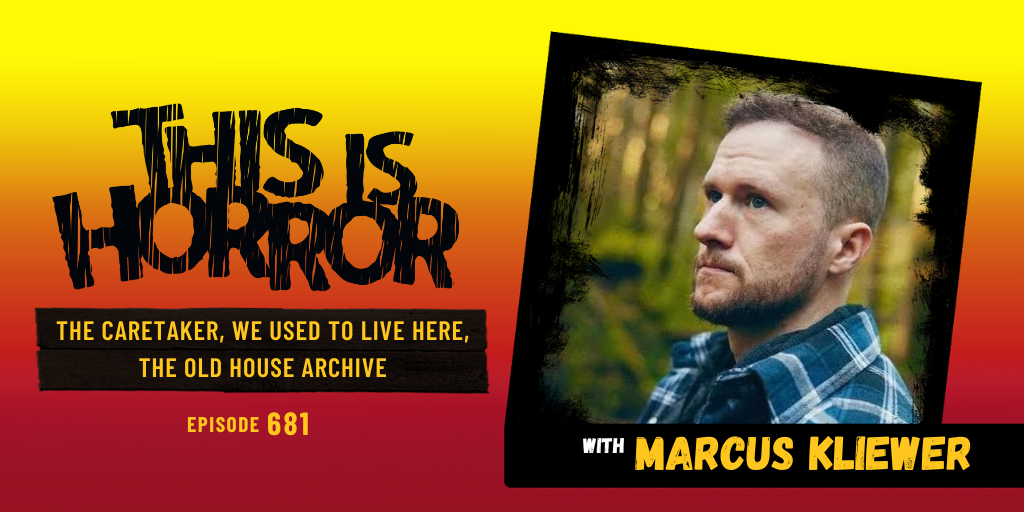
In this podcast, Marcus Kliewer talks about The Caretaker, We Used to Live Here, The Old House Archive, and much more.
About Marcus Kliewer
Marcus Kliewer is the New York Times bestseller author of The Caretaker, We Used to Live Here, and his new audiobook short story collection, Please Remain Seated.
Timestamps
Thanks for Listening!
Help out the show:
- Support This Is Horror on Patreon
- Listen to This Is Horror Podcast on Apple
- Listen to This Is Horror Podcast on Spotify
- Rate and review the This Is Horror Podcast on Apple Podcasts
- Share the episode on Facebook and X
- Subscribe to This Is Horror podcast RSS Feed
Let us know how you enjoyed this episode:
- Write a comment below.
- Follow us and get in touch on Instagram @thisishorrorpodcast
- Subscribe and comment on YouTube @thisishorrorpodcast
- Follow us and get in touch on TikTok @thisishorrorpodcast
- Tweet us @thisishorror.
Resources
- Marcus Kliewer
- Watch the video version of This Is Horror Podcast episodes, including our conversation with Chuck Palahniuk on YouTube.
House of Bad Memories by Michael David Wilson
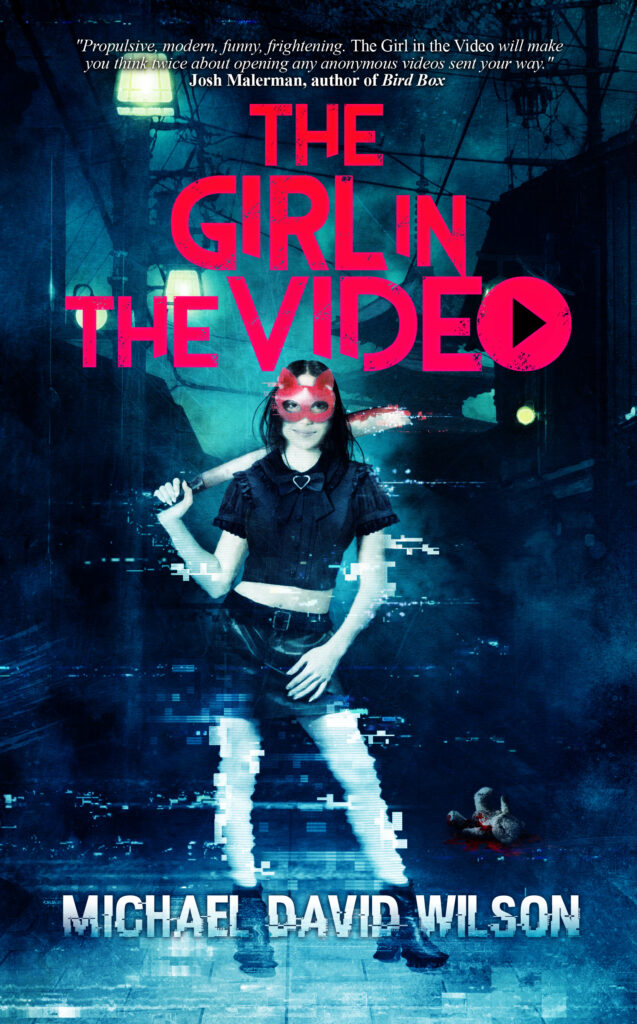
From the author of The Girl in the Video comes a darkly comic thriller with an edge-of-your-seat climax.
Denny just wants to be the world’s best dad to his baby daughter, but things get messy when he starts hallucinating his estranged abusive stepfather, Frank. Then Frank winds up dead and Denny is held hostage by his junkie half-sister who demands he uncovers the cause of her father’s death.
Will Denny defeat his demons or be perpetually tortured for refusing to answer impossible questions?
House of Bad Memories is Funny Games meets This Is England with a Rosemary’s Baby under-taste.
Buy House of Bad Memories from Cemetery Gates Media
Buy the House of Bad Memories audiobook
They’re Watching by Michael David Wilson and Bob Pastorella
From the hosts of This Is Horror Podcast comes a dark thriller of obsession, paranoia, and voyeurism.
After relocating to a small coastal town, Brian discovers a hole that gazes into his neighbour’s bedroom. Every night she dances and he peeps. Same song, same time, same wild and mesmerising dance. But soon Brian suspects he’s not the only one watching and she’s not the only one being watched.
They’re Watching is The Wicker Man meets Body Double with a splash of Suspiria.
Buy They’re Watching in paperback and eBook right now.
Michael David Wilson 0:29
Welcome to This Is Horror, a podcast for readers, writers, and creators. I'm Michael David Wilson, and every episode I chat with the world's best writers about writing, life lessons, creativity, and much more. Today is the second part of my conversation with Marcus Cleaver, the New York Times best-selling author of *The Caretaker* *We Used to Live Here* and his brand new audio book short story collection. Please remain seated. In this episode, we dive deeper into his standout novel *The Caretaker* So we will get to that imminently. But first, a quick advert break.
Bob Pastorella 1:30
From the host of this Isorra podcast comes a dark thriller of obsession, paranoia, and voyeurism. After relocating to a small coastal town, Brian discovers a hole that gazes into his neighbor's bedroom every night. She dances and he peeps. Same song, same time, same wild and mesmerizing dance. But soon Brian suspects he's not the only one watching, and she's not the only one being watched. Their watching is The Wicker Man meets Body Double with a splash of Suspiria. Their watching by Michael David Wilson and Bob Pastorella is available from This Is Horror.co.uk, Amazon, and wherever good books are sold. House of Bad Memories, the debut novel from Michael David Wilson, is out now via Cemetery Gates Media. Denny just wants to be the world's best dad to his baby daughter, but things get messy when he starts hallucinating his estranged, abusive stepfather Frank. Then Frank winds up dead, and Denny is held hostage by his junky half sister, who demands he uncovers the cause of her father's death. Will Denny defeat his demons, or be perpetually tortured for refusing to answer impossible questions? Clay McCloud Chapman says, "How's the bad memories hit so hard you'll spit teeth out once you're done reading it. House of Bad Memories by Michael David Wilson, available now in paperback, ebook, and audio.
Michael David Wilson 2:51
Okay, with that said, here it is. It is Marcus Kliewer. On This Is Horror. So, to talk a little bit more about we used to live here, I want to know, in terms of it getting picked up with a publisher, and in terms of it also having the film rights bob to what that journey looked like.
Marcus Kliewer 3:24
Yeah, it was a roller coaster that I feel like I'm still kind of on in some ways. Where basically I'd mentioned earlier how I got reached out to when I was on Reddit, and then my the guy who's my manager now basically was like we we we really love your writing. What are you working on? Kind of thing because they had reached out to me about a different story initially that was called. It's a very Reddit title. It was the man in my basement takes one step closer every week. You know the titles are kind of the log lines on there because you want to hook people, and it was my manager and another producer. They really liked the story. They liked the premise, but it was a very long and very unwieldy type of story that wouldn't have served well for kind of these punchy, short story Hollywood kind of pitches that they do. And so they're like, well, what else are you working on? And I sent them a once I made sure they were legit. I sent them a list of a few things I had on the back burner, and and one of those things was we used to live here, which was already a short I had on Reddit that was a one parter, but I'd always wanted to add more to it or expand it, and they like immediately latched onto that, and they're like, "That is like, it's got the title, it's got the premise, and let's go with that. And so I wrote it up, and they gave fantastic notes. Like you hear nightmares about Hollywood producers giving like horrible, but both it was Dan. Kagan and and Scott Glasgold, who's my manager now. So Dan Kagan's a producer. He does a lot of stuff with Neon. So he worked on like Long Legs and and The Monkey and like all these all these great little films. And they both just had incredible notes and really helped make sure the story was the best it could be. But even then, it was like it was still no guarantee. They were never promising anything. They never asked. The first thing was they never asked for money. The first, like, if you know somebody scamming you, if they're asking for money, because like any producer or agent worth their salt, they get the money once it's sold on the deal or whatever. You know, if they're an agent, they get a commission. We posted that, and then I think within a week, it was it had gone. It just that week was probably the craziest week of my life because it was like, oh, it would go go across so many people's desks. We'd be like, oh, like Ridley Scott's producing company is reading it. Oh, Charlie Theron just read it. Like all these just like names just going like I'm here, and you know, I was writing this thing in a Danny's up in Canada in a little diner, and then it's going to every major studio in Hollywood and getting read by executives and actors and and just all these people looking at it, either passing or oh maybe I want to do it, but I don't know. And then they do all the the Hollywood agent stuff behind the scenes, and then it finally went to Netflix, and and then shortly after that, it was like book deal. It was just everything. It's just so much happened within a week, essentially, which is why it has that overnight feeling from the outside, and it kind of did at the time as well because it was just such a dramatic. Even though I've been working at it my whole life, it was just a very sudden of like not making any money writing to all of a sudden this this life changing amount of money from a Netflix deal and then a two book deal that came out of that was a separate thing from the Netflix deal, and yeah, it's just insane. It's just every time I talk about it, it doesn't seem it doesn't seem real. I'm super. It's a big whiplash for sure.
Michael David Wilson 7:18
And in terms of getting the book deal. Did you have your literary agent at the time, or was was that part of this one week of madness that you're
Marcus Kliewer 7:30
basically? Yeah. So like my Scott, my manager, he had all these connections at an agency called called Verve, and he connected me with somebody named Liz Parker, who's independent now. She's my she's my agent, my literary agent. And it was basically like she wants to be our agent. Let's meet her. And I talked with her, and she had like a great track record, and we we got along really well. And so it was pretty much like that week, like once it sold to Netflix, it was like, okay, here's here's here's an agent, here's these guys, and that kind of thing. And I trusted Scott, and these were people that he worked really well with. So I was like, you know what? Let's let's go with it. And I have not regretted the choice at all. It's been a very, um, a very good career for me for sure, but a very unconventional route. So there's times where I'm like, man, I wish I. There's times where I'm like, man, I almost wish I had a more conventional route so I could give better advice. But then I also think, well, it's a whole new world, you know. Like it's this is how it is. Like this is not a common experience that I had, but it is something that can happen. And that's the the thing with Reddit and the thing with the online world is the is there is that element of discovery and there is that element of not having to do a traditional route to publishing. And and the great thing about Reddit was I was still building up an audience without having to you know query for agents and the more traditional routes to to getting into the publishing world, yeah,
Michael David Wilson 9:11
yeah. I think the more people that I talk to, the more I find that even though you do have the traditional route. There are so many other avenues to making it, to getting into the film world, to getting into the publishing world. I mean, for me at the moment when I put out my debut book, *The Girl in the Video* that was then very quickly snapped up for the film rights as well, and then I got a film manager. And at the moment, I mean, I I still have a film manager, and we're doing a lot of exciting things. But I don't actually have a literary agent yet. But that's something that we're now looking. Doing and we've got a book that we're going to be sending to people, but rather than me querying in a traditional sense, it's more he's giving me recommendations. Let's hit up this agent. Let's contact this agency. Let's see if they like it. And I don't know. I've had a lot of experiences with people in the film world and in the book world too, and even though it can take a very long time to get a film made, there's a lot of excitement I find with film agents and producers, and things seem to happen quicker, even if the film itself may take a long time, so yeah. I feel fortunate to have a film manager because great people, in my experience,
Marcus Kliewer 10:52
yeah. And it's um, it's almost like a roundabout way of getting to it. Did you did you post stuff online first, or was it all just straight to like sending it to agents and everything?
Michael David Wilson 11:05
So, I mean, with with me, with my with my debut book, it came out in 2020, but I'd been doing the This Is Horror Podcast since 2013,
Marcus Kliewer 11:18
right?
Michael David Wilson 11:18
And you know, I'd been working in, I guess, freelance horror fiction journalism since 2010. So, another case of it might look very quick because you know, in terms of it having an option deal, that was within a few months of it coming out. But people didn't see the 10 years before where I'm working in the genre, so I think with that specifically, when I put the book out, I deliberately got myself booked on a lot of podcasts. Also, as I said, it was 2020, so that may have helped with the a bizarre thing, really, that the global pandemic may have helped and people may have been paying even more attention, but some of the emails that I got from film producers, it was because they had heard me on different podcasts and they'd been intrigued with the with the book, and I think too probably to to my advantage, like I'm living in Japan, and so I was kind of pitching this as this Gaijin JE horror book, and so I think that was quite an intriguing thing as well. But yeah, I wasn't I wasn't really. I was going to say I wasn't posting stories online. I wasn't posting in the sense of Reddit, but I did get my story on a num different stories on some podcasts, like there's in the UK, Hawk and Cleaver's the other stories, and I had a couple on the No Sleep podcast. Right, yeah, but I don't think that's how they found me. I think they found me through me being on other people's podcasts. So that's why you just got to put yourself out there.
Marcus Kliewer 13:10
Totally.
Michael David Wilson 13:12
But I mean, in terms of the logistics, you had the book deal before you had a full novel before we used to live here, which I mean that must have been daunting. But I want to know what did it look like in terms of fleshing it out into a full novel. I'm imagining because of how meticulously crafted it at least appears to be that there was a lot more planning rather than this being something you wrote as you went along.
Marcus Kliewer 13:49
Yeah, I mean, I am a notorious, I guess, pantser, but I'm a very, I guess, it's educated pantsing. Like I really like to run it, run out, and just kind of write very loose, rough outline, kind of almost more like a treatment or a screenplay where it's present tense and it's very punchy and it goes from point form to dialog to it. Just kind of can get as high resolution or as low resolution as I want in in what kind of details I'm showing, so sometimes it's as simple as like two characters have an argument, X character wins. Sometimes it goes straight down into the prose, into the texture, into the metaphors, and and I just kind of let myself run wild, and then I will kind of have to rein it in and go back and do that thing to be like, okay, how am I gonna set this up? How am I gonna make this so it has a payoff here and that kind of thing? So it feels very intentionally planned. So it's kind of like I'm just throwing out red carpets in different directions and then seeing where they roll and seeing where they end up and the one that kind of ends up in the. Area I like the most is the one that I'm going to go in and really kind of curate and landscape and make it look really nice. But with with adapting, we used to live here to a novel in particular because I had never actually written a novel. I'd written a bunch of shorter things and I'd written some very long series that were essentially novel length on Reddit or in private, but this was the first like, oh, this is going to be a published, you know, 60 to 70,000 to 80,000 word thing from a roughly 20,000 word short story slash novella, and it was very challenging and difficult because it was. I don't know. It's like the metaphor I've used in other interviews. It was like it was like I built the car and the car worked. wasn't perfect, but you know it got the job done. And now I'm being asked to take it apart and turn it into a bus, and that it's challenging, and especially as somebody who really likes to write things as fast-paced as possible without ruining the tension and the dread, it was a challenge to kind of find ways to keep that tension. And I don't, I don't even think I necessarily fully pulled it off all the time in the way that I wanted to, I'm still very proud of that book. Don't don't get me. I'm not like trying to put the book down or anything, but I just felt like it was very challenging to break it apart and find those moments where I can expand it. And it took a while. It was like there were certain moments, especially in the final third of the book, where that probably took 80% of the writing power and thinking power was just finding the moment to break it open, and there's a certain scene in a motel that happens that was that moment where I, when I finally figured that out, everything else kind of was kind of the door hinge for everything else to spin on, and but that took a long time to crack, and then I definitely made some of those documents in there a little longer to help pad it out. I'm not gonna lie, because yeah, I needed a word count, so you know there was a bit of that in there, but it's an interesting challenge.
Michael David Wilson 17:23
So then, I wonder, in terms of what we can call the found documents, were they part of the original vision, or did you actually add the documents after when you realized, okay, this is a way to make this project longer, and it it seems such a smart choice because you know you you can almost have the best of both worlds. You don't need to overly inflate the actual story. You know, you said you like it to be fast paced, and I think as a reader, I completely want that as well, so you're not adding extra words to the story, but you're giving almost additional content.
Marcus Kliewer 18:08
Yeah, it was actually a book I read. Believe it or not, the original Reddit version I wrote that without having read House of Lee, and if you go back and read it. It definitely has House of Lee's elements in it of like you know the liminal space and stuff, but there there was a lot less of that in it. And then I read House of Lee's, and then I read a book called The Troop by by Nick Cutter, but pretty famous body horror. And and both of those books, in their own ways, just implemented found documents, and and it just I mean obviously House of Lee, the entire book is that, but in Nick Cutter's book he kind of divides it up every few chapters. There's a found document in there that adds more context, and for me it really was a way to the cynical answer is the padding out, obviously. But then for me, it was also a way to expand on this world because I love world building, and I really wanted to let readers know that there's so much more to this world than I'm even in this book. And and yeah, it was just a fun way to do that, and also keep the pacing, like you said, without without without messing with the pacing of the core story as much. Because if if I had to make the core story a full 70,000 words, I think I don't know if I could have maintained it. Because there's only so much you can do of the family is staying before it just gets almost comedic, you know. Of like, okay, I mean, it it almost does in the book, and and that's I think I try to point that out when it does feel almost it's just absurd how long they're staying there, and I feel like the premise, ironically, can definitely overstep. It's welcome as well, and I think I was very cognizant of that, and the documents really helped doing that in a way that I felt like also expanded on the world and gave people more to chew on.
Michael David Wilson 20:16
Yeah, you've mentioned House of Lee and the troop, and then I think probably because of the found documents lending it an almost epistolary quality. The other book that it brings to mind is experimental film by Jemma Files, another Canadian horror writer.
Marcus Kliewer 20:37
Yeah, I've heard very good things. I haven't had the chance to read it yet, but it's one that people bring up all the time, so I definitely have to check that one out.
Michael David Wilson 20:46
Yeah, and particularly as it would appear that you know liminal spaces-that is your wheelhouse, that is your preferred subgenre. It would it would seem so. Yeah, you're not going to go wrong with experimental film by Gemma Files, and I wonder, in terms of that word count, did your publisher give you a strict number that they said this is the minimum you cannot do any less?
Marcus Kliewer 21:20
I think it was 80,000 was the general, and then I feel like I want to say it ended up being around 72,000. I feel like anything below 65 was really pushing it with them, but I don't know. Now I'm talking to authors that are getting the opposite note from publishers because their their books are getting too long and they want them to be shorter. So it seems like a lot of books now are in that sort of 320 page kind of for for better or worse. I love me I love me like a huge Stephen King book from time to time, but I also love like a really tightly paced 60 to 70,000 words as well, but yeah, I don't. I think at the end they just kind of wanted me to get it done because I was taking so long. I was so slow, and they they would have been happy with the book coming out like a year before it came out. Like they just get this done, but I I'm glad I took the extra time with it for sure.
Michael David Wilson 22:24
So does that mean then contractually there wasn't a hard deadline? They bought the publishing rights, and then it was a case of you hand it in when it's ready.
Marcus Kliewer 22:37
No, not at all. So they, yeah, I think I was like so just needed to sign a contract. I didn't even really pay attention to the actual deadlines, and like I have a great like agent and everything, and like I think they pointed it out to me and my lawyer and everything. And I was just like, I think I just really overestimated my writing speed ability because I was just when I wrote on Reddit, I would just kind of post without planning. Like I would, I would start a series, and I wouldn't know what the next part, the next week would be, and I would just kind of come up with it in the week between. And I did like a 40,000 word story that way, and like it was just every week I was writing like three to 5000 words, and it was surprisingly cohesive. But I think writing writing that way versus writing in a vacuum where you're just alone and it's only your friends reading it is far less motivating because there's something super addictive about posting and getting immediate reactions that you just don't have, and so I think there is that element of I just greatly overestimated how fast I could write this thing, mainly just from that motivation. It's not even that I'm a slow writer. It's just like I need to kind of find ways to trick my brain into into getting motivated for sure.
Michael David Wilson 23:55
And I wonder too, did you have to provide them with an outline before you had written the book,
Marcus Kliewer 24:04
think I guess in the case of this one because there was the short story, which was I guess novella length, that kind of proved as the outline. I think I we sent out a one pager, basically being like, here's how I might expand it. So, but other than that, it was just kind of like, yeah, it's going to be a longer version of this short story, and and that was it. I think too with the documents in particular, for me, it was always really important to start the story with the family knocking at the door because it just felt like why, why not? You know, like I don't. We all know this story. We all know the story of the people buying the house to flip it, and like we don't really need to see that again. Like we don't need to see them touring the house with the real estate agent, as brilliant as that can be in stuff like Rosemary's Baby and all that. I just felt for. Story in particular, I didn't really want to see that, and there were actually versions of the story where the second chapter was that it was very much the like two weeks earlier kind of thing, you know, where like goes back and it shows them buying the house, and then I ended up just replacing that with a real estate posting, and I think that kind of did what it needed to do to ground the house in the reader's mind. But yeah, I it's just like I went into this knowing nothing about the publishing world because I was so Reddit brained and so it just didn't even seem like a possibility to me. Like really, my goal was self-publishing, and to end up in traditional publishing so quickly was definitely a shock.
Michael David Wilson 25:48
What I love about we used to live here, and the same applies really to the caretaker. I mean, both of them have so much commonalities in the sense that they start with such an innocuous premise and an innocuous event. You know, you've got just these people asking, can they have a quick look around this house that they used to live in? And then with the caretaker, you've got a situation where there's a job advert for Macy Mullins, where she can make a lot of money just kind of looking after this house. So they're so relatable, you know what they are straight away. But then things get very disquieting and unnerving incredibly quickly. It's like you lure us in with this delicious hook and high dialog, and then before we know what's going on, possibly both the reader and the characters are being gaslit, and you're questioning what is and isn't real.
Marcus Kliewer 27:01
Yeah, I love I love some like uncanny horror where there's just one detail that's a little off. I've called it like a pebble in the shoe kind of thing. So in Cormac McCarthy's The Road, there there's a sequence where where the the husband or the the father and the son are navigating this post-apocalyptic landscape. For anyone that's not familiar with with the road, and and they come across this house, and and the line is it just says the windows were oddly intact. Is a sentence that just kind of sits on its own there, and then they go into this house and they start, you know, looting the drawers because they're so desperate for for finding food. And as that chapter or several chapters unfolds, you start to learn why those windows were oddly intact. But for me, that sentence just served as like a pebble in my shoe as I'm reading, of just this thing that's in your brain that feels uncomfortable, and you know it's not going anywhere good, and so I try to put as many of those little things. So with with we used to live here, it would be she notices a smudge of dirt on the father's thing, or she notices their car isn't there, and then they say, oh no no! It's down on the you know we couldn't make it up the driveway. It was icy, so we had to walk and like just these little things where you wonder, okay, am I overreacting? Am I misreading? And that's the kind of stuff that that freaks me out because it's just very relatable to me. To the it's the threats that you can't even categorize as threats because you don't know what they are, and I find that very unsettling. It's it's almost less unsettling than just somebody showing up with an ax, which of course would be terrifying. But at least you know, okay, I'm either going to fight or I'm going to run or I need to barricade the Hap. Like you, you know that there's concrete actions you take, but if somebody's showing up screaming for help, help my family's they're hurt down on the street and you know their arms bleeding, but there's something in their face that you're just quite not sure if they're being genuine. Now you're in a territory where your body doesn't even know what to do, and to me that is is much more uncomfortable and and can often be much more terrifying as a reader. That's not to say it can be a good fun to have an ax show up and that's a great slasher film as well. But I really like existing in the ambiguity of not really knowing what kind of threat you're Dealing with,
Michael David Wilson 29:43
yeah, and I feel it's so much more relatable for everyday life. I mean, you would hope so if an ax murder returning up is relatable to your everyday life. Then you definitely want to move neighborhood or just do something different. But I mean, a lot of us. I just think, as human beings, we have this intuition built into us, and we can recognize when something, or more terrifyingly, someone is off. But socially, you know, you can't. It's harder to just, you know, get out of that situation or say there's something wrong with you without, you know, then you being the one who might be institutionalized or might run into issues yourself. Whereas if someone turns up with an ax, it is known that you you run away or you barricade yourself when you get out of that situation, and so that that's why it's so unsettling. I think, and yeah, you do such a good job because we know that the family, and particularly, you know, that the person purporting to be the the father, the head of the family, we know does something off so quickly, but we also know that you can't just easily get out of it. And the other issue which this deals with is the protagonist is a people pleaser, and so yeah, there's there's that aspect, and I wonder, you know, what's terrifying too is that if her partner Tiali had answered the door, we are explicitly told none of this would have happened. It's the protagonist Eve's people pleasing that has brought all of this on. Just because she said, "Okay, you can come in for 15 minutes. So, I mean, I wonder how, if at all, has people pleasing played into your life, hopefully not with these consequences. Yeah,
Marcus Kliewer 32:04
I mean, sometimes I think about it, and like, I think I call myself a recovering people pleaser because it's something you have to. It's really ingrained into you as a child that you know, good people make other people comfortable and happy, and unfortunately, that tendency, though coming from a place of goodness, often leads to self destruction. I think there's that saying: "It's empathy without boundaries is self destruction, and I constantly have to remind myself of that because there is there are people out there whether intentionally or otherwise that will whether it's a salesman or home invader or whatever they they will pick up on those tendencies in people and find ways to exploit them and for me, I think Eve is definitely a heightened version of that part of me. Like I'm no, I think even at my worst, I wasn't at. I think I would have kicked that family out. That's much earlier than she did. But still, it it's crazy what just social discomfort and what not not wanting to make other people feel bad and all that kind of stuff can can lead to, and so I kind of like for me social anxiety is a big thing, and being in a situation like that just is kind of a nightmare, and having to set firm boundaries is something that I constantly have to remind myself to do in my own life. And I'm certainly a lot better at it than I used to be, but I think writing that story, in a way, it kind of shows where where that can lead. Unfortunately, if if you um if you if you're living your life for other people, whether it's whether it's for oh like I'm worried about what what my family's gonna think, or I'm worried about what religion might think, or I'm worried about what what Twitter might think, like all that kind of stuff, you can really start to lose yourself, and you can really just lose your identity, as we kind of see happen a bit with Eve in that story, and and you kind of forget who you are, and you start living for other people, and then before you know it, you're living a life that you never wanted, and you're not even making the people you were trying to please happy for the most part. It kind of makes everybody miserable, except for maybe the you know the salesman that sold you the thing you didn't want. But other than that, everyone's kind of miserable. So yeah, you got. To take care of yourself before you take care of other people, and I think that was important to me to kind of put into that story. Not not that I think about it too intentionally. I feel like usually if I put a character in a situation that tests what they're bad at, those kind of things will naturally arise, you know, out of the out of the conflict.
Michael David Wilson 35:25
So, I mean, in terms of your own personal life, in terms of setting these boundaries, are there any rules or ways of doing things that you now have to kind of look after? I suppose your own well-being, and to make sure that you don't slip into these habits.
Marcus Kliewer 35:47
I think I don't have, I don't have kids. I have a dog, and I have two cats. But I think I really think about if I was a father and I had a child, how would I approach this situation? You know, because that really puts into perspective a lot of things on on on what you're gonna lay like on what kind of stuff you're gonna allow into your life. Because you have to be there for your kid, you have to be there for your family, and weirdly, that I'm not a particularly paternal person, but weirdly, that kind of thought experiment really helps me a lot when I'm in situations because it's like I would, in a way, it kind of is like, well, I'm not saying no to this person for me. I'm saying no to this person because I have a kid that I is my priority, you know, and like I'm not going to. If I say yes to this thing, and now I'm getting worn out because I said yes to a thing I didn't want to do, and now it's draining all my energy, and now I'm not able to be there for my kid, which is, yeah, I don't know where that came from, but for some reason that works for me. It really helps me set boundaries, and I guess in a way, I'm kind of the kid. You know, I'm kind of like I'm the one I'm taking care of, you know. It's like treating myself like somebody that I'm in charge of taking care of, kind of mentality, really helps with setting boundaries. And then I think just acknowledging as well that it never feels good to set boundaries for me. I think there's an idea that oh, you should be totally fine doing it, and it's like if you're feeling uncomfortable setting boundaries, then that's wrong. It's like no, that's kind of the point, especially if you are so used. Your default is to go to people pleasing. It's not going to feel good to set boundaries because you're fighting, you're you're fighting kind of something that's been ingrained in you for so long, and so just expect that unpleasant feeling. Expect that there might be guilt. There might not be too, but if when that comes to not succumb to it, because I find if I tell myself like, oh, don't feel guilty, don't feel this, then I can almost that emotion sneaks up on me, and now I find myself not setting the boundaries that I should have set. So just kind of be like, okay, that that feeling's probably going to come. Set it aside, and yeah, but yeah, it's still it's a daily thing for sure.
Michael David Wilson 38:17
I like the child analogy, and there's almost a sense that you know we talk about liminal horror. You have a liminal kid that is kind of existing and not existing in this in between space and
Marcus Kliewer 38:33
shadow child. Yeah,
Michael David Wilson 38:34
yeah. Now I've got a couple of questions that were submitted by Lydia Peva, one of our patrons, and I think this is an appropriate time to bring them up as they tie quite nicely into what we're talking about with your two novels. So she says, as a Canadian writer, I am always interested about the decision to set a story stateside. Do your stories begin in those settings, and if not, why are they adapted to a U.S. audience?
Marcus Kliewer 39:15
So, whenever I am writing a story, there is for for the caretaker in particular, where it's such a societal story, and it's a it's a story about a character that's struggling financially and is taking a job that is insanely sketchy. There's a bunch of red flags around this job, but she is broken. She needs to pay her rent. For me, it sucks being poor in Canada. In Canada, we have a bunch of our own problems, 100% But at the very least, I've never had to think about going to the hospital if I was injured. You know, maybe for the ambulance fee, but that's about it. In the states, your. Rock bottom of financial ruin is just so much, so much worse. I mean, like Breaking Bad would not happen in Canada. The whole point of that story is that he didn't have the health insurance to pay for his cancer treatment, so he needs to cook meth. So there's that. There's just the simple and unfortunate reality of of societal stakes, and and then on top of that, I find with a lot of my horror, so much of it is with social and interpersonal reaction interactions, and it's another thing that is just every time I I go to the states, there's just an immediate shift in energy of knowing that any conflict you get into could escalate to the point of somebody pulling a gun on you, and that's like a very there's a ton of just energy in that feeling, and like in Canada again, there's violent crime in Canada. Obviously, there's there's people that will pull out a knife if they're angry with you, but there it's just not the same energy of any person you see, especially if it's a concealed carry state could be carrying a gun, and which immediately just adds higher stakes and higher tension to to everything. Now, now you could argue that I could try to find ways to do that in Canada, and I guess I would say to that if I was when I do set things in Canada and I have set short stories in Canada. I feel like I would prefer to do stuff that's more wilderness because I think the wilderness in Canada is much scarier than it is in the states. Because in the states, if you're lost in the wilderness, obviously there's massive wilderness, but there's still that kind of idea of like, oh well, I guess I could walk in any direction and I'd eventually hit a border, or I'd hit the ocean. You know, like which is crazy because you can be lost so deep in the wilderness. But in Canada, it's like, man, you could be going the wrong way, and you could end up in like Russia. You like could end up in like the North Pole. Like it's just you look at a map and how just vast our wildernesses. We're all huddled along the border, all of our major cities, and then it's just wilderness for that. So, like for that type of horror, or for Nick Cutter type horror, where it's the the horror is very much like a it's like a worm that eats you from the inside out, or it's biological jellyfish nightmare thing. Like that stuff is going to be scary no matter where it's set. So that's the the the long story short. It's just the states is a scarier place for better or worse. So I find it's just less of a challenge to make things scarier. And then the one other thing I would add to that too is the states is also it's just so much easier to make it universally understood. If I say Manitoba or Saskatchewan, those words mean nothing to most people. Like they'd be like, okay, they'd have to Google it, they have to look it up, they'd be like, oh, isn't that in a Chapel Rown song or something? That's about it. But if I say Ohio or I say Nebraska or Arizona, immediately images just burst into somebody's mind, pretty much no matter where in the world they're from. And so there is a temptation.
Marcus Kliewer 43:40
It's it's definitely hard to not fall into that temptation of just having to do less groundwork as an author to ground your reader and immerse them in a setting because of how just how dominant U.S. culture is in the world. But I will certainly have stories set in Canada in the future, and I do have short stories set in Canada as well. So like any time I can find that it's not lowering the stakes. I do it in Canada.
Michael David Wilson 44:06
Yeah, so it sounds like there could be a Canadian wilderness.
Marcus Kliewer 44:11
Yes, definitely.
Michael David Wilson 44:12
Yeah, yeah, and I, I mean, I wonder too in terms of location. Whilst it is, whilst the stories are set in America, just because the nature of the horror is so in these liminal spaces. I mean, it's almost like this is your own Kliewerverse. This is another America. This isn't quite the world that we live in anyway.
Marcus Kliewer 44:41
Yeah, for sure, and I I like I like making things. I guess I take a page from King there where he'll bake up town like dairy that's grounded. He's taking elements from all these real places, and I like doing that because it's um you just have a lot more freedom as a creator, and you're not super locked into making. You get the research 100% right if you're going to base it off of a real city, you know.
Michael David Wilson 45:05
Now, Lydia's second question is pertaining to another aspect of your work, and particularly the caretaker. So, Lydia says, "Do you feel that following the puzzles that are hinted at in your work to be mandatory to the experience or optional,
Marcus Kliewer 45:30
100% optional. I think most of them just lead to more confusion, so it's not the kind of thing where you're going to solve this puzzle, and then that question you had about why the rabbits were there or why the people were wearing yellow rain jackets is all of a sudden going to make sense. It's probably just going to lead to more questions. But for the people that love that kind of stuff, it's there. And there's certainly sometimes I will shine a bit of extra context on the mysteries of the story. I don't know. For me, especially with expanded universe stuff, I really want to avoid the fatigue of. I want people to enjoy each book on their own, and then have this extra stuff that's there if they want it. They don't need to dive into it to still appreciate the stories on their own, if that makes sense, because I feel like with with things like Marvel or Star Wars, they obviously do some great stuff, but then also there can be that almost like overwhelming nature of being like, oh man, I got to watch like 20 different shows and five different movies to even understand who this new character is in Doomsday, and I really want to avoid that kind of world building when it comes to expanded universe and puzzles and all that stuff, but for the people that love it, it's there. And if you don't love it, well, you can just leave it alone.
Michael David Wilson 46:50
Yeah, there's something so psychedelic and trippy about rabbits in general, and of course, you know a lot of that is probably from Lewis Carroll and Alice, and then you know you've got the Jefferson Airplane sung White Rabbit, and I wonder how did you land upon including rabbits within your rules, within the rituals, and are rabbits also something that you have been fascinated by.
Marcus Kliewer 47:26
Yeah, I think so. the The answer is pretty fun. Yeah, actually, it's obviously Alice in Wonderland. Like I watched that movie when I was a kid. Well, obviously it was a story before it was a movie, but the Disney movie was my introduction to that story, and so anything with rabbits is almost always going to be connected to that inevitably, including the thing that inspired it, which was actually a game called Super Mario 64 on the Nintendo 64, and I played it back in I want to say the late 90s, early 2000s, and there's in the bottom of Prince's Peach's castle. There's this damn white rabbit that you have to friggin' chase, and it's so difficult. You go through this weird little maze, and you have to like long jump. And if you like, you're always so close to getting it, and then it just slips away. And so I'm pretty sure that was just burned into my subconscious and just kind of bubbled up, and then I also just love rabbits because they're cute. But the closer you get, they creepier. They kind of got the Nesferratu fangs, and they're usually that kind of that yellow color. And then, so they're cute and creepy at the same time. And then, yeah, obviously a nod to to Alice in Wonderland, and any time I can do Jordan Peele Easter eggs, I'm always going to do those as well. I'm I'm massively influenced by by his work. So,
Michael David Wilson 48:52
and then in terms of your expanded universe, and in terms of the old house archives, how often are you going to be updating them, and how does that fit into your writing routine? Because obviously, you have a lot of things to do. You've got your deadlines, you've got your publishing deals, but then you have this whole
Marcus Kliewer 49:18
other,
Michael David Wilson 49:19
yeah, little trail that people can go on should they decide to.
Marcus Kliewer 49:25
Yeah, so I'm I'm trying to do one page of content a week there ultimately, and so I'm actually like behind on that. So I need to like spend a week just only writing content for that, so I can kind of get a good buffer because I think I got like two pages and then it's and then it's fresh out. I have a bunch of half written stuff, but for me it's just a fun way to keep the diehard fans invested, and then it's also a really fun way to direct conversation because like sometimes I'll see. I can almost kind of influence the way people are talking about these books by writing documents. So sometimes I'll see a certain fan theory really kind of take hold, and it might be the theory. It's always cool whatever theories they are, but sometimes like I don't know if I want that to become the prevalent theory. So I'll drop a document and put some subtle hints that kind of push back against it, and then even put that conflict into the document as like a very House of Lee style thing where you know you have sources fighting with each other or the footnotes are fighting with the author and there's footnotes within footnotes. It's very fun to play with that, And and yeah, so it doesn't. I don't really have a routine with it. I think I need to start putting it in my routine. I think you've just inspired me to maybe because I do have kind of a dead spot in my evenings right now. So maybe I need to just set aside even just 30 minutes. You can get a lot done in 30 minutes. So maybe I'll I'll just start doing that in the evenings, just 30 minutes a day, so I can get a good buffer on that.
Michael David Wilson 51:05
Well, on that basis, I'd love to know what does your writing routine look like, and what does a typical day look like for you, or if it's easier a typical week?
Marcus Kliewer 51:18
Yeah, so I'll give like two answers. I'll do the answer that's like when I'm working, when I was working a job, and then now that I'm only writing, because it is definitely a rare thing to to have only be writing, and so it's not the most universal for for the listeners, of course, not the most universal experience, but for me right now, my routine is: I wake up, I put on a podcast or an audio book, usually a podcast called Creepcast that reads like creepy pasta stories. I'm going to start adding this one to the docket now, so I got a bunch more content, and then I have Talking Scared in there as well, just you always horror related, whatever it is, and then just so as I'm like doing the dishes and stuff, I feel like I'm still getting something, you know. And then I take my dog for a walk. I go to a gas station nearby and I grab a a protein bar, and then I come when I come back, I I do the Pomodoro technique, so I'll write for 45 minutes, and I always start with. This is something that's universal to whether you work a part-time or a full-time job. To any of the listeners, is I always try to start. If you're the type of person that really struggles to start, I like to start with doing transcribing for five to 10 minutes in every writing session. So what what that looks like is I'll take a like a an ebook. I'll put it up on my iPad or whatever I'm writing with that day, or or a screenplay or a short story. Whether it's Stephen King, Mike Flanagan, somebody that I that I admire their work, and I will read it. And then, as I'm reading, I'll have my keyboard, and I'll just unplug my keyboard. If you don't have wireless keyboards, you can just do it in a document. And I just type as I'm reading, and I would I find that nothing has improved my writing more than that, and nothing has also just kind of made the day less intimidating, or the 30-minute writing session after work if you're working a nine-to-five, than to have that little five-minute kind of just like lubricant to get into the actual writing session, and then some days I just will not get off that transcribing, and I will spend an hour just doing that, and I make sure to draw from a bunch of different authors because I found sometimes I would only do King for a while, and then you really start to feel like that style bleeding into your work too much. But especially when I was starting out, it just helped me help me so much. And then yeah, I work in 45 minute chunks to 30-minute chunks, depending on what I'm feeling, and I take five-minute breaks in between. My phone is never in the room. I think that's super important. If you can try to have a profile on your laptop that like hard blocks for listeners, if they have a laptop or even an iPad, try to find a try to have a profile on there that hard blocks everything else. So only your writing thing is on there, and then maybe even research. Like I just try, like some people, like oh, I need to have Google so I can research things. Even that I find just having access to it, even if I'm not using it, really messes with me. And then yeah, it's only about two hours in the morning that I'm actually writing, an hour to two hours, and so if if somebody is working a nine to five, you could dir that down to 230 minute chunks, and like man, like instead of browsing on the phone or whatever, you can get a lot done in half an hour, and and and yeah, and because it's that concentrated work, and because I don't allow.
Marcus Kliewer 54:59
Myself to go on any distractions until that five minute break kind of thing that seems to really work for me. But yeah, like I said, I'm gonna add I'm gonna add in the evening because usually it's just morning and then I'm kind of done. I'll do the dog walk in the day, but I think I have a little bit more steam in me. I'm gonna do that 30 minute chunk for the extra content, yeah, and
Michael David Wilson 55:24
then so that begs the question: What are you doing for that little chunk when the writing is done and the evening has yet to begin?
Marcus Kliewer 55:35
The oh, the writing is done, and then I'm usually reading. Like I have so many, I have so many books now. Whether it's you know like like blurb requests, or or I'm reading a friend's book to give notes on it, or sometimes I'm rereading my own work to give notes on it in the evening. But a a ton and ton of reading, and then I'll, you know, play video games as well for like relaxation or watch a movie. Reading I find very relaxing. Like it doesn't feel like work to me now, so that's really good because I lost that for a while. So it's nice to have that again.
Michael David Wilson 56:18
Now I'm wondering too with your move to doing this full time, are there things that you've had to put in place so that you don't become too socially isolated, or are there any kind of negative drawbacks from doing it full time? Because I've found with my own life that I've gone between doing creative things full time and then having a job alongside it. And one of the unexpected things for me was how socially isolated you can become if you don't deliberately make an effort for it not to be that way.
Marcus Kliewer 57:00
Yeah, it can definitely be isolating. So I try to be intentional with like going out to see friends and all that when I can. But yeah, there's something where I miss-I kind of miss that element of going into an office or a warehouse and just having people that you see every day and and you talk to them. So I was actually renting an office with some friends for a while, but then it was just the traffic in Vancouver is so bad that I just was it was so frustrating to get there every morning. So I did lose that kind of social element, which was really nice. But yeah, it's um I'm I'm very introverted and very private, so I can go very long stretches without connection. But then there's times where I'm like, man, I need to like be very intentional because there it's a point where it gets too much for sure. Doesn't matter how introverted you are.
Michael David Wilson 58:01
Yeah, I think until I tried my hand at writing and creating full time, I thought I can probably go months without having to necessarily see another human being, and it was like, ah, shit! I I miss human interaction. Who would have thought it? And
Marcus Kliewer 58:23
yeah.
Michael David Wilson 58:23
Also, as well, like I mean, luckily it didn't get too bad. But almost, if you don't interact enough with other people, you can create an anxiety, or it's like, what? What do I do? Like, I become even more socially awkward when I then have to have interaction, so I don't know if there's some tenuous link to you know fitness, and it's good to keep getting the reps in just to condition yourself and so condition yourself to social interaction. Because for a brief point, I had a social anxiety that I didn't know I was capable of having, and that was quite frightening.
Marcus Kliewer 59:07
Yeah, I think like during COVID, I would go to like a Denny sometimes, where they like they kind of still have the social distancing and stuff. But that would be nice because then at least it's like okay, I'm talking to like the waiter that I see every day, but no, it's a good reminder because I definitely get get locked in a bit too much, and I can definitely just be like hyper fixated on work when it's not healthy. You never you never hear stories of people in their old age being like, you know what? I wish I worked more and spent spent less time around my friends and family. You almost never hear that, so yeah, that's something to definitely take to heart.
Michael David Wilson 59:51
Now, for listeners and viewers, I should say that next week we are going to be recording another podcast in which we are going to go. Deep in terms of, please remain seated. So this is a deliberate omission from this conversation, but you will have the chance to really listen to that and for us to explore that world. But something I want to talk about to kind of end this is you've spoken before about having ADHD, and so I'm wondering how does that play into both your life and your fiction and your writing routine?
Marcus Kliewer 1:00:36
Yeah, it's something I was diagnosed with quite quite Recently, and it's I guess because I did stop motion animation, it never even crossed my mind as a possibility because it was like, well, I'm I can focus on that, right? So like I I must I must not have it. Like I'm doing, but it's like, oh no, it's very you can hyper fixate on things that you love to do or super special interests, but when it when it starts to branch out of things outside of that becomes very difficult, and so for me, the the the thing that's really been transformative is the Pomodoro technique that I mentioned earlier, doing breaking it up into 3045 minute chunks, 30 especially if you have less time, just 30 minute chunks, and then only checking your phone in that five-minute break in the middle, and then the other thing is chewing gum has been a game changer for me. So like I chew gum when I work, and like I don't, I haven't Googled if there's a thing about that or whatever. I don't like it's just it works, so I'm just running with it, like it just it really helps lock me in, and I find more often than not, people really give the placebo a bad rap. They think like, oh, you're kind of dumb if you fall for it or whatever, and it's like, well, if it works, it works, you know. So sometimes just telling myself that hey, gum is this thing that will really help you focus, it just kind of my brain believes it because I'm just telling my brain believe it, and it does. And and then I think the other thing would just be being very cognizant of starting too many projects because it's always tempting to just jump to the to the next thing or whatever, And I try my kind of rule is like no more than two more at a time, and and then I also have started letting myself edit while I write. Not in the early stages. In the early stages, I'm just kind of running with it and and just kind of doing whatever comes to mind. But in the later stages, I really when I'm kind of polishing more, or even just writing stuff where I have a better sense of where it's going, and I think that helps my brain because it's like, oh, if I'm getting fatigued of the creative writing aspect, I can go back and do the technical. So at least I'm doing something continuously, and then I can kind of jump back and forth between those two minds of being. Yeah, and then keeping the phone out of the room. I buy the if you you can get like lock boxes for your phone. They're pretty cheap online. You can like time lock boxes, and I find I now use them so much I don't even really need to use them anymore because my brain just has that barrier. And yeah, getting your phone out of the room when you're writing, especially if you have bad attention span, is almost like mandatory. And then an extension of that too is just locking down your device so that it only has the bare necessities for for writing. Because if you have access to the entire internet, and you have ADHD. That's not a good combo. You're and especially when you're writing, and I feel like research is the one that always gets you, where it'll it'll pull you in. Oh, you gotta Google this because you need for the store, and then you end up in a Wikipedia rabbit hole or whatever. So, yeah,
Michael David Wilson 1:03:57
yeah. So I've got a couple of questions I want to ask off the back of that, but but talking about attention jumping about as can happen with my own attention, I should have followed up when you mentioned about writing out the screenplay or the writing of other people to get you in the mode in terms of your writing routine, because that that's a really interesting idea. So, I want to know what have you learned about writing or about storytelling through this practice.
Marcus Kliewer 1:04:36
I find, of course, reading is a great way to learn about writing. Like like all the greats read a bunch, but I find with me is I get so lost in the story when I'm reading, I get so absorbed by the prose and the characters that I just stop thinking about any sort of technicality or anything. Whereas if I'm again, I'm not even like I said my key. Bob unplugged. I'm just kind of typing as fast as I can, not really worrying about getting it perfect. And for some reason, that just really helps me absorb not just the not just the story and the characters and all that, but also just like the flow and the structures of sentences. Like I struggled for most of my 20s with writing prose, I was notoriously slow, and I would, you know, it would take me like 30 minutes to write a paragraph, kind of thing. And and I think just because I transcribe so often now, it's just really trained my brain to just keep writing, keep writing. From a practical perspective, it's got my typing speed up incredibly, and then from a from a craft perspective, you wouldn't. I play piano quite poorly, but I found that in my in my improvisation, when I started learning other songs, I would start noticing techniques that those musicians used working their ways into my improvisation, or like a little scale that they used in a way that oh I haven't quite heard that to the point where it becomes something new. And of course, every all art is redundant at the end of the day. And and so I say you want to draw from a bunch of different authors so you don't end up unintentionally sounding too similar to another voice, but I mean the same problem could happen with just reading. So yeah, for me it was just massively transformative, and in a way that I can't even really articulate. It just kind of just happened because I think it was yeah you just you just do it so often, and you, and like I've I've transcribed entire novels. Like it's been it's pretty insane, like how much I do this, especially early on when I was like getting back into it. And yeah, super super helpful.
Michael David Wilson 1:06:55
And I wanted to know too. So you say that you start the session doing this for about 510, 15 minutes. Once you decide that okay, this is what I'm transcribing. Do you do it so that if you start transcribing it by Stephen King, you are now locked in? So every single session, you are doing that in chronological order, or yeah, you you can choose what you want. You could do Jordan Peere's get out and start from page 22. So you just whatever you want to do.
Marcus Kliewer 1:07:31
Totally, yeah. I will jump around. Sometimes I'll have like six or seven different books at the same time, and like I will not. There's a bunch that I've started and I don't finish, or even there's certain ones where it's like I feel like I've learned. I feel like dialog is one of the things that I don't struggle with as much as I used to, and so sometimes I will just not transcribe the dialog. I'll still read it, but I'm like, okay, I think I got the sense of the dialog here, unless it's a very unique voice that I'm like, okay, this is an and like my brain will naturally kind of absorb the cadence of that of that speech, especially for authors like Cormac McCarthy that are so great with um with like an old Southern cowboy sitting on a porch, that kind of stuff that feels so authentic and and is difficult to write if you don't live around it. Um, yeah, like right now I'm doing, but screenplays I think are fantastic. Even if you don't want to do screenwriting, because it just has the bare bones show don't tell to the max, and it's just kind of you're getting so many stories in your head. I've done countless. I'm working. I'm doing weapons right now. I just found that one's up online now, by by Zach Krater, and it's just it's such a brilliant script, and it's also so informative because you get to see scenes that were deleted or changed, and so you learn about the craft that way. You're like, oh, okay, like I see why they deleted this scene, or I see why they might have added this thing, and yeah.
Michael David Wilson 1:08:56
And I really want to try this, if only as a creative experiment, and I'm kind of seeing a parallel between writing and language learning because you know, living in Japan, like I try to study Japanese as much as possible to get better at it, and we talk about kind of passive and active learning, and so now I'm thinking: when you normally read a book, I mean, it's kind of passive reading. But if you're having to write every word, that's active, and I just feel there's got to be something that will allow you in writing it to absorb that story or to absorb the screenplay on another level, so I think I got to try it. And you know, what's the worst that can happen? That I spent 10 minutes of a day and didn't get anything. So it's a it's a low risk experiment. Oh no, you wasted 10 minutes. You you fucking waste 10 minutes every day on social media. Totally, at least, and you know at least if I'm wasting it writing a screenplay, it's it's more fulfilling than wasting it looking at Twitter or whatever.
Marcus Kliewer 1:10:19
I find too it's also very fun to for me. It's just fun to start a day reading a story, you know, and like it makes the day it makes it less like okay, I have to sit down and write now. It's like oh cool, I get to, and that that's when I know something's good is when there's been stories where I haven't read it before, and I just spend the entire day transcribing just because the story is so good, you know, and it's like, man. So like, I gotta be learning something. If I learn it by reading, yeah, there's got to be something there. Yeah. Well,
Michael David Wilson 1:10:51
I'll start doing it immediately then, and then when we talk next week, I can. Yeah, let me know. Let me know what
Marcus Kliewer 1:10:57
you think. Definitely not for everyone, but it might might work.
Michael David Wilson 1:11:02
Well, we will be talking again next week, as I said. But I mean, before we go today, where can listeners and viewers connect with you?
Marcus Kliewer 1:11:16
So I'm on Instagram. Just my full name, Marcus underscore Clear, and then I'm also on Reddit. If you go to my subreddit, Old House Archive, I try to do AMAs at least. I'm gonna start doing once a month again, but like that's sort of the best time because I have such a hard block on all these apps. I have a friend that runs my Instagram for me, but like I, she'll still send me stuff and I can respond to things. But um, but I try to do like a big AMA at least once every month or two, and that's just kind of people can just hit me up with any questions they want, and then um, that's sort of where I try my best to answer as many things as possible, but yeah, you can always follow me on Instagram. Check out the subreddit r slash old house archive. Yeah.
Michael David Wilson 1:12:10
All right. Well, do you have any final thoughts to leave everyone with?
Marcus Kliewer 1:12:17
Ooh, I would just say, I would just say the thing that embrace failure is the one thing I always say, especially if you're an aspiring horror writer. That is one of the most important lessons, and it took me to my late 20s, early 30s to kind of get over that fear of perfectionism. And you know, there's that saying that's like allow yourself a shitty draft or whatever, and I was so perfectionist. I always took that. I always added something that was never even on the saying, being like, okay, but the next one better be good. And I say allow yourself a shitty story. I say allow yourself multiple shitty stories because nothing's perfect. You know, like there's not a single writer out there that doesn't have stuff they're embarrassed by. There's stuff in both of my published novels that I look back on. I'm like, ah, damn, that could have been better. Or I wish this, I wish I had done that. And if I never got over that coulda, shoulda, woulda thing, then I never would have posted on Reddit, and I would never be here talking to you. So it's embrace failure, especially when it comes to writing. It's such a low risk, such a low overhead, a low overhead career. It's not like you're investing millions of dollars into something. It's like the worst that can happen is you write a story and you enjoy it. You know, it's a pretty low, low consequence for failure.
Michael David Wilson 1:13:44
All right, thank you very much for joining me.
Marcus Kliewer 1:13:48
Thanks for having me.
Michael David Wilson 1:13:52
Thank you so much for listening to Marcus Kliewer on This Is Horror. Join me again next episode for another conversation with Marcus Kliewer, but this isn't exactly the third part. What this is is a brand new episode recorded on a different day and with Bob Pastorella in the co-host chair, in which we spoke about "Please remain seated. Now, if you would like to get that and every other episode of This Is Horror ahead of the crowd, please do become a This Is Horror Podcast patron at Patreon.com forward slash This Is Horror. Not only will you get early access to each episode, but you will also be able to submit questions to each and every guest. So once again, that is Patreon.com forward slash This Is Horror. Okay, before I wrap up, a quick advert break.
Bob Pastorella 1:15:05
House of Bad Memories, the debut novel from Michael David Wilson, is out now via Cemetery Gates Media. Denny just wants to be the world's best dad to his baby daughter, but things get messy when he starts hallucinating his estranged, abusive stepfather Frank. Then Frank winds up dead, and Denny is held hostage by his junky half sister, who demands he uncovers the cause of her father's death. Will Denny defeat his demons, or be perpetually tortured for refusing to answer impossible questions? Clay McLeod Chapman says, "House of Bad Memories hit so hard you'll spit teeth out once you're done reading it. House of Bad Memories by Michael David Wilson, available now in paperback, ebook, and audio. From the host of this Isorra podcast comes a dark thriller of obsession, paranoia, and voyeurism. After relocating to a small coastal town, Brian discovers a hole that gazes into his neighbor's bedroom every night. She dances and he peeps. Same song, same time, same wild and mesmerizing dance. But soon Brian suspects he's not the only one watching, and she's not the only one being watched. Their watching is The Wicker Man meets Body Double with a splash of Suspiria. They're Watching by Michael David Wilson and Bob Pastorella is available from This Is Horror.co.uk, Amazon, and wherever good books are sold.
Michael David Wilson 1:16:28
Now to conclude the episode, it is rather simple. I have but one ask of you, and that is to go out and buy Last Night of Freedom by Dan Howarth. Dan is an author who I don't think gets enough praise. The book is a fast-paced thrill ride. It is The Wicker Man meets the darkest possible version of The Hangover meets the Ritual. It is addictive. It is a page turner, and it is one of the best books that came out in 2024. So, that is "Last Night of Freedom" by Dan Howarth. And with that said, until next time for our please remain seated conversation with Marcus Cleaver, take care of yourselves. Be good to one another. Read horror. Keep on writing, and have a great, great day.