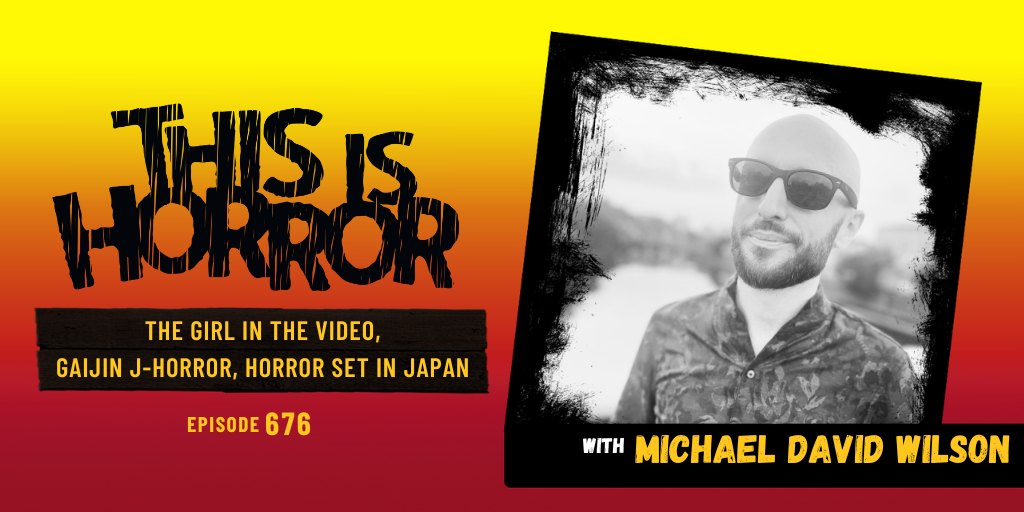
In this podcast, Michael David Wilson talks about The Girl in the Video, Gaijin J-Horror, horror set in Japan, and much more. With special guests Dan Howarth and David Moody.
About Michael David Wilson
Michael David Wilson is the founder of the popular horror website, podcast, and publisher, This Is Horror. In addition to The Girl in the Video, he is the author of They’re Watching (with Bob Pastorella), House of Bad Memories, and Daddy’s Boy. His work has appeared in various publications including The NoSleep Podcast, Dim Shores, and Hawk & Cleaver’s The Other Stories. Michael lives in Gifu, Japan. You can connect with Michael on X @thisishorror or on TikTok, Instagram, and Threads @thisishorrorpodcast.
Timestamps
Thanks for Listening!
Help out the show:
- Support This Is Horror on Patreon
- Listen to This Is Horror Podcast on Apple
- Listen to This Is Horror Podcast on Spotify
- Rate and review the This Is Horror Podcast on Apple Podcasts
- Share the episode on Facebook and X
- Subscribe to This Is Horror podcast RSS Feed
Let us know how you enjoyed this episode:
- Write a comment below.
- Follow us and get in touch on Instagram @thisishorrorpodcast
- Subscribe and comment on YouTube @thisishorrorpodcast
- Follow us and get in touch on TikTok @thisishorrorpodcast
- Tweet us @thisishorror.
Resources
- Michael David Wilson
- Watch the video version of our conversation with Michael David Wilson on This Is Horror YouTube.
- Watch the video version of This Is Horror Podcast episodes, including our conversation with Chuck Palahniuk on YouTube.
Michael David Wilson 0:28
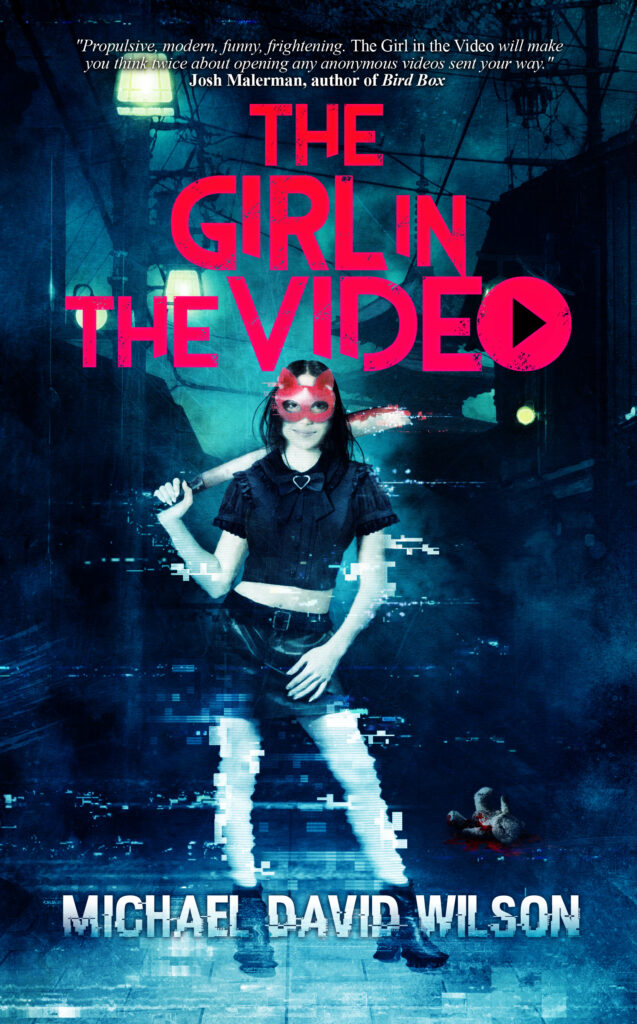
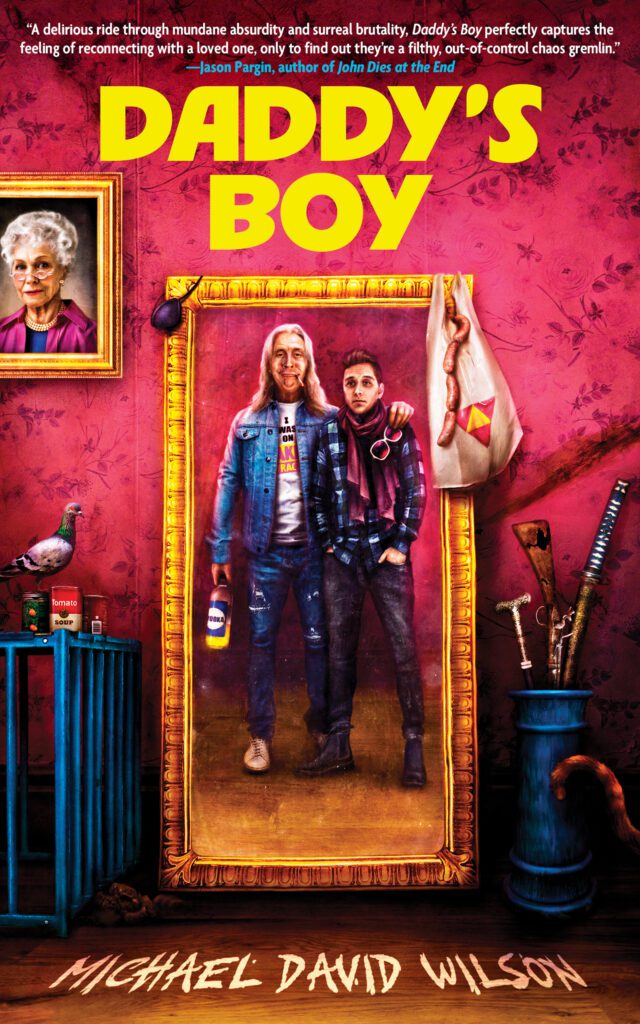
Welcome to This Is Horror, a podcast for readers, writers, and creators. I'm Michael David Wilson, and every episode alongside my co-host Bob Pastorella, I chat with the world's best writers about writing, life lessons, creativity, and much more. Now this week is a little bit different because today is the release of the second edition of The Girl in the Video, and so the interview tables have turned, and former This Is Horror Podcast co-host Dan Howarth returns alongside David Moody and regular co-host Bob Pastorella to interview me. Now The Girl in the video is a new nightmare of Gaijin J horror, isolation, and terror for the digital age. It is the ring meets fatal attraction for the iPhone generation, and a second edition includes the short story Teka Teka Teka, and an exclusive afterward. Now, of course, I would love for you to order The Girl in the Video now from This Is Horror.co.uk or Amazon. And now, for the first time ever, it is also on Kindle Unlimited, so Kindle Unlimited members can read The Girl in the Video, as well as my other books, Daddy's Boy, and they are watching. And with that said, we're having no adverts this episode, just pure conversation. So here it is. It is me, Michael David Wilson, talking about The Girl in the Video and Guyan Jee Horror on This Is Horror.
Dan Howarth 2:34
Welcome to This Is Horror. I'm your guest host Dan Howarth, and tonight I'm joined with the usual co-host Bob Pastorella and special guest host David Moody, and tonight we're interviewing the usual host of This Is Horror, Michael David Wilson, about his upcoming re-release and reissue of The Girl in the Video, is fantastic horror novella, and we're going to dig deep beneath the skin of this fucked up Gaijin J horror novella, and we're going to dig deep into the horror that is Michael David Wilson. Okay, so Michael, I'm aware that you often open this podcast by asking your guests what was their first experience with story, and I flip this on its head and ask you, what was your first experience with this story?
Michael David Wilson 3:31
What was my first experience with this story? Well, that would be Max Boof and Laurie Michel inviting me to submit a story for, I believe it was one of the lost anthologies. I think it was lost. Yeah, it must have been lost films because the idea was that the story that they wanted it it could be anything within video horror or where technology is being used for, I suppose, something foreboding and uneasy and spectral. So it was, you know, much like a lot of these anthology calls. You could really interpret the theme as broadly as possible, as long as it was video or media horror, and so when I got the invite to the anthology and being a fan of the previous anthology they'd put out, Lost Signals, and being a fan of Max Boof and everything that was going on at Perpetual Motion Machine Publishing now ghoulish books. I thought let's submit a story, and so much like Stephen Graham Jones when he gets a call to an anthology, the first thing I did was actually come up with a list of things that I didn't want to include, and that I thought okay. This is all a bit too cliche, and then came up with another list. Okay, what could I include? And I thought we're living in Japan. Setting it in Japan was a great starting point, and I wanted the protagonist to receive these disquieting but slightly alluring anonymous videos, and that that was the starting point. That was the impetus. And as I was planning and then subsequently writing it, I realized that this was going to be a lot longer than the 5000 word limit for this anthology call, and so I I spoke with Max and was asking, well, how long can this be? And I kept checking in with Max, and as it got longer and longer, and in the end, she just said, why don't you submit it as a novella? Why don't you submit it to Perpetual Motion Machine Publishing's novella line? I don't know if that was because Max thought it was, you know, a good idea, or if she just wanted me to stop pestering her about the word count and how much I could get away with, and so that is my first experience with The Girl in the Video. So it went from short story to novelette to novella to now second edition novella with a potential film in the works. So not a bad journey really for something that came as a result of of an email asking if I'd like to submit a story to Lost Films.
Dan Howarth 6:53
Yeah, which to be fair was an awesome anthology as well, wasn't it? Really cool.
David Moody 6:59
So, Michael, that was your first bit of Japan set horror, and pretty much everything you've done after that has been back in the UK again. So, what was it about that story? Was it anything to do with you having? I don't know how how long you'd been in the country when you wrote it.
Michael David Wilson 7:14
Well, I mean, I would say I would say at the moment that I'm alternating between writing things in Japan and in the UK, more often than not, specifically in the Midlands, more often than not, specifically in Kidderminster,
David Moody 7:30
Kidderminster,
Michael David Wilson 7:31
yeah. But for that, for that particular story, I so how how long had I been in Japan, so it came it came out in 2020, but I think it was 2018 that I submitted it. So then I must have written it around 2017, which shows you just how long these publishing cycles can be. So then that that would mean that I had been in Japan for for for like about two years at that point, and I I just I just think that the the isolation that you have in Japan and the like as as a guide, you in Japan, the potential for that, and you know, being a literal foreigner by nature, and the isolation and anxiety that you can feel if you're getting these anonymous and these creepy videos and these videos that are clearly personalized just for you, they're a perfect marriage. So it it was never going to be set in Kidderminster or anywhere else. It just felt like it was the perfect complement to the story. So the location is as much a character as any of the characters, and so you know, I've said that there's a potential film in the works. I've spoke a little bit about that in the afterward as well. But one thing that I think is important for the film, if at all possible, obviously there are a lot of moving pieces. There are a lot of other people involved, but I think it's keeping that setting to Japan because I think if you take The Girl in the Video out of Japan, you do lose a lot of that atmosphere and a lot of what it is that that creates the fear and creates the unease.
Dan Howarth 9:44
Absolutely. I mean, one of the things that I kind of wanted to ask you, and it's I've got to be honest. Like we've known each other a very long time, Michael. It's something I feel like I've kind of neglected to ask you, but you know. You'd lived in the country two years at that point. What what were your early days like in Japan, and how do you think they informed your writing? You've talked about kind of isolation, you know, the culture shock, I guess, from moving from you know from Brian as a Western-facing country to Japan. You know, can you tell us how that experiences, you know, as an outsider almost, I guess, has informed your writing? Because it is infused not only through this book but through every other book. I would say, even the ones that are set in Brian, it's it's clear that your perspective on the world has has grown further than it had when you were just living in the UK. So
Michael David Wilson 10:45
this is one of these questions where the the person being interviewed they say, "Wow, that was a fascinating question that I've never been asked before. And the reason that they're doing that is they're actually stalling for time and trying to simultaneously think of the best way to answer the question. As someone who has interviewed a number of people, I know what's going on there, and there's so many pieces to what you're asking. Because goodness, it's like, do I talk about the writing? Do I talk about specifically my first impression of Japan, and then molding them or melding them together is, yeah, that that is a beast in and of itself because I think my writing really kicked off in a big way after the one story per week challenge that we did Dan for a year, and that was in 2016. But the first time that I went to Japan was in 2014. Now some people are saying, "Hang on a minute! You said you wrote this in 2017, and it was two years, and that's three years. Well, the thing is that I've lived in Japan on three different occasions, so there was a year in Portugal in between, and so when when I first came to Japan, I did it because I wanted to get out of the UK and I wanted to experience another part of the world. I wanted to experience another culture, And so, goodness, when when I came to Japan, it's like being almost overwhelmed with sensory input. You know, you've got the bright lights, you've got the the language which I didn't really speak or couldn't really read at the time, and even train stations and supermarkets have their own unique theme tune and jingle, and everything felt a little bit like being in a video game. Probably because you know companies like Sega and Nintendo and Sony-they are from Japan, so you know I'm sure that has a lot to do with it, but it it was a a wonderful experience, and it was overwhelming at the same time, but almost in a glorious way. So that was 2014. But I I suppose as you live there for longer, then you do realize, like you know, how isolating it can be, or how much potential there is for isolation. And and not only is there a different language, but there are three different alphabets. One of them being the the kanji character system, or there's there's what over 10,000 kanji, but there's only about only about 2000 that are in popular use. So that means that if you see a really obscure kanji, and you you could ask a Japanese person, what does that one mean? Don't know. Well, what what chance do I have? They don't know. They've been living here 20 or 30 years. So I think that there was so much potential again to kind of almost repeat from the last question to to just go into the the isolation and the disconnect, but in terms of how it's informed my writing, I suppose because I was doing the one story per week challenge in in 2016, and I was in Japan at the time, I haven't really not been writing. I haven't really been writing really seriously and not living in Japan. It's a little bit difficult for me to separate the two. I remember that well, you know, whilst I did a degree in English and create. Writing, and you and me, Dan. I think we've had similar journeys in the sense that since we've known each other, which I think was in 2010 or 2011, we have both been writing. But for the first five or six years, it was almost we will write when we have the time. Well, if you say that, then there is no fucking time. You make the time. You make the habit. You cultivate that.
Michael David Wilson 15:30
So, of course, I'd written stories before, but rather than it just being living in Japan, I think it was making a deliberate practice out of writing stories that that led me to to do this with some seriousness, you know, talking about things that are overwhelming. Your question is overwhelming, Dan. This is what I'm getting a taste of my own medicine. This is what I fucking do to people. I throw something out so vague, or sometimes I make a statement and hope that they'll answer it. There's no answer to be given, but I can see that Bob has something to say. So let's see if I fare any better from that.
Bob Pastorella 16:18
Well, I just it seems like that. I mean, as a writer myself, I mean, we we tend to gravitate towards the things that we become obsessed with, and change and uncertainty within change is something that I think that a lot of writers can use that to tap into and and discover different stories, and so I think that that whenever you're you're you're kind of like me when you when you find a new a new thing for you moving to Japan, it it opened it it did. While the actual move itself may have presented some problems, it opened the door to creativity, and being that you were you know writing and doing the story all the time, you know it allowed you to kind of indulge in in in other in some of your other you know I guess preoccupations. You tend to to to write about characters that are fish out of water. You know, you tend to to write about people going through you know tremendous change in their life. You know, you you have this thing with women named Yuki, but you know, talking about They're Watching, but you know the the the the concept of of write what you know you you do it it's it's not like you know write what you know is like well I know my job no no no you it's about it's about using your life and I think that you use that to to the best of your abilities and it's proven to be very very very successful for you I just, I mean, it's not really a question. It's just a comment. It's just you know, a general observation that I've seen in your work.
Michael David Wilson 18:09
Yeah, well, I think you did a better job of answering the question that Dan put to me than I did. So I just field them to you in the future. But I mean, as well, like I, I think, you know, being a horror writer living in Japan, there aren't that many of us about, so I almost felt that it would be a tremendous missed opportunity to not be setting horror in Japan, which kind of goes back to what Dave was saying before about look, I I wrote The Girl in the Video, and then I proceeded to release They're Watching, which is set in England. House of Bad Memories, which is set in England, Kidderminster, Daddy's Boy, also Kidderminster, and I've got another one that I'm working on at the moment. What would Wesley do? Kidderminster. So it's the Kidderminster trilogy. We had the Cornetto trilogy. Now we've got the Kidderminster trilogy. The most underwhelming. So certainly,
Dan Howarth 19:17
certainly not as tasty.
Michael David Wilson 19:19
Yeah, yeah, yeah. You don't want to put that in your mouth, believe you me. But I, I think as quite a few of my short stories were then set in Japan. So, like I said, where The Girl in the Video it had to be in Japan. I think what I've done is I've essentially written the stories that I've wanted to write, and that have arrived to me. But I have felt recently, you know, going back to The Girl in the Video in Japan, and specifically Gaijin Jae Horror, that if I'm not tapping. Into that, then, what am I doing? So it's a it's difficult because I do have Kidderminster based stories that turn up, and if a Kidderminster based story turns up, then I I'm not going to reset it to Japan because much like Japan is a character, Kidderminster is a character. But I think at this point, if I have a kid in Minster story and a Japan story, then I might be more inclined to write the Japan one at first. But it's it's bizarre because I think particularly if you take The Girl in the Video and Daddy's boy, both of them seem to have the potential to be the one that hits big for me. There's things with both of them going on in the background, and in in a way they couldn't be more different. But I feel like my my career is not necessarily splitting, but that something might happen that will depend on whether I am more a dark comedy writer or I am more a horror writer with elements of comedy that specifically sets things in Japan. Maybe I can establish myself as both. That would be great, but we got to see what happens. And and you know the market, the sales, the readers-they did they dictate a lot more than perhaps we'd like them to. And it's a bizarre thing that we've said before, because we can put a lot of worth on the sales, and on the acclaim, and on hitting or not hitting a bestseller list. But the weird thing is, whatever happens external to us, it's still the same bloody story. So why are we putting so much worth on these external things?
Dan Howarth 21:52
It's a fair question. I mean, part part of what I was wondering was whether some of it had come down to the psychology of home, and you know The Girl in the Video, you know was your first certainly the first one that I'd read of your stories that were set in Japan, and then maybe similarly with Daddy's Boy. You know you'd been living abroad for a long time. I wonder if The Girl in the Video was you searching for a home in Japan at that particular point in your life, and Daddy's boy addressing maybe the you know the lost love for the UK and searching for a home in in that respect after many years away. I wonder if there are some parallels there that kind of draw them both into you know being some of your more successful in certain terms or you know certainly creative stories in terms of your output.
Michael David Wilson 22:55
And the concept of home is a funny one because you know I've had people before. I'm trying to think how to phrase this and what specifically has been said to me, but you know that there can sometimes be a bit of pushback having a white British person writing about an experience in Japan. Well, that's why I'm specifically, you know, looking at writing Gaijin J horror. This is an experience in Japan from the Gaijin perspective. But but yeah, like I say, there are some people who they they will feel a bit funny about you know a an outsider writing about the Japan experience, and there's another book that I'm writing where the main character is half Japanese and half British, and you know, at one point, I wanted to make that main character just Japanese, but because it's something that I'm co-writing, there was a big discussion, and the co-writer wasn't so comfortable with with that. Some of the short stories I've written have been all Japanese characters look at the bonus story teka teka teka. So that so there's that element, and I but but I think if I can't write about Japan, then then where can I write about? And you know, then with with the UK, there was another story where I showed it to a friend, and they said, "Oh, some of these things that you're saying happen in the UK. They haven't happened for about 10 years now. That's not actually what the UK is like. And so, I almost felt a paralysis where it's like some people are saying. You can't write about this. Some people are saying you can't write about that, and but ultimately there can be a kind of liberation and a freedom, and it's something that me and Bob go back to, where it's like, look, you can write about anything, just don't screw it up. I think that is a butchering of the Coulson Whitehead quote that Bob trots out every other episode, and you know it is not even write what you know necessarily. It's just know what you write, and so that's you know that's where where I've landed. But then you know, if you almost existentially ask me, God, maybe you shouldn't ask me where is home. I might have a panic attack. I might have a breakdown on the podcast. Like where, where is home? I don't know, Dan. You know, this is this is where I live. I mean, Japan is the nearest that I've felt to home, out of anywhere that I've ever lived. But you know, I don't have so many friends or family here. That's just a reality. So there's, yeah, there is a division where it's like I'm being pulled into England in one direction, pulled into Japan in the other. It's like the the place of Japan is home. My wife, my kids are here, but then other family members and and friends are in the UK. The language that I'm most familiar with is is English is in the UK, so so then there's probably nowhere that I can say fully and completely fits the definition of home. There are aspects of home in both places, but I do know that interestingly, when I was living in Portugal, I got a kind of feeling akin to homesickness, where I was missing Japan, and I felt great regret that I wasn't in Japan anymore. And even when there was a period of time when I was back in the UK, I felt a sickness and a longing to be back in Japan. So, I think we can say that Japan is where I belong. If if we can't completely define home, to answer the question you didn't quite ask,
Dan Howarth 27:33
I think we've been talking so long. I can't 100% remember what the question I asked was, but I do think it's interesting, really. Like I think both of us kind of went through periods of great change in 2016. You know, you're talking about living in Japan and and doing the Story a Week challenge. That's something that I wasn't hugely involved in because 2016 was the year that my daughter was born, and there wasn't a huge amount of writing being done. And one of the things that I think was interesting, so I brought out my short story collection in 2021. A lot of the stories were were written after my daughter was born. It was only when I saw a review, somebody had said, "This is a collection that is about becoming a father for the first time, and I was like, "Is it? You know, you can kind of write something from the subconscious that you know maybe you don't realize you you're writing at the time until somebody points it out. You know, would you say that that horror is your outlet to telling people about whether Japan's home or not, just how much you love and kind of relate to that country. It's it's certainly from my point of view as somebody you know looking from the outside in to your experience living there. Certainly a hugely kind of Japanese-influenced book, and one that I couldn't have written having not been to the country. So, how does that kind of sit with you as kind of a love letter? And do you think there's more more layers to this story than perhaps you know looking back on it as a reissue now, but perhaps you realized at the time of writing.
Michael David Wilson 29:25
So I think that there's a lot of autobiography in every single story that I write, and people who know me can often see those elements of my life coming into it, and sometimes it's very obvious, and sometimes it might just be a little line or a little nod. And so, I've actually found even through writing short stories, if I reread my own work, which I don't do a lot, I don't have a habit of. I'm looking for a good story today. I'll pick up one of mine, but when I do see lines from my work, it can take me back to exactly the place that I was-not even just like the geographical location, but the headspace, the things that I was thinking, the concerns that I had. So, of course, reissuing this and going back through and proofreading and doing some very minor edits to it, it got me into that headspace. And I think what's interesting with The Girl in the Video as well is there's currently a movie version, which I can't talk about too much. But you know, at at the moment, that it it it it is a little bit, a fair bit different to the original novella. And Bob and I had a similar experience with their watching in that we wrote a screenplay for their watching. So then it's almost like Wangon. Which which is the story in my mind? There's two different stories now. There's two versions of the same story, and they almost become part of this wider world. So I would say, you know, through the the current film version that I'm quite involved in, anything that I thought was missing in in the book, I've now been able to kind of update that, but with the book itself, when when I put out the second edition, I wanted it to be an honest reflection as to where I was when I originally wrote it. So there hasn't really been anything that I've changed in terms of the the actual text, even even though my even my writing style has changed a little bit, it's evolved in a certain way. But you know, The Girl in the Video has been my most popular book, so it wasn't the time to rewrite that.
David Moody 32:21
Um, it's really interesting, isn't it? At the moment, one of my short stories has been adapted for film by a chap in in America, and I found it a really interesting process. And just listening to to you speaking now can identify because we're we're back and forth about different ideas for for where to take it. It's a bit different with this one because it's just a short, and we're expanding it to a feature. But I've I've come back from our conversations and thought, I wish I'd thought of that, or maybe I should have taken the book in that direction, or maybe I should have taken a short in that direction rather. And I was interested to hear how much that's happened with Girl in the Video, as it was fairly early work for you, and it's a decade on. You know how how have you reapproached it, and are there things that you you're happier with this time around? Have you made a lot of changes? I guess in the reissue,
Michael David Wilson 33:13
in terms of the actual main story, there's been very few changes. It's a very honest reflection as to what Perpetual Motion Machine put out in 2020. One of the changes I have made, you know, as someone concerned with presentation and esthetics, is that in the Perpetual Motion Machine version there were no chapters, but I've actually put chapters in, so when there's a new day, that is marked as a new chapter, and I, it just, I felt that esthetically it made the interior of the book look better, and it just, it, I just felt like psychologically it gives the reader more breathing room. It it feels more of a complete piece, and moves it more into you know a full book rather than it being a long short story. So that there was that change, you know that this wasn't me rewriting The Girl in the Video. This wasn't me coming up with, you know, the the definitive or the expanded version. This came about because Perpetual Motion Machine Publishing took out of print all of their the titles that were under the PMMP banner. So they they've only got titles out that were ghoulish books, and that that was completely the right decision for them. That's not something that you know I need to talk about. But Max Booth has been very transparent about that. So you can find out more through looking at like ghoulish books and reading about that. But I think in many ways it was a long time coming because the ascetic brand of ghoulish and what they're doing is actually very different to what they were doing when they were PMMP. So in in terms of of the book, and in terms in terms of a reissue where I might rewrite it, that would be something that you know, if a publisher approached me to do that in the future, then I would consider. But it would be a different book. It would be a different story. This was simply an exercise in making sure that my most popular book was still in print. But I, you know, we we have got new cover art from Ben Baldwin, and I feel that is a more honest reflection of the book. It is a more honest reflection of Gaijin Ji horror, and it is a more honest reflection of my intent in terms of what I want to be doing as I write more Gaijin Ji horror stories. It just felt that it really reflected the book better. The original cover by Pypar is fantastic. It's so eye catching, but this one I think it tells you more up front the story that you're going to get, and I think that is that was the right move for this time in my career and what I want to do. In in terms of other bonuses, I mentioned there's the Teka Teka Teka short story, and there's also the afterword in which I primarily talk about the film journey, and I give a bit of a peek behind the curtain because I think you know people don't talk transparently about these kind of things, and I wanted to do that as much as I could, and you know, literally as much as I could. Because the reason a lot of people don't talk about these things is they they don't have to sign NDAs, or there are just things so in progress that it's ill-advised to be talking about them at this moment, but you know, I had an opportunity with the the first film adaptation essentially lapsing, and now us being on the second is like right. Well, I can talk about the first now because that's all Dan, and yeah. there was a point where I wondered about because it was just about putting keeping it in print. I I asked Pie, and he even said I could keep the original Pi part.
Michael David Wilson 37:54
The original Py part-that's his fucking name-the original cover art, and then I could have literally just almost put out the exact same book, but I thought if I'm gonna go to the effort of reissuing it, I want to be able to deliver something extra for the reader, and I think as well in giving it the new cover art, in giving it the afterword, and in giving it the short story, not only have I given people a reason to buy the second edition, but I would assume I have now added value to the first edition because there's now a much rarer item. You can't get, you know, that first edition with that cover art anywhere else apart from now picking up a second-hand copy via PMMP. I don't think there might be somehow a new one still on Amazon.com. So
Dan Howarth 38:56
eBay, yeah. I I've got a bit of a question for Dave there as well, and for for Michael too, because Dave is currently in the process of reissuing Hater 20 years after the the first the first issuing the first edition of it. So what? This is a question for both of you, really, because I'm not that far down kind of my author journey to the point where I I kind of need to do that with any of my books, or have felt compelled to do so. When you come into approaching that as a book that's already been out, what what are your thoughts in terms of you know adding value, improving kind of the the product, I don't necessarily mean changing the story, but also kind of you know in terms of where you draw the line of of what value, what changes you want to make, what you want to add to it, because. You know, I think we're we're all there as writers, where you know you could get to the end of almost any story and think I could keep going back and keep going back and keep going back and never truly finish anything. So, so what's kind of your approach, both of you, really? I would say to to kind of bring in those those stories and those books back to life and aiming for a new readership with them.
David Moody 40:25
It's been for me. It started off as really a tidying up process because I'd released quite a few independent books over the years. I'm not not talking about Hater here. I'm just talking over the last few years I released some of my older standalone books. I re-released them, so Strangers and straight to you, I completely rewrote because similar to what you were saying earlier, Michael, about how no, sorry, it was you, Dan talking about how people could tell that you you were this book was written by a parent. I wrote straight to you when I was just a bloke living upstairs in mom and dad's house and no life experience whatsoever, and then looked at it again 10 years later and thought, "Good grief, that's terrible, and had to redo the whole thing. But I, but in the other re-releases, I've I've I've really tried to add some value, so I've wanted to go back and and do complete re-edits and add new stories and things like that. But I'm also very mindful of not going down the George Lucas route too badly, you know, and just adding tweaks for the sakes of tweaks. The hater thing for me is a little bit different because you know it's my biggest selling book. Fingers crossed, we will see some real movement on the movie this year. I've shared something with you recently, Michael, about an interesting development on there, and things do seem to be moving, but it just seemed that 20 years was was too good an opportunity to miss. So I thought I'll re-release that. I got agreement from the the publishers at St Martin's Press in America to do a very limited run, but I've I've really gone for it. And this one is an illustrated version. There'll be illustrated endpapers. It'll be a fancier production in terms of the hard cover, be like foil backed and sprayed edges and all that malarkey. But also some extra stories as well, and a kind of essay about the behind the scenes of it and how it affected me and how it's how it look how it feels to me 20 years on, so that was a very different experience. But you know, I'm I'm I'm getting old, so I've got that kind of gap between a book being released and and today, and it's and it just seemed like a a good thing to do, and hopefully earn a few quid in the process because we've got to eat, you know. So I don't know about you, Michael, but it's a it depends on the project, really. I guess is what I'm saying and how I approach the reissue.
Michael David Wilson 42:45
It's interesting that you know, for me, I've I've gone from the start of this year having no re-releases to now I've got I've got two re-releases because of course before this girl in the video second edition, Thunderstorm Books put out a limited hard cover of Daddy's Boy. So you know that that that's I guess in a way more akin to what you're doing with Hater because it's not replacing the original edition as such, but it's this is deliberately marketed as a premium product. This is limited. This is going to have the price tag to match, and so yeah, I think when when you know that you're going to be charging a premium price as well, that's a little bit different than if you're just reissuing the paper back in the second edition, so then with that again we have new cover art again by Ben Baldwin. So he seems to be like my reissue cover art guy, and there is a introduction from David Moody, which is in the Dan again. Yeah, so so we've got the introduction. We we have the story again, very similar. You know, probably even less tweaks than with The Girl in the Video, and then I wrote an afterword, and and the the time when I was writing the afterword, like I wasn't sure what am I going to write in this afterword. And then, unfortunately, my grandfather passed away at the grand old age of 95. So it's you know it's remarkable you know that he lived so long, but he yeah he's the kindest person I've ever known. He was so instrumental and encouraging in terms of encouraging me to to be a writer. To follow my creativity, and he just really modeled to me what it is to be a good human being, a kind human being, a compassionate human being, and so I thought the afterward. It somehow I decided I'm going to tie in, and afterward to the the crudest dark comedic book I've ever written. I was just going to say tribute to the kindest person.
David Moody 45:32
It's it's ironic you saying that when you've written a book full of absolute deplorables.
Michael David Wilson 45:37
I know, I know. So it it was almost like approaching the impossible. You know, any other book would have been better to include a tribute to my to my grandfather in, but you know that that was how the cards were dealt. That was the order that it all happened in, and you know from the feedback, including I, you know, I've even I've sent it to family members, but I've um I've omitted the only thing I've omitted from the version to the to the to the family members is the strap in or strap on. They don't need that. Also, they've not read Danish voice. So, what what the fuck is he even talking about? For people who haven't read it, that you know, there's a lot of dick jokes. There's a lot of innuendo. But but but the feedback I get is that the afterwards somehow I pulled it off, which again is a dodgy thing to say when talking about Daddy's Boy, but yeah, I was going to say I nailed it. You can't say anything when it comes to Daddy's Boy. I did a good job, is what people have told me, and then also, you know, because in in for the Daddy's Boy Special Edition, it was like, what what can I do that that will really add value? And that that's what I try to do when reissuing something. I'm not going to throw something in for the sake of it. It has to add value. There has to be a point. It's not about you know inflating the page count or being able to say you did something extra. That's why it was so difficult to write the afterword because it needed to count. And so the thing that I came up with and was to have a glossary because there's so many bizarrely British terms, there's so much euphemistic language. There's also a lot of references to obscure British celebrities like John Fashionu, like Rolf Harris. Oh, don't mention him on the podcast. Well, it's happened now, hasn't it? Cancel me, no, please don't. But anyway, this is the kind of awkward tone that if you like this, you'll get something like that in Daddy's Boy. But yeah, people in Daddy's Boy, particularly when when I'd been interviewed as well, they didn't know some of the terms, and I thought this is an opportunity to include a hopefully amusing glossary. So, yeah, those were the additions to to Daddy's Boy. But the rule is only add something if it will add value. Don't add it for the sake of it. That's the approach.
David Moody 48:41
I agree completely. Yeah, I think that the glossary is really important as well. I had an experience a few years back when I was talking about the black country, which is, you know, it's for for anybody who's from the Midlands, you know that that the like the whole the Wolverhampton, Sandwell, all of that is the black country because historically it was very built up and industrialized and was covered in soot. But I had somebody take exception because they weren't aware of the nuances. So we joke about the sweat about your glossary, which is very comprehensive, I must say. But it has a it has an important point as well, and I agree with you completely. It adds value, and that's the thing. I would never put something out for a second time if it wasn't substantially different. It goes against everything that that I've I've done throughout my career. I mean, this is that I I hate the idea of people buying more than one format of one of my books. So I I have this little system on my website, and if somebody buys a print edition, they can go to a certain page, look up a page in, go to a page on my website, look up a page in the book, type in a certain word that's on there, and get a free ebook edition. Because it just, I really don't like the idea of people having to buy that and then the audio book and then and now another version of Hater. So it's. Just about, yeah, not not not burning your bridges with the readers. I think.
Michael David Wilson 50:05
Yeah, yeah, I totally agree, and I've done things like that before. And in fact, and this wasn't a planned plug, but you know, if people buy The Girl in the Video via This Is Horror, and they buy the paperback, then I I will send them the audio book, which is the original audio book narrated by R. J. Bailey, and then I will send them the ebook as well. And I know that me and Dave have had this conversation for years now. It's like, look, if you've bought the book, we want you to experience the book. We don't want you to have to, you know, buy the other format because you've decided that's how you want to have it. So buy the paper back, and we'll give you the rest.
David Moody 50:53
Yeah, absolutely.
Michael David Wilson 50:55
This is horror.co.uk. You can buy The Girl in the Video now.
Dan Howarth 51:00
It's those kind of bonuses and kind of that kind of customer forethought that sets indie publishing apart from traditional in many ways as well, doesn't it? Really, you know, it's you know in the in the kind of cruel world of traditional publishing, it's pay me once for each format and you know pay for those in a lot of cases. So to make it accessible to readers like that is something that we, as kind of you know indies, have the flexibility to do, and looking after those readers as well. I think you know to offer something new to people who, you know, everybody on this call, you know Bob, Dave, myself. We we've all read The Girl in the Video. You know there's going to be people on here who have known of you for a long time who, you know perhaps for whatever reason haven't got round to picking up The Girl in the Video. Well, now's the time, and to be able to get it in a number of formats for the same price is is surely appealing. Like you know, for example, got here still unpacking two copies of Solace House by Will McLean, who is an awesome author. I end up buying it on Kindle because it's an unwieldy hardback, and I have a habit of falling asleep while reading, and I didn't want to knock my teeth out with an enormous hardback book when I could, you know, fall asleep reading my Kindle. So picked it up for 90 9p as well. But to encompass those kind of media within one purchase is, you know, is a is something to be promoted really, particularly when the audio book is as well read as and as well produced as yours is, Michael. It's you know really really good piece audio fiction. There,
Bob Pastorella 52:47
I really do appreciate any any any writer who puts out and gives a reader opportunity to get the book in whatever format they want. I tend to do a lot of of ebooks simply because I just don't. I live in an apartment. I don't have the storage space for for paperbacks and hardbacks. I do have some, but a lot of that stuff is in storage right now. So it it it's just because I just don't have a place to to put it. And with, I mean, I just noticed a new book that's coming out from a big big name publisher, and the ebook is $20. There's no overhead on an ebook; it's a file. So, I really, really do appreciate when people give a You know, reader. Another alternative: you buy one, you get you get it all. That that's to me. I think that is what you should do.
David Moody 53:49
I remember having that argument when Hater first came out, when it was first published by anybody other than Infected Books, because I was selling the ebook for a quid or whatever it was at the time, and suddenly it's it's I think it was $10 or $12 something like that, and I got straight onto the my editor and said, "How can you price it like that? Oh, overheads. Oh, we've invested in 50,000 print copies or whatever we've done. But ultimately, that I still feel that that stops your work getting out to as many people as possible. I tried to get the rights back from some of my books that are with St Martin's Press recently, and they they wanted to hold on to them, so I haven't got them. But what they did say is we'll we'll just we'll reduce the ebook prices for a bit, and and and it's really interesting to see how many books flew off the shelves, the virtual shelves, when they slashed the price from $10 to $2, $3. It seems like false economics, and you'd think that by this stage, I I think that when e-books are so prevalent, that publishers, that even the big publishers, would be taking a different a different approach. But then as. Well, I guess that that that they they benefit from marketing it when they do drop the price. You know, that's a special event for them, and it can get on the Amazon daily low price email or whatever. You know, it's it's a it's a way of of extracting more. I think.
Bob Pastorella 55:18
I think a lot of us subscribe. I've subscribed to BookBub, which definitely helps out. Where you can get books for two or $3, and they have you know new releases, overleases, things like that. You know, it's funny too because who would have thought I'm a I'm a the only there's an author that is pretty much now nobody really likes her anymore. J.K. Rowling, when her original contract did not include e-books, the publisher. It took them a while to realize how fucked they were, you know, and that that was really kind of savvy because from what I read, it was like, can she? You know, she basically said, "Can I have all the electronic rights? And they're like, "Yeah, nobody's going to do anything with those. Wrong answer. So, if they could, if they could have like continued to believe that, that would have been really good. It's like, man, what's the deal with these writers and their electronic rights? It's like, well, we just give it to them. That's fine.
Dan Howarth 56:25
Then those days are long, long gone, Bob, aren't they? Let's face it. I think it raises like an interesting point for you, though, Michael, because you know you've much like myself. We've got kind of those aspirations to be traditionally published, and those are the standards that we kind of set for ourselves. So when it comes to you, you know, being in charge of publishing, you know, your own work, what kind of standards do you set yourself in terms of the quality of of the story, but also the quality of the output that you kind of you know in terms of be it the physical or the audio or the electronic copy. Like I think that that's something that you know certainly was one of the things I took from our friendship early doors was that you know you set extremely high standards for yourself. So, how does that translate into, you know, this reissue?
Michael David Wilson 57:27
I've mentioned this before, but this is actually something that comes from an early conversation with Dave, and it may have even been the first one. But when Dave was talking about independent publishing, and when he puts out a book via infected books, the standard is that he wants the book. If it's next to other traditionally published books, you cannot tell which is the indie book and which is the one that has come out via the mainstream publisher, and so that was something that Dave said over a decade ago now, and that is something that has always stuck with me, and that is my standard. So, you know, the the first calling card is the cover art. That is why I am so particular about it. That is why I don't skimp on the cover art. That is why, if I need to, then I will go back and forth with the cover artist, much as I will with edits, much as I will with anything. Look, Dan knows particularly how bloody pedantic I am. In fact, I think you all know how pedantic I am, and so that absolutely
Dan Howarth 58:45
you're an absolute bastard for it, Mike. Right, I've got any corners.
Michael David Wilson 58:50
But also, when I do this to other people, I do it even more to myself. So, if anyone's had an annoying experience with me, everyone listening is like, yeah, yeah, I've had that. Then it is nothing compared to the high standard that I will set myself, and how pedantic I will be with my own releases, with my own work, and yeah, if you know, it is. I have annoyed people before with how high my standards are, but I just I can't accept that if there's even a minor error that it will go out like that. I just it doesn't sit right with me, so it has to look the part. It has to be indistinguishable from a traditionally published book, you know. And and I've said before, I said on the Ark Party, which you mentioned previously, Dan. There was one of my books. It was going to come out. With a different publisher, they'd left some widows and orphans in. You know, meaning a a word dangling on a line on its own, either at the top or the bottom of a page.
Dan Howarth 1:00:13
Criminal, yeah.
Michael David Wilson 1:00:14
To me, yes, yeah,
Dan Howarth 1:00:17
no, I agree.
Michael David Wilson 1:00:18
And and so I said, "Look, you you can't do that. And they said, "Well, this is the way we've always done it. And I said, "Well, this isn't how a professional publisher does it. And if that's a deal breaker, then I'd like the rights back. And it was a deal breaker, and I got the rights back, and you know, put it out with a different publisher, and it's a better story because at the time it was a novella. It was then expanded into a novel. His House of Bad Memories. There you go. You can Google it and find out the rest of the the history. But I, you know, I I take what I'm doing very seriously. I don't see myself as a hobbyist. I don't see myself as an amateur. This is, you know, writing stories is the most professional thing that I do. It is the thing that I take the most seriously. You know, I take it more seriously than the podcast, and I have fairly high standards for the podcast, but when I was growing up, I didn't think, "Oh, I'd love to be a podcaster. No, I mean they didn't exist, so that would have been weird. But I wanted to be a storyteller. I wanted to be a professional author. So, yeah, that that's that is the standard. That is what I do. And so, in terms of the The Girl in the Video, any editing was just if I note if I noticed there was a comma that I didn't quite agree with the placing, or if I thought a comma needed to be inserted, or a little end dash here, something like that. Dan knows all about my n dash m dash hyphen history. I think I fucking gave him nightmares for years over that. But it's all about
Dan Howarth 1:02:11
still in therapy, Michael. Yeah, and I was edit.
Michael David Wilson 1:02:15
You know, I can't I can't cut corners and I can't do things on the cheap. And if that is going to be the case, then I'd rather not do it at all. It's either I do it to the best of my ability, or I don't bother. And you know, I've I've always put things out in audio book as well because I love audio, and I I do believe that it is a growing medium, but you know I haven't had that many sales in audio comparative to the cost of putting out an audio book. So if I independently put out another one of my novels, I don't know if I'll put the audio book out because I don't know if I can justify the cost, and that's a really like shitty position to be in. But you know, we're we're we're always having this struggle between creativity and the art and commerce. If this is more than just a hobbyist, like I, I want to have this as my full-time job. So, you know, do I put the audio book out because I love audio books, but know that this is like a personal loss, and then I just have to almost view it as if I'm going on a holiday, but I'm just actually sitting in my office annoying a narrator as I make pedantic little notes about. Oh, I think you didn't pause for long enough here. Well, we can't work together again. But I, yeah, I don't know. I might not be able to do that, and I've said before. I mean, I I think hopefully going forward, I will be able to have a literary agent, and I will be able to be with a publisher and not putting things out independently because the thing I want to do at the moment, I just want to write. There's so much that we have to do when you know. There's so much even as just the writer, but when you're the publisher as well, you know, marketing the accounts, the social media presence, it it takes so long. And I, you know, when I look at the end of my life, I want to see all these stories that I wrote, not that I spent hours meticulously putting together fucking TikTok videos. You know, at the moment, very current. But I've noticed on Instagram people just putting up like, here are the five. The 10 books in this obscure category. Here are the the 10 horror books you should read if you like Japanese Japanese samurai swords. Or here's the 10 books you should read if you like walking in the forest. Here's the 10 books to read if you on the toilet doing a number two. It's ridiculous, and I don't. So many people are jumping on that bandwagon, and I don't even fucking blame them because we all want to make money, we all want to be seen, but it doesn't seem like it's a terribly fulfilling thing. And probably at the at in the moment when I would be putting something like that together, I would be hating myself. So, you know, a rule of life is the less you can hate yourself, the better. And it's it's just nutritionally devoid work. There is no substance. There is no intellect. There is no joy to be had. I sometimes probably when people read things like Daddy's boy, they might think this is a ridiculous thing to say. But I want to be putting things out of worth and of substance. And as many fucking dick jokes as there are, I fucking sweated over every dick joke, and I really made every word count. There is not a single word that is unintentional. Every decision I have meticulously made. So, anyway, that's can I just
Dan Howarth 1:06:40
say, Michael? I'm really looking forward to the day the the film version for The Girl in the Video hits, and this gets you know this book gets picked up or advertised or whatever, and you have to dress up and dance on TikTok or something, and we can pull this clip and just really, really enjoy those moments. I personally, I hope you hit it big for many reasons, but I think that is actually very close to my top reason now. Just to see you have to go through that promotional grind and know that I can see in your eyes, all the time you're dancing on TikTok, that you are dying inside. That will make me, as your friend, so so happy. I
Michael David Wilson 1:07:30
just, I don't believe in doing anything inauthentic. And as I'm saying that, I'm imagining now, like you know, years to come. Get that clip. I don't believe in doing anything inauthentic. Then it cuts to me in a fucking Hello Kitty mess. Nobody fucking see that, you know. But it's no, I'm. I mean, I think part part of the reason that it that it is often so sad and so depressing for me personally. Is so you you could spend all this time putting like you know the the perfect TikTok together, and then hardly anyone sees it. So so it's like so I wasted all of that time and nothing happened. But Dan, if I've got a mainstream publishing deal and they're like, "Wear the Hello Kitty costume, you're gonna get the equivalent of so many 1000s of pounds. Well, now that there's a literal payoff, so I guess what I'm saying is, like, look, I'll sell out, but it better be for a good price.
Dan Howarth 1:08:46
Yeah, yeah. You have my rules, we'll sell them. But I think this is quite an interesting, like, parallel with the story itself. You know, it's the the book is a comment on social media and the digital age, you know, in and of itself, yeah, it's fascinating to kind of hear you talk about the promotion of it when so much of the story is based around you know those awful black rectangles that dominate our lives. It's yeah, I mean, there must have been some genuine real-world anxieties that filtered into that book because I must admit, when reading it, they yeah it kind of surfaced in my mind at the same time.
Michael David Wilson 1:09:33
Yeah, yeah, and I think it's even more relevant now with the rise of AI.
Bob Pastorella 1:09:39
Definitely,
Michael David Wilson 1:09:39
you know, and well, I mean, if I was writing the story now, it would be a different story because when you're getting these personalized videos, of course, it would come into your head that maybe this is AI, maybe somebody has, you know, they could quickly search. My profile, without even properly searching it, they could come out with what seems like a more personalized video. So, in a sense, The Girl in the Video is scarier for being set at a time where you didn't have access to that, because then is there's much more likelihood that somebody has literally stalked you, gone through all your videos, found out all this information. But then there's an argument that it's even more terrifying now because fucking anyone, even someone who doesn't know you, could make it seem like they do. They could have a very personal insight into your life, and I think, you know, the obviously the moral of the story, and we've said for a long time, you know, be very careful in terms of what you put out online, and you know that that is something that I'm I'm I'm careful of, and I I I would say that I've been more private online about my personal life after after I got divorced. I can say after my first divorce. That sounds like a second one's coming if I if I say that. But you know, so so I don't. I haven't put any photos up of me with my wife, I haven't put any photos up of me, you know, with my kids since since the divorce, and I'm just a little bit more guarded as well. So, of course, I put myself out here on the podcast in video form every week, but beyond this little rectangle, you don't get a lot of of my private life. Although, although I am, you know, I guess honest, vulnerable, authentic in talking about it, but I, you know, my limit is putting like photos and videos up for public consumption, and we all have to decide what are our lines, and we all reserve the right to change the rules and change the the way that we operate and we publish things on social media at any given moment. But there is there there must be for a lot of people a conflict because then we're fucking rewarded by putting our most intimate, or hopefully not our most intimate, but a lot of our private moments online. But some people are rewarded for their most intimate moments. Like if you have a good OnlyFans profile, then cash cow.
Dan Howarth 1:12:45
And is that like when you? I mean, you're talking about the evolution of you know social media, the evolution of morality. I would say perhaps within the last 10 years since this book was written. So you know you've you've talked pretty often on in interviews and on the podcast, and certainly within the afterwards of the book about the development of the film, being involved in that was that something that you kind of considered in terms of how perhaps the story could hit differently, you know, now as opposed to 2016, 2017 when it was written, because 10 years on from that, you know, people are, you know, 1011, years more online, if you will, than they were at the point that you wrote it. You know, you talked about it being more relevant. How did that play out when you were going through those discussions about the film version, and and did the change in technology and the change in people's views towards it factor in when you were having those meetings and those calls about the film version?
Michael David Wilson 1:13:56
So this is where I have to be a little bit careful because the Question is now really relevant to the second iteration of the film version, rather than the first one, which I can publicly talk about. But the easy way to answer it is yes, that absolutely has factored in, and I feel that the film version and vision at the moment is the truest and the best form of The Girl in the Video for this current generation. I and I think that the team that is working on it is the best possible team. If this is made into a film, which you know we hope it will be, but you never know with Hollywood, then then I will be very happy. I have not been happier than where we are with the film right now.
Dan Howarth 1:14:56
That's good to hear. And as somebody who's looking forward to seeing it hit screens. That's more than encouraging. I think it's fair to say.
Michael David Wilson 1:15:04
Yeah,
Dan Howarth 1:15:05
Bob, you had your hand up a little while ago. Do you want to chip in? Sorry, mate.
Bob Pastorella 1:15:10
Oh, that was that was back when we were talking about the M dash. And yes, yes, I've I've had my experience with that. I know exactly where to find all of the symbols now on the Dositar website, so yes, Michael instructed me properly.
Michael David Wilson 1:15:28
Glad to hear that my instruction was not for nothing. Yeah, yeah. I've I've annoyed numerous people, as I said, with the n dash m dash hyphen distinction, but but again, I do think it's important, you know, get it right and see it. Next question.
Dan Howarth 1:15:53
Anyone else? So you wait. I chip in.
Michael David Wilson 1:15:56
I'm looking at your quarter of the screen, Dan. Even though
Bob Pastorella 1:16:00
you
Michael David Wilson 1:16:00
can't tell.
Dan Howarth 1:16:01
I think one of the things that I'm interested in is, you know, you kind of touched on it before when we first started talking, probably 2010, 2011, around that time. I think we both freely admit now. Both of us talked more about writing than we were actually writing at that particular point in our lives, and things have changed a lot for both of us since then, and for the better in terms of our output and those kind of things. But what I'm interested in is, you know, when you look back now, almost 10 years later, on having written this novella, the novella that has kind of launched you as a writer. What has changed in terms of your process, and what has changed in your approach to story, based on you know you looking back at yourself all those years later? I'd be I'd be fascinated to see if this process has led to you learning more about yourself as a writer and and things that you do or might want to change moving forward in terms of your writing.
Michael David Wilson 1:17:09
I mean, in terms of changes, I think right now I am writing the truest to me and my vision and who I am, and I think if you look at The Girl in the Video, I was dabbling a little bit with the humor and my comedic side, and then you've seen Daddy's Boy, and that's what happens when it's fully unleashed. I think as well, when I was writing The Girl in the Video, I was more conscious of and mindful of writing rules, whereas now I would say I have the experience to know the writing rules and to consciously decide when I'm going to break them. You know, there's a scene in House of Bad Memories where there's a very long-winded conversation in a car, and some beta readers, possibly including you, Dan, picked up on it, and they're like, you know, I'm not sure if you can do that, and you know, it's a bit awkward, is it? But but that was the effect that I was going for, so I I think as well like I've always enjoyed things that are dialog heavy and I have for better or for worse and different reviewers will have different opinions on this. I have lent much more into the almost Tarantino esque long winded conversations, but every conversation, as long as it is, it will have a purpose. You know, each line in my mind is necessary. Either it's advancing a character, or it's creating tension. It's showing us something, so we never have what Chuck Paulanik terms as ping pong dialog, it's always advancing. It's not just throwing the words back and forth. So that is a way that I've changed, and yeah, that that was something I was very mindful of with The Girl in the Video. It's something I'm a bit mindful of now as I'm expanding my novella. What would Wesley do into a novel? That like now I I include kind of richer conversations, conversations that are certainly longer, but I think for the better, but it's interesting too because then The Girl in the Video is the most commercially successful. So I I wonder if my more honest, authentic style to me is not what the general reader wants. But at the same time, that is me, so that is what you're going to get. But there's almost there is a cruelty if me being me then doesn't see the commercial success of me being slightly more restrained. I think in terms of other changes back then, I was writing things that were more novellas. These days, most ideas that come to me are in novel form, so I'm much more comfortable writing longer stories. Back then, I was just getting my writing routine, but you know, you mentioned 2010 and 2011, and we weren't writing as much as we wanted to. My drive to write has always been there, but I think there was a fear. There was a fear that deepened when I started doing this as horror podcast because I I felt I'm interviewing all these legends of horror and all these accomplished writers and there was a fear of me putting something out in the world and it just being disappointing you know it's like you've interviewed Adam Neville and Ramsay Campbell, and this is what you're presenting. Particularly when I knew that esthetically, with the comedy, with the dialog, it's very, very different. But for for some reason, probably the the one story per week challenge and people responding favorably to it, I don't know. For better or for worse, I I am gonna put these stories out, and I became free of, I suppose that prison, that prison of doubt, that prison of rejection. Whereas now maybe people won't like it, but but fuck it, I I like it. I'm glad that I wrote this, and so back in the day, I would procrastinate and I would do anything but write. Whereas now, I feel it's actually the reverse. Probably it's better to have a balance, but now I will write at the expense of almost anything else, as I say, probably better to have a balance. But if I had to choose between one extreme, I'd rather be procrastinating through writing than procrastinating through anything other than writing.
Michael David Wilson 1:22:36
So now I'm writing every day, and and like I said, like I, I, you know, I'd rather be writing than doing all the kind of marketing and the writing tangent or things. Podcasting is my favorite type of writing because it doesn't, it doesn't feel bullshit. It doesn't feel Inauthentic, coming up with a listicle, coming up with a Instagram recommendation of books. I mean, if not inauthentic, then it's inefficient. Why do I need to put a fucking picture of the secret dinner in Kemberton when I can just write in a blue sky post, you know, these are my two favorite books of the year. There you go, 30 seconds, 25 minutes to put that in an Instagram post. Tag everyone. What am I doing with my life?
Dan Howarth 1:23:39
As long as you're telling people how good Kemberton is, I think you're onto a winner, no matter how you do. Cheers,
David Moody 1:23:44
guys! Thank you. We did this last time, so so yeah. I'm just chipping in now. Now
Dan Howarth 1:23:51
I've got a microphone for this one, but yeah. Bob, you had your hand up before. I think you you had a a question while Michael was.
Bob Pastorella 1:24:01
Well, it's just a comment that, and it's it's been you know really fascinating to to see, but I I didn't know, I didn't realize that you had this this fear, um, and so you know that that really comes as a surprise to me, and I love how you you overcame it. You quit self rejecting, and that's you know I think that's something that that every writer goes through a stage, whether it's at the beginning, it can happen at any time, where we we we begin to doubt Our abilities, and when we really shouldn't at all, you know, we should we should embrace our work fearlessly, and that that self rejection, it's it's it's a bad thing, you know. I recently went through some of that, and so now you know I'm kind of like you know I'm give I've given myself permission to write as shitty as I possibly can, and and it's it's not shitty at all, but you know just you know just just to get words on the page, because you you got to write. That's that's the whole thing, and you don't know what you have till you till you till you write it. And so, don't just if anything, don't self project.
Michael David Wilson 1:25:32
Yeah, no, that's not something I do anymore, and and I think as well, I must be good at projecting confidence because also there was something recently with with Dan where I was feeling the pressure about a written project that I had to submit that I have to skirt around a little bit because I can't talk about it properly and there there was a little bit of doubt as to how it's going to be received and you know Dan said that was quite surprising for him because he said he'd never really heard me, you know, at least in recent years, have any doubt about you know what I'm doing or what I'm submitting. But yeah, I I guess like like a lot of people, I can have initial doubt with something new until I then get like okay something positive back or it's not as bad as I feared. Yeah, it was weird in a sense, I suppose, that I had this English literature and creative writing degree, a decent degree from Warwick, but I but I was worried that everyone would think, you know, oh, you can't write well, and then, and then that was going to be the end of me. That was going to be the end of this as horror, you know. I remember too because I started this as horror in my 20s, and then I'm, I'm talking to nearly everyone is much older than me, almost feel in some doubt about my age, or like I'm an imposter. I I think like I think I've felt doubt about a lot of things, but I just have to kind of push it down. Or it's not even as simple as saying, you know, I strongly feel doubt. It's like it's like there's two fucking voices, not in a kind of the shining "I'm about to murder my family" kind of way, but you know you've got the the one voice being like, "You're not good enough. You're an imposter. What the fuck are you doing? And then the other saying, "Shut the fuck up! I'm doing a good job. You know, he is. I've got like four novels out or whatever, and just providing the evidence. But it can be a constant to and fro, and so you know the the next thing on my kind of to do list or my white whale list, Dan sometimes puts it is to either have this have one of my books made into a film, or to get picked up by a publisher or literary agent. But like I said at the start, is it is funny that these external things are what will ultimately validate me, and and I'll still be writing stories either way. But you know, I I think it's because you know we we do live in a capitalist society. We do live in a society where money is needed to function, and I want to be able to provide not just for myself but for my family through writing. That's what I want to do. And you know, I spoke about in my 20s I had some imposter syndrome because of my age. Now, ironically, having just turned 40, I feel more pressure. Like, come on! You've been writing for years. Where's the fucking result? Why aren't why aren't you completely comfortably doing this full time? There will be writers who are doing it full time. Who are like, I've got bad news for you. Completely comfortably might not be how you'll ever be able to describe.
Dan Howarth 1:29:21
I think I can pass on a new anxiety to you, Michael, because I'm a year. I'm a year older than you, and you've just turned 40.
Michael David Wilson 1:29:29
Yeah. One
Dan Howarth 1:29:29
of the things I've thought about pretty much every time I sit down to write, particularly a news story, since I turned 40, is fucking hell. You might be dead soon. You need to get all these written. So there's a pressure to choose the right book to deliver it well, to make sure that you're doing every story justice, because you know you're now on the other side of that kind of midpoint of your life. If we're you know if we're lucky, we'll get 80 plus years and. Hopefully, we'll all get as many years as as your granddad did. Yeah, live to a good age and fair play to him. But yeah, you kind of sit down, think, you know, in your 20s, you're like, ah, shit, I don't know if I can validate this. I don't know if I can, you know, speak to the experience that I've had and all those kind of things. But sit down in your 40s and think, fucking, I've got to make this one count because you never know how many more there's going to be. So there's a new anxiety to pass on to you every time you sit down. But yeah, I just sit down and and write and think, yeah, not today. Doubt you can fuck right off, and that's usually a pretty good way to start the day, in my opinion. But yeah, just thought I'd pass on that little little nugget of misery to you to celebrate your new book coming out.
Michael David Wilson 1:30:51
Yeah, I I mean one of the wonderful things about doing the This Horror podcast is getting to talk to all of these writers and these experts, and even little comments that maybe were meant as just innocuous, or they were meant as just a straight answer to a question, like Dave talking about, you know, the standard that he sets with his independent books. That one line I can remember for the rest of my life, and so when we were talking to Craig Clevenger, he spoke about how he puts everything into the book that he's writing as if it's his last, and that was very effective for me too because I think you know there there might have been a point where I felt like, oh well, I'll hold this back for the next one, or oh, I won't put this joke in this particular book, or I might not explore this issue. But it's like, no, if this is something I want to explore, then and and as a vehicle in the story that I'm currently writing, then bloody well get it in, write the book as if it's your last, and then as a kind of another point in terms of things that have stuck with me, I don't even know why. But at some point when Bob was talking about doubt, he said you have to fake it till you make it, which is obviously such a kind of cliché thing, but I don't know. He's he's absolutely right, and that's what I do. Any moment of doubt, I will fake it till you make till I make it. And also, Tim Ferriss said a similar thing. It's like, let's say I don't think I'm a good teacher. Why don't I act and do what I think a good teacher would do? So it's it is the fake it till you make it mentality. Is like right. What would a good writer do? Do that. What would a good teacher do? Do that. What would a good learner of Japanese language do do that, and if you fake it till you make it, then one day you realize you're actually not faking it anymore. You're just making it.
David Moody 1:33:14
Yeah, I just wanted to pick up on the age thing. Having been round the block a few more times than you sprite the chaps at the bottom of my screen, I haven't asked your age, Bob. So I think you're you're probably closer to me at 55.
Bob Pastorella 1:33:27
I'm 59.
David Moody 1:33:29
Are you 59? Well, you're looking good on it. Yeah, good looking
Michael David Wilson 1:33:32
59. If Bob had said he was 49, I don't think anyone would have questioned it.
David Moody 1:33:39
No, that was very impolite of me. That was I wasn't that wasn't what I wanted to do. I just ask your age. I was just going to say that I think for me, the age thing has been a kind of a positive thing. It's a real wake up call. When I mean when when I was writing the Hater and Autumn books, the original ones, I'd spend whole days pissing around, not doing what I should be doing, and wouldn't think anything of it. But now the pressure feels like it's really on. I've got a. There's. I've been planning to write one particular series, and I've been talking about it for literally a decade or so now, and I will write it. But I'm just. I'm. I'm conscious now that if I do one one book a year and it's a five book series that takes me into my 60s, and it's a real kick up the backside. And I've I've talked quite a bit about this ideas list that I maintain as well, which has got so many 100 ideas on it. And if and I worked it out that if I go at my usual rate, it would take me two centuries to write everything that's on there, so I I do find it a bit of a stimulant getting on in age because it it it it's it helps me to know that there isn't that much. I was going to say there isn't that long left. Hopefully there is a while left, but it it helps me to know that. You know, I'm up against the clock now, and the other thing as well. This is completely unconnected, but sitting on my desk here, my wife and I have just redone our wills, and I've included my literary estate in my will, which sounds very fancy. And I say to the kids, when you get it, it's either going to be worth a lot or about 10 pence, but it gives me a kind of it's again it's a stimulant because I think well okay what I'm doing now every day is going to make a difference to what my kids have after I've gone and it's a so I think it's not I just wanted to say it's not all doom and gloom I think when you're on the other side of of middle age I think it can have its moments as well. Also, you're a wise old owl by now, so you know, tell the kids
Dan Howarth 1:35:47
it it is a powerful kick up the ass. Like going back to it, like you know, like you say about kind of mucking about. You know, I wasn't doing anywhere near as much writing as I should have when I was, you know, a a childless man, like come 2016, I can I can remember, like I can remember where I was, like in our old house. You'd kind of step down to the kitchen, and I can remember sitting there waiting for a bottle to warm up while my daughter was screaming upstairs, like you know, probably two weeks old, if that. I remember sitting thinking, "You've not got any time left to be pissing about and doing nothing. Like if you're going to make something happen, you've got to make it happen now. And that compaction of time made a huge difference to my writing. It made a huge, huge difference, and it made me start to squeeze the words out of every hour that I had, every minute that I had, and you know, without that, I would be nowhere near as productive as I am now. You know, 10 years on, I've written 15 books. Prior to that, in 25 years, I've written you know more well more than 25 years, and written notebooks. So you know it's it's amazing what that kind of stimulation, that kind of not quite pressure either, is it? Because it's a situation you're privileged to be in to to To grow old and to have a family, and you know all those different situations that we find ourselves in, that they're all privileges in their own way, but it's a writer's duty to bring what they can in terms of the output and the quality from those situations. And I think, you know, looking around the the virtual room. I think we've all done that in one way or another. Be it our own situations, we've all made the best of them and and turned them into work. And I think you know that's the making of a writer in many ways. It's it's how you turn your hand to the time and the resources and the knowledge and the insight that you've got. You know, be it a you know an outsider looking in on another culture like Michael is or you know somebody whose time is suddenly squeezed by a newborn child or you know whatever it may be it's you know it's it's it is what we make of it and I think you know like I say that's that's how you cut your teeth as a writer really more than anything,
Bob Pastorella 1:38:22
I think that the thing that I felt as I've gotten older is that there's there's this part of me that feels like I need to put out something of substantial quality for a legacy, and not not that I haven't, not that I that haven't. It's just that when when you do feel a little bit of doubt, it's like, what have you done? And it's like, when he when he going to write, you know, what what they might call the great American novel or something like that, and something that's like, man, I need something that would really really make me feel, you know, successful to have some substance, going to be serious, you know. Then you then you flip through you know industry news and stuff like that, and you realize that one of the most profitable movie franchises ever, The Evil Dead, doesn't even make sense on fucking paper that it falls apart as soon as you start to write down what its possible rules are, and they've made millions off of that. And I'm like, you know, I can do that shit too. So I'm just going to have a good fucking time. That's the way I see it. Yeah, I think that's you know, why have all that pressure for a legacy when I can have a lot of fun?
Michael David Wilson 1:39:36
Yeah, I think any time we try to chase a trend or we try to manufacture a book because we think it will be commercially successful. Then it it just goes to shit. We have to write authentically. We have to write what it is that we believe in. We. I mean that that is the key word: having belief in your work. And also, I mean, when we look at the the books or the movies that really tapped into something or really exploded, they were the outliers. They weren't the ones that jumped on a trend or easily fit into the genre box, you know that if you look at, I mean, you you mentioned Harry Potter before. It was Harry Potter that became big. It wasn't the ones that jumped on that trend like Barry Trotter, which was a parody of Harry Trotter or the other boy wizard books. So if you're trying to parrot something that's popular, that trend has already gone. It was the thing that was popular. It's not your book. So you know that's why you know Dave has put something out like Kemberton, which you know it-it's a well. I was going to say what it's a what subgenre it's a take on, but the beauty is that comes so late that it's almost a spoiler to say it. It's like nothing you have read before. You know, Daddy's Boy could never have been written by AI. I think that's a good rule. Actually, can could your story have been written by AI? If yes, okay, come up with a different one. You know, if you look at both of Dan's recent novels, Last Night of Freedom and Lion Hearts, they're they're not jumping on a trend. They're doing something very different. And with with last night of freedom, I mean, god damn it, I could see that becoming a film. It's so cinematic. It's playing with different sub genres, but it's wrapped it in a wholly original delivery system. It's and it's very British in its way. It's very folk horror. It's got trappings of the slasher to a point. So we have to do Something original, you know. That's kind of the way that we have to do it. Otherwise, we not only are we going to fail, but we're gonna we're gonna hate the process. So there's no point if you're just doing it to make money, I've said it many, many times. Do something else. Work in finance. Work in the legal sector. It's gonna be more of a guarantee for money, and you you might hate yourself less, or at least you might hate yourself equally. But you've got the guarantee of getting money, which you don't have with writing, and that's brought the room to only because it's true.
David Moody 1:43:10
Because ultimately, it is the most stupid profession if you want to make money. There's that great quote, isn't there? It's like I can't remember who said it, but it writing a book is like spending two years writing a joke and waiting to see if it's funny.
Michael David Wilson 1:43:25
Yeah, you know, it's
David Moody 1:43:26
something something like that. It's just it is ridiculous, and and the amount of effort that you have to put in to produce something which people will then balk at paying two or three quid for. It's it's a nonsensical job, but I think it goes back to what we've. I think we've all said in in this conversation. You have to do it, and it's the the love of doing it that keeps us doing it. And if we make money from it as well, then then then that's great.
Michael David Wilson 1:43:52
Yeah, I think this is why I've had this mini life crisis turning 40 because I know that I have bet so much on my writing. I have deliberately took jobs that would facilitate my writing. I have declined social events to facilitate my writing. It's like I've bet my life. I've bet my relationships. I've bet my work. I've bet potentially finance on making a success of writing, and you know that the more time goes on, the more it's like, is this bet going to pay off? Now, I'm opt I'm optimistic, but I'm also somebody who doesn't just wait around, so I seek out opportunities. I try to maximize my chances of success. And despite having this this fear, this mini crisis, I do also feel the most optimistic this year, given the things that are happening. That actually. This bet might finally pay off, but there's another part of me that's like, can we just speed it along? Can we just have the fucking payoff now? You know, This Is Horror has been going since 2010 originally as read horror. I've been writing with some seriousness, as I said, for a decade now. Books out since 2020, you know, and and the first one, The Girl in the Video, which we're here to talk about the reissue. That is the most successful. So so each book after has not quite been as Successful, which sometimes can be a little bit depressing, but at the same time, I think well, when I'm being optimistic, it can be humbling. It's like, yeah, you've got the struggle. If every fucking book does well and you have no struggle, then maybe I could get a bit egotistical. Maybe I could get a bit arrogant, but it's like okay. So we've now released four. Can we can we go back to the sales picking up? Can we have something good happen now?
Dan Howarth 1:46:14
Well, we've talked about that in the past, Michael. It's the struggle that that keeps us going. You know, we've we've there are writers out there, and God love them, who have released that first book that has done fantastically, and the second book that's sold even more, and the third, and you know these are writers who haven't been through the slush pile or through the rejections and through the heartache that comes with it, and and worse than the rejections, the fucking waiting. Oh my god! Like that's the worst bit. Having irons in the fire is one thing, but resisting the temptation to constantly pull them out and check them if they're hot yet, like that's that's the true skill to being a writer. And there are there are people who haven't gone through that, you know. And fair play to them because you know to take that elevator straight to the top must be an amazing feeling. But you know, a lot of a lot of it is the journey, and the journey is what most of us have. And part of it is making it a journey that you're proud of and a journey that you enjoy, and maybe the destination isn't exactly where you want to be, but as long as you've spent your time putting the legwork in and and enjoying the process, then I guess you've won no matter where you end up. I suppose. So yeah, we just got to just got to keep pushing through, and you know, from my point of view, yeah, The Girl in the Video is a very strong entry into into your canon, but it's up there with all of the others, as far as I'm concerned. And you know, let's hope this film gets made. Let's hope you know everything that you've kind of talked about with it in the afterword, and you know, and all those kind of things comes to fruition because you know the legwork is there, and the one thing we can't legislate for as writers is the luck, you know, the the kind of the the chance that somebody else takes on our work. And as long as you keep putting out there, I've got faith that it's going to happen. So, yeah, here's to many more. I would say on that front.
Michael David Wilson 1:48:26
Yeah. Well, I've certainly got another two tickets to success, as I like to view these books as, because there's another two books that are near to being ready to submit to places, and then I've got another one that will need a substantial edit, and then that can be fired out to places. So, yeah, there's three, so almost enough to double to double the releases. Well, I can I can throw a short story collection too. So, agents and publishers, if you're listening to this, you get in touch because I got the goods.
Dan Howarth 1:49:07
Okay, so based on the fact that you know you've reissued your most successful book, Michael, and you know there's there's hugely optimistic film news in the works. What message would you like to leave us on as writers and people in terms of our craft and the way that we continue to improve. What's the one lesson that starting out with The Girl in the Video 10 years ago and looking back at it now at its peak, as hopefully it's about to tip you over the edge to horror superstardom? What have you learned, and what would you like to pass on to to your listeners at this point in your writing journey?
Michael David Wilson 1:49:46
I mean, despite talking about originality, I don't think any of this will be original advice. But the writing game is one of perseverance, so you'd. Just have to keep writing. If you can make a routine of it, then that's great. If you find that your life and your schedule makes it difficult to have a concrete routine, that's okay too. You know, don't be hard on yourself. Write as much as you can when you can, but if as much as you can isn't that much, that's okay. Just be completely at peace with your circumstances and your situation, because this life is ever changing anyway. So even if it's difficult now to write regularly, at another point, it will be easier. There will be other opportunities. You know, we spoke about not self-rejecting, but don't put barriers up. Maybe it is easier for you to write on your computer, as it is with me, but that doesn't mean that you can't write a little bit or plan a little bit or do something useful. Maybe when you're on public transport on your phone, you can be thinking of ideas, you can be jotting things down. So there may be obstacles, and you may have to get around them, but don't let them paralyze you. Don't let them stop you from writing and from creating. You can be creating in most circumstances, so you do what you can. You do it as regularly as you can, and like I said before, don't wait for opportunity. Don't hope that one day opportunity will come knocking. You have to come knocking. Submit your work to publishers. Get in contact with agents with podcasts. Remember that story is first. Don't let other things like money or commercial constraints come into it. Don't tell yourself you can't do it, even if you're scared. Write anyway. It's okay to be scared. It is normal to be scared. If you are feeling something about the story is off, then you are probably right. But that's okay. You can adjust. You can look at it. Even though I am a perfectionist, particularly in the first draft, don't let perfection be the enemy of done. You can write the first draft. You can fix it later. So keep going. Keep believing in yourself. If you want to write, write. You don't need permission from anyone else. That's it. You know, as I say at the end of This Is Horror, keep on writing. Sometimes it's as simple as that. Thank you so much for listening to me, Michael David Wilson, talk about The Girl in the Video and Gaijin J. Horror with Dan Howarth, David Moody, and good old Bob Pastorella on This Is Horror. Join us again next time when we will be talking to Ryan Lowell about his brand new book Freight. And if you would like to submit a question to Ryan and get that conversation and every other episode ahead of the crowd. Please do become a This Is Horror Podcast patron at Patreon.com forward slash This Is Horror. Now, as always, I would like to end with a clip from a previous This Is Horror episode. Today's clip is from episode 672 with E. L. Tian, in which she talks about the best and worst writing advice. So, here we go.
E. L. Chen 1:54:24
The best and worst advice I've ever received is actually the same advice. It's the old, you know, from Stephen King's on writing: write 500 words a day, write 500 words a day, and then you know, after it's written every day, you'll have a novel. That's all you need, you know, which is really great advice, and I mean that's something that I do follow. I usually, when I'm drafting, I do write 500 words a day because I can usually do that in an hour. You know, and usually that's that's as much. You know, I usually have at least an hour a day to focus on writing. You know, but at the same time, it's also it's also bad advice because you know it kind of implies that you know you have to be productive, you have to be writing every single day, or else you know you know what what is your worth as a writer if you can't do this every day? So some years ago, when my son was about three or four years old, he he would not stay asleep in his bed. I mean, you've got like a little one now, so you you you understand what it's like, right? And so I was so sleep deprived every single day. You know, I had you know my commute time to the office on the subway. You know that was supposed to be my writing time. I just ended up falling asleep instead, and I was really quite anxious about that because it's like I got to write my 500 words a day, and so you know I was just like you know very depressed and very anxious about that because I couldn't, you know, I couldn't write because I was, you know, sleep deprived, and it actually wasn't. It wasn't until sometime later I was talking to David Nichol, who's another fantastic Canadian horror writer who wrote The Geisters and Utopia. You know, I was telling him about how you know I was you know pretty bummed because I couldn't get in my you know daily word count, and he was the one who pointed out to me that you know it's it's usually privileged white men who give this advice that you know you have to write every single day because you know of course Stephen King can can say this because you know he had his wife to look after his kids, right? He didn't have the sort of you know everyday responsibilities that a lot of us has had, and so I think that that was you know that was very freeing for me. So and that way, you know, the 500 words words a day was you know you know it's good advice, but also really bad advice. You know, it's advice you have to take with a grain of salt, you know. It's it's something that you know it's you know it's great to be able to squeeze in writing when you can, but you know if you can't, you know don't don't stress out about it because you know we we we don't all have you know partners to help with the family.
Michael David Wilson 1:57:21
If you would like to listen to the full episode of the L T N, you can listen to episode 672 of This Is Horror Podcast. Or if you want the video version, it is available on YouTube, youtube.com forward slash at This Is Horror Podcast, and if you would like other inspirational clips from past episodes, please do follow us on TikTok and Instagram at This Is Horror Podcast. Now, before I go, please do order The Girl in the Video Second Edition. This book means everything to me, and I think you will find its premise and take on Guyian J horror to be truly original. But hey, don't take my word for it. Josh Malerman, author of Bird Bobs, had this to say about The Girl in the Video: propulsive, modern, funny, frightening-the girl in the video will make you think twice about opening any anonymous video sent your way. Then it'll make you think twice again. Michael David Wilson has long added to the genre with his incredible podcast and press. This Is Horror, but here he offers a book, and now it's time for someone else to interview him. Well, they did, didn't they? Because you just listened to it, and that someone else was Dan Howarth and David Moody. If you want to listen to other episodes where people are interviewing me, there's also a new episode, the Ark Party with Rob Olson, and Jason's Weird Read. So, if you're not sick of hearing about me and The Girl in the Video and Guy and Jay Horror, you can check out those too. All right, well that does it for another episode of This Is Horror. So, until next time with Ryan Lowell, take care of yourselves. Be good to one another. Read horror. Keep on writing, and have a great, great day.