
In this podcast, Raphael Montes talks about The Secret Dinner, the Seagull Soup Riddle, writing about taboo topics , and much more.
About Raphael Montes
Raphael Montes, born in 1990 in Rio de Janeiro, is Brazil’s most prominent thriller writer. He is best known for The Secret Dinner, a dark and provocative thriller set in Rio de Janeiro that has sold over 300,000 copies and established him as one of the most compelling voices in contemporary crime fiction. He has written eight novels: Russian Roulette, Perfect Days, The Village, The Secret Dinner, Good Morning, Veronica, Mortal Magic (his first YA book), A Happy Family, and A Woman In The Dark, which won the Jabuti Prize in 2020. His novels have received critical acclaim, sold over a million copies, and are published in more than 25 countries.
Timestamps
Thanks for Listening!
Help out the show:
Let us know how you enjoyed this episode:
Resources
House of Bad Memories by Michael David Wilson
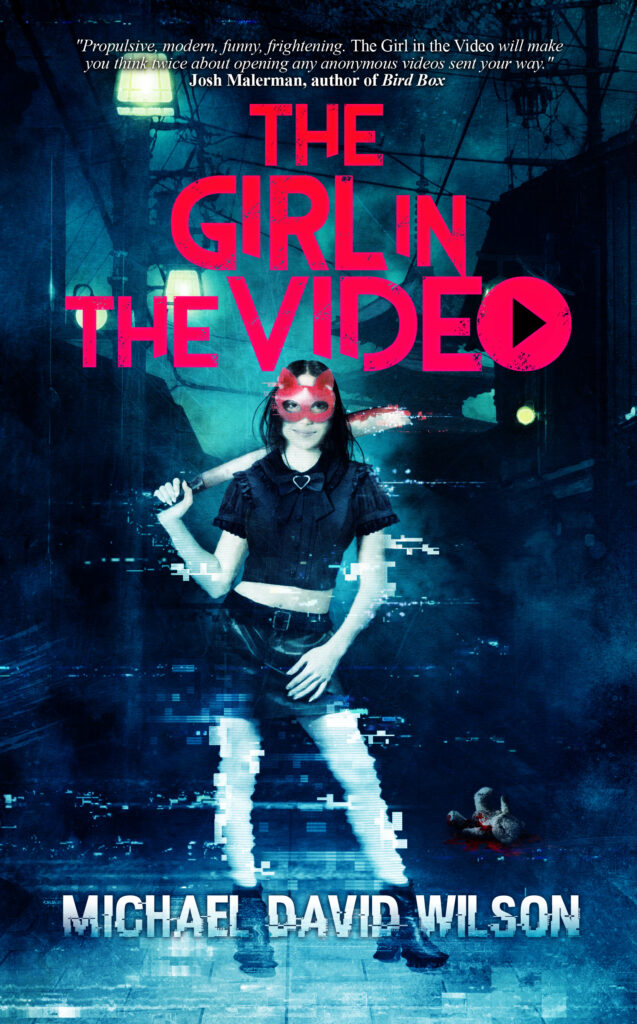
From the author of The Girl in the Video comes a darkly comic thriller with an edge-of-your-seat climax.
Denny just wants to be the world’s best dad to his baby daughter, but things get messy when he starts hallucinating his estranged abusive stepfather, Frank. Then Frank winds up dead and Denny is held hostage by his junkie half-sister who demands he uncovers the cause of her father’s death.
Will Denny defeat his demons or be perpetually tortured for refusing to answer impossible questions?
House of Bad Memories is Funny Games meets This Is England with a Rosemary’s Baby under-taste.
Buy House of Bad Memories from Cemetery Gates Media
Buy the House of Bad Memories audiobook
They’re Watching by Michael David Wilson and Bob Pastorella
From the hosts of This Is Horror Podcast comes a dark thriller of obsession, paranoia, and voyeurism.
After relocating to a small coastal town, Brian discovers a hole that gazes into his neighbour’s bedroom. Every night she dances and he peeps. Same song, same time, same wild and mesmerising dance. But soon Brian suspects he’s not the only one watching and she’s not the only one being watched.
They’re Watching is The Wicker Man meets Body Double with a splash of Suspiria.
Buy They’re Watching in paperback and eBook right now.
Related







TIH 675: Raphael Montes on The Secret Dinner, The Seagull Soup Riddle, and Writing About Taboo Topics
In this podcast, Raphael Montes talks about The Secret Dinner, the Seagull Soup Riddle, writing about taboo topics , and much more.
About Raphael Montes
Raphael Montes, born in 1990 in Rio de Janeiro, is Brazil’s most prominent thriller writer. He is best known for The Secret Dinner, a dark and provocative thriller set in Rio de Janeiro that has sold over 300,000 copies and established him as one of the most compelling voices in contemporary crime fiction. He has written eight novels: Russian Roulette, Perfect Days, The Village, The Secret Dinner, Good Morning, Veronica, Mortal Magic (his first YA book), A Happy Family, and A Woman In The Dark, which won the Jabuti Prize in 2020. His novels have received critical acclaim, sold over a million copies, and are published in more than 25 countries.
Timestamps
[8:55] The films and books Raphael was consuming from an early age.
[13:30] Writing stories that don’t fit into an easy genre box.
[17:00] Planning The Secret Dinner.
[21:35] Dark comedy.
[26:30] The seagull soup riddle.
[29:30] The real-life Piglet.
[34:40] The Secret Dinner in conversation with Chuck Palahniuk.
[45:15] Our generation’s search for meaning.
[49:20] Brazil’s reaction to The Secret Dinner.
[53:35] Are any taboo topics off limits for Raphael?
[59:25] Horror chose me.
[1:03:45] Vegan reaction.
[1:08:35] Religion’s effect on Raphael’s life and presence in Brazil and the book.
[1:13:40] Connect with Raphael and final thoughts.
Thanks for Listening!
Help out the show:
Let us know how you enjoyed this episode:
Resources
House of Bad Memories by Michael David Wilson
From the author of The Girl in the Video comes a darkly comic thriller with an edge-of-your-seat climax.
Denny just wants to be the world’s best dad to his baby daughter, but things get messy when he starts hallucinating his estranged abusive stepfather, Frank. Then Frank winds up dead and Denny is held hostage by his junkie half-sister who demands he uncovers the cause of her father’s death.
Will Denny defeat his demons or be perpetually tortured for refusing to answer impossible questions?
House of Bad Memories is Funny Games meets This Is England with a Rosemary’s Baby under-taste.
Buy House of Bad Memories from Cemetery Gates Media
Buy the House of Bad Memories audiobook
They’re Watching by Michael David Wilson and Bob Pastorella
From the hosts of This Is Horror Podcast comes a dark thriller of obsession, paranoia, and voyeurism.
After relocating to a small coastal town, Brian discovers a hole that gazes into his neighbour’s bedroom. Every night she dances and he peeps. Same song, same time, same wild and mesmerising dance. But soon Brian suspects he’s not the only one watching and she’s not the only one being watched.
They’re Watching is The Wicker Man meets Body Double with a splash of Suspiria.
Buy They’re Watching in paperback and eBook right now.
Michael David Wilson 00:28
Welcome to This Is Horror, a podcast for readers, writers, and creators. I'm Michael David Wilson, and every episode, alongside my co-host Bob Pastorella, I chat with the world's best writers about writing, life lessons, creativity, and much more. Today, I am chatting to Raphael Montes, the author of *The Secret Dinner* which is my favorite book of the year thus far. Now, *The Secret Dinner* is a novel of suspense and pitch black comedy, evoking the likes of Chuck Palahniuk and Augustin Burroughs, and it comes with my highest possible Recommendation. Now, as for Rafael Montes, he is the biggest thriller writer in Brazil. His eight novels have sold more than a million copies and have been published in more than 25 countries. He is also a screenwriter. Montes is the showrunner of *Scars of Beauty* the most watched original show on HBO Max in Latin America, and Netflix's award-winning series *Good Morning Veronica* He splits his time between Rio and New York, and he has a strong presence on social media, where he shares his creative process with his readers. So, that is Rafael Montes. As I said, he is the author at a secret dinner, which I highly recommend everybody goes out and buys, but before we chat with Raphael, a quick advert break.
Bob Pastorella 02:26
House of Bad Memories, the debut novel from Michael David Wilson, is out now via Cemetery Gates Media. Denny just wants to be the world's best dad to his baby daughter, but things get messy when he starts hallucinating his estranged, abusive stepfather Frank. Then Frank winds up dead, and Denny is held hostage by his junky half sister, who demands he uncovers the cause of her father's death. Will Denny defeat his demons, or be perpetually tortured for refusing to answer impossible questions? Clay McCloud Chapman says, "House of Bad Memories hit so hard you'll spit teeth out once you're done reading it, House of Bad Memories by Michael David Wilson available now in paperback, ebook, and audio. From the host of this Isorra podcast comes a dark thriller of obsession, paranoia, and voyeurism. After relocating to a small coastal town, Brian discovers a hole that gazes into his neighbor's bedroom. Every night she dances and he peeps. Same song, same time, same wild and mesmerizing dance. But soon Brian suspects he's not the only one watching, and she's not the only one being watched. They're Watching is The Wicker Man meets Body Double with a splash of Suspiria. They're Watching by Michael David Wilson and Bob Pastorella is available from This Is Horror.co.uk, Amazon, and wherever good books are sold.
Michael David Wilson 03:49
Okay, without said, here it is. It is Raphael Montes on This Is Horror. Raphael, welcome to This Is Horror.
Raphael Montes 04:04
Hi, everyone. Thank you very much for the invitation, Michael, Bob. It's a pleasure to be here.
Michael David Wilson 04:10
Yeah, it is great to have you here, and I'm so excited to talk about writing, to talk about seagull meat, to talk about the secret dinner. But before we get into all of that, I want to go all the way back to the beginning of your life because I want to know what were some early life lessons that you learned growing up in Brazil.
Raphael Montes 04:35
Yeah, so I I was born in Brazil, Rio de Janeiro. I still live there. Now I'm in New York to publish the secret dinner here in the United States, but and in Brazil it's interesting because we don't have that much crime fiction and horror fiction like written by Brazilian authors. Okay, so so when I started to like to be a reader, I started. Reading, of course, the the classic crime fiction like Agatha Christie, Arthur Conan Doyle, and all that, and and I told my parents that I wanted to be a writer, and they were like, "You are crazy! You can't be a writer! You you you you won't survive as a writer, especially in Brazil. But then, but then I said, okay, but I want to do it. So I started writing my stories, and when I was like 1213, years old, the first short story that I wrote another day, I found it in my notebooks, like with my child letter calligraphy. I mean, it was a story called "The Teacher, and it's about a teacher, a really sweet woman that one day she decides to kill herself. But before that, she takes a gun to the school because she wanna take also her favorite students with her. So it's a a really strange short story and strong that I wrote when I was like 1213, years old, and and it was interesting because then I I started writing this story and then I I showed it to a friend in the in the classroom, and he was like, "Oh my God, what happened next? And I said, "Okay, tomorrow I will tell you, and then the next day I continued a bit more the story, and then I did that. So in a way, I learned how to keep the reader curious and interested since I was like 12. And let me tell you, when I was 12, I was not like the the popular guy. I was not good in football or stuff like that, so telling stories was the kind of way that I found to, to, I mean, to connect with my friends also. So, so well, so I kept I kept writing through all my adolescence and reading a lot, of course. Before being a writer, you need to be a reader, right? I mean, so, so, and I think the lesson, the first lesson that I learned is believe in yourself because because everyone told me that it was not going to work. I mean, my friends they were like, "Okay, you dreamed of being a writer; it won't work. My parents said that. Everyone told me that. And but I mean, I wanted to be, so that's why I started writing.
Michael David Wilson 07:32
And of course, when you were writing something that was so heavy in terms of thematic concerns and in terms of suicide and murdering your favorite students as well, and I love that as well. She wasn't going to maliciously take out the bad students. It's like no, the the good students are coming with. But
Raphael Montes 07:53
yeah, there is a there is a paragraph that she says like, oh, this he's amazing. He stays. He's always paying attention in what I say last time after the vacation. He brought me a gift. Okay, I'm going to kill him because I wanted I wanted this this this guy with me. So I mean, it's really macabre and and and but I usually say when people ask me like where where you find these stories and then I say, "Oh, it was my childhood. My parents create me in a basement with a lot of torture. But it's no, it's I'm kidding. I had like an amazing childhood. I don't know how to explain how I have these ideas.
Michael David Wilson 08:33
Yeah, yeah. And I mean, when you were younger, were you watching a lot of dark fiction in terms of like film and cinema, and were you consuming a lot of books? I mean, you were saying that in terms of actual Brazilian authors writing crime and horror, they were few and far between. But I'm wondering what your diet of entertainment was.
Raphael Montes 08:57
Yeah, but that's interesting because in my childhood, I I can. I come from a suburban family, like low mid class family. So honestly, my parents they they didn't have like had have the routine of taking me like to cinema. They don't know like the direct the directors. I watched movies in TV, of course, but there was no streaming that time. So, so really, for example, when I was a child, I used to say that I I I loved stories with real people. That means that I hated animation. I I I didn't watch any animation. I really like. I didn't know was they were actors, but so what I used to do is, for example, I had like how do you say that some action figures of, but I didn't know who they were, so I created them. I mean, I I used to buy this this. Make action figures, but I played with them, creating who these characters were because I didn't know because I didn't watch to the cartoon or to. So that was that was something that I think helped my imagination. But then I discovered literature, so I really started by literature by and by crime fiction and not horror. I mean that's also a funny story that I can tell you later. That when I started writing, also I thought that I was a crime writer, right? Not a horror writer, and and still nowadays I balance between both. I think all my books are thrillers, are crime fiction, but also with a bit of horror. And honestly, I'm a how to say that I'm a person that I'm always afraid of everything, which is interesting, since I write the stuff I write. I'm I'm I'm I because I always think the worst situation that can happen in any case. So when I'm crossing the street, I always imagine that the truck can can come in my direction. So my my imagination is all always thinking, what the hell can happen and and do a mess in my life. So so when I when I was like 14, 15 years old, and I watched, for example, The Exorcist. I was really scared. I was like, "Oh my God, that's too much. I remember that the first time I watched The Bone Collector, that's a serial killer movie. I really love that movie. I didn't want to take a taxi for like six months. I told my parents, "I'm not taking a taxi because the serial killer used to attack in a taxi. He was a taxi driver. So, so I remember this this some movies, and of course, when I was 1617, years old, I watched Saw. It was when it was released. I I think we can check the year. Which year was Saw Saw movie? Let me check.
Michael David Wilson 12:07
Yeah, it was the early '90s. That's for sure.
Raphael Montes 12:10
Yeah, was yeah. So see, it was 2004. So sorry, I was 14 years old, and so when I was like 14 years old, I watched Saw, and that was mind blowing for me. I loved it, and and that helped me to to also. I mean, create the the way I like my stories too. And after that, of course, I watched all the Hannibal Lecter movies and everything, Rosemary's Baby and all that stories that we love. But but they didn't form me from the beginning. I mean, I I think what the origin of my ideas are is the the crime fiction literature.
Michael David Wilson 12:53
Yeah, I think on the basis of the secret dinner. I mean, it's quite difficult to actually pinpoint it cleanly into a genre because it has elements of thriller. It's got suspense. There's definitely the horror, and more broadly speaking, dark fiction. And of course, there's crime everywhere in terms of the tale. But it's not what you would typically think of when you're told, okay, you're going to read a crime fiction story, and I often find though that these are the stories that are most interesting. Those ones that don't neatly fit into a genre box.
Raphael Montes 13:32
Yeah, I I love the fact of in verse two. I published eight novels already, and all of them, I I do like. They are all different between each other. The books, and all all of them go like to a direction of one genre or a mix of different genres. So that's something I like as a writer. I like to experiment. I like to to see how it works, so a big reference for the Secret Dinner was this movie Tarantino movie from from dusk to dawn. That's that's a a movie that I love because it starts as a drama and a thriller, and then it becomes a vampire crazy story in the on the second half. So for me was pretty clear that since the beginning that I wanted to do a book about these four childhood friends struggling to pay their rent. So something that everyone can relate with. They want to fulfill that dream. They are they. There is a financial crisis. They in Brazil we had the terrible president. I mean, I think every, especially Americans, maybe they here in New York, for example, you have like this situation about owning houses, so it's so expensive. So I wanted to to talk about all that, and there's. So they decide to do secret dinners, but then I knew that in the middle of the book it was going to turn in another thing. It goes much more into the horror in a way, and goes pretty crazy, more crazy than you can believe, right? And than you can imagine in the beginning of the book, and that's something that sounded interested for me because then when I was writing, I think the good books. When you you know you're writing a good story when you are excited by the story when you in a way kind of discover what's happening through the story, right? While you are writing,
Michael David Wilson 15:40
yeah. So that that's interesting because the book is so meticulously crafted, and I mean, once I'd read it once, I went back and immediately started rereading it and realized all of those puzzle pieces you have put up there in the front and center. I mean, obviously, we see Dante going to the police station to confess in the first scene. We see that he says, "You know, you're going to think that I'm a piece of shit, but I used to be a good person. And and then once you, I mean, we we can't. We will try to dance around spoilers, but there are things, particularly right at the end, that you then throw at us, and it's all there. And we realize that Dante, everything bad that has happened to him has been a result of his actions. There are steps that he took, and if he hadn't took them, this never would have happened. So, I wonder, in terms of your writing process, how much of this was planned out, and how much of this organic came to you? I guess how much was what one might term a discovery writer.
Raphael Montes 17:00
Well, no. I'm. I'm really. First, I love to hear that you you start to read again the book, and you saw that all everything was there. Because sometimes when readers, I love mind mind blowing endings. All my books they have like a big twist. Usually in the last page. Sometimes in the last paragraph. I love that, but also I love when readers sometimes they can figure out the ending or or the twist, because for me that shows that if you are paying attention, you can discover the end. I mean, you can you can see that I'm trying to to do a magic trick, right in a way. So, and of course, mostly of the people, they don't don't notice anything. But I think it's important to have all the elements, so as the reader can discover if he's paying attention. So when you read it again, you see it was everything there, right? In a way, so that's one thing. But I'm I'm a plotter. I mean, I love to to create the plot. Is the is honestly my favorite moment. I mean, to create the the and I all my ideas start by the plot, also not by the characters. So in the case of the secret dinner, a group of friends struggling to pay their rent, and they decide to. They hear about a website called secretdiner.com that connects people who want to host a dinner with people who want to pay for a dinner, and and well, and they decide to do dinners where the menu in the menu they serve human flesh, and that that starts as a joke, but then it becomes real. So I start by this idea, and then I start to figure: okay, who who is the who is the main character? How how is how is the dynamic between these four characters, these four friends? Who is attending the dinner, and then all the characters that attended, so I start to create by the plot, and then I, in a way, discover the characters, and I do all that before starting to write. So, and that's the most delicious part, honestly, because I take notes, I go for a run, and then I come back, and then I. So when I start writing, I have like a pretty clear and detailed roadmap or outline of what I'm going to do, right? But why I do that? Because since I have the roadmap, I can allow myself to go out of the highway in a way. So while I'm riding, I have I know what's going to happen next. But sometimes the character says, "No, no, no, no! I want to go in the other direction, and I can't allow the character to do that because if I got lost, I have the map, right? I also. I love the idea of being with a flashlight in a tunnel. I mean, I know there is the end of the tunnel. I can't see anything. I go with the flashlight, discovering stuff. But I always know that if I keep walking, I'll get to the end of the tunnel. That I know where it is. So that's important to know where I want to end. So in a way, it's a mix of controlling a lot and knowing a lot, but because of that, allowing yourself to be to be free to respect what the character is telling you that you need to do.
Michael David Wilson 20:37
Yeah, I think this method is similar to how I like to approach writing because you've got almost the comfort and the stability of having the plan, but you've got the playfulness to be able to go off track and off plan and have some fun. And you know that's one thing that really comes across in this as well. And it might be weird to be talking about a book about eating human flesh, and say that it's so playful and fun, but it really is, at least for my sensibilities, such a fun book. And the dark humor, which, of course, you know, you see that in Tarantino as well. It comes across so beautifully, and there's so many good lines, and so I imagine for the humor, that is probably something you're not so much planning in. It feels like that comes organically to you.
Raphael Montes 21:35
Yeah. So when I was a child, all my friends they thought that I would be a Stand-up comedian, because I I use like to how do you say that to imitate? You say imitate, like my teachers, my friends. I'm good to like understanding the accent, the way a person talks, and then I I used to do it. So everyone thought I I was going to be a comedian, and also because in real life I'm a pretty funny and acid person, and I'm I'm not like the dark writer that doesn't like to to talk and always is is is thinking every time about violence and stuff. No, I I love to have a great life, great good friends. So so I always had my in my personal life. I am this. I have this ironic view about everything. I don't take myself seriously that much. Also, so, but my first novels because The Secret Dan is my fourth novel published in Brazil. So my three first, my the first and second the third novels, they were pretty dark and pretty pretty strong and pretty violent and with no humor at all. So when I had the idea of writing the Secret Dan, I thought that since the the story told in first person by by Dante. That's one of the friends. He's the main narrator of the story. I thought that I could use in a way a bit of my point of view about things in this character. So so that's why I knew that you are right. I mean, it was not something that I need to think a lot. I just did, and it was there because that's the way I, I, I, I see things. Also, that time I was in Brazil. Nowadays in Brazil, I'm I'm the showrunner of some shows for streamings, and I write movies also. And so I was starting to to be invited to some elite parties, like from really rich, wealthy artists, and and but I was not like fascinated by it. I will I would look and would say, oh my god, that's so corny and so ridiculous in a way, the all this this theater, right? So I think also a bit of this point of view appears in the novel. How Dante talks about the people that goes to the the people that go to the dinner dinners, and another you you said about Tarantino for me another big reference is Coen Brothers, so this kind of story where you make bad decisions and then you go more and more to a terrible shitty situation. That's something that really interested me, and that's an important point. In Brazil, we deal with with with how do you say like street violence every day. So it's pretty violence is something that's part of our routine. So. For example, it's it's kind of common that someone can call you and say, "Oh, don't use Highway One because there was a shooting there. Use use Highway Two. And then wait, there was a shooting? No, no, it's okay. There was a shooting, so don't don't go by by this one. Take the other one. So we we live with the idea of violence. I mean, so when I decided to write this story set in Rio de Janeiro with all the Brazilian flavor, it was pretty important to be hyperbolic, to be over over the top in a way, because if it was like a regular violin, that would be nothing for the Brazilian readers, right? So, so that's why I think also the the book is a it for me there is almost a tone of fable in a way that's that's important for for the tone of the novel.
Michael David Wilson 26:03
Yeah, and I think the fable comes across too because you start with the seagull soup riddle, so immediately it's got that kind of cautionary tale to it. And God, I I loved that riddle. that That was the first time that I'd actually heard the riddle, and it's gonna be a good one to you know bring up during dinner parties and see how people. Yeah, really nice.
Raphael Montes 26:32
Yeah, and let me tell you, it's a riddle. I mean, I will tell. I'll tell how is the the riddle. The riddle basically is a guy is walking down the street when he came across a restaurant that is serving seagull on the menu. He enters in the restaurant, asks for the for the dish, ate it, he eats it, he goes home and kill himself. Why? And then you have to ask questions, and the person can only answer yes, no, or irrelevant, and and that's a true riddle. Okay, and now the funny story. I mean, it's it's always hard to pinpoint how you have an idea for a novel because it's it's much more easy to after you wrote it, you say, "Oh, the beginning was here. But when you are living it, you you you don't notice. Oh, I'm now having an idea for a novel that's that I'm going to write. So there were many subjects that I wanted to talk about that were like inside me, and I was thinking about it. I was thinking about becoming a vegetarian, for example. That was one thing, and there were many others. We can talk about that later. But the the the the element that, in a way, connected all my desires was the single meat riddle. I was in a bar with a great friend of mine, a real person that's called Piglet, and that's the name of the character I know. And this great friend of mine, he he's called Piglet, and he we were in a bar, and then he told me the single meat Rito, and that in that moment was like, okay, now I know I'm going to start with this friend in a bar, and someone tells the single meat riddle, and so it's. I agree with you. It's really important, and also my Brazilian readers, they all the I mean the inside joke. The the book became really big in Brazil, so it's one of the most popular books in Brazil, and so it became like an inside joke. Like, have you ever tried seagull meat? So seagull meat is like a funny inside joke.
Michael David Wilson 28:55
So if I ask any Brazilian about seagull meat, they're probably going to know what I'm talking about now,
Raphael Montes 29:01
probably yes, probably yes. They they they use as sometimes like t-shirts. Do you want a tricycle meet? Ask me how, like, and stuff like that. So it's interesting,
Michael David Wilson 29:16
and I wonder too. I mean, how does your friend Piglet feel about you including a character called Piglet in your novel, particularly given the character of Piglet.
Raphael Montes 29:31
Well, he was kind of pissed off because I mean, no, but but he liked it in the end because he he he's an amazing friend. He's a philosopher, and he is a fat guy who is pretty proud of being fat. And he, being a philosopher, he has a theory of life that's ridiculous to to. Try to get in in diets and and and and go into the gym. It's pathetic. Everyone's going to die, and you have to fulfill your life being whoever you want to be. So it's amazing. I mean the the theory of being, and I I love to eat too. So he is my friend. That, for example, when in Rio open a new restaurant, we go together. We are both like foodies. We love to eat pretty well. So I'm in New York now. I I try to book the best restaurants. I love to go to restaurants. So I love to have like dining experiences and stuff like that, so he was pretty offended because Piglet he he eats like jerk food, like bad food, and and he in the real life no he goes like to the best restaurant. Like you create a character with my name, and you say that he eats McDonald's, I'm offended. But also, the the character became famous, so he says that sometimes he goes to parties and people wait. You are you are the piglet from the book, and it's like, no, I'm a real human being, and I came before the the character, right? So it's. I mean, he was not pissed off, but he was he he he he complains about it like as a joke sometimes.
Michael David Wilson 31:32
And I love too that the part that he was most offended by was that he was eating junk food. It wasn't any of the other things. It wasn't the fact that his friends pulled together to buy him a prostitute for his 20-that was fine.
Raphael Montes 31:48
That was fine. That-that's something that he would do.
Michael David Wilson 31:51
Yeah, maybe that's what he did do. I mean, you haven't confirmed or denied yet.
Raphael Montes 32:00
Yeah, yeah, but yeah, no, no, and he he, and also for example, all the piglet is is a science computer guy, so he's like a hacker in the story, and my friend is a philosopher. So I think being a writer, I always say when when I meet someone, I say, well, you are taking a risk because I, we we steal all the time. We are every time thinking our stories, of course. So we are we're stealing from the world. I mean, so sometimes I'm crossing the street and I see a woman crossing the street. I say, okay, my character is going to walk just like that, and then I'm on the subway, and then I hear a conversation between. Do you know a thing? What I love to do? I go to subways. I took it. I took the subway. I take the subway with my earphones, but without listening anything, so I can listen the conversation of people around me, and I get great stories and great stuff. So I mean, so but it's not not on purpose. We are stealing all the time because that's the way a writer thinks. I believe.
Michael David Wilson 33:11
Well, I mean, what you're doing with listening in on the subway is similar to what Chuck Paulanik does when he goes to ER waiting rooms. He goes to hospitals and he listens in there because that's often where people have the best or the most interesting conversations. And I mean that brings us quite nicely to. We've mentioned Tarantino. There's Alfred Hitchcock, who's mentioned in terms of the blurb on the cover, but for me there was something very Chuck Paulnick. I think in terms of the delivery, in terms of that wry, dark sense of humor, but also in terms of the social commentary and the commentary on the elites of this world. So I have to believe that there's a kind of kinship with Chuck Palahniuk, and your work is in conversation with his to a point.
Raphael Montes 34:09
Well, I'm a huge fan of Chuck Palahniuk, and I read I read many of his novels, but the first one, of course, was A Fight Club. It's not my favorite, honestly, but but I I really was the first one, so it was a thing for me, and and well, I think the the way first the the way he writes. I mean, it's it's he's a writer that of course he create great characters, and oh, and create great plot. But there is a thing in the language, the way he writes the language. It's like short sentences, like a punch. Every every sentence is a punch. That's amazing. That's something that I try to bring to the secret dinner. And also, I mean, about literary references in the Sequidina of, I think there is a lot of Agatha Christie because there is like a mystery and whodunit in the end of the book. I think there is a bit of of Thomas Harris, Hannibal Lecter, and and I think that there is a lot of chuck because of the social commentary. Because I believe that when you write about crime fiction or even horror too, you are talking about violence, and when you are talking about violence, you are talking about society. Who commits violence? Who are the victims of violence in our society nowadays? Right. So, so when I decided, but but that comes later, right? I mean, as I said first, I have the idea of a plot, and then say, okay, I'm going to write the story of four friends doing secret dinners. But when I'm writing that, what the hell I'm talking about in the end? And then after thinking a bit, I understood that if I'm talking about secret dinners, expensive and fancy secret dinners, where the menu is human flesh. The obvious question is who pays for this kind of dinner, and also who is served in this kind of dinner. I mean, so who is served? Obviously, people that you don't miss in the society. So people that you can kill that and nobody will notice. And who pays for this dinner is also an interesting question because who pays for this dinner? And then I I read as I said I was thinking about becoming a vegetarian and and food is really related to power. So we eat the pork and the chicken, because we are superior in the food chain. We are best. We are best than them. That's why we don't suffer. Oh, poor pork! No, we do. We're like, okay, poor pig. No, I can eat it. No problem, because I'm superior as a human being. And then I started to think that nowadays, probably, probably no, I'm sure, there are human beings that think they are better than the other human beings, like as a as a superior race, and so so. And then I understood that I was going to write a story about like literally rich people eating poor people. That's basically the metaphor, and but I always so so in all my novels I do that. I love to to tell a good story, an entertaining story that you can't stop reading, and when you notice I'm provoking you as the reader to think about stuff, but it's it's not in a didactic way or of finger pointing like oh you need to learn that or think about that. It's like just a discussion in a way, for example, since the book is narrated by Dante in first person, it's interesting to ask readers when they stop to agree with Dante, because in a way, I'm asking you, the reader, your moral line: where, when for you it was too much, and and so until here it's okay. Okay, so until just do a first dinner, fine. When they decide to make it a business, then it's a problem. So what what's the the the limit, right? How how how is your moral line? That's a question that I ask to the readers.
Bob Pastorella 39:04
It's interesting that you talk about the power aspect of it because I definitely see the you know the the the Chuck Ponick in in the story, but I also see a lot of J. G. Ballard in the story, particularly a novel that that he wrote in the 70s called Cocaine Nights, which is basically it's it's the level of complicity that you will take in to you start rationalizing. Hey, if I if I continue on this path, you know how how how am I going to survive as a human being, and we find that we can handle a lot, and so and that's you know it's like where do you cross that moral line? That is that is such an interesting question because we we we I don't know where I crossed it. I don't know, but. But I did, and I kept reading, and so that's like okay. And I was like, you know, I should not be reading this anymore. But it was just it's fascinating. The other thing that I saw too was that that it reminded me of like there's definitely some the usual suspects slashed way of the gun in there, Christopher McQuarrie stuff, and I'm liked it, and I love that stuff. Just like one situation turns into another situation when starts to snowball, which is kind of like the way of the gun, and then also you know you have this whole thing in the book where at the end I was like, I got Kaiser's so safe the whole fucking time, and and thank you for that. Yeah, so yeah, there's a lot, a lot more than than than just Chuck. You know, there's there's a lot of influences, but it's distinctly you.
Raphael Montes 40:58
Yeah, thank you for that. I really think that a writer is made by everything he reads and he watches, and that goes. So it's it's interesting because sometimes the the influence I when I'm doing I I don't notice, but but then it's there. Oh my God, it's there! I I did not on purpose, but it was there. But yes, you are right. Usual suspects is a big reference, a big influence for me. I love the story. So, and and totally, the reference was like okay, I want to have a Kaiser shows in the story, and and so that was one thing. Also, I like to play with the reader. So, for example, the what they are two two important chapters in the book that everyone in Brazil talks about. One of them is the the last one, of course, the the the last dinner, and the other one is the slaughterhouse sequence. And it's interesting because before the slaughterhouse sequence, I tell the reader be prepared. Do you want to continue or not? Are you sure you are prepared to what's what's about to come? So in a way, I'm playing with you like you have the courage to go there and to to keep turning the pages. So so well that that was that was one thing. But the other thing I want to mention is also for me, it's a lot about ambition. This book, because well, I created the characters, right? So and I did on purpose that Dante, he comes from this small city. the The four friends they move from a small town to to the big city. So they they they live a small town in Paraná. That's a state in Brazil, and they move to Rio de Janeiro. That's a big city, a capital. So, and I did on purpose that his parents they are wealthy, so when they are like struggling to pay their rent, he could only get the phone and and ask for help. I mean, he had that option, but because of the ego and the ambition and the fact he wants to try to prove himself, he prefers to do human flesh dinners than calling his mom, and I and from and in my opinion that tells a lot about the character, about who he is and how he behaved, right? So because that's something that readers sometimes question me, like why the hell he didn't call his mom? I mean, I created his mom because I wanted you to be like questioning that because that's absurd. But that's how he preferred. You know, oh, another another big influence in that specific case is Breaking Bad. I mean, I wanted to do the Breaking that of Dante through the book,
Michael David Wilson 44:03
right? Yeah, and you've certainly got that Walter White like arc because he gets into it for good intentions, and as you say, that each escalation, not only are we asking, would we do this? Would we go along with it, but we are watching in real time Dante's dilemma as he weighs up the pros and the cons, and whether he should, whether he shouldn't, what kind of trouble he's going to get in, and in terms of that power dynamic as well, it's important to point out that this is taking part during the financial crisis and the economic recession, so all of the friends they've graduated unfortunately at a point where you know they had big dreams, they were promised these things, but actually, sorry, the economy has crashed. There's nothing for you, so. They're almost looking for notoriety and meaning in something else. This is a way to to have meaning, to have importance. It's morally reprehensible, but they are certainly getting something and some acknowledgement.
Raphael Montes 45:17
And and this search for meaning is something really strong in this gener in my generation, and I think in the in the new generation also, because so I told you that the seagull meet was like the point where I decided to write the novel, but one of the subjects that I really wanted to talk about is exactly what you just said. So I had a dinner with some friends from some childhood friends, and one of them said something that was, in a way, a bit the was the origin of the idea. He was like, "Rafa, we were that time. I think we were 24 years old. So he said, Rafa, when I was a child, my parents used to say to me, "You need to study. If you study, and if you are a good student, you are going. You are going to be someone. You are going to be successful. You are go. You need to go to university, and if you go to university, you're going to have a great job, and you're going to earn a good money. And and then he said, "Now I'm 24. I just finished college. In my age, my father he already owned a house. He already had the job, and he already was my father when he was 24. And I'm 24, and I'm fucked because I just finished college and I can't find a job, and I don't have a girlfriend, and I don't, and I barely can pay the rent, and I don't know when I'm going to buy a house. So this this idea that even if you're brian, you you might not get there, and if you even if you dedicate yourself a lot, you might not get there. That was something that really resonated with my generation. I'm 35 right now, so in that time I was 25, and I think honestly that's more and more common nowadays because with AI now we are going to. You you can be a an amazing engineering and and and engineer. You study to be a great engineer, and then you you you need to drive Uber because you can find a job. So so that that kind of search for meaning and for being successful is something that I think it's really important and resonates with the the readers.
Michael David Wilson 47:50
Yeah, I think you're absolutely right there. And you know, if if we look at our generation and we compare where we were at 25 to where our parents were, as you said, it's not usually a favorable comparison. But goodness, with the insidious rise of AI, I mean, people are going to have to find and search and create new meaning and new worth and new jobs. It's completely disrupted everything, and it's it's chaotic and it's frightening to think that you know studying and working hard is not the path anymore in in many ways. So I, whilst I might have preferred to have come from my parents' generation, I'm certainly glad that you know, I'm not a 20 year old kid in this generation because yeah, yeah, it's
Raphael Montes 48:48
terrible. I think it is.
Michael David Wilson 48:50
Yeah,
Raphael Montes 48:51
I really think it is really challenging.
Michael David Wilson 48:54
And I mean, obviously, this became one of the biggest books in Brazil. It also deals with cannibalism. I got to imagine there was some pushback from some quarters. So, what kind of reaction did it get? What were the good reactions? What were the bad or the more amusing reactions? How was it received?
Raphael Montes 49:20
Honestly, in Brazil, it was pretty well received, but it took a while. So, when it was published, as I said, it's my fourth novel. So I had these previous novels where they were like pretty strong, but not about cannibalism. So they were like more real violence in a way. So when I did the Secret Dan, everyone was kind of surprised. Even my publisher, my Brazilian publisher, he was like, "That was not the book I was expecting to be your next one. I said, "Well, that's the one I did, because that's the thing. I also love to, as I said to you, I love to do different books. My books are each one is is goes in one genre. And so I have one book that's more like gore. I have another one that's only psychological, and there is no violence at all. So I like there is one that goes to supernatural. So I mean I like to play with that. So when when I when it was published, the reaction. were like mixed, and then the book starts to find like a big community that really loves it. So, and and I usually say that I don't have readers; I have missionaries because they they they really go like knocking every door of their friends and say, "You need you need to read the Secretana. I mean, I think the ending and also the the strong scenes and also the acid the the acid humor all of that makes the the WhatsApp group chat so all that made you want to talk about it when you finish. So so the book became famous in Brazil by word of mouth, like readers spreading the word, like recommending the book, and then it starts to to to be big. Also, was really important some influencers like book talkers, book tubers talking about it, and and and and I think that people got curious to to know what it is and to see if they could deal with it. But as I said, I started saying that our conversation in Brazil, we don't have that many crime writers, or thriller or horror writers. We don't have it. So when I public, so here here in United States, you have like many how to say categories. So you have like body horror and and cosmic horror, and then cozy mystery, psychological thriller, domestic thriller. You have like specific subgenres, and in Brazil, no, I'm a thriller writer, and that's it. So now that I'm I'm being published here, I love to read the reviews and the reactions, and it's interesting because I already saw some. I read some reviews, like oh, it. I started reading, thinking it was a crime fiction, it was a crime novel, and then it was a horror. But I couldn't stop reading. But I was like, oh my god, I don't, I don't read horror, but I was enjoying it. So, and I couldn't stop it. And that kind of feeling is something that I like to provoke in the reader. So, inviting the reader to discover something outside his comfort zone, and of course, there are people that can't deal with it and stop it. But honestly, they are-they are not that much. And my my impression is that readers discover that they they can deal with that more often than they could imagine.
Michael David Wilson 53:20
And I wonder too, as a writer who explores the darker side of humanity and these taboo issues, are there any topics that are too taboo for you, or are there any topics that you won't or you wouldn write about?
Raphael Montes 53:37
If I think a topic that I think is too taboo and I can't write about. Then I try to find a story to write about it because, because I mean, I think in fiction is the place where you can explore the hard subjects and and and and provoke. I mean, it's it's important to do it to not explore violence and and gore just to shock the reader, I mean, of course, I love to shock my readers, but for me there is a reason. For example, there's Laura House chapter. It's a it's a really shocking sequence, but everything that I describe there is what we do to animals. There is nothing that I created should be more violent. No, no, no. It's exactly what we do with the animals that goes to our table. That goes to our table. So, So I think that the limit, my limit is that to explore violence in a meaningful way and not just violence for the violence, right? And and also again, horror does this pretty well. So for example. Got out. I mean, you discuss racism in a really smart way, and but but well, my readers in Brazil, it's interesting because the 95% of my readers are women And young women, so from like 18 to 35, this is my biggest audience. So, and we know that women love to read crime fiction, horror anthroprime too, right? So, so that's interesting too.
Michael David Wilson 55:43
And I wonder too if you ever had any pushback from an editor or from an agent or a publisher, because obviously, you know, when it comes to you, you're writing very unrestrained. But then, when there's a publishing house involved, there might be other factors that, if you're not careful, will try to stifle creativity, particularly when the subject matter is so extreme. I'm wondering if that's something you've ever had to deal with, or if you've been fortunate enough in that they've understood the vision.
Raphael Montes 56:20
I was fortunate enough. I mean, in in this novel, I had with my Brazilian publisher. I had a discussion that was which imprint I was going to publish it because I'm published in Brazil by Penguin Randall House in one in one in they are more like important imprint, and with the secret dinner, we had a discussion that they because they have also an imprint that goes specifically like through horror and crime stories. But I'm not. I was not bob. I'm not published, and I I was not published at that time by this imprint. So when he read the secretary, he was like, "Oh, maybe we should move you to the horror in print. I was like, "No, no, no, no, no! I want everyone to read it. I don't, I don't want only horror readers to read it. And and well, honestly, since the book is pretty famous in Brazil, I have I have many readers that don't read horror, so it's something challenging for them to read the Secret Dan, but they like it, and so so a question that I receive a lot in my Instagram is, oh my God, I never read anything like that before. Now I read it and I love it. Why should I read? And then I say, okay, go to Chuck Palahniuk, go to, and then I start to recommend writers that, of course, people need to discover because sometimes people are so afraid of discovering new, new, new things and new writers.
Michael David Wilson 57:59
Yeah, I think from a marketing and publishing point of view, you certainly went the right route in terms of going for the the general, the the main imprint. Because I think horror readers they will follow the writer to whatever imprint they're with, but if you put it with a horror imprint, it's going to be harder to get what you might term more general readers. There'll be a reluctance. A lot of people say, "Oh, I don't read horror, or I don't like horror. But then, if you talk to them about what they actually read, it's like, no, you you do read horror. Yeah, there might right, and there might be particular strands of horror that you don't like. So it might be you don't like in movies slashers or torture porn, but it's like horror is so much more than that. It's all encompassing. So you know, I I think the Silence of the Lambs and what Thomas Harris has done is horror, or it's at least horror tangent, or there are horrific moments, and you know that's yeah.
Raphael Montes 59:09
It's a thriller that goes to horror.
Michael David Wilson 59:12
Yes, yeah, yeah,
Raphael Montes 59:14
and not and not not only in Salas of Lambs, but also in Hannibal, for example. Yes, we have like really strong scenes there that there goes a bit to horror, right?
Michael David Wilson 59:24
Yeah, yeah. But
Raphael Montes 59:26
I always say I always say that horror chose me. I mean, because I, as I said, when I started reading, I started reading my crime fiction. Now, as until now, still nowadays, I mostly read thrillers and crime stories. But then, when I start to publish, I have this third novel that's called The Village. That is a horror novel. No, sorry, I did this my second novel that's called Perfect Days, and it's also published in English. It was published many years ago, and in. Thriller, but then everyone that like producers, TV producers, and and they start to call me and say, "Oh my God, I can see you. You understand a lot about horror. I can see you are like a specialist, and I was I was not, because so he was like, oh, I can here. I can see that you have like influences of Lovecraft and Shirley Jackson, and I was like, okay, Lovecraft, Shirley Jackson. I need to read them because I don't know that that time. So that went okay. It was 20 something, but so it's for example, Bob. You said you said about about GJ Ballard. I wrote down here because I never read it. So, so it's interesting when sometimes some people discover influences in your work that they are not influences because I I didn't read it. But so so that happened helped happened with me in the horror universe. So people start to say that I was a horror writer and that that I understand a lot about horror. So I was invited to be the showrunner of a horror series in Brazil, and and then the guy asked me, "You understand about horror, right? I said, "Of course I understand. And then, and then I start to read about it, and and then I fall in love with the genre, and then I fall I fell in love by slashers, by joll movies. Daragento is one of my favorite directors ever, and but it was it was interesting because I discovered that after being already a horror writer, right? And and so so it's interesting.
Bob Pastorella 1:01:48
You you may have seen some of Ballard's movies. He wrote Crash, that David Cronenberg. Okay,
Raphael Montes 1:01:55
yeah, yeah, and he
Bob Pastorella 1:01:57
did. He wrote High Rise, that Ben Wheatley made into a film.
Raphael Montes 1:02:02
What's the name? Sorry,
Bob Pastorella 1:02:04
High Rise.
Raphael Montes 1:02:05
High Rise. Okay.
Bob Pastorella 1:02:07
Yeah, with oh, let me see the Titan Portuguese. He plays Loki. What's his name? Hiddson. Right. I think that's who's in there. Yeah. Tom Hiddles. Yeah. Crash is
Raphael Montes 1:02:19
amazing. Crash is amazing.
Bob Pastorella 1:02:22
So he he wrote the book, and he's written his writing is is is changed. He's passed on, but as he got in his later years, he he really kind of got into this more crime, dystopian, hyper violence, how how do we how do we justify being complicit, or how do we rationalize this stuff? And that that was that was kind of his focus. I see there's there's a lot of that, a lot of that in a secret dinner.
Raphael Montes 1:02:58
Yeah, for example, this high rise I just researched it here. Is like a class war, like in a in a building, and I I I'm going to watch it. So really, yeah. My next book is in a building, the one I'm starting to write right now. So, so stories in a building is really nice.
Michael David Wilson 1:03:21
Well, I mean, I wonder too. You mentioned that you know, at the time you were writing it, you were considering being a vegetarian, or you were dabbling in that mode. Have you inadvertently gained a big vegan or vegetarian following in terms of your readers, because I could almost imagine this serving as a vegan manifesto.
Raphael Montes 1:03:47
Yeah. So a comment that I read a lot by my readers is okay. After that, I I became a vegetarian after this book, and also there are many vegetarian groups that love the secret dinner, but they then they are disappointed with me because they ask if I became a vegetarian. The answer is no, and to be honest, I I still eat meat. But but for a period when I was when I was writing the novel, I stopped with meat, but then I came back. Right, but but well, yeah, it happens a lot. I mean, so vegans and vegetarians they love the book because, in a way, the the book is a man. No, I don't I don't like the word manifesto because I don't think it's like in a in a positive way, because well, I'm not a vegetarian, so it's not like you. It's not that you should be, but it is like maybe you should think about
Michael David Wilson 1:04:51
it. Yeah, I think what it does is it it exposes the hypocrisy, and it also goes into depth in terms of how. Culturally, in some countries, they will eat one type of meat, but then they won't eat another, and then another country they'll eat that animal, but they won't eat the other type of animal. So there's certainly just not only a light shone on hypocrisy, but just on the bizarreness of human nature and where again where we each draw our lines, what happens to be a sacred creature for
Raphael Montes 1:05:28
us? Yeah, yeah, and that's totally cultural, and and that's something I think what we eat is just like prejudice. I mean, it's something that you learn from your parents. So when you are when you are a child, you don't have any presence. You don't you don't think anything about. I mean, you you like everyone you, and but then your parents tell you, oh, you don't you can't like him because he is gay, and then and then you become an homophobic. But we learn to be. Our parents teach us stuff, right? And also, what we eat is the same thing. I mean, if my mom, since I was like four years old, if she told me you can't eat chicken because it's poor chicken, I wouldn't eat chicken because that's the way. So and and that idea of some societies they eat this but not that was pretty big for me. I think as a writer I need to have empathy. So one day I received a message from my mom, and she was like, "Rafa, it's an absurd look. In China, they are eating dogs in a festival. In a, and I love dogs. I have three dogs: Agata Christie, Arthur Canandai, and Stephen King. So, so I love dogs, but I told my mom, "Mom, in China they are eating dogs, and here we are eating cows and pork and chicken and pig and chicken. So, I mean, why dogs are? I mean, of course, culturally for us is crazy. I would never eat a dog, but who I am to go there and point my finger and say you can't eat dogs. If they come here and say you can't eat chicken, we'll stop eat chicken, right? So, so, so she provoked me that in that story, and and I thought was pretty interesting, like to think about it,
Michael David Wilson 1:07:41
yeah, and I love how you have that conversation, that real life conversation with your mother, essentially in the book verbatim. It it it's there, and
Raphael Montes 1:07:51
yeah,
Michael David Wilson 1:07:53
yeah, it it kind of is thought provoking for us as the reader as well, and this is what good literature does. It continues that conversation beyond you finishing the writing.
Raphael Montes 1:08:05
Yeah, I hope when you go to bed, you're still thinking about this story. Yeah, that's my job.
Michael David Wilson 1:08:11
Right. Yeah, and of course, religion is present throughout the secret dinner within the background within the culture of Brazil and a Brazilian set story. So, I'm wondering how has religion affected and been a part of your life for better and for worse?
Raphael Montes 1:08:34
Yeah. So I studied in a Catholic school, and and in Brazil, we have many religions. And what's interesting that we culturally we have generally people they have like mixed religions. So, so for example, I believe many stuff. So and I like a lot of religions, so we have like some religions that came from Africa and are really strong in Brazil. I love all of them. We have Catholicism, we have Spiritism. Well, Umbanda, Candombla, they they have translation. They are Afro Brazilian religion, so so I have a good. I mean, and I believe in God and all that. So, but what? And and as we know, religion can be pretty good, and can be pretty bad, right? I mean, so there are a lot of people that use religion to use people to they use the power to use people, and and I wanted to talk a bit about that too. So that's why I created that backstory of piglet. The the small the small town where they used to live is a town that's known nowadays to be a touristic religion how to say religious tourism I mean a city where people go to to pray and to ask for for miracles and stuff, and we have Brazil these small cities, these small places where people travel. These places, if I got a cancer, you go there like to to pray for God, and I think it's interesting the idea of you need like to travel to talk with God. That might be in a way everywhere, and in this. But one funny story is the the story of the city because basically the city in the city in the books like that, right? In the city, they they used to be a brothel with this main sex worker, and one day a religious woman pastor created a shirt right close to the brothel, and then she starts to ask God to punish the city for their sins, and then there was a storm, and then and then the the brothel was destroyed by a by a by fire, by by a lightning. Yeah, the lightning like put fire in the brothel, and so that's the story of the book, and it's based in a true story that I read in the newspaper because a woman that used to own a brothel? Not in a small city. I mean, it's all fiction, but the real story is a woman used to be the owner of a brothel, and and then there was a pastor, a religious woman, that asked God to punish her, and then the brothel was destroyed by a lightning in a storm, and then this woman decided to sue the pastor and to sue God, and and it's amazing the idea of trying to to take to the justice God, because he punished the the brothel and everything. So that religion, the religious aspect is is present in the book. Yes.
Michael David Wilson 1:12:35
Well, that's something we might have to delve into in a future episode, because I know, as well as writing, you have a legal career, so we can talk about the ins and outs of trying to sue God. But I don't think we have, you know, the the time for such. I
Raphael Montes 1:12:53
don't know what he was impossible to find. I mean,
Michael David Wilson 1:12:57
yeah, no address, no
Raphael Montes 1:13:00
address.
Michael David Wilson 1:13:01
Yeah. Oh. Well, thank you so much for spending so much of your evening chatting with us. This has been an absolute life.
Raphael Montes 1:13:12
Thank you. Was great, great talk. Thank you again for inviting me. Yeah, the Secret Dinner has been such a wonderful book. It's my favorite that I've read of the year thus far, and I'm certainly going to be recommending it to as many people as possible. So, thank you very much. Please become a missionary, like spread the word. I hope to have more books published in English, and I'm happy to hear that it's one of your favorites of this year.
Michael David Wilson 1:13:41
Yeah, yeah. Well, where can our listeners and viewers connect with you?
Raphael Montes 1:13:47
Well, I I'm really present on Instagram, so it's Raphael with ph underline Montes M O M T E S. So it's my name basically with an underline in the middle between Raphael and Montes, and also, as I said, I'm I'm a showrunner and a TV writer, and I do movies too. And mostly my works are on streaming. So I did a series called Good Morning Veronica. That's a three-season crime series with a serial killer. Pretty, pretty dark. It's a Brazilian crime. It was a Brazil, the first Brazilian crime series for Netflix, and was pretty successful with three seasons. And you can watch it on Netflix with subtitles are duped. So I invite everyone to watch. Good morning, good morning, Veronica. Just watch the the pilot, and I'm sure you're going to watch everything. And also, I did I wrote already some movies in Brazil, and one of them is is based on a true crime that happened in Brazil, and the movie is. Called Elize. That's the name of the woman that killed her husband. So Elizy, E L I Z E, and the movie was released two weeks ago, and it's on Netflix also, and it's on the top 10 around the world. So I think it's on the top 10 in Japan. I think it's in the top 10 in United States. So everyone can watch it. It's called Elyse and Shadows. Elyse Shadows of a Woman. That's the title, and it's based on a pretty violent and horrifying true crime that happened in Brazil. And well, and also in my Instagram, I share everything I'm doing. So the publication of this new book here in the states, that's the secret dinner. Also, I'm going to publish my next novel in Brazil next month. So, a lot of stuff happening, and I love to keep in touch with my readers. So, will be a pleasure to meet you. All right, who are listening to us? Yes, yeah, and so much viewing now to be done with all of those great movies and the TV shows. So yeah, it's going to keep people busy for a good while. Yeah, until the next until the next novel.
Michael David Wilson 1:16:15
That's it. Yeah, exactly. Well, do you have any final thoughts for our listeners and viewers?
Raphael Montes 1:16:24
Well, my final thought is: if you are thinking about reading the Secret Dinner, my advice is: don't eat while you're reading it.
Michael David Wilson 1:16:35
All right. Thank you so much.
Raphael Montes 1:16:38
Thank you.
Michael David Wilson 1:16:42
Thank you so much for listening to Raphael Montes on This Is Horror. Join us again next time when we will be talking all about the second edition of The Girl in the Video. And for those of you not in the know, The Girl in the Video is my debut book, and it is getting its re-release on August the 25th. So next episode, in a bizarre reversal of roles, I am the interviewed author, and the interviewer is none other than the original co-host of This Horror podcast, Dan Howarth, alongside special guest and author of Hater, David Moody. Now, if you would like to pre-order The Girl in the Video, a new nightmare of Gaijin J horror, isolation, and terror for the digital age, then you can do so right now from thisishorror.co.uk, and we will also send you the audio book and ebook absolutely free of charge. And if you would like to submit a question to me about The Girl in the Video, or frankly anything else, and get that conversation and every other episode ahead of the crowd. Please become a This Is Horror Podcast patron, a Patreon.com forward slash This Is Horror. Not only will you get early bird access to each and every episode, but you will be able to submit questions to every single guest. So once again, that is Patreon.com forward slash This Is Horror. Okay, before I wrap up, a quick advert break
Bob Pastorella 1:18:41
from the host of this Isorra podcast comes a dark thriller of obsession, paranoia, and voyeurism. After relocating to a small coastal town, Brian discovers a hole that gazes into his neighbor's bedroom. Every night, she dances and he peeps. Same song, same time, same wild and mesmerizing dance. But soon, Brian suspects he's not the only one watching, and she's not the only one being watched. Their watching is The Wicker Man meets Body Double with a Splash of Suspiria. Their watching by Michael David Wilson and Bob Pastorella is available from This Is Horror.co.uk, Amazon, and wherever good books are sold. House of Bad Memories, the debut novel from Michael David Wilson is out now via Cemetery Gates media. Denny just wants to be the world's best dad to his baby daughter, but things get messy when he starts hallucinating his estranged, abusive stepfather Frank. Then Frank winds up dead, and Denny is held hostage by his junky half sister, who demands he uncovers the cause of her father's death, will Denny defeat his demons or be perpetually tortured for refusing to answer impossible questions? Clay McCloud Chapman says, "House of Bad Memories hit so hard you'll spit teeth out once you're done reading it. House of Bad Memories by Michael David Wilson available now in paperback. Ebook and audio.
Michael David Wilson 1:20:02
All right. Well, as always, I would like to end with a clip from a previous This Is Horror episode, and today's clip is from episode 661 with Kylie Lee Baker, in which she talks about understanding and respecting horror. So, here we go.
Kylie Lee Baker 1:20:28
And I just think horror is a perfect vehicle for confronting, you know, your worst fears, everything you're afraid of, everything that breaks your heart. And in terms of, I think when I first came to understand this, it was definitely after I started writing horror and reading horror as an adult, and got a much better sense of what I believe is to be good horror, the kind of horror that moves me. Because obviously, as a child, I consumed a lot of horror, but I didn't have particularly well-developed thoughts about it. It was just you know, oh, this was fun. I liked this. Whereas now, as an adult, it's much more, it's much clearer to me when I read a book or I watch a horror film. It's very obvious to me when it's written by someone who does not understand or respect horror, and that just ruins it for me. But it's so easy to tell because they think, you know, we can. There's just all this violence, and that's what people want. And it's like, well, maybe, maybe in some like extreme horror, like, sure, you know, I'm not going to yuck anybody's yum. But most of the time, you know, the violence is there to show you something. It doesn't exist in and of itself. It's every good horror story still has a point to it, and it's almost so insulting to me when people don't get that, and then their movies still like end up on Netflix. And I'm like, how did you? How did you get all this money? I could have done this better because I love horror. You don't love horror, and it makes me so frustrated because you know there's the potential for it to be so powerful, and people just throw it all away because they don't respect horror as a genre, and that I could rant all day about that.
Michael David Wilson 1:22:18
And if you would like to listen to the full episode with Kylie, you can listen to episode 661 of This Is Horror Podcast, or if you want the video version, it is available on YouTube, YouTube.com forward slash at This Is Horror Podcast. And if you would like other inspirational clips from past episodes. Please do follow us on TikTok and Instagram at This Is Horror Podcast. Okay, well that does it for another episode of This Is Horror. So until next time for The Girl in the Video Second Edition with special guest David Moody and special host Dan Howarth. Take care of yourselves. Be good to one another. Read horror. Keep on writing, and have a great, great day.
Share this:
Like this:
Related