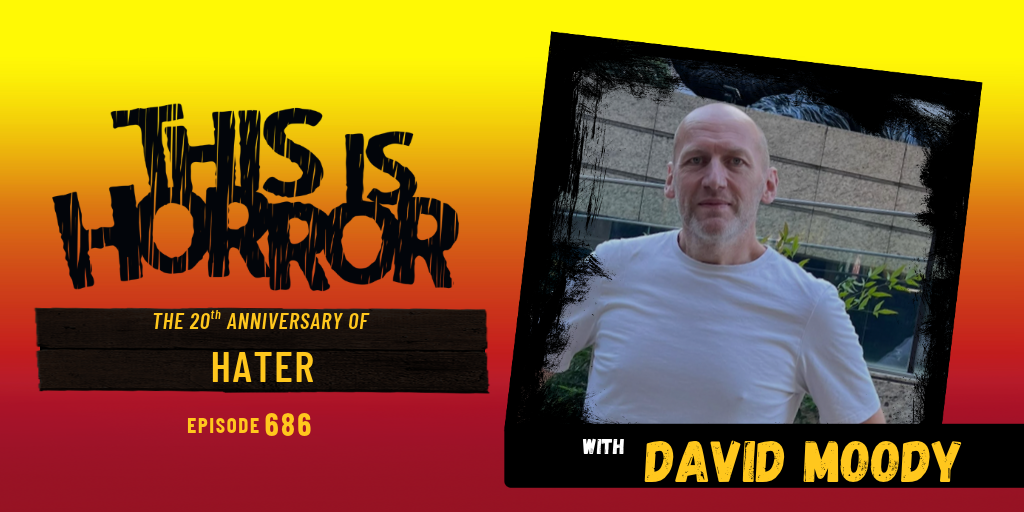
In this podcast, David Moody talks about the 20th anniversary of Hater and much more.
About David Moody
David Moody first self-published Hater in 2006, and without an agent, succeeded in selling the film rights for the novel to Mark Johnson (producer, Breaking Bad) and Guillermo Del Toro (director, The Shape of Water, Pan’s Labyrinth). His seminal zombie novel Autumn was made into an (admittedly terrible) movie starring Dexter Fletcher and David Carradine. Moody has an unhealthy fascination with the end of the world and writes books about ordinary folks going through absolute hell. His latest book is Kemberton.
Timestamps
[03:40] Conversation start/what shaped Hater
[13:35] Pacing and plot turns
[22:20] The relevance of Hater today
[34:45] The idea and inspiration behind Hater
[40:35] The book’s publishing history and film adaptation
[1:06:00] Bonus stories in the anniversary edition
[1:16:00] Orion Zangara illustrations and art
[1:22:45] Order the limited edition
[1:27:30] The Dirty Day deal
Thanks for Listening!
Help out the show:
- Support This Is Horror on Patreon
- Listen to This Is Horror Podcast on Apple
- Listen to This Is Horror Podcast on Spotify
- Rate and review the This Is Horror Podcast on Apple Podcasts
- Share the episode on Facebook and X
- Subscribe to This Is Horror podcast RSS Feed
Let us know how you enjoyed this episode:
- Write a comment below.
- Follow us and get in touch on Instagram @thisishorrorpodcast
- Subscribe and comment on YouTube @thisishorrorpodcast
- Follow us and get in touch on TikTok @thisishorrorpodcast
- Tweet us @thisishorror.
Resources
- David Moody
- Watch the video version of This Is Horror Podcast episodes, including our conversation with Chuck Palahniuk on YouTube.
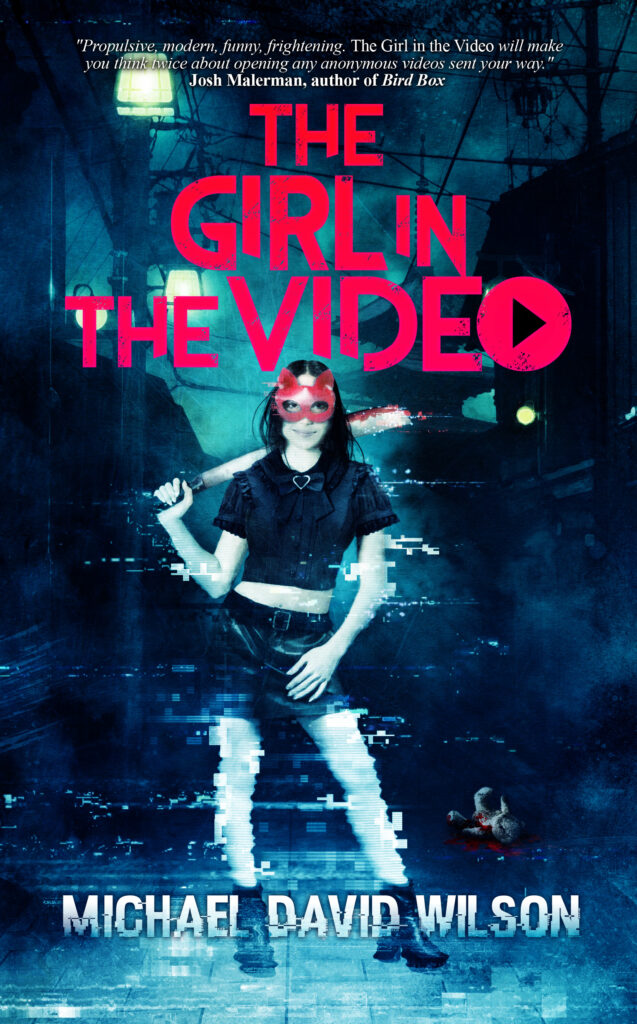
House of Bad Memories by Michael David Wilson
From the author of The Girl in the Video comes a darkly comic thriller with an edge-of-your-seat climax.
Denny just wants to be the world’s best dad to his baby daughter, but things get messy when he starts hallucinating his estranged abusive stepfather, Frank. Then Frank winds up dead and Denny is held hostage by his junkie half-sister who demands he uncovers the cause of her father’s death.
Will Denny defeat his demons or be perpetually tortured for refusing to answer impossible questions?
House of Bad Memories is Funny Games meets This Is England with a Rosemary’s Baby under-taste.
Buy House of Bad Memories from Cemetery Gates Media
Buy the House of Bad Memories audiobook
Something Macabre: 13 Classic Gothic Horror Stories and their Origin Explained
From the outdated mental health treatment that inspired “The Yellow Wallpaper,” to the original vampire myths that predated Dracula and Twilight, to creatures from Muslim and Japanese folklore, this collection of thirteen short stories explores why readers found these stories scary and what influences they still have on modern society. Edited by Arthur Short.
Michael David Wilson 0:28
Welcome to This Is Horror, a podcast for readers, writers, and creators. I'm Michael David Wilson, and every episode I chat to the world's best writers about writing, life lessons, creativity, and much more. Today I am welcoming back David Moody to talk about his forthcoming 20th anniversary of one of his most infamous books, Hater, a book that is so beloved that Guillermo del Toro says of it, it is a head-spinning thrill ride, a cautionary tale about the most salient emotion of the 21st century, hater will haunt you long after you read the last page. And let me tell you, Del Toro is not wrong. And with this special edition, you are getting so much. You are getting 10 original illustrations of key scenes from the novel by artist Orion Zangara, you are getting illustrated endpapers. You are getting approximately 40,000 words of original additional content, which is incredible on its own. You're getting brand new cover art by Ian Hill, a foiled blocked jacket and spine, and you were getting all of this for the bargain price of 40 pounds. So it is well worth your time and money. We are going to really get into the details of this, but before that, let's have a quick advert break.
Arthur Short 2:24
Remember, it's just a story, right? Something macabre: 13 classic gothic horror stories and their origins explained by Arthur Short uncovers the terrifying truths behind fiction. Was Bluebird a real serial killer? Did a vampire stalk an English manor? What horrors inspired America's most famous ghost stories? Discover the chilling history behind 13 gothic classics with original illustrations by the author Something Macab. Available now from Lions Press wherever books are sold. Sleep well.
Bob Pastorella 2:55
House of Bad Memories, the debut novel from Michael David Wilson, is out now via Cemetery Gates Media. Denny just wants to be the world's best dad to his baby daughter, but things get messy when he starts hallucinating his estranged, abusive stepfather Frank. Then Frank winds up dead, and Denny is held hostage by his junky half sister, who demands he uncovers the cause of her father's death. Will Denny defeat his demons, or be perpetually tortured for refusing to answer impossible questions, Clay McLeod Chapman says, "House of Bad Memories hit so hard you'll spit teeth out once you're done reading it." House of Bad Memories by Michael David Wilson, available now in paperback, ebook, and audio.
Michael David Wilson 3:38
Okay, without saying, here it is. It is David. Moody on This Is Horror. Dave, welcome back to This Is Horror.
David Moody 3:54
Well, thank you for having me yet again. I think I've I've set a record this year for the number of times that that you've had me on, and I hope it's not getting too boring for people listening. If people still are listening, I hope they're not thinking, "Oh, it's him again." We only heard that last week or last month. But no, I appreciate it. Thank you.
Michael David Wilson 4:12
Yeah, if I have you on much more, I might have to start paying you. So this could be the last appearance of the year. Just financially speaking seems sensible for me.
David Moody 4:24
Fair enough. You've set out your story. You tell me where I stand. That's fine.
Michael David Wilson 4:27
But we are here because you are releasing imminently the 20th anniversary limited edition of Hater, and I feel that not only is Hater a special book to you, but it's a special book to me because it was my introduction to your work. It was the reason that I first interviewed you about goodness what 15 more than 15 years. At this point,
David Moody 5:01
yeah, I think it would have been like two 2009. The book had its official re-release after my Infected Books release.
Marcus Kliewer 5:08
Yeah,
David Moody 5:08
yeah, long time ago.
Michael David Wilson 5:11
It's been interesting too because when I first read it, I was in my mid 20s, and now in in my 40s, like I have a different appreciation for it, particularly, you know, the the start and the way that everything gets going, the frustrations that the main character Danny has. But what I want to know to begin with is, what state were you in when you first wrote Hater. What was the mindset? Where were you in life?
David Moody 5:46
That's a good question, and and that allows me to get my first plug in for the book because there's a I've done put together a wealth of additional material. I think there's as much additional material as there as it's as long as the original novel or just about, and and one of the things I've done is just look back, and I can't think of a better word, but I hate to use the word essay because it sounds so boring and formal. But I have done a kind of essay in retrospect, having a look at it, and and yeah, that's that's kind of forced me to go back and look at where I was. So so basically, I'd worked for HSBC for a high street bank for a long time, and that was about as exciting as you can imagine. Got me, and but as I was approaching the end of my time at HSBC, I started to make money from writing. I released the autumn books, the first autumn books, and I was giving the first one away, but other people were downloading and paying for the second and the third book. So I thought, oh, I know, I can, I can do this. I can, I can make some money from it. I can maybe make a living from it. So I was made redundant from HSBC, but but I left thinking, if I want to do this full time, I know how much money I'm making from the few books I've got out already. I just need to write X number more books, and hope that it's kind of exponential, or you know, hope hope that I'll be able to earn enough. So that's where I was when I went to Write Hater, but things didn't work out because that's a bit of an ambitious aim, and it was it was very different time then. It was before e-books had got a foothold. No such thing as audio books, and independent publishing was was very very new. A lot of people weren't sold on it, which is why I ended up giving about half a million copies of Autumn away because I couldn't get people to buy them, well, not that I couldn't get them to buy them, and they just there was no real mechanism to get the book to them other than giving it away. So I ended up going back and doing a series of different jobs. I worked for a debt management company, which turned out to be just a really bizarre, immoral con, and I hope nobody who worked there is listening to to this now because there were some lovely people there, but the whole setup was just ridiculous. That they would charge people to look after their finances for them, charge people to look after their debts and consolidate them. But the the you know the clues in in the in the word charge, there they were charging people to do that, and therefore increasing the debt. And when they couldn't pay, because they couldn't pay their debts anyway, they sent them to the debt collector that the same people owned, just a few doors down the hall. It was it was very weird, very dodgy. But that kind of got me thinking about Hater in a weird way, because apart from the fact that I came up with the idea when I was on an incredibly dull day out with the director. I can't remember where we were going or what we were doing. I just remember crawling at the door of the car trying to get out. And I was just thinking, how how can you be somebody who professes to want to help somebody, and what you're actually doing is ripping them off and making their situation worse, and it was just that little spark on a horrible day trip down the M5 or M4 or whatever it was that really triggered the ideas for Hater. But looking back at it now, and I reread it, I've reread it twice now in the last six months for this for the new edition. Haven't done any, haven't made any changes to it. I just, I just reread it just to familiarize myself with it again.
David Moody 9:25
But what really becomes apparent for me is that the, the thing that had changed the most in my life was the fact that I had a wife and five kids, and when I started writing, I, I was just this lad living at my mom and dad's house, just just trying to chat to my mom. I had absolutely no life experience, but then Lisa and I got together and found myself bringing up a big family in a very small house and having to make the money that had had been comfortably supporting me on. Own having to make that feed seven pounds and pay a mortgage and so on, and so I think that is the root of of Danny's character in there, and it really came came through to me looking at it again, just how I wasn't miserable, but just how tough it was. You know, I wouldn't want to go back there. I wouldn't want to swap. And the scene I always refer to is that there's a scene where Danny it's a Saturday morning, and he can't escape the kids, and they're arguing over what they want to watch on TV, and he shuts himself in the toilet, but he realizes he hasn't fixed the lock in the toilet, and that was his job, and he was supposed to do it last week, so he ends up sitting on the throne with his legs stretched out, keeping the door blocked, looking at the window behind him, thinking, "Can I get out of that?" And that was that was pretty typical of of the kind of stuff that was going on in our household and the in the the lead up to Writing Hater. That was a very long winded answer. I hope I actually answered the question you asked there.
Michael David Wilson 11:00
No, you certainly did because I wanted to have a picture painted in terms of where you were, and actually, yeah, for me too. When I was rereading it, it really came across just how discontent Danny was with his family life and his domestic situation, and I think too. You know, as I said, when I first read it, I was in my mid 20s with no children. Right now, 40s with two children, one of which is a baby. So,
David Moody 11:36
yeah,
Michael David Wilson 11:36
I, I could really see how you you channeled any of the negative emotions that you can get when you're in that situation, and you're sleep deprived, which is a key component, and you just absolutely dialed it up. And I thought too, as well related to that, the pacing of hater is really interesting because to begin with, when the inciting incident hasn't happened, Danny's own discontent, his own hate, is just bubbling away. You know something is going to happen because he he's just upset with all these elements in his life, with his his job, with the situation that he finds himself in, with his family, with his lack of freedom. Now that he has all these responsibilities, so you've got a slow burn as it boils away. But then, as soon as we get into the them or us, we get into okay, haters are here, and like I, I don't think it's a spoiler to say that Danny and his family have to flee; that they are divided. One is in the hater category. One is not in the hater category, at that point the pace is just blistering. It's crazy,
David Moody 13:07
isn't it? Yeah,
Michael David Wilson 13:08
yeah. And suddenly, you know, when it is them or us, when it is kill or be killed, domestic troubles don't matter anymore. It's funny how it throws things into perspective, and I don't know if that was something you were really conscious of in terms of the pacing when you initially wrote it, but it was so effective. Yeah,
David Moody 13:34
the the book developed very organically. I had I the writing of the first part, Danny's family situation and the frustrations that he has, and these violent attacks that are happening randomly but with increasing regularity, you know, them starting to encroach on his family's lives, that all flowed very easily. But there's the key scene, I think, which we've kind of alluded to already where the family gets split, and and and yeah, from that point on, everything did just accelerate. And I don't don't know whether that was a conscious decision, but again, going back to it for the 20th anniversary, it's something that I've I've looked at and I've been thinking about it a hell of a lot over the last couple of weeks because, and one example is AI. So we've got this AI issue at the moment, and depending on who you talk to and what they're going to get out of it, at any given moment, AI could get smart and do something that's going to wipe us all out. That's that's the story we're getting, and you know that there's there's got to be some truth in that. I think you can't rule it out as as fear mongering or or scaremongering rather, or as the AI companies trying to justify their existence and get more money, saying that we're the only ones that can protect you from this thing that we've created. But I I think we still. Have a tendency to to listen to that, be scared by the headlines, and then think, "Oh well, what's on TV?" Or "Oh well, what? Let's go. Let's go to work now. Or let's go for a run. Let's go for a swim. Or let's go to the pub, or whatever." It's so easy to kick the can down the road, and I think that's what Danny and Lizzie and and the whole family set up that that that's what they were doing, and it and the point that we're talking about where the split in the family arrives, that's where suddenly they all have to confront what's happened, and so things do speed up because they've been in their little flat that they despise, locked away from everybody else, and and another thing that I was more aware of this time around is that you know they're sitting there trying to keep themselves together, but we we we don't see the the speed with which the world is falling apart outside. So when they do get outside, it's all gone to shit already, and everything just goes like you say, blistering at 100 miles an hour, and you know, within a couple of days of the change, that one of the characters is in a gas chamber, and so on and so on. It's a yeah, it's a it's a very it's a very rapid acceleration towards the end.
Michael David Wilson 16:15
And I wonder too when you first wrote it. So for the Initial draft was this something that was planned out, or did you pants it? I'm sure that 15 years ago I asked you the same question, but as I don't remember exactly everything,
David Moody 16:36
sadly I do remember exactly everything, so I can tell you, it it was plotted out, but the issue I had was I'd plotted the whole thing out, and the reason that the first half of the book was easy to write and it flowed, compared to the the second half, was because the second half of the book in the original plan it really went down a more traditional survival horror route, but it was literally when I'm when I was writing the key scene, which was initially the the roles were reversed. But then I thought, oh, hang on a minute, that that's just what what everybody else would do. What if I switch things up and did a complete 360 or 180, not a 360. I've heard that. I've said that twice today. If I did a 360, I'd be going the same way again, wouldn't I? Right, a 180. Do a complete 180 and send the story in a completely different direction. And that was when I really broke the back of the book. That's when it. That's when it all came together.
Michael David Wilson 17:38
Yeah, I think if you hadn't done that, then it it wouldn't have been as effective. Because, as I said, then you look at almost the foreshadowing. It had all gone in that direction. That that's what that was. Well, as as Bob often says, it was inevitable but unpredictable, and that is good storytelling.
David Moody 18:04
I appreciate that. Thank you. I know that it made, yeah, it did make a big difference to the reception of the book because everybody was talking about how it something happens two thirds of the way through, which you you do not expect, and and it was and it was great, and I think that the characters were perfectly positioned to do that because they were so mundane, and they were so boring, and they were so just like us dealing with day day to day crap. You know, you wouldn't have expected any of them to to go the route that they go towards the end, and I think it caught a lot of people by surprise.
Michael David Wilson 18:43
Now the the mundane you did perfectly, and particularly in the pub scene when the family are going for a pub lunch. I mean, it actually reminded me of my childhood and a lot of the tension there, and you know when one of the kids tries to order the most expensive item on the menu, and it's like, what are you doing? And you know, they don't even
David Moody 19:08
like lobster turbine or
Michael David Wilson 19:09
yeah, yeah, that's it. But I, I mean, I, I think as as well, it almost yeah, it was almost nostalgic for for the the 90s and the noughties in the UK for me because you know being much further removed from that now I mean geographically too with me being in Japan but you really captured those details
David Moody 19:38
that that's been a really interesting thing to look at, and again, it's something else I touch at, touch on in the book. The fact that it was written in 2006, so although we were online and we'd got mobile phones, etc., you know, it's it's incredible how much technology has advanced and how much it has become an intrinsic part of. Our lives over the last 20 years, you know, it was there, but it was just an add-on that was occasionally useful. And I've written a few short stories for for this release. One of them is is it kind of branches off from the main novel, so that's set at the same time. But then I was just going through the final edits today, and and the editor I've been working with said, "Well, you you know you're talking about doom scrolling here and Bluetooth and maps on the phone, and that wasn't around in 2006. So when exactly is this set?" But but it just came very easily to write the news stories as of today, which I hope isn't too jarring for people to read. But you know, he's just we could just imagine that Danny and his family were very under reliant on technology back then.
Michael David Wilson 20:50
So then, when your editor pointed these things out, did you correct it or did you decide you're going to leave it in?
David Moody 21:00
I've just left it in. It doesn't. In reading the whole thing together, it doesn't. It's not. It's not too jarring. I think that there are occasions. There are there are things that date Hater now, and there's a scene where Danny's, you know, trying to find something to do. So he digs out a pile of music magazines from under his bed that he hasn't looked at for years, and who has a pile of music magazines under their bed anymore? You know, and there's arguments over which channel the kids want to watch on TV, and there are no no computers in the house, and nobody's online. So I think it's it's dated if you look for it, but hopefully the the story and what's happening to the people is still relevant enough to to to keep it going through.
Michael David Wilson 21:50
Yeah, although the pile of magazines was another part that made me nostalgic. You know, there was a kind of warmth for fondness to it. So I I don't see it as being dated in a bad way, you know. Just like Stranger Things, it's clearly over time. This is over time. Does that mean it's a period piece? Can we say that for 2006? I mean, I don't. I feel like a period
David Moody 22:19
piece. I can tell you that,
Michael David Wilson 22:22
but I mean something that we said the first time we spoke, and something I was feeling as I was reading it now, was the story almost feels more relevant now than it was when you wrote it, and then that got me thinking: is it more relevant now, or do we just always think that the moment that we're in is the moment with the most division? Because I think it was Steven Pinker who said exactly that: that we always feel that we're in the moment of the most conflict. But if we look historically, generally, things are getting better.
David Moody 23:05
Yeah,
Michael David Wilson 23:05
obviously we have our ups and downs, but I I guess because there is always conflict, it means that the story of them or us will always be relevant. So not only is it our yeah yeah it's timeless.
David Moody 23:24
I remember I did many years ago. I did a book convention, and Hugh Howie was there, and we were on a panel together. You know, Hugh from Wall Wall Silo, as it's as it's better known now. And he, we were talking about the apocalypse, Armageddon, and he he read out a quote, which sounded like it could have been written yesterday about how you know we're doomed. It's the end. Forces are conspiring against us. We haven't got left long left as a civilization, and and then he revealed that it was it was from the Roman era, or it was certainly hundreds of 1000s, hundreds of 1000s, hundreds or 1000s of of years ago. So I think that it is always there. But that said, I do think again, looking at at Hater and how it has just refused to to die over the last 20 years, I I think it has become more relevant, and I think that's because the the the device that I used in Hater, the divide, the split between us and them. To me, it just feels like we're we're closer to that than we ever have been before. You try and have a a political debate with anybody now, and chances are that it'll go nowhere. You'll end up falling out because people's positions are entrenched, and there's there's hardly any room for for maneuver, is there? And I think you know, I started off thinking, well, what what caused the hate, and always thought it was something genetic or a virus or something. But as time has gone on, I've I've just come to the conclusion that it's an ideology. In fact, one one of the film conversations that we had when I was working with Ed Barrett from from Newcastle, we he was trying to get it pitched to studios in America just when Trump was running for re-election. I think it was, but he he was pitching it as "Make America Hate Again," and it was, you know, it's so close, really. I think we are, we are at the moment so polarized as a civilization. I think it really it plays into a lot of the themes of theta.
Michael David Wilson 25:34
Yeah, yeah. Well, I mean, in terms of you know a film or a TV show adaptation, and we're hopefully going to be able to talk about that a bit later. I mean, if if you were looking at pitching it, make America hate again is just perfect. And particularly, I mean, in a way, that's what I don't know if you've seen it, but the the Amazon show The Boys essentially did like it as it progressed, it mirrored closer and closer to reality and to the divide that people were in, and I think there's an appetite for that because again, it's so relatable, and I mean, I will certainly say that you know when I was at university in in the noughties, you could have a political debate with people on different sides, and you could just about come to an understanding. This is in the UK, so it may have been different in America, but I feel just now there's no room for nuance. We can say that there is a party that we most align with, and you know that that would probably be true for most of us. But then there's almost this weird thing where we're not allowed to say, well, actually, the other party maybe they have one good point, and then it could have 1000s that are rung, or equally we can't say actually our party that we like, but they have a few points that we're against, and it just doesn't feel human, and it doesn't feel real, and it doesn't feel honest because what are the chances of a political party existing where every single point you agree with it? It's like it was made just for you. If that happens, you might be in a kind of horror movie of your own because that sounds like some magic is going on there. But
David Moody 27:40
that's the impossibility of politics, isn't it? And I think it's something that that we don't. Politics, I think, is inherently dishonest on a lot of levels. I mean, the the people that we've got running certain countries at the moment go, if if they applied to have a job and you were recruiting, you'd chuck them out of the sift, you know. You wouldn't even consider them, but they get elected to these positions of absolute power. Um, and I've totally, I was thinking about somebody orange dan, and I've totally lost my my thread of what the point I was going to make. But, but yeah, you you get the gist. It's so you you have to nail your colors to the mast, or nail your flag to the lamppost, as we do here in the UK at the moment.
Bob Pastorella 28:28
I think the thing that made it feel like on on my reread more relevant was the the but the basically the way the media was was being portrayed, and I I felt like you know yeah this book was written in 2006 and so on but I mean I felt like I was reading stuff about the way that the media is portrayed today like right now and it it it's to me that that's one of the scariest things because that is how people gather information and our media is being manipulated in so many ways in so many directions that we we question what's real, you know, and it's it's and the people that are doing the manipulating love that they can't wait for you to think that something that they created was real. They're so excited about that, and to me, that that's like that's the scariest shit.
David Moody 29:36
Yeah,
Bob Pastorella 29:36
because they could they could pull the wool out from underneath us, and we wouldn't even realize it, and we'd probably enjoy it because, and and and in the masses, you know, we're not we're not very we're not very smart, you know. So
David Moody 29:51
you're absolutely right.
Bob Pastorella 29:53
It's sickening, you know.
David Moody 29:54
Yeah, the fact that so I was going to say the fact that fact that politicians. Can say so many things now that are demonstrably false, or they can contradict themselves, or they say things that are a blatant lie and there to be no comeback. It's just astonishing because, again, going back to to working and doing a job, if you get caught out lying and it has implications, you could well be you could be gone. I sack people for lying to me, you know.
Bob Pastorella 30:22
Yeah, I mean, I deal with I deal with the public on a daily basis, and you would be surprised how many people lie. And then when you catch them in a lie, they they they they don't they they don't even. It's like they eat it. They eat it and spit right back at you. And it's like, golly, I'm I'm old enough to know that if I lie about something, I get caught, then I'm gonna feel ashamed that I actually even tried to pull the wool over someone's eyes. That's just me. So we're dealing with a totally different type of mindset on on a lot of these people. That oh well, you caught me in a lie, ha ha ha. I'm still gonna win, you know. It's like, well, no, maybe not. I don't know. I can understand why people get violent.
David Moody 31:08
Yeah, no, absolutely. Yeah, write a book about it. Yeah, yeah, exactly. I think just going back to what we were talking about a few minutes ago about how how the the story may have have dated the one technology related thing. I think that is very conspicuous by its absence now. Reading back is social media, because there's there's no mention at all. And I think, you know, I've thought about this quite a bit as I've I've looked at the novel and tried to imagine it today. That I think things would accelerate. It that that this the length of the book is about a week, I think, just over a week from the first signs of trouble to things the shit really hit in the fan. But I think you know, had social media been at play when Hater was written, I think it would have happened in half that time, probably.
Bob Pastorella 31:58
I think that people don't probably don't realize too the amount of of how fast your your infrastructure can can go down, and I unfortunately live in the coast. I have lived through multiple hurricanes, have to leave for almost a month at a time before we're even able to come back, and even then, there's absolutely no infrastructure at all. When you when you return home, your your street lights aren't working. Businesses are shuttered and closed. You know, you you go to check the mailbox. There's no mail. They didn't deliver any mail. You know, you've got freezers full of rotted food, and and no and no garbage, no municipals to come to take the garbage away or anything like that. And that, if you've lived through that, then that was that felt very you know not not cool nostalgia reading hater. You know, it's like, oh, I've lived through this shit. But if you haven't lived through it and you only see it from the lens of the book, then, then, I mean, I think you you nailed you nailed a a lot of it. It's just, you know, it's just everything breaks down extremely fast, and all it takes is just one one flood, one high wind, you know, sustained at 80 miles an hour for four hours, and you're you're hosed. And so when you have a mass of people trying to kill one another, yeah, things can go bad pretty fast.
David Moody 33:36
Yeah, just imagine trying to do anything now without the internet. I was thinking about that the other day again, looking at AI. If I, if if somebody was saying an AI could knock out the internet, you'd you'd be absolutely crippled. I wouldn't have an income. I think a lot of us wouldn't have an income. It's you wouldn't be able to find out what was going on. It's just it's we're so dependent on these things, aren't we? As you're saying, Bob. Yeah, we are. I mean, they're so fragile.
Bob Pastorella 34:04
It's a fragile system. I mean, like our our our water municipalities run off off of the internet, run off computers. There's there's you know the the computers are running the show. They have people who man the computers have engineers who do that kind of stuff. But without it, then you you basically you you have maybe 1010 days of good water, and after that, the the the the levels get so out of whack that it's like don't don't drink it. You probably don't even want to touch it. And but it's without computers, you're just going down a tube, going down the drain.
David Moody 34:43
Yeah, I really
Michael David Wilson 34:46
want to go back to the start because I want to know what was the initial impetus for writing Hater. What was that first spark of an idea?
David Moody 34:59
Well. Apart from being trapped in a car with a bloke I couldn't stand on the M5 for for a day, which is where the the first real spark of the idea came from, I I actually it was the it was the idea of writing about a division because I'd written about zombies for years, and that's quite an obvious split. You know, you dead dead or alive. But I thought it'd be interesting to look at some other kind of something else that would allow kind of both both sides of the divide to continue to function. Because that's the the thing about zombies, isn't it? You know, when when they're dead, they're dead, and they're just a nuisance. Really, there's there's not a lot of computational power in their heads, and it's it can be quite a bland and generic story. So I started to think about that, and weirdly, it started off as a werewolf novel. I don't know; it came after Hater, but I'm sure you've seen Stakeland or you remember Stakeland, yeah. So for anybody who hasn't, I think that the the gist of it is that vampires have won, and and there's only a few non vampires left. And I just tried to imagine, well, what if something like that happened with with werewolves, and it was that that obvious a split. But then the more I thought about it, the more I realized that that doesn't work. So I think werewolves are so bizarre. It only really works with the traditional story of some poor bugger getting bit and having to kill themselves to sever the bloodline and so on and so on. So then I started looking at other divides and just what what other devices I could use to to split the human race in half. It went through lots of really bizarre variations. There was one. I wouldn't say it's not a draft. It was it was a set of notes where half of the population became physically repellent to the other half. And I know, you know, there's a there's a lot of that already. But I just imagined if if half the population with a certain gene developed a really disgusting odor, or lost all their hair, or had some foul skin issue. That these people would bond, the other people would bond, and it would just split everything in half. But again, that was just too schlocky. That was just too silly. It wasn't going to work. But where the where the hate came from was the seven seven bombings in London. I don't know if you remember that. So in July 2005, I think 2005 or 2006. But London was hit by four suicide bombers, and and what absolutely chilled me to the core was the was the fact that the leader of the of these bombers. I can't remember the chap's name. He he was the guy who blew himself up on the on the top deck of a bus because his his comrades had already blown themselves up on tube trains, and the tube that he was supposed to be going on wasn't wasn't working, wasn't running. But the thing that got me was this guy was a married man with a young child, and his job was he was a classroom assistant in a junior school. So he spent his days trying to help kids develop and trying to educate them and bring them into the world and bring them up in the world and give them a good a good footing, and I just thought, what what could possibly make somebody do that one day, and then the next day go into London with a rucksack full of ball bearings and propellants and whatever it was that they they put in the bomb with the sole intention of killing as many people as possible, and I just thought the fact that we'd all got that potential within us, you know, we suppress it. But what if that suppression suppression mechanism failed? What if it wasn't there? And that was really the genesis of the hate.
Michael David Wilson 38:54
And I think you really succinctly in hater put that idea across as well when there's a conversation after Danny has been, let's say, exiled and is is is talking to other people of his condition. Like I'm not even sure if it's a spoiler to say whether Danny is a hater or not. Even though you released us over 20 years ago, and it turns out it's
David Moody 39:23
hard hard to avoid now. Yeah,
Michael David Wilson 39:24
yeah, but but yeah, they're saying, "Look, we're the ones who are called haters, but they hate just as much as we do. It's just we're better at dealing with it."
David Moody 39:39
Yeah, from the very opening of the book, all all the haters that we follow, you know, it's a it's a horrible cheesy name for them. I'm sure it will never make it to the film, but it was it back in 2006. It was kind of an outlying slang phrase. It wasn't very used very much, so I just about got away with it. But all of the haters that we follow in the book, they they all make it very clear that they they do what they do because of the hate coming from the other side, and that's why the tagline was always "kill or be killed, hate or be hated," because they they they genuinely believe that they were the ones who were hard done by and just had to kill because if they didn't, it was their necks on the line. It's the old cliche, isn't it? The one man's terrorist is another man's freedom fighter. It's just which side of the divide you fall on.
Michael David Wilson 40:34
And you know, as we've mentioned the film a number of times, we've we've alluded to it. I mean, this is the other part of the the hater puzzle and the hater journey. Because, I mean, you you said that originally it was published by Infected Books, so your independent imprint.
David Moody 40:55
Yeah,
Michael David Wilson 40:56
I want to know when and how it then got picked up by the bigger presses, Saint Martin's Press, and then when the film adaptation, when the film rights initially became part of the conversation, because I'm not sure whether it was picked up by Saint Martin's or whether it had interest in the film side first.
David Moody 41:22
Yeah, it's very very weird story, and and I still find it hard 20 years later to to believe that it happened. Again, this is something that I've gone back and looked at. I'm I'm a I'm an absolute dickhead for emails. I never delete emails. I just keep archives of them going way way back, and I found my first ever contact. So the first contact came from Granvia, the public, the production company was called, and that's Mark Johnson's company. And Mark Johnson, for people who who don't know, he at that point he'd won an Oscar for Rain Man. He was working on the the last iteration of the Chronicles of Narnia films, and he was just a couple of years away from being one of the producers of Breaking Bad and Better Corsor. So I had an email from his production company, and and ridiculously, it was one month after the book had come out. So I'd sold like just I don't know just a couple of 100 copies, maybe maybe 500 copies because it was a lot. I was selling independently in lot in decent numbers back then, and so you know this this this book somehow ended up on the desk of of these people, and I was convinced that it was a it was a joke because some of my friends had form. I think the first time I had a book signing announced, they bombarded the some dickheads I used to know, bombarded the store with phone call saying, "When's he coming? What's he going to be doing?" So the the store thought there was going to be like 1000 people turn up, and it was just just me and an empty desk. So I thought it was a joke to start with. Did a bit of digging, you know. Signed up for IMDb Pro and just mooched around and and saw that you know these were genuine people. So I spent an eternity kind of constructing a reply, which hopefully didn't give all my cards away and didn't make me sound like the complete novice that I was because I was completely on my own end, no had no representation at all. And yeah, within a within a day, I'd had replies trying to set up a meeting with Mark Johnson, a phone call, and then within a week, I was talking to Mark, and that's when he dropped the bombshell that he wanted Guillermo del Toro to direct it at that stage, and so it was just it was just incredible. I have no idea how it originally got to them. The link is the link with St Martin's Press. So so that came about a month or so after. I had an email from John Schoenfelder, who was an editor at Thomas Dun Books, the link was that his business partner was Guillermo del Toro's PA at the time, I believe. So they just they just spoke, and it was it's just the the most bizarre set of coincidences that just had the most incredible effect on on me and my life and my career,
Michael David Wilson 44:22
and so now I understand that finally, after a lot of ups and downs, after quite the roller coaster of a journey, that things are looking very positive for that movie adaptation coming to fruition,
David Moody 44:42
yeah. What can you
Michael David Wilson 44:43
say?
David Moody 44:45
It's so frustrating because it it's not been publicly announced yet. But I can allude. Should we say that? Yeah, it got very close first time around. Del Toro was whisked away by Peter Jackson to work. On The Hobbit, so the director's chair was vacant, and J A Bayona, who made The Orphanage, and went on to direct films like The Impossible and Society of the Snow, I think it's called, and one of the one of the better Jurassic World films. So he was going to direct it. Glen Mazzara, who I know you've spoken to, you've had him on the podcast, he wrote the script, but as as often happens with these things, it just it fell apart at the last minute. So it went round and around a little bit. Option was renewed a couple of times, but then it wasn't really going anywhere, and it was just a very small amount of money that that I was being offered each time, and I got a better offer from Ed Barrett, a chap I've already mentioned in the UK, he bought the film rights. Came very close to getting a pilot filmed with Sony at one point, but then they came back to me, Del Toro and the Grand Via people, and apparently he calls it the one that got away. I know he has a lot that get away because he's notorious for for having so many different projects that that never come to fruition. But they made a really good offer, which I obviously accepted, and it almost immediately then got set up with one of the major streamers, And there's there's no way I can say it without giving it away, so I won't say anything. That's gone through a couple of scripts. the The last script didn't work out too well, so Del Toro has brought in new writers, really interesting writers. Again, I don't think they've been properly announced, so I don't I can't talk about them, but I'm expecting the script to be delivered by the end of fall, whenever that is. I know we call it autumn, but I'm guessing like end of November, something like that. So we'll see where we go after that. But I'm very hopeful that things are going to happen.
Michael David Wilson 46:55
Is that literally what they've said? The end of fall. So it is a bit ambiguous because then you have to decide right when does autumn end and when to start
David Moody 47:05
meteorological or calendar fall yeah
Michael David Wilson 47:08
yeah yeah well I mean I know from my own dealings with Hollywood around mid November to mid January it all kind of closes down and they stop commissioning things. So if you're looking at pitching an idea for the screen, you know, and you've got it in November, really you have to pick it back up in mid January, start February. So maybe that means you'll have it by maybe mid November if we go on on that logic,
David Moody 47:43
maybe I'm just very green because I've gone through the last 20 years telling people, "Oh yeah, it's definitely happening. It's definitely happening." But the thing is, it's never died. The project has never died so far. I've never been told, "Oh, you know what? There's no legs. We're not going to. We're not going to renew this time." There's always interest in it. It's just, it's a really. I think it's a really difficult one to adapt. I think it's very easy to write a script that's very horror focused, but I think the real key to Hater is the sociological aspect of it. And I think the the adaptations that have come before and have been about four or five different scripts now. I think they've all been lacking in the sociological side of things, and that's where the real horror is for me.
Michael David Wilson 48:30
Yeah. See, what I would want with an ideal film adaptation is something that mirrors the pace of the book that we spoke about before. You know, almost that kill list style, where to begin with, it seems like it is a social drama, a social drama with a lot of anger and a lot of tension, but nonetheless something so that when the inciting incident happens, when the family are divided, it's completely shocking, and it goes from a from that to a blistering conclusion.
David Moody 49:10
I mean, I I always talk. One of my favorite films that I'm constantly referring to is Threads, you know, the BBC nuclear film.
Michael David Wilson 49:17
Oh yeah, yeah,
David Moody 49:19
and absolutely terrifying, absolutely superb. But I, I think I still think the the key to that there's two two real things. One's a documentary kind of style that they have wrapping around it all, but the real genius in that in Barry Hines's script, I think, is the fact that it's the first half plays like Coronation Street. No, it's like a soap opera, but you're just aware of something not great happening in the background. Again, it's like it's like we were saying before: we bury our heads in the sand for so long until we're forced not to. And I think that yeah, if we were to take that approach with Hater, and the first half or first two thirds of the story is just very small. And this little family unit, we get we get to know them, we get to like them or not like them. In Danny's case, because he annoys a lot of people, but then something absolutely traumatic and horrible happens to him. I think it really increases the the emotion that you feel for them.
Bob Pastorella 50:17
Yeah, it feels like kill this is like that's that's kind of like maybe the template, but I mean, it's more. I'm thinking about it. I mean, the the and when you say, especially the societal aspects of it, and it's it's it's got J.G. Ballard written all over, like any anything that has to do with with that, because that was you know to me he was like the the opinion. It's like hater is like his work, but on steroids. You know, you know, yeah. It's like because there's there's obviously violence in his work, but but it ain't it ain't like hater. You know, so it's like, uh, but yeah, that's man. It's it's messing with my head. It makes me, I don't know. Just and I love that kind of stuff. I got to get, I got to get more of it.
David Moody 51:10
Yeah, well, hopefully coming coming to a screen near you. Honestly, you'll hear you will hear me shouting all the way from Japan, Michael. You will hear me where you are when they announce that they're finally making it, when they start filming, yeah, it's been a long road.
Michael David Wilson 51:26
Hope that you know they screen it in Japan as well, because you know that that that's an an issue here. And I mean, often because they want to put the Japanese subtitles on the film too, which you you can't blame them for. It is Japan, but it but it but it will mean that often you know when you're getting the film in the UK and America, we get it here in Japan two or three months later. Maybe if my Japanese can get better, I can say to them, look, I can turn around the subtitles quicker than that. Send me all the horror films. I'll get it done in a week.
David Moody 52:07
It was published in Japan when everything went crazy. When Thomas Dunn Books took took the took the series on, and when then when Guillermo del Toro blurb them, and and it just it exploded. Got sold to a lot of countries, and I think the Japanese edition, just for for sheer visuals, is one of my favorites. Tiny little book with a very bizarre cover. I haven't got it in here, unfortunately. I'm not going to nip out to the kitchen and get it. But I have a bookcase in the kitchen. I don't keep it in the kitchen cup. All my books in the kitchen cupboards.
Michael David Wilson 52:37
Yeah. No. I mean, I mean the standard paperback format in Japan is almost what in the UK we would see as like a pocket guide. That's
David Moody 52:47
yeah, yeah, that's the size.
Michael David Wilson 52:49
So yeah, that kind
David Moody 52:50
of size. Yeah,
Michael David Wilson 52:51
yeah, which I think is a great way of doing it because it also means that then the price of that paperback edition is much lower. So then more people can buy books, more people can read. This is surely a good thing, and particularly got to be
David Moody 53:07
a good thing.
Michael David Wilson 53:07
Yeah, in Japan, even now, you know, collecting physical media is much more a thing than in the UK and America. People want, you know, the the book or they want the disc version. So a lot of people in Japan aren't happy with what's going on with PlayStation at the moment. But that's another another story. Yeah, we were
David Moody 53:30
just talking about this before we started, weren't we, Bob? It's a yeah, it's a you. A lot of people want to have the physical thing in your hands, so nobody can take it away from you. And yeah, I'm there. I get that. Yeah,
Bob Pastorella 53:42
I mean, I I agree with that sentiment, but I mean, at the same time, you can't. I mean, of course, the companies are going to do that. It just tie everything's all tied together. There's just like a big, big, big grift with media, and so yeah, of course they're they're not, but that doesn't mean I'm not going to play Green Theft Auto. I've already you know got the whole weekend off, so yeah,
David Moody 54:14
it's a busy weekend that is, isn't it? So I know this is a bit of an aside, but I just I saw somebody posting on Instagram yesterday about how much stuff is landing that weekend because there's June part three, isn't there? Is what else? Some other big films I can't remember, and Grand Theft Auto same weekend. So I think you've done well to get the weekend off. I think a lot of people will be going for that.
Bob Pastorella 54:38
Yeah, and usually you think that a lot of people aren't going to schedule anything around that time? It's like, well, we're thinking about november 19, and there's some executive going, "No, no, no, you're not, no, you're not. You're thinking like december 2." Yeah. See,
David Moody 54:55
Avengers film, I think, is coming out the same weekend.
Bob Pastorella 54:58
Yeah, crazy. Yeah, if something great should happen, like Led Zeppelin should put out a new album or something like that, it would derail Grand Theft Auto completely. It would be terrible, but it would also be great.
David Moody 55:12
Yeah, don't think there's a lot of chance of that happening.
Bob Pastorella 55:16
Yeah, man.
David Moody 55:17
My brother met Robert Plant in Kidderminster, of all places. Well,
Michael David Wilson 55:20
yeah. Like, I mean, I don't know if this has ever came up, but I mean, he lived really near to Beauty. So often, when I was a high school student, I'd pass him on my walk to school, like multiple days. He's just walking around Beadley. He's just there. He's from a plant, you know. So just, just nod to him. All right, all right. Conversation. That's that's the way it is. And yeah, like I've never, I've never really wanted to be into celebrity worship in a way that would make someone feel awkward. You know, we're all just people at the end of the day, it would also get a bit repetitive if every fucking day I ran up to him and was like, "Oh my god, you're Robert Plant!" It's like, "Oh my god, you fucking do this every day." Go away,
David Moody 56:12
school kid. Get to school.
Michael David Wilson 56:14
Yeah. Anyway, yes. I mean, there's not really a way that you segue from I saw Robert Plant. No, we managed to segue into it. Yeah, I don't even know what we were. How do we segue? We're playing at there, but there's a
David Moody 56:31
banding. There's a banding hater. That's quite a segue. A real band? Do you know it's a real band? The men they couldn't hang.
Michael David Wilson 56:38
Ah, no, I'm well now. I do.
David Moody 56:43
Yeah, it's very weird. I was contacted by the singer, who was a fan of the autumn books, and it was just as I was writing the scene where Danny and Lizzie go to a concert and the band start knocking seven shades out of each other on the on the stage, and he said, "Oh, do you think that could be us. They were quite big in the 80s. They supported Barry at Milton Keene Boll, and they had a couple of top 10s. I think it was top 40 singles. So yeah, that was. There's a random fact that gets us back to Hater. There you go. It wasn't Robert Plant, but it was the men they couldn't hang.
Michael David Wilson 57:18
Yeah, was that just a kind of gentleman's agreement, or did did you have to get them all to sign some weird, I don't know, contract? Be like, right, I'm putting you in, but don't fucking sue me.
David Moody 57:33
Yeah, nothing, nothing was signed, but I did have it in writing that they were all happy with the levels of violence that they inflicted on each other,
Michael David Wilson 57:41
yeah, which was
David Moody 57:42
good. And they and they they gave me a ticket to a gig and got got a call out and everything. It was all very cool. It was all very rock and roll for a little while. It's not anymore.
Michael David Wilson 57:52
Well, I mean, hopefully that's coming back with with the movie things. Hope
David Moody 57:58
so. Hope so.
Michael David Wilson 58:00
Again, wanna I want to say more because I know a little bit more than we're alluding to, as well. But it yeah feels like an announcement will be coming.
David Moody 58:12
I think so.
Michael David Wilson 58:13
And you you said that you know all that interest happened basically about a month after you'd put Hater out, so
David Moody 58:22
yeah.
Michael David Wilson 58:23
In terms of the writing of Hater, I assume that it was always. Well, I was going to say I assume it's always envisioned as a trilogy, but actually, you said that originally it was quite a different novel. So then, did it only become a trilogy at the point that you were with the bigger publishers?
David Moody 58:48
It did, but by that stage, it was already a duology.
Michael David Wilson 58:52
Okay.
David Moody 58:52
Because in in the original edition of Hater, there's a page at the back advertising dog blood, and I hadn't got anything for for dog blood apart from the title at that stage and a very general gist of what was going to happen. Yeah, weird. If you want to go back onto 60s and 70s rock again, I came up with the title for dog blood while I was at a David Gilmore concert as we were walking through whatever the university is by the Royal Albert Hall, and just have to see the words "dog blood" together in a window. Anyway, that's unimportant. So yeah, it was envisaged as a as a duology. Once once I'd once I'd ironed out the the last third of the book, once I knew the direction it was going to go in, and once I'd established the divide in the family because it's an it's an uneven divide. I'm kind of skirting around the details here for people who haven't read it. I knew that the person who was displaced would want to get back to one or more of the kids, and so I knew there would be there was room for a follow up. I didn't know how Hater was going to. Going to land. I didn't know if people were going to like it, so I just took a punt and put a full page advert in the back for Dog Blood. But again, John Schoenfelder, the the editor, he came back very quickly and said that they were more than happy to sign me for a duology, but they really wanted to push it to a trilogy, which worked out well. In fact, and and then they ended up with three more books later, which is the the biggest disappointment of my career because they just absolutely nosedived for various reasons, and I can't. I've tried to get the rights back, but I I can't. So I'm just hopeful that if and when the film happens, I'll get all six reprinted again. It was another reason for doing this anniversary edition. It's because Hater is really, it's quite hard to get. I was at a book event at the weekend, and a number of people who saw my banner that's got Hater and Guillermo del Toro's quote all over it. Oh, I'll have a copy of that, please. I can't, sorry, because it's really hard for me to get hold of. It's not. It's it's print on demand at the moment from the US publishers and the UK publishers. So it's just not practical to get it. But I thought you know doing the 20th anniversary edition, I'll actually have some copies in my hand that I can sell to people.
Michael David Wilson 1:01:15
Yeah. Well, as a side note, I'll be looking for the Japanese version of hater, and when you mentioned it, and Bob was talking, I I was quickly trying to to find it, but my my skills have yet to to land a copy. But I did notice on on Amazon, there's there's a Amazon Japan for about 300 pounds. You can get them or us in a hardback. That's just the the English edition. So it's so it's so rare that that's going for 300 quid right now. It's
David Moody 1:01:50
crazy, isn't it? Yeah, I'm very, I'm very. Again, that's one of the reasons I want the film to happen is to get the the books back out again. They sell really well as e-books. Hater's been selling phenomenally well over the last few months. I'm not entirely sure why, but but yeah, it's it's always there. But it's just it's the economics of publishing, unfortunately.
Michael David Wilson 1:02:14
Yeah, and in that original, well, not the original version, but the original big publisher version hater ends with to be continued, and I thought if you did that in 2026, you might piss off a lot of people. Like that takes some balls to end a novel with to be continued. I know,
David Moody 1:02:41
I know. It always felt like a fairly open, open-ended ending. I mean, the last the last line is "We are at war."
Michael David Wilson 1:02:49
Yeah,
David Moody 1:02:49
and you know, it's it's um yeah, but I guess I always knew there was more to come, so I I was happy with it. But yeah, to be continued. Dot dot dot seems a bit cheeky when you've shelled out $20 for a hardcover,
Michael David Wilson 1:03:02
yeah, yeah, and I, I mean, I'm guessing at the time there wasn't much pushback from the publisher because I, I feel that in that era, so I guess the the 2010 s, there just were more serious. There was more. This is going to be a trilogy, and that is just accepted. Whereas I find now there are more standalones, and even if it is intended as a series, you can't write to be continued as the final line.
David Moody 1:03:39
No, you definitely can't, yeah. But yeah, it was one of the things that always interested me as well. That when it was published, because the the main publishers were Galantz in the UK and Thomas Dun Books in the US, they they didn't change the text. They they Americanized it in America, but there was no re-editing of my original book, which was I always took to be quite a positive thing. As
Michael David Wilson 1:04:05
I mentioned, St Martin's Press before have they got nothing to do with it? Am I conflating them with with autumn?
David Moody 1:04:12
No, not at all. So Thomas Dunn Books isn't that now no longer exists, and that was an imprint of Macmillan, who also owns St Martin's Press, very soon on. I think the paperback editions of the book. So they came out as hardcovers first, and through Thomas Dunn. Then the paperback editions came out through Saint Martin's Griffin, I think, which is now is Saint Martin's Press. I know I I didn't understand it either, but that's how it goes.
Michael David Wilson 1:04:43
I mean, sometimes I can't keep up. Penguin and Random House were separate at one point. Now they're together. Is Penguin Random House? So yeah, yeah. You know, is it the Big Four? Is it the Big Five? Is it the Big Six? Changes on a yearly basis, and and now with other players like Amazon coming in, I don't even know if the the the concept really of big big five or whatever is necessarily true. And and then you've got other big players like Titan Bob, who well, you wouldn't have traditionally put them in the big six, but you get a deal with Titan and serious businesses happening.
David Moody 1:05:29
Absolutely, yeah, yeah, you're right. Yeah, I, I, I lose track. It's, it's a very nerdy thing to be keeping tabs on the ins and outs of publishers' acquisitions and mergers and so on and so on.
Michael David Wilson 1:05:42
Yeah, I mean the important thing for us as writers is just is a decent publisher with a significant upfront payment and good royalties going to sign us. That's the most important thing.
David Moody 1:05:57
Yeah, 100%. Yeah.
Michael David Wilson 1:06:00
Now let's talk a little bit about the bonus content. So there are three short stories, one of which is essentially a chapter that you you could. I think it's called like chapter 30.5 or 31.5.
David Moody 1:06:18
Yeah, there you go. It's got proper title. It's it's called yeah.
Michael David Wilson 1:06:22
It doesn't just say chapter 38 to clarify.
David Moody 1:06:28
It's called freeze, flight, fight.
Michael David Wilson 1:06:31
Yeah.
David Moody 1:06:32
So obviously, those traditionally your your your range of three responses to something unbelievably appalling happening, which is what happens in chapter 30 of the book, but the the I think it was really important when I was writing the original novels that the the focus had to be we watched the whole thing through Danny's eyes, so the focus always had to be on him. But when the event that we've been alluding to happens, like two thirds of the way through the book in chapter 30, we'd leave the rest of the family and just stick with Danny. So I just thought it was really interesting. I'd always kind of known what happened to the rest of the family, to to Lizzie and the kids, because I'd explored it for various film options, film versions at times, because it it made Danny chasing after Liz as more of a more of an a filmic way to continue the book than Danny just going off in another direction and leaving the kids alone. So so I kind of explored it, but this gave me the opportunity to really tell the story because Lizzy reappears in the second book, and it was just nice to be able to kind of fill in the blanks a little bit. So yeah, so there's that. I mean,
Michael David Wilson 1:07:52
what was it like going back into that world, going back into that story? You know, so many years later, and then essentially continuing, but from a different perspective.
David Moody 1:08:05
Yeah, it was. It's like putting on a pair of comfortable socks, if you know what I mean. It was very, very easy to do. I think it, you know, not not least because by that point, I'd read the book again a couple more times, and I kind of knew Liz's story a bit, and it was just nice to, yeah, it was just really refreshing to go back and do that. I think if I just go on to one of the other shorts, which is called I think the Last Day of Her Life, and that's okay. I've had loads of people asking me over the years who was the first person to change, and it was never in my intention that it would be some massive event. I thought it would just happen to some random person in some random place at some random time. So I was able to write the story of that person, and that was really interesting because I was going right back to kind of pre-hater then to the couple of days before the first novel starts. So you've got this person who suddenly finds themselves doing the most awful things, knowing that they have to do them, but thinking it's just me. What's going on here? What's wrong with me? Because nobody else has changed. It's not on the news, and it's it was it was an interesting perspective to have a look at there.
Michael David Wilson 1:09:24
Yeah, and it's a very effective story. And again, I'm thinking, goodness, how much can I even say about it? But you know, I I love the conflict that the person who changes is not in an ideal situation. Let's say to begin with, and and and you know, at the point where they change is at a point of complete tension within that day. So her life is not is not a good one. She's in a bad situation. She's in a a moment. Of desperation, despair, and and arguably fear, and then the hate takes over. So just kind of do doing all of that together. I mean, it's certainly more effective than if we'd have just seen a bloke watching Animal Hospital, and then it overtakes him, which maybe in in the context and what we now know about Rolf Harris would be more organic than it would have been back then.
David Moody 1:10:30
Very true, but Bob's looking puzzled. We've gone very English with those references there.
Michael David Wilson 1:10:35
Yeah, now Bob has something to say.
Bob Pastorella 1:10:39
Well, it's it's not it's not that it's it's it got me thinking because like you have different levels of fear and different levels of emotions whenever especially dealing with a customer looking at from a customer from a character's point of view, right? And so I think that initially, like Danny kind of goes through these stages, and there's a stage that at the end that that we go through because it seems like we've we've gone past the tension. Like there's fear, and then there's panic. Panic is the highest tension of fear. Like panic is you're running. There's like you just only thing you can think of is surviving, And once we we shift, there's exhilaration, which is a culmination of all these tensions and a realization that that Danny that Danny has, and so readers, we even though we we know that we're not supposed to feel that way, we kind of do, and so it's kind of like it's like we go through the same state same stages that the characters do, and that is just that's that's fascinating how that how how you pull that off, and it's pretty slick shit right there, Dude, thank you. But
David Moody 1:12:03
it's frighteningly easy. It's frighteningly natural. You can. I found it very easy to get into the the headspace of people doing absolutely awful things. And but what really surprised me is when I wrote the second Hater trilogy, which are it's all told from the perspective of somebody on the other side. And as soon as I started writing that, it was "Damn you, haters!" And I was 100% behind the unchanged. It's just, it's yeah, it's it's a very weird thing. It's hard hard to hard to explain.
Bob Pastorella 1:12:33
I would think so. I mean, it's like because I know in my own my own life that if I have a confrontation with someone that ends up physical. I I never feel exhilaration afterwards because I'm I'm a very empathetic person, and so if if if I get into an argument with somebody and it comes to blows, usually I'm the one who's on the defensive, and no matter no matter what the income, what the outcome is of that? Whether if I'm victorious or if I get my butt kicked, I my my emotions do not go to exhilaration; they go to depression and sadness. And so, for it's just an interesting dichotomy that someone could could could do that, and then you know never felt better before in my entire life. I'm like, I would never felt that way after a violent confrontation, and I haven't had many, but I have never felt that way.
David Moody 1:13:33
I'm exactly the same. I'm exactly the same. But I think it's the it's a couple of things, isn't it, for the people who turn, I think, is the fact that it they they know in their heart it's the right thing to do, and also there's a kind of camaraderie that comes from all being together like that. So it it is it is very weird. And just say something else on that on that short story. I had this ridiculous idea, and maybe one day it'll happen. Maybe it won't. We're on holiday this year, and we're sitting around the pool, and everybody's reading the same bloody chick lit books. Do you know what I mean? Like, what's the Sally Rooney book called? Is it Ordinary People or something like that? And so, my my daughter's a she's a bookstagrammer and she she's um she's great at recommending books and she she gives me a constant stream of these books to read and I believe that it's great to read outside of genre because you you learn so much more and she's sent me a couple of these books that are like these two people destined to be together, something splits them up, and they fought. Then they meet again, and they get married, and then they realize they shouldn't have got married. They should have got married to each other, and so on and so on. These big, long, convoluted stories, and I just thought, wouldn't it be great to write something like that against the backdrop of the apocalypse? And that's where. The last day of her life came from. It was. It's one day. If if if the the I was going to say if the muse takes me, but that's so wanky. I won't say that. But if the muse takes me, I I would love to write a book like that about the characters we meet in this that short story, how they should be together, but the apocalypse keeps getting in the way and knocking them off track. It will probably sell about three copies.
Michael David Wilson 1:15:26
I mean, it's the kind of thing where it would either sell three copies or 3 million. You know, it's one of those ideas that would either absolutely take off or plummet.
David Moody 1:15:37
I'm edging towards three.
Michael David Wilson 1:15:39
Yeah, there you go, and you know the the other thing that we haven't properly mentioned is that there are 10 brand new illustrations in this hardcover version illustrating key scenes. And
David Moody 1:15:57
yeah,
Michael David Wilson 1:15:57
so talk us through that. Talk us through how you chose the artist,
David Moody 1:16:03
so the the artist that I've used is a chap called Oryan Zangara, and he's I know I owe you a reply to an email, Michael. I said he he's a character. He really is. He's an absolutely lovely guy. I spoke to him. I recorded a conversation that we had on Sunday night. I think that I'm going to put out as a kind of bonus video with him talking about the the process. I hadn't worked with Ryan before, but I knew that he'd got a great track record. In fact, after having spoken to him, I know find out that you know his grandfather was a huge name in DC Comics, and a lot of his family work for DC and Marvel, and and he's taken a different approach. He's he's he's obviously he used the word brainwashed twice in our conversation. He said he was brainwashed into doing some kind of illustration, but he's going towards more illustration rather than comic strips, and very much specializing in horror, and I think he's got a really unique style. It's very, it's quite stark, tall, gray tones, and he's just got a really good eye. And I thought I just approached him and said, "Would you like the opportunity to to have a go at it?" And he'd read read some of my stuff before, and and and he jumped at it. So I picked 10 scenes from the book. There, you know, if you've read it, you know that there are little vignettes, I guess you call them, are violence where people change in the least opportune circumstances. So I sent him a list of those, and he illustrated them for me, and they've they've turned out really well. He's also currently doing end papers, so I think one image that's always stuck with me from writing Hater is the fact that, and particularly when we were working on one of the film adaptations, potential film adaptations. One of the devices we were using was Danny going to work on the train every day, watching the city around him getting increasingly more dilapidated and broken up. So Ryan's just doing a couple of end papers for me at the moment. The start will be just a city scene, and then at the end it will be that same city scene after the events of the book, which is going to be quite interesting. But it's great. It's it's he's a lovely guy. He really got what I was looking for. He has a great way of drawing your eye into the illustrations and telling. Considering he comes from a comic strip background, he has a real skill. I think for just in a single a single image, pulling your attention to the right spot, so I'm looking forward to people seeing them. We've shared a couple of them online already, but as you said, there's another seven or eight still to reveal.
Michael David Wilson 1:18:50
Yeah, and I mean, off the back of that, I've been looking at Orion's artwork, and he did a number of covers for Richard Thomas's magazine Gamut. He's also done illustrations for Silent Nightmares, the book that may, in fact, in America, be released today as we're recording. Yeah, by Chuck Palahniuk and Michael Bailey, and he just does really have a striking style, and honestly, like looking through his artwork, it makes me wish that there was just more not even demand, but more publishers who were prepared to put illustrations out, because obviously, back in the day, like many years ago, there were more illustrated novels, but that's really fallen out of favor, particularly with the rise of print on demand, with the rise of you know getting things out quick rather than getting out. I suppose what is a collectible. So I just love to see more of these things into the in the world. I mean, unfortunately, you know, the barrier for both independent, in particular, and for traditional publishers is the cost of
David Moody 1:20:18
then
Michael David Wilson 1:20:18
commissioning these illustrations, and I suppose you know, because publishing is a business, traditional publishers in particular will look at things in a very profit and loss way, and it's like is is the the the extra cost of putting these illustrations in going to generate a bigger return on investment, and unfortunately, that's rarely the case. I do wonder, and I'm completely thinking aloud. You know, we've we've spoke about this insidious rise of AI, but as that is happening, as there is more AI in inverted commas art spoiler is not fucking art. It's created by a robot. I do wonder if there will be more of a demand for these stories, this art that is is from humans that has soul that has passion, and maybe that will mean that there will be more of a demand for interior illustrations.
David Moody 1:21:26
I'd hope so. It really adds something to the book, I think. And I've only got the PDF at the moment. Of course, it's not it's not gone to the printers yet. But just to be reading through, and then suddenly you've got a visual representation of the generally very brutal and bloody scene that you've just been reading about, it's great. It really does add a lot to the book, to the atmosphere of the book. But as you rightly pointed out, cost is prohibitive, and this whole this whole adventure, this this 20th anniversary edition, is quite a nail biter financially. It would be if I I don't have to sell all the copies to make a profit, but it is kind of a premium thing, and I've tried to price it as fairly as I can. You know, it's it's 40 quid, and mailing list members can get a 10% discount. So it's not ridiculous because I'm not out to to make a huge amount of money on it, but yeah, it is an expensive game, and it and it is going to be very very frightening when I finally submit the files to the printer, and then place that order and send them x number of 1000 pounds to get it printed and delivered.
Michael David Wilson 1:22:37
Well, I mean, on that note, for people who would like to order a copy, where can they go? How can they make that happen?
David Moody 1:22:47
Well, the place to go is infectedbooks.co.uk. Part of the contract that I signed, the agreement rather that I signed with St Martin's Press to allow me to to do this, and and it felt right to do it through Infected Books because that's where the book started. But part of the agreement was that I could only sell it through Infected Books, so you won't find it on Amazon or any other websites. So yeah, InfectedBooks.co.uk pre-orders are open now. The book hopefully will be hitting should be out on the 29th of October. However, there may be a little bit of slippage there because I'm not taking any chances with this, and I want it to be completely right. I've got a few things still to to bring together for it, and and yeah, it's it's going to be it's going to be lovely. Actually, I'm looking forward to holding it on my hands. It will be all like bells and whistles with foil stamped cover and a little bookmark and sprayed edges and that kind of thing. So it will be it will be a nice looking thing.
Michael David Wilson 1:23:58
Yeah, and I think 40 pounds is incredibly reasonable. It's almost I almost want to say it's almost too cheap. Yeah, but I mean for what you're doing, and when you look at you know a lot of the limited edition books that are out, and you look at publishers like Thunderstorm Books, who do an amazing job, but you're really, you're really giving people value for money here. So I do encourage, yeah, people to support this endeavor. And this is completely independent publishing. This is you taking a chance. This is you putting something special out into the world, and it's a bloody good story. And if if people want to be cynical and think of it as it an investment opportunity, then they can probably do that too because it's limited edition. There's a movie that fingers crossed will be happening. So,
David Moody 1:25:06
and I don't think I'll be writing the the doomed romance story I was talking about earlier. So there's every possibility that the the bonus content that appears in this book will only ever appear in this book. So I'd love for people to to pick it up.
Michael David Wilson 1:25:20
Yeah, and you know, even getting that extra chapter as well, it adds, as we said, it adds another dimension to the original hater story, and that's the only way you're going to get
David Moody 1:25:35
it. You get it absolutely. Yeah, I think the the original novel runs to just shy of 70,000 words, so it's not particularly long, but I think all the bonus content added together comes to about another 40, 50,000 words. So it's almost doubling the length of the book. It's taken a hell of a long time to put together. I don't mind telling you.
Michael David Wilson 1:25:55
Honestly, the more that you tell me about it, the more I genuinely wonder how can you charge 40 pounds and make any sort of profit? Those margins must be tight.
David Moody 1:26:10
Full full disclosure: if if I sell all 500 copies, I'll I'll probably make a few grand. Um, I think I have to sell 240 to to break even, so it's it's it's not as bad as it sounds. I've I've gone with a good printer who I used before, who I think Galantz used for their their versions of the books, so I know the quality's there. It's just and it's economies of scale as well, isn't it? I think you, if you if you order enough, you get them at a decent price. Yeah, and I've also I'm fortunate in that the the original novel didn't have to be edited because it had already been edited, so that's no real cost there. I've got been working with a new editor who's a friend friend of my daughter's, so she's she's just absolutely excelled and overperformed for me, and she's she's been she's been brilliant. So she's gone through all the bonus material. Not settled on the front cover yet, but went not too far off. I got to go back to the to the cover designer this week and just talk about some tweaks. the The artwork was a big investment, but yeah, I mean, it it should, if all the copies go, and I hope they will, it'll be okay. It will have been worth it. To be honest, it would have been worth it if I, as long as we just don't make a loss.
Michael David Wilson 1:27:32
Yeah, yeah, no, that's it. And I mean, talking about things that will have been worth it, and I just want to briefly talk about this before we wrap up. Dirty Day. We have been speaking about Dirty Day for what feels like years now.
David Moody 1:27:57
It has been years. It
Michael David Wilson 1:27:59
is a book that I am greatly looking forward to, not least because Dan Howarth keeps telling me how I bloody need to read it, and it's one of the best things, if not the best things, you've ever written. And
David Moody 1:28:13
that's cool.
Michael David Wilson 1:28:14
You'd known for a long time that there was something special about this one, and you wanted to see what you could do with it and how you could put this out in a way that would be really fitting for the story. And then, as of I believe it was last week, you've got an announcement. You've signed with a major publisher. Tell us about that. Tell us as much as you can about that to round out the episode.
David Moody 1:28:45
No, you're absolutely right. I came up with the idea for this book a long, long time ago, and I often talk about how I kind of went into a flow state when I was writing Hater, and it just and it and it just it just happened. Well, Dirty Day was the the only other time that I've experienced that. It's a very very different kind of book. Just to it's yeah, it's different in genre. It's more of a commercial speculative thriller. In my blurb, I talk about it being set on the the razor thin line between our online and offline worlds, and how one wrong click, and you're knackered. And the the premise is that there's a guy who's really in a mess. He's got a young son, not a great relationship with his wife. They've lost their house. They've had to move in with his mother-in-law. He's lost his job because he was wasn't as good as he thought he was and made a few bad choices. He's got loads of debts. He's really down on his uppers. Goes to Brent Cross Shopping Center in London to try and find a job just before Christmas. Gets turned down for a bloody seasonal job selling toys. You know how bad of it. Got to be to to lose that job to not get that job. So he's drowning his sorrows. He goes to the toilet before he goes home, and he hears a phone ringing, and he finds a mobile phone ringing on the floor of a cubicle. Answers it. Smart move or not, I don't know, but he answers it, and it's the owner of the phone saying that the phone's been stolen, and she offers him 1000 quid to get it into central London by 1o'clock. So he's got an hour and a half. The book is told minute by minute rather than chapter by chapter, so it's real time. And I can't. I don't want to go into the ins and outs of it yet, but I think you can probably guess. But from from what you know of of the way that my stories don't turn out well for people, that he's biting off a lot more than he expects he is in agreeing to deliver this phone, and things get way out of control, way way way out of control. But I think there's some there are some twists in there that you just wouldn't expect, and I and I love the I love the mechanism, the minute by minute thing. I think it really it really does help. But yeah, my agent Scott Miller, he was really keen on it, full of praise for it. Was about to take it out to publishers, and suddenly he passed away with cancer a couple of years ago, so I've been holding out because much as I love putting stuff out through infected books, I I think this one deserves a bigger audience and it's a different kind of market. So I've been holding out. And Brendan Danine, who's a pal of mine who edited quite a few of the original Autumn and Hater books at Thomas Dunbox and St Martin's Press, and he also did. Don't know if you remember all the Walking Dead novels that came out years ago. Jay Bunner Singer, and there was a long series of them. He was responsible for all of those. So he he's acquired it for Blackstone, who are a really young and up and coming company. Not that young actually, because they actually put out the original Hater audio books back in the day, so that they've been going for quite a while. But they are their profile is is rising. And Brendan's got before he worked for Thomas Dunn and St Martin, he worked in film, so he worked for the Weinstein's and and Scott Rudin, and he's got a long, long history of working in film, knows the industry inside out, and his soul is his job title is something about acquiring books for film, and he's told me he'll he'll he's going to try and sell the shit out of it to Hollywood. So that makes me happy.
Michael David Wilson 1:32:35
Oh yeah,
David Moody 1:32:36
that's that's going to be released in May 2028. It's a bit of a wait for that,
Michael David Wilson 1:32:42
yeah. And you know, already haven't even read the thing, and already the things that you've said have inspired questions, particularly about you know writing in a minute by minute format. But we should probably save that for one after I've read the book, and two for when you inevitably return to actually promote the thing.
David Moody 1:33:06
I think your viewers and listeners will be very happy if I don't make an appearance until it comes out in 2028, as I've as I've done so many recently.
Michael David Wilson 1:33:16
Well, that is definitely something that we cannot guarantee, but you know they are they are free to skip the David Moody episodes for some reason.
David Moody 1:33:32
Yeah, I wouldn't blame them.
Michael David Wilson 1:33:35
Anyway, as always, this has been an enormous pleasure chatting with you. So, for those who haven't listened to an episode with you before, where can people connect with you?
David Moody 1:33:50
The best place is to go to davidmoody.net, and you can find all my socials on there. I'm a very antisocial person, but I do have a presence on on pretty much all of them, and I do try and post quite regularly. But that's the if you go to my site, you're able to get to all of those, and also infectedbooks.co.uk, which is where you're able to order and pick up Hater and all my other books.
Michael David Wilson 1:34:15
Will you consider doing a silly dance to promote Dirty Day? Is that something that Blackstone would like you to do?
David Moody 1:34:24
Maybe, but no. What I am going to do, probably jump in the gun here, is I've got a friend who who worked in central London for a long time, and we're arranging in February, March, something like that next year to meet up at Brent Cross Shopping Center and to do the whole journey from the book and film it, which will be interesting. But I can't guarantee any stupid dances or not in there.
Michael David Wilson 1:34:53
I mean, the good thing with this coming out in 2028 is you have that lead time. To be able to do things like film the journey and to put out promotional marketing material without it becoming overwhelming, because suddenly you have a few months to put it all together.
David Moody 1:35:14
You're absolutely right, and it's a it's a book and a story that really does lend itself to to Viral marketing, because you know what what Isaac, the chap in the book, does is you could say it's stupid, but it's probably what most of us would do. So we'd be able to do a few promos, putting people in in his shoes. It's going to be interesting.
Michael David Wilson 1:35:38
All right. Well, this has been great. Do you have any final thoughts to leave our listeners and viewers with?
David Moody 1:35:47
Well, it would be really trite just to say, please pre-order the book. But, but I, I, I'll be honest. I have poured my heart and soul into it over the last six months. Really looking forward to it coming out. And there's a there's a lot of of extra stuff in there. I think it's it's worth if and if you've read the book before, it's worth giving it a go. But that that's all really. I just want to thank you two for being so supportive as always. It's always a pleasure. I joke about the number of times I've been on recently, but it's absolutely always a pleasure. We just need to sort out our time zones a little bit.
Michael David Wilson 1:36:24
Yeah, unfortunately, it doesn't matter how creatively skilled we are; we cannot change the time zones of Japan, the UK, and Texas. But
David Moody 1:36:35
true,
Michael David Wilson 1:36:37
I don't know. That would be a good use. Yeah,
David Moody 1:36:41
I'm looking for an excuse to come to Japan again, and I haven't visited Texas yet. So, you know, yeah, missing person.
Michael David Wilson 1:36:50
No, I don't think I'll be
David Moody 1:36:51
let in at the moment.
Michael David Wilson 1:36:53
Love for you to come to Japan, but appreciate you know it's not really like getting on the Midlands train and you know traveling a few stops is quite quite a journey,
David Moody 1:37:06
but it is such an incredible place because we we visited in 2023.
Michael David Wilson 1:37:11
Yeah,
David Moody 1:37:12
and and you know it was my trip. It was for my birthday. Lisa was just coming along, but she also fell in love with the place, and she she was saying only yesterday, I'd love to go back again. So it's not impossible.
Michael David Wilson 1:37:24
Yeah,
David Moody 1:37:25
love to do
Michael David Wilson 1:37:26
it. I hope you do. And on that note, David Moody, thank you very much for joining
David Moody 1:37:34
us. Cheers. Thank you both. Thank you everybody.
Michael David Wilson 1:37:39
Thank you for listening to David Moody on This Is Horror. Do join me again next time when I will be chatting with Genki Kawamura about Exit Eight, among many other things. But if you would like to get that and every other episode ahead of the crowd, please do become a This Is Horror Podcast patron at Patreon.com forward slash This Is Horror, and very recently I have been revamping the This Is Horror Podcast Patreon, and I want to really guarantee that I am offering you value for money, and as I am now writing and podcasting full time, there has never been a more important or critical time to become a This Is Horror Podcast patron. And you can become a patron from just $4, which is less than the price of a cup of coffee. Which apparently is how a lot of people seem to pitch their membership sites, always referencing coffee. I don't know when that became how we measured things in life, but that is how it is. Nonetheless, This Is Horror Podcast patrons who have access to the brand new Patreon exclusive podcast on the phone with, in which I talk often with a special guest about writing, creativity, and all the things you love and expect from this as horror. Dare I say it is the perfect complement to the podcast, but it is also the perfect way to help you with your writing because you can submit a question for me and my guest to answer on on the phone with. And already there is a podcast up with Bob Pastorella talking about Killer Con, and within days there will be a podcast with Kev Harrison talking about the new Resident Evil movie. But in terms of those Patreon submitted questions, I've already had questions submitted about depression and staying motivated when the world is going to shit. I've had questions about intimidation and. Self-doubt, and about the dilemma as to whether one should write short stories or novels, and all of this takes me back to why I started this as horror. It was to help people like you with your writing. So, be part of that journey, and let me help you by becoming a patron at Patreon.com forward slash the Sashara, and I want you to become a patron even if you can't afford to pledge, and I want to help you even if you're not a paying patron because I would hate for money to get in the way of me being able to help you with whatever your creative problem is so. Join me at Patreon.com/Lisara. Listen to on the phone with. Submit your questions and let me help you with your writing, creativity, and concerns. Okay. Before I wrap up, a quick advert break.
Arthur Short 1:41:02
Remember, it's just a story, right? Something macabre. 13 classic gothic horror stories and their origins explained by Arthur Short uncovers the terrifying truths behind fiction. Was Bluebird a real serial killer? Did a vampire stalk an English manor? What horrors inspired America's most famous ghost stories. Discover the chilling history behind 13 Gothic classics with original illustrations by the author. Something macabre, available now from Lions Press wherever books are sold. Sleep well.
Bob Pastorella 1:41:33
House of Bad Memories, the debut novel from Michael David Wilson, is out now via Cemetery Gates Media. Denny just wants to be the world's best dad to his baby daughter, but things get messy when he starts hallucinating his estranged, abusive stepfather Frank. Then Frank winds up dead, and Denny is held hostage by his junky half sister, who demands he uncovers the cause of her father's death. Will Denny defeat his demons or be perpetually tortured for refusing to answer impossible questions? Clay McLeod Chapman says, "House of Bad Memories hit so hard you'll spit teeth out once you're done reading it." House of Bad Memories by Michael David Wilson, available now in paperback, ebook, and audio.
Michael David Wilson 1:42:15
Now, as is often the case, I would like to end today's episode with a clip from a previous episode of This Is Horror, today's clip is from Marcus Cleaver talking about getting a manager after writing stories on Reddit. So here we go.
Marcus Kliewer 1:42:40
I'd mentioned earlier how I got reached out to when I was on Reddit, and then my the guy who's my manager now basically was like, "We we we really love your writing. What are you working on?" Kind of thing, because they had reached out to me about a different story initially that was called. It's a very Reddit title. It was the man in my basement takes one step closer every week. You know the titles are kind of the log lines on there because you want to hook people. And it was my manager and another producer. They really liked the story. They liked the premise, but it was a very long and very unwieldy type of story that wouldn't have served well for kind of these punchy short story Hollywood kind of pitches that they do, and so they're like, "Well, what else are you working on?" And I sent them a once I made sure they were legit, I sent them a list of a few things I had on the back burner, and and one of those things was we used to live here.
Michael David Wilson 1:43:41
And if you want to listen to the full conversation with Marcus Cleaver, please do listen or watch the video version of This Is Horror Podcast episode 681. And if you would like video clips with little nuggets of wisdom and inspiration, do follow us at This Is Horror Podcast on TikTok and Instagram, and find us on YouTube for full video conversations of our episodes. Well, okay, that about does it for another episode of This Is Horror. So until next time with Genki Kawamura, take care of yourselves. Be good to one another. Read horror. Keep on writing, and have a great, great day.