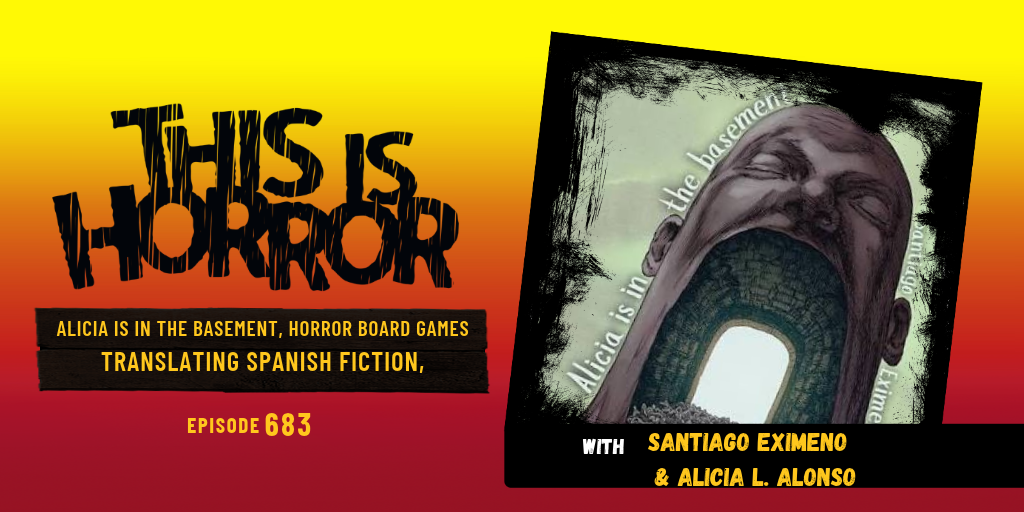
In this podcast, Santiago Eximeno and Alicia L. Alonso talk about Alicia is in the Basement, translating Spanish fiction into English, horror board games, and much more.
About Santiago Eximeno
Santiago Eximeno (Madrid, Spain) is a Spanish genre writer who has published several novellas and collections, mainly horror literature. His work has been translated to English, Japanese, French or Bulgarian. He was a HWA Member. His stories has been translated to English by Alicia L. Alonso, Daniele Bonfanti, and Mónica Louzón.
Timestamps
Thanks for Listening!
Help out the show:
- Support This Is Horror on Patreon
- Listen to This Is Horror Podcast on Apple
- Listen to This Is Horror Podcast on Spotify
- Rate and review the This Is Horror Podcast on Apple Podcasts
- Share the episode on Facebook and X
- Subscribe to This Is Horror podcast RSS Feed
Let us know how you enjoyed this episode:
- Write a comment below.
- Follow us and get in touch on Instagram @thisishorrorpodcast
- Subscribe and comment on YouTube @thisishorrorpodcast
- Follow us and get in touch on TikTok @thisishorrorpodcast
- Tweet us @thisishorror.
Resources
- Santiago Eximeno
- Watch the video version of This Is Horror Podcast episodes, including our conversation with Chuck Palahniuk on YouTube.
House of Bad Memories by Michael David Wilson
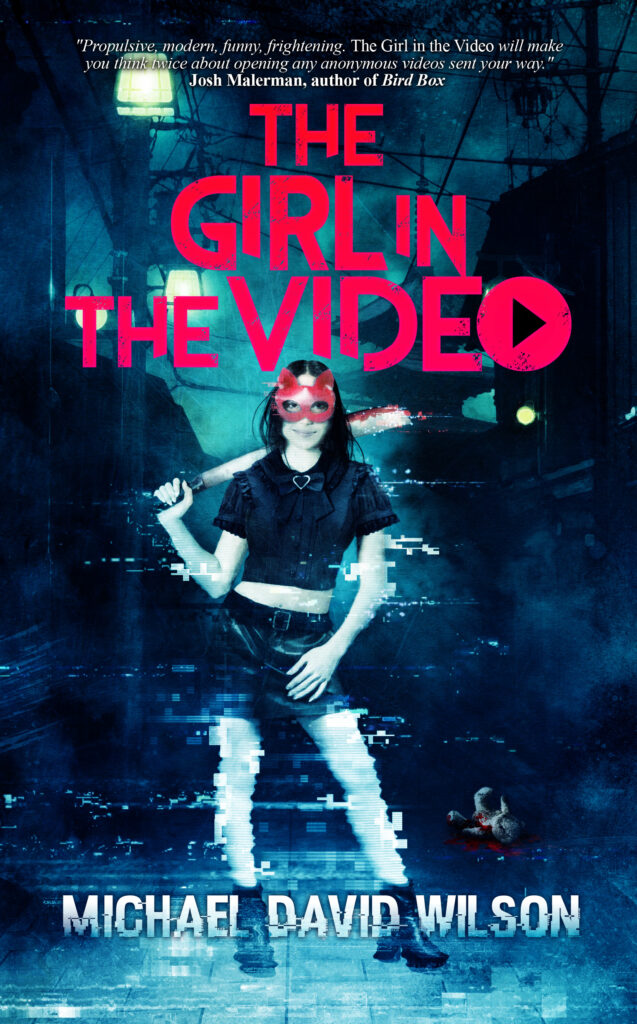
From the author of The Girl in the Video comes a darkly comic thriller with an edge-of-your-seat climax.
Denny just wants to be the world’s best dad to his baby daughter, but things get messy when he starts hallucinating his estranged abusive stepfather, Frank. Then Frank winds up dead and Denny is held hostage by his junkie half-sister who demands he uncovers the cause of her father’s death.
Will Denny defeat his demons or be perpetually tortured for refusing to answer impossible questions?
House of Bad Memories is Funny Games meets This Is England with a Rosemary’s Baby under-taste.
Buy House of Bad Memories from Cemetery Gates Media
Buy the House of Bad Memories audiobook
They’re Watching by Michael David Wilson and Bob Pastorella
From the hosts of This Is Horror Podcast comes a dark thriller of obsession, paranoia, and voyeurism.
After relocating to a small coastal town, Brian discovers a hole that gazes into his neighbour’s bedroom. Every night she dances and he peeps. Same song, same time, same wild and mesmerising dance. But soon Brian suspects he’s not the only one watching and she’s not the only one being watched.
They’re Watching is The Wicker Man meets Body Double with a splash of Suspiria.
Buy They’re Watching in paperback and eBook right now.
Michael David Wilson 0:29
Welcome to This Is Horror, a podcast for readers, writers, and creators. I'm Michael David Wilson, and every episode, I chat with the world's best writers about writing, life lessons, creativity, and much more. Today, I am chatting to Santiago Ximeno and Alicia El Alonso about Alicia is in the basement. Alicia is in the basement. Was originally published in Spanish in 2015, and this year, thanks to Tenebrous Press, it is now out in English for the first time ever. Now the premise is as follows: One summer afternoon, Santi and Maria's daughter disappear from a public park without a trace. After months of agony and fruitless investigation that only serves to tear his life even further apart, Santi learns of a being that unleashes an entirely new kind of horror on the young family's life, a being known simply as he who does not speak with children. So I had a wonderful conversation with the author Santiago and the translator Alicia. It's a great book. It is very intense and disturbing, but it is wholeheartedly recommended. So we will get to Alicia is in the basement imminently, but before that, a quick advert break.
Bob Pastorella 2:13
House of Bad Memories, the debut novel from Michael David Wilson, is out now via Cemetery Gates Media. Denny just wants to be the world's best dad to his baby daughter, but things get messy when he starts hallucinating his estranged, abusive stepfather Frank. Then Frank winds up dead, and Denny is held hostage by his junky half sister, who demands he uncovers the cause of her father's death. Will Denny defeat his demons or be perpetually tortured for refusing to answer impossible questions, Clay McLeod Chapman says, "House of Bad Memories hits so hard you'll spit teeth out once you're done reading it." House of Bad Memories by Michael David Wilson, available now in paperback, ebook, and audio. From the host of This Is Horror Podcast comes a dark thriller of obsession, paranoia, and voyeurism. After relocating to a small coastal town, Brian discovers a hole that gazes into his neighbor's bedroom. Every night, she dances and he peeps. Same song, same time, same wild and mesmerizing dance. But soon, Brian suspects he's not the only one watching, and she's not the only one being watched. Their watching is The Wicker Man meets Body Double with a splash of Suspiria. They're Watching by Michael David Wilson and Bob Pastorella is available from Disashora.co.uk, Amazon, and wherever good books are sold.
Michael David Wilson 3:36
Okay, without said, here it is. It is Santiago Examineo, and Alicia El Alonso on This Is Horror. Santiago and Alicia, welcome to This Is Horror.
Alicia L. Alonso 3:55
Thank you for having us.
Santiago Eximeno 3:57
Thank you, Michael. It's a pleasure to stay
Michael David Wilson 3:59
here. Ah, it is a pleasure to chat with you both, and I'm very excited. Having recently read *Alicia Is in the Basement*, which has to be one of the most harrowing and disturbing books that I've read all year, it's so masterfully done. But goodness, it is not an easy read.
Santiago Eximeno 4:24
No, I know, I know.
Michael David Wilson 4:25
But before we get into Alicia, I would like to know what were some early life lessons that you learned growing up.
Santiago Eximeno 4:40
My my grandparents had a huge library, and we lived in this library when I was a kid for years. So I have the opportunity to read some books about romance books, horror books, science fiction books, and. Without limitation, because there are the the 80s. I am five to three years old, and in the 80s, the parents don't be aware of where we can be read, we can be seen the TV, or we can see in the cinema. So I I enjoy books of Carl and Paul, Lovecraft, and then we can jump to other things more horrible, more not adequate, not for kids like Carrie Stephen Keene, and then I I feel that this is the things that I really enjoy more than tunes, more than the Lonely Tunes that classic. I enjoy more Violence, decapitations, horror, loot.
Michael David Wilson 6:05
And so, when you think about those films and those books that you were reading and that you were watching, did that also unlock a passion for writing? Were you telling stories from an early age.
Santiago Eximeno 6:22
When when I see when I was 1212 13, we live in a building in front of a video store, and we usually go to rent films with my parents in this video store there are there are a restricted area, not for pornographic films, so for horror films, and my parents give me the the let me to to rent my my elections, and we see in family. We I have a a sister one years less than me, and we see all in our sofa evil dead, and then I, I feel that I want to tell this kind of stories. I seek a feel that I that was marvelous and was a budget, and there is a it is a story that I can tell, that I can share with my family, and them enjoy with me. So I feel that I can write this kind of stories and show them with glue, with violence, with zombies, the additives, and they like it. So we feel that this is my my future. I really want to be a board game designer, but writer there are other opportunity to to realize me and to share happiness with my family.
Michael David Wilson 8:29
And so, do you remember the first story that you
Santiago Eximeno 8:35
wrote? Very very bad, and and. The citrus in Spanish is a queer que aquel que due herme lascuridad. He was lived in the dark. Yeah, still be the title. Still be the story. And I try to imitate all the tropos that are in the Lovecraft stories. So I try to show a writer that that is writing a letter, and is this letter is narrate the horror that goes into the house, and when the entity that goes into the house and try to kill him, he is writing about it. Oh no, the entity want to kill me. Stupid, absolutely, absolutely ridiculous. And my parents say, "Oh, great, great story! Oh, great story! Oh, oh, we like it, and I know the the life, but but it's not important. It's my first try, and after I feel that I improve my.".
Michael David Wilson 10:01
And so, were you also sharing these stories with your friends? Were you sharing them at school? Did people have an idea that you were writing these gruesome, scary horror stories?
Santiago Eximeno 10:18
At first, not not because I I am very confused that I I was very bad writing, but I had a a friend an old friend Ricardo that she illustrates and draw comics And want and say to me that I made the the stories so he can illustrate it. And these comics, there are it it was very very good in science in. in copycats that we share with our friends in the college, in the school, and with his illustrations, my story is not so bad. But until 18, I do not show my stories to friends and to possible publishers.
Michael David Wilson 11:29
And so, what was the moment when you knew that you were going to do this professionally, or what was the moment where you had the story where it was like, okay, this is the one. This is something that I'm going to seriously pursue.
Santiago Eximeno 11:47
The one origami. Origami was the first story that a publisher paid me for it. So at this moment, I feel that I can be a professional rider. I receive a payment of euros, 15 euros, because we we was paid in pesetas. That it's the the money in these times in Spain, but in euros, approximate 50 euros, and I feel that oh my god, the next probably we we we will pay it 100, 200 1000s, and not not not a course, but most of the the first story was Origami, has been published in in English too.
Michael David Wilson 12:52
And of course, alongside writing books, you created a number of board games as well. So I'm wondering, where do they fit in to your writing life or the the puzzle of your creativity?
Santiago Eximeno 13:08
Games games start first when I my my first trying of do a board game was I was nine years. I read comics, British comics, Judred, and I tried to to do a game about Judred in the in the zone. See, man, because Ditzon, try trying to cross Ditzon in super bike, and I this was my first my first try, you know, do a board game. Actually, as my first story, absolutely horrible, but I persist and I publish as an indie author. I I made several games that I offer to in my web to college friends and and more as a print and play. And when I when I see that these games are played, I feel that I probably go to a publisher and publish a game.
Michael David Wilson 14:32
And so I wonder too, as we mentioned before, what does your writing routine look like
Santiago Eximeno 14:43
chaos, absolutely chaos, chaotic. Why I have two daughters? It's impossible to find time to find and provide the space. To write, it's impossible. I try to to bring calm to my mind, to bring and space, and now I write. Probably when we when we finish this this conversation, I try to write one or two hours this night, but I don't know. It's one day I write 2000 words. One one weekend I write the 100 words, and it's well, it's chaotic and it's not relevant to the final result. result.
Michael David Wilson 15:43
Yeah. So rather than having a fixed routine, it is a case of you will write when there is time, when there is a gap in the chaos of your life.
Santiago Eximeno 15:55
Yes. Are you sorry? Write at every moment that I can. I always take with me a notebook and I write with a ballpoint. And then when I can use one of the computers in my house that my daughters is not using at this moment, try to to write.
Michael David Wilson 16:25
And in terms of your work, of course, it is in translation, which is one of the reasons that we're talking today. And I want to know then. So, how did the two of you meet, and how did you start working together?
Alicia L. Alonso 16:43
Okay, so Sandy and my husband have known each other for a long, long time. So I met Sandy through my husband because he was the same group of friends, and that's how we met. And so. I'm really also into horror literature and and films. And when I learned that Sandhu was a horror writer, you know, I thought it was really interesting. So I wanted to read his stuff, and and I offered to translate a few of his short stories, which he was happy, happy for. And and then I read Elites in the Basement, and and I found it so horrifying and so disturbing and so horrible that I said I have to translate this right away. It's especially terrifying for me because Santa and I are neighbors. Well, we live like two blocks away, and my son is just like one year younger than his older daughter, so he used to go to that park in the bob. He used to hang out there, and I is exactly what he describes it. I can see the park, the slide, and and the sandbox, and you know the so so you know, it was like I needed to get it out of my system because it was bothering me. So I had to translate it. I don't know why. Anyway, that's how we met. I mean, I've answered much more than that. That's how it happened.
Michael David Wilson 18:38
And so before we go into detail in terms of Alicia is in the basement. It might be helpful for our listeners and viewers if you could tell me the elevator pitch for Alicia. Alicia is in the basement. So what is the quick premise?
Santiago Eximeno 19:00
Oh, Arithia is in the basement. It's a book about the loss, the grief. It's a. I want to talk about a father that lost his daughter in a park, and how this loss destroy his life, his family life, and all the things, and all the all the things. No, all God destroy his soul, destroy his point of view about the life. How if you lost, if I lost my my daughter, I don't know how I can continue with my life. And I want to to show this in in this book, and I want to show this in. Weird environment because I always want to try these stories with a weird element, probably to switch the the effort because it's so horrible the reality that I try to to share with the reader that it's necessary to to offer a exit to this horror,
Michael David Wilson 20:30
and I mean it's incredibly difficult to read because of the emotional and mental toll that it can take on you as a reader. So, I imagine it must have been very difficult and very intense to write and to translate. So, I'm wondering, was there anything that you had to do to protect your own health while you are writing, or to help with your own mental space. Because to be spending so many hours each day working on this, I have to imagine it was a difficult headspace to be in.
Santiago Eximeno 21:19
It was. It was difficult about about writing. No, Alice about translation. Alicia, after about writing, it's it's difficult to deep in this kind of of work because when I writing, I I always writing about me. I say when when we ask it about that all all my works or my short stories or my novel all my novels, it's about my not me. It's a what if about not me. Even when I show a giant mechanic monster. I'm talking about me. So in in this story, I need to try to separate the reality that I have talking about. So my own life, because my my wife is Maria. Maria Jesus is her name, and I have two daughters, Alicia and Maria. And at the moment when I write this story, my wife is Brian of Maria, so I of course my wife not read this book. Don't want to read anything that I wrote. She shouldn't. So it's it's difficult, but it liberates my my mind. So when I write this kind of things, I feel that they don't be in the real life. They they stay in the book, and they don't translate to real life. It's a form of se diar conjurar mis demonios se dividia una forma de conjurar mis demonios en inglese my demons, so to
Alicia L. Alonso 23:42
conjure your your demon.
Santiago Eximeno 23:44
See, yes, conjure my demons and liberate them and live without these demons in my mind.
Michael David Wilson 23:53
Yeah, and goodness to find out that you also included so many Autobiographical details using the same name as your wife, of course. Santi is the main character. Your wife was pregnant at the time, so it it just adds another layer as to how difficult and disturbing it must have been.
Santiago Eximeno 24:22
For the reader and for the writer, it's really disturbing to to write about these things and and to maintain my life, my daily life, no? Because when I am writing a novel, the it's always in my mind, 15% of my of my daily routines are thinking about the novel. So when I was speaking with my wife, I was thinking about the horror I am writing.
Michael David Wilson 25:00
And how long were you writing this one for?
Santiago Eximeno 25:04
This novel, three months, more or less in writing, and six, seven months in corrections in from the first draft to the final book.
Michael David Wilson 25:20
Yeah, so you you were in this headspace basically almost a year. So kind of the the whole time that your wife was pregnant, you you were writing this this horrible but beautifully written, amazing horror story.
Santiago Eximeno 25:40
Absolutely, when a. I have an anecdote with my when my first daughter Alicia born, I publish a collection collection of sorry stories called babies playing with knives. So from this moment, my my wife knows that I am very disturbed and try to discard all the things that I am writing.
Michael David Wilson 26:23
So it sounds like your wife is, of course, aware of the types of stories that you're writing, but she doesn't typically read them, which may be for the best. I mean, I'm sure, as of the majority of mothers very protective of her newborn baby, so she might not want to read babies playing with knives. Knives,
Santiago Eximeno 26:48
yes, it's preferable that she don't read my my books and my short stories. And if if we if we want, it's preferable that that play my board games.
Michael David Wilson 27:01
Yeah, yeah. So, Alicia, what was the experience like with the translation, and in terms of again just being in that difficult mental headspace?
Alicia L. Alonso 27:17
Well, okay, it was a lot of fun, a lot of fun, and as I said, the whole story happens in our neighborhood that we both live in. The same park, the same street. So I could, for me, it was easy in the sense that I could see it in my mind. I could actually see the places, so it wasn't foreign to me, and it was a little bit challenging because Sunday has a very, very peculiar style, you know, which is great, but to translate it to another language, you know, you need to make a few decisions sometimes. Like, I have to leave this repetition out of the way, and maybe I can add something here, you know, to to add to that effect, it is it's not easy, but you know, I I found it really really I found it really fascinating, and and because we we we were communicating all the time, so I would say, what what do you think of this? Should I change this? Should I add this here or there? So no, it was very straightforward. Yeah, and it was fun. So much fun. Yeah, that's why I did it.
Michael David Wilson 28:54
And it's interesting to hear that there was a lot of communication during the translation because that was something that I was interested in in terms of how much you were both talking and how much you were perhaps showing him. Okay, I've translated this chapter in this way, this in another way. So it sounds like it was quite a collaborative process.
Alicia L. Alonso 29:21
Oh yes, I think we're both very. What's the word? Well, I have raising ADHD, and and Santi. I'm not sure about that, but he's very active. He's always, you know, it's always ready to respond and always reading your email to your text, so it was very very fast. No, anytime I wanted to ask him something, he'd be ready to answer the next day, and then I would ask him the same question seven times, and he'd answer seven times. He has a lot of patience. I don't, but no. No,
Michael David Wilson 30:04
I love that.
Alicia L. Alonso 30:07
And we're friends, right? It wasn't like a business situation or anything. So no, that made things easy.
Michael David Wilson 30:17
Yeah, I think I think when you're friends with the people that you're working with it makes everything a lot easier and a much more enjoyable experience. And I I want I wonder too. How did you first connect with Tenebrous Press? So what did it look like in terms of saying, okay, we're going to put out an English language version, had you already translated it at that point, or did you talk to 10 of us before you translated
Santiago Eximeno 30:51
it? We we have it translated previously, and in fact, we well we I I tried to to publish this book with two or three others publishers that have no interest in this kind of book and Tenable Express. I was reading some of these books and I want to publish with with with them a short story in his magazine, but I I I be rejected. Then the open submission window for novel for novella, and I see that they are publishing more than horror, they publish in weird, but why not? So I I send the book without any expectations, without any good sensations that they can like this kind of book. But Alex says that it's fascinating about this book, so very happy.
Michael David Wilson 32:06
Yeah, I think one thing that's interesting with Alicia is in the basement as well. Is that it? It doesn't neatly fit into a genre. It is horror. It is dark thriller. It is crime. But it's also almost just in this in-between space, and so that may be why other publishers weren't sure what to do with it. But what I love about Tenebrous Press as well is that they publish; they put out the books that don't neatly fit into a genre, and you know, those are the types of stories that I want to read more of because I think they're the most interesting, they're the least predictable, and often the most tense as well.
Santiago Eximeno 32:55
Yeah, I believe that that this is a book that fits perfectly with legal publishers that want to try to experiment with this kind of books, but I I have the sensation that my my books don't go in the same form when has been translated, because in Spain I have a kind of reader. It's very different that my experience with I talk with other readers in other languages. In English, it's it's really I'm really happy because this book that in Spain have very few readers that enjoy it in in English in Goodreads and reviews, and in this podcast here, the books it works. It works with the readers. It really enjoy enjoy fun with the books. is is difficult to to enjoy, but enjoy this kind of of proposal.
Michael David Wilson 34:14
And I think when I was reading it too, I felt similarly to how I felt when I read *The Girl Next Door* by Jack Ketchum.
Alicia L. Alonso 34:25
Of course,
Michael David Wilson 34:26
just this thread of uncomfortability and tension, and you almost don't want to continue reading. So you had this Jack Ketchum feeling to it, but then you've also got this folk lore, and you've got the entity known as he who does not speak with children. So, I want to know how the folk lore factored into the book, and is he do he who does not speak with children? Based on real Spanish folklore?
Santiago Eximeno 35:04
No, in this case, no. I have I have written other books as Lice Hunter, Casador dementiras, that it's inspired in folklore, Spanish folklore, but it is not. This is a. I want to try to to work in the style of Jack Ketchum in this book. It's a compliment comparison with Jack Ketchum. I not Jack Ketchum, but I want to to introduce a mythology. in in this in the Clive Barker's style. So something a rumor, something like he don't speak with children, not have a real personality. It's and not human, not a ghost, only a rumor that people talk about it. So it's it's not a Spanish idea in this in this case, but it's more a Clive Barker inspiration.
Michael David Wilson 36:22
Yeah, I can definitely see how there's some Clive Barker with it within it, and particularly with I guess the more fantastical and supernatural undertones that are hinted at. But I I know that we get more into the supernatural as the story progresses, so I don't want to say too much about it because I don't want to spoil it for people who I want to be able to experience this fantastic book.
Santiago Eximeno 36:54
Okay,
Michael David Wilson 36:56
but another thing that I'd like to talk about. So I've got a question from Kev Harrison, who's a This Is Horror Podcast patron, and he says one thing I loved about Alicia is in the basement was the natural humor which accompanied a story on such an incredibly dark theme. Was there any pushback against this from publishers or agents thinking that you had gone too far?
Alicia L. Alonso 37:32
Well, can I say the people at Tenable Press? They were very respectfully insistent on changing a couple of things that were maybe too offensive, so we did, you know, because we understand this. We're Spanish; they're American, so you know that's is maybe maybe it's better to be just a tiny bit more political correct.
Michael David Wilson 38:08
So, so now I don't know if you're prepared to talk about this, but of course now I want to know what were the elements that you had to change or that you received pushback about and were seen as too offensive.
Santiago Eximeno 38:25
It's not. It's not about violence or not about horror. It's just about the fat, fat comments.
Alicia L. Alonso 38:33
Who was fat saying
Santiago Eximeno 38:36
that the proton is says usually the denigrate the fat people, so protagonist is a horrible guy, and and we need and we say that oh I know it's a horrible guy. It's not necessary that that they say these things. Well, well, I I I believe that he is a monster. He is a a bad guy, and his mind is broken. is It's normal that say these things, no? But he prefers that we don't say a little words, no, little two, three words that we remove from the book.
Alicia L. Alonso 39:27
There was something else, but I can't remember right now. But I, I think what Santo was doing, as he said before, he was, you know, exercising his demon. He was now putting out there the worst possible version of himself in a horrible, the worst possible horrible situation that he could ever live through. So of course he'd be pissed off, you know, and. And and I think that is very that's a great like it's masterful you know to be able to do that you know to say I am going to be this real big asshole and I'm going to get him out of my system you know because he's such a nice guy. Because that guy is gone now. No, he's in the book.
Santiago Eximeno 40:28
No, it's it's difficult to to convince now, Alicia. That I am a happy guy. I'm a good guy after read and translate this book.
Alicia L. Alonso 40:41
Yeah, well, for now, that's how it looks.
Michael David Wilson 40:47
Yeah, it's always a little bit perplexing for me, at least when you know you have a book that's about child kidnap and some of the most extreme things that can be done to a human being, and then you get pushback against fat shaming, and it's like, of course, fat shaming is is terrible, but I don't think it should be controversial to say I believe that child kidnapping is much worse than fat shaming, but I, but I, I do think you're right that it's something that is more, I suppose, a more taboo or a more sensitive issue right now in the climate within America. You know, less so in the UK, less so in Japan. Well, very, very much less so in Japan. It's almost the other way, which which is a problem in itself. But yeah, I. This is about child kidnap. This is about the most abhorrent human beings. You know that is what people should be taking issue from. But
Alicia L. Alonso 42:06
I understand what they did. Yeah, I don't, I don't blame them. They're really cool people, anyway. Oh yeah,
Michael David Wilson 42:12
yeah. No, I mean, we all love Tenebrous Press. That This Is Horror, certainly, and I can understand, you know, being sensitive to the climate and not wanting to. We, we, you don't want when you're putting out such a good book. You don't want the conversation to all be about, you know, there was fat shaming in it. When it could be about, look at this incredible transgressive book that everybody should read,
Santiago Eximeno 42:43
and because of that, it's not relevant to to us to to delay these these words about fat. I don't remember exactly what all these these three horrible words that the protagonist says that the Nebraska said no. This not okay, no problem. I I can I can kill this kid. Yes, okay, no problem.
Alicia L. Alonso 43:17
Wasn't really important to the story anyway.
Michael David Wilson 43:21
And what about the humor? Because there is some humor with the protagonist. And how did you find balancing, you know, almost this playful personality with what was actually going on?
Santiago Eximeno 43:40
It's it's probably because I I'm a joking man. I'm a horrible man. I'm I'm a mixture of of all these things. So I can go in the mind of this monster with the tranquility that a monster is not always a monster. The people is not bad in all the moments of of his life. People can give a joke, can smile, and then made an atrocity. All of us has this balance in in this life, so it's not difficult to afford a protagonist in in this kind of a state.
Michael David Wilson 44:34
No, it makes sense because we we all have our good sides, we all have our bad sides. We just hope that we have more good than bad, or at least a better balance than Santi in this particular story.
Santiago Eximeno 44:52
The bad, the bad thoughts go to the writing, and yeah.
Michael David Wilson 45:00
Yeah,
Alicia L. Alonso 45:02
at Sunday I never asked you. I wonder if at least your daughter read the story.
Santiago Eximeno 45:09
Because she's a big
Alicia L. Alonso 45:10
reader. She like
Santiago Eximeno 45:11
she loves. She's trying. She's trying to read it. She's trying. I. She has read two first chapters and go to my to my room and and says, Daddy, you are reverberant. You are a demented person. You are crazy. I need to stop this and try to read one or two years more. My Alicia has a 20 years now, but he he feels that the things that I write there are in in several times that are a little more horrible that she can support.
Michael David Wilson 46:04
Well, I'm glad that she's reading this at 20 years old, as opposed to like 10 or 11 or 12. That would, yeah, that that's the kind of thing that would sky you for life. Totally.
Santiago Eximeno 46:23
My my my parents had had showed me horror films with 12 years, and I think that is not the good the the best idea. So I try to not repeat this kind of things with my daughters.
Michael David Wilson 46:46
Yeah, yeah, and I think there's, I mean, there are different types of horror film. If you're showing something like Evil Dead Two, it's very campy and in your face, and clearly not real. But if you read, it's
Santiago Eximeno 47:07
a farm film.
Michael David Wilson 47:08
Exactly, yeah. But if you look at Alicia is in the basement, or I mean, even like Silence of the Lambs or Seven. These are much more grounded within the real, so I think, in a way, they can be scarier for for a child or for anyone to to experience.
Santiago Eximeno 47:34
Recently, recently, one year ago, Alicia has seen Midsummer, and I and I say don't go to see Midsomer. It's not a kind of film that you can enjoy because it's not a monster, a bad monster, a good people. It's horrible, and and they say, Daddy, it's true. It's horrible. I don't want to see this kind of films, but it's trying. It's it's my my heritage. They need to go to horror.
Michael David Wilson 48:17
Yeah. Well, with Mid Summer in particular, I mean, the the first five minutes of that film are perhaps some of the most traumatic minutes ever portrayed in cinema, and the scream that you hear in that opening scene that ends the scene. It's just, it's terrifying. It's haunting. It really does capture grief and agony and misery within this one sound. And yeah, Midsommar is not a light film. This is not a popcorn
Santiago Eximeno 48:59
Film after Miss Omar, she goes to to see Hereditary.
Michael David Wilson 49:06
Yeah, yeah, yeah.
Santiago Eximeno 49:08
Why? Why it's it's broken in your in your mind? But she she she enjoy both films, but we terrify it and and probably continues to see these kind of films.
Michael David Wilson 49:23
Yeah, well, I mean, for me personally, Hereditary and Midsomer are the best Ariesta films that he has done thus far, and and to be honest, they're two of the greatest horror films of the last 20 or maybe even 30 years, they are so incredibly effective.
Santiago Eximeno 49:46
Yes,
Michael David Wilson 49:46
and of of course, there's a there's a scene in Hereditary that will always stand out in in one's mind in in the car. And people, if people have seen it, they. What I'm talking about, if they haven't seen it, you need to see it, and that happens within about the first 30 minutes. Although hereditary is maybe lighter than midsummer.
Santiago Eximeno 50:14
Same, yes, but but this scene is impressive. Yeah, keith in is memorable.
Michael David Wilson 50:24
Yeah. Now, now you said that the reaction to your fiction in Spain is a little bit different compared to America and the English-speaking audience. So I'm wondering, what does it look like in Spain? How do people react to your work?
Santiago Eximeno 50:45
I I am trying to publish a short story in English. I sent to 2526 magazines, and I don't don't I don't publish it in Spain. This this story has an award, has been published, and the first try, and so I, by example, this story, it's different because in Spain we expect that we go far away the spectators of the reader. In English, no. In English, I'm not an author with very translated works, so it's always a new author trying to offer something different. So in English, for my surprise, Alice Alicia is in the basement. It has a very enjoying for the readers in Spain. Not, and it's a surprise because in Spain usually I can offer the readers more extreme horror than in English. In English, it's more difficult for me to to to publish more of my extreme horror. Probably because I try to publish in publishers that know That not work with this type of horror, no? As Jennifer's press is weird, and I try to sell to sell this a jacket from horror, and I and it works. But it's possible that it says because as I am known Spanish author and has published more than 200 short stories in Spanish, that they are waiting more horrible story after that. And in English, I I always I only has published 15 stories, so the readers don't know how to expect with the different stories that I sent.
Michael David Wilson 53:14
Yeah, I think right now there is less appetite for extreme horror from mainstream publishers than there was when The Girl Next Door came out, which I think was in the late '80s, and you know that extreme horror boom continued into the '90s and the '90s. But right now, you do see some of it, and particularly, I'm thinking about Eric Larocca. He's being yeah published in the mainstream, and he's doing some very extreme and transgressive stories. And in a way, I think you and Eric Larocca, you do have some commonalities because what you're doing it is extreme. It is pushing the boundaries, but at the same time, it's never gratuitous. You never include something extreme just because you can. It is always part of the story, and so that there is a demand, but it's certainly less than it used to be, which is why it's so hard to to get these things in print. But hopefully, now that Alicia is in print, maybe other publishers will start looking at. Okay, well, what else does Santiago have. I'd like to see a few more of these
Santiago Eximeno 54:45
before before artists in the basement. I I publish a short story collection with Independent Legends Publishing, Title Umbria, and the stories. In in Umbria are horrible too, as you as you can expect. But I work in Umbria with body horror, splatter punk, gore, but with Social horror as the more important that the gore or that the or or that the blue that are the violence the social horror so the stories it talk about Woman that had had been had suffered violence for his for his men or children kidnapped again, children dead by his mother. When I publish this collection. I I think that I have this space, so we can publish this kind of books in in United States and in in Brian, but not not not in between Brian and Alicia in the basement has passed five years, so no, I don't have found this space for me for now. In Spanish, in Spanish too, but in English for now, no.
Alicia L. Alonso 56:38
Well, I think that Right now, all you have to do is look at the news, and you already have horror. You know, there's so many horror things going on in the world right now. That you know, so
Santiago Eximeno 56:58
in Spain, it can be
Alicia L. Alonso 57:00
an inspiration, you know. For me, reading about supernatural and horror books actually helped me. It helped me get away from everything, you know. But I had the feeling that most people that are not specifically following this gender, which is very niche, are not really interested in in in this kind of reading experience, you know. Not this time, no.
Michael David Wilson 57:48
Yeah, you make two good points there, Alicia. I mean, first of all, yeah, just because we're getting so much news, and we're getting news on a global scale, you know, 20 or so years ago, we would be getting mostly the news from our own country, but now we get to see all the horror in the world, and and so really, it's it's too much. It's more than the human brain was ever designed to be able to comprehend and to to cope with,
Santiago Eximeno 58:23
and and
Michael David Wilson 58:24
then to your other point, you know, for people who are into horror, I think reading a horror story or or watching a horror movie, it is a way to escape the real world horror. It is a way to be in a kind of horror that you can control, that you can step away from if you if you want to, and not only that, but it's an area to really explore these topics, but to do it safely. So, yeah, for for me, as you could imagine, having This Is Horror. I want to have more of this in the world. You know, this is my happy place. Being within horror is what makes me happy.
Santiago Eximeno 59:15
A safe place. Yeah, seeing a horror movie is a safe place when you can enjoy and you can suffer because you know that it's it's not you it occurs to others and you can stop when you wish.
Michael David Wilson 59:34
Yeah, I I wonder too. Having written Alicia, are there any subjects that are too dark for you to write about? Is there a limit to what you will explore, or will you write about any topic?
Santiago Eximeno 59:56
I I write about any topic always. About me, I try to to narrate stories about my life, my friends, my my family. So I don't have any problem writing any topic that I like to write about. Other thing is that this story that I have write have written that I try to publish or not. It's poss. It's I have short stories in my in my computer that I don't send to any publisher because I feel that probably only it's interest to me. Probably not exist readers that can go so far, but writing about any topic.
Michael David Wilson 1:00:57
And so, as someone who has written a number of short stories, a number of novels, a number of novellas. How do you know what form each idea will take? And in a typical year, how much are you writing in terms of novels versus short stories.
Santiago Eximeno 1:01:23
I usually know the length of the the text that I have written that that I am writing. So when I go two or three days with it, I am working on it during two or three days, and I know if it will be a novel, it will be a novella, it will be a short story. But sometimes I am absolutely absolutely. Absolutely, absolutely mistaken. So I I have written flash fiction. I feel that they don't grow up more than 200, 300 words, and finally have 2000 words. So it's. not always can assure that a story don't grow up on on shrink. It's necessary.
Michael David Wilson 1:02:32
And when you're writing, are you planning these stories in advance, or are you writing and seeing where the story takes you,
Santiago Eximeno 1:02:44
I usually I usually know the first pages, the end of the story, and two or three scenes that I want to go and go through these scenes to go to the end. But it's possible that, as says usually says the riders, that the protagonist and want to change this rail and go to other parts. I have no no playing all the things, only first pages and and two or three memorable things.
Michael David Wilson 1:03:32
It sounds like a good approach that definitely will keep things interesting and fresh for you because even you don't know the exact details, so it must mean for the creative process it's a very exciting one.
Santiago Eximeno 1:03:51
Yes, it led me to discover more creatures, more horrors that I don't expect to to include in in the story, but grows unexpectedly.
Michael David Wilson 1:04:06
Now, what lessons did you learn from writing Alicia? Either lessons about writing, or yourself, or the world.
Santiago Eximeno 1:04:19
One lesson: Don't share your books with your family. It's a lesson of life. I'm writing something that it's better not shared with my family, with my friends, well, they are crazy as me. But my family, it's preferred to not offer this kind of stories to to them.
Michael David Wilson 1:04:53
No, I think given everything you've said, that that is probably a wise. Now I know that we are coming up to the time that we have together today, but before we go, I want to know what are you both working on at the moment? I don't know if Alicia, if you're translating something at the moment, or have any other creative projects? And Santi, I'm wondering what on earth is going on in your depraved mind right now.
Alicia L. Alonso 1:05:33
Well, I'm always happy to translate things for Santi. I've done a bit of translation, but that's not really my day job. I, I need to, you know, make money, and this is not it. This is for fun, and I'd love to do this for a living, you know. To so, yeah, I have creative projects that I'm working on. I'm I'm um um don't want to say too much right now because you know I feel like I'm going to jinx it, but I'm starting to write things on my own for myself, and you know, I have a lot of stuff locked up in my mind, in my computer, in all kinds of you know notebooks, napkin, everything, and I'm trying to find the time to put them all together, and you know, and maybe you know, start translating myself as well. You know, because I the one thing I yeah the one thing I can't figure out sometimes, and which is this is really really stupid, but it blocked me. I never know whether to write in Spanish or English because to me that they are very different languages and they carry different cultures with them. They're not just languages, you know. They're like world, so it's it's it's not the same. So I'm always saying, okay, I write this in English, but then I translate it in Spanish, or I write it in Spanish. But no, I don't want to write it in Spanish. So this is like a stupid thing that I need to get out of the way first, so that I can organize it all. And that's about it for me. I
Michael David Wilson 1:07:42
mean, it sounds interesting too. Because if you have this dilemma as to whether to write in Spanish or English, but then the story will be different in each language, rather than a direct translation, you could almost consider writing. This is the Spanish version. This is the English version. The stories are not 100% identical; they're different with different elements of culture. So I think you know, yeah.
Alicia L. Alonso 1:08:15
But for me, it comes more naturally to write in English because I I studied English literature at university, and so for me, and I read more in English than I do in Spanish. So for me, it comes more naturally, you know. So, but yeah, yeah, I'm working on all of this right now. It's never too late.
Michael David Wilson 1:08:38
I'm excited to to hear what you come up with, and I'll be keeping my fingers crossed for you. So just keep going, keep pushing on, and if self doubt gets in the way, just ignore it. You know, it happens to everyone.
Alicia L. Alonso 1:08:55
Yeah, thanks.
Michael David Wilson 1:08:57
Santi, how about you? What are you working on?
Santiago Eximeno 1:09:01
I, for me when well I'll I I will publish a short story collection in Spanish the next year, and I want to to translate some of my role play role playing games To English, my my my Spanish publisher want to to try to to sell this kind of role playing games that that are experimental, are horrible, are role more role than more games, more experimental than that fun. But he thinks that it's possible that has interest in in in English, and I and I was to and I want to to to see the. If it is true, because the role-player games, it's a space that I want to to try to enter too.
Michael David Wilson 1:10:12
Yeah, well, I want to play these games, so I hope that you find a suitable publisher. Can't wait,
Santiago Eximeno 1:10:21
and I cross my fingers. But it's all all all go as as I expect in the next year, next two years. I have a film about one of my short stories in Spain. So cross my fingers. Yeah, yeah. We have the contract all signed, but a film is a thing that can die in any moment in the process.
Michael David Wilson 1:10:55
Oh yeah, the film industry is certainly much more turbulent than you know the the book publishing industry, but I'll be crossing everything, and I hope that I will be watching your film within the next year or so. Yeah, yeah. Well, thank you so much for spending so a long time at such a late hour in Spain chatting with me, I do really appreciate you doing this, and I know that the listeners and viewers will too. But before you go, where can our listeners connect with you?
Santiago Eximeno 1:11:41
Oh, I have a web and web. I have a a web with my with my last name eximeno.com. There are an English version of of the web, so the readers can can see the social stories published, role playing game that I publish in English. Alicia is in the basement, but mostly is the pages in Spanish. And of course, I am Blue Sky, for example, I'm I'm not in Facebook, Twitter, and more because I want to to to have a life.
Michael David Wilson 1:12:31
Yeah.
Santiago Eximeno 1:12:31
So only Blue Sky. My last name is is strange, Lexi Meno, so it's easy to To find me,
Alicia L. Alonso 1:12:41
I think there are only like sorry, like how many people in BAN have their last name? 516. Yeah,
Santiago Eximeno 1:12:52
yeah, we are dying. We are dying and disappearing. Only 16 in the world.
Alicia L. Alonso 1:13:00
Me, well, I have an Instagram account. I'll send it to, but it's mostly just photos of no places I've been to, and no typical Instagram account. And I've just started working on a Substack account, which is going to be bilingual, and it's still not ready, not fully ready, you know. But I can send you the address too.
Santiago Eximeno 1:13:36
Share with me too.
Michael David Wilson 1:13:38
Yeah, yeah. No, that sounds brilliant. So, thank you again for chatting with me. Do you have any final thoughts or any final last words of advice that you'd like to leave the listeners with?
Alicia L. Alonso 1:13:59
Read more horror. It's good for you, and it's cathartic, especially with the times that we're living. You know, and if you need inspiration to buy it, just watch Fox News
Santiago Eximeno 1:14:22
for. horror writers that are starting, don't let your job maintain your job because it's this is not sufficient to it.
Michael David Wilson 1:14:38
All right, thank you very much.
Santiago Eximeno 1:14:41
Thank you.
Alicia L. Alonso 1:14:42
Thank you.
Michael David Wilson 1:14:47
Well, thank you so much for listening to Santiago Eximino and Alicia El Alonso on This Is Horror. Join me again next time when I will be chatting with Jason Pard. About his brand new John Dies at the End book. Now, if you would like to get that and every other episode ahead of the crowd, please do become a This Is Horror Podcast patron of Patreon.com forward slash This Is Horror. Not only do you get early bird access to each episode, but you will be able to submit questions to each and every guest. And now I am writing full time and podcasting full time, so your support on Patreon means more now than ever. And depending on how many patrons I get, will determine really just how many episodes of This Is Horror, I can justify putting out each month. So, I would love it if you voted for This Is Horror. If you showed us your support at Patreon.com forward slash This Is Horror. Okay, before I wrap up, a quick advert break.
Bob Pastorella 1:16:03
From the host of this Azora podcast comes a dark thriller of obsession, paranoia, and voyeurism. After relocating to a small coastal town, Brian discovers a hole that gazes into his neighbor's bedroom. Every night she dances and he peeps. Same song, same time, same wild and mesmerizing dance, but soon Brian suspects he's not the only one watching, and she's not the only one being watched. They're Watching is The Wicker Man meets Body Double with a splash of Suspiria. They're Watching by Michael David Wilson and Bob Pastorella is available from Disashorror.co.uk, Amazon, and wherever good books are sold. House of Bad Memories, the debut novel from Michael David Wilson, is out now via Cemetery Gates Media. Denny just wants to be the world's best dad to his baby daughter, but things get messy when he starts hallucinating his estranged, abusive stepfather Frank. Then Frank winds up dead, and Denny is held hostage by his junky half sister, who demands he uncovers the cause of her father's death? Will Denny defeat his demons or be perpetually tortured for refusing to answer impossible questions? Clay McLeod Chapman says, "House of Bad Memories hit so hard you'll spit teeth out once you're done reading it." House of Bad Memories by Michael David Wilson, available now in paperback, ebook, and audio.
Michael David Wilson 1:17:24
Now, as is often the case, I would like to end today's episode with a clip from a previous This Is Horror Conversation, and today's clip is from Rafael Montez talking about the realities of graduating university, so here we go.
Raphael Montes 1:17:50
So he said, "Rafa, when I was a child, my parents used to say to me, 'You need to study. If you study, and if you are a good student, you are going, you are going to be someone. You are going to be successful. You are go. You need to go to university, and if you go to university, you are going to have a great job, and you are going to earn a good money. and And then he said, "Now I am 24. I just finished college. In my age, my father he already owned a house. He already had the job, and he already was my father when he was 24, and I'm 24, and I'm fucked because I just finished college and I can't find a job, and I don't have a girlfriend, and I don't, and I barely can pay the rent, and I don't know when I'm going to buy a house. So this this idea that even if you are brilliant, you you might not get there, and if you even if you dedicate yourself a lot, you might not get there. That was something that really resonated with my generation.
Michael David Wilson 1:19:02
And if you would like to listen to the full conversation with Rafael Montez, please do listen or watch the video version of This Is Horror Podcast, episode 675. And if you would like video clips with little nuggets of wisdom and inspiration, do follow us at This Is Horror Podcast on TikTok and Instagram, and find us on YouTube for full video conversations of our episodes. Well, that about does it for another episode of This As Horror. So until next time with Jason Pardin, take care of yourself. Be good to one another. Read horror. Keep on writing, and have a great, great day.