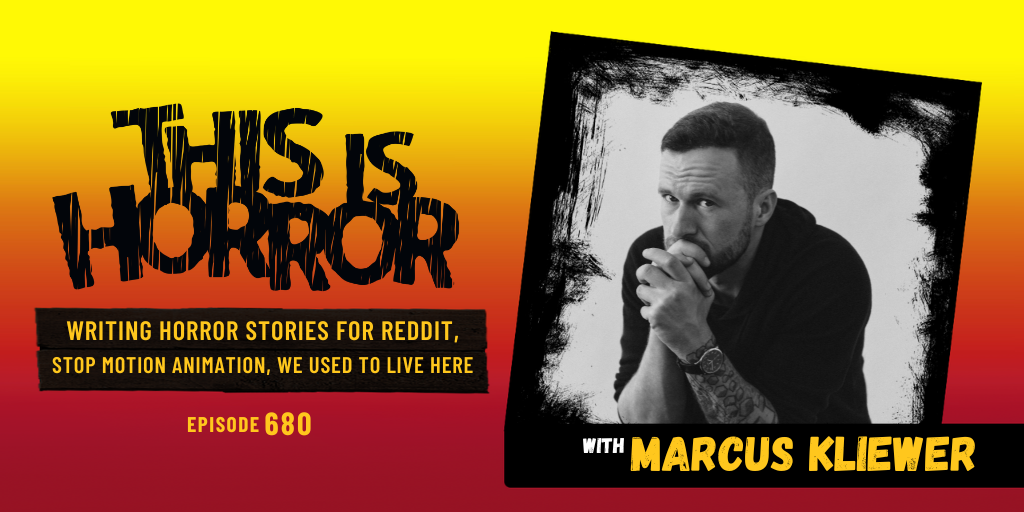
In this podcast, Marcus Kliewer talks about writing horror Stories for Reddit, stop motion animation, the story behind We Used to Live Here, and much more.
About Marcus Kliewer
Marcus Kliewer is the New York Times bestseller author of The Caretaker, We Used to Live Here, and his new audiobook short story collection, Please Remain Seated.
Timestamps
Thanks for Listening!
Help out the show:
- Support This Is Horror on Patreon
- Listen to This Is Horror Podcast on Apple
- Listen to This Is Horror Podcast on Spotify
- Rate and review the This Is Horror Podcast on Apple Podcasts
- Share the episode on Facebook and X
- Subscribe to This Is Horror podcast RSS Feed
Let us know how you enjoyed this episode:
- Write a comment below.
- Follow us and get in touch on Instagram @thisishorrorpodcast
- Subscribe and comment on YouTube @thisishorrorpodcast
- Follow us and get in touch on TikTok @thisishorrorpodcast
- Tweet us @thisishorror.
Resources
- Marcus Kliewer
- Watch the video version of This Is Horror Podcast episodes, including our conversation with Chuck Palahniuk on YouTube.
House of Bad Memories by Michael David Wilson
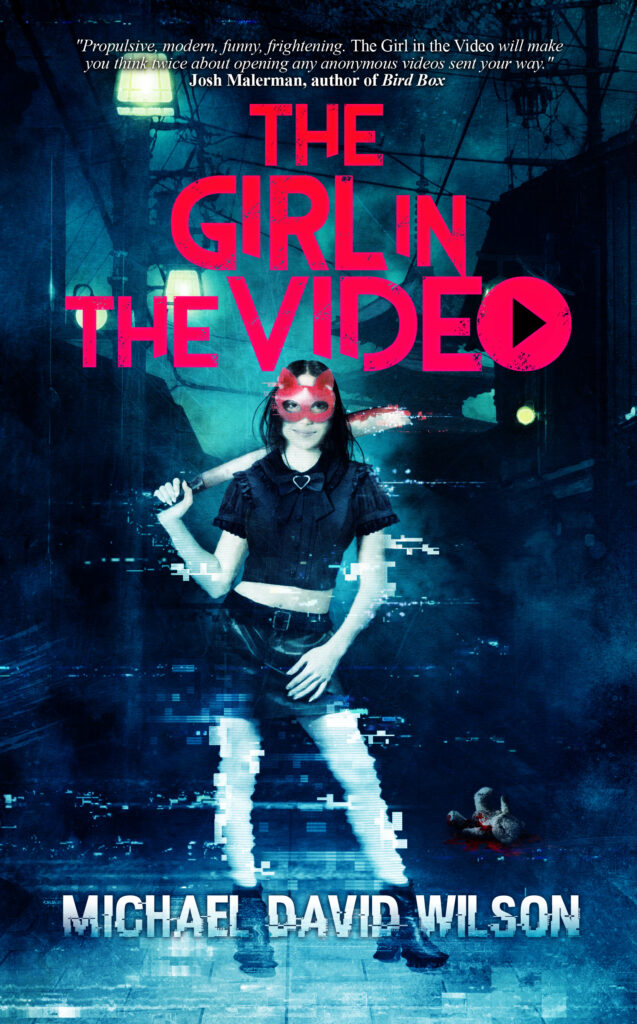
From the author of The Girl in the Video comes a darkly comic thriller with an edge-of-your-seat climax.
Denny just wants to be the world’s best dad to his baby daughter, but things get messy when he starts hallucinating his estranged abusive stepfather, Frank. Then Frank winds up dead and Denny is held hostage by his junkie half-sister who demands he uncovers the cause of her father’s death.
Will Denny defeat his demons or be perpetually tortured for refusing to answer impossible questions?
House of Bad Memories is Funny Games meets This Is England with a Rosemary’s Baby under-taste.
Buy House of Bad Memories from Cemetery Gates Media
Buy the House of Bad Memories audiobook
They’re Watching by Michael David Wilson and Bob Pastorella
From the hosts of This Is Horror Podcast comes a dark thriller of obsession, paranoia, and voyeurism.
After relocating to a small coastal town, Brian discovers a hole that gazes into his neighbour’s bedroom. Every night she dances and he peeps. Same song, same time, same wild and mesmerising dance. But soon Brian suspects he’s not the only one watching and she’s not the only one being watched.
They’re Watching is The Wicker Man meets Body Double with a splash of Suspiria.
Buy They’re Watching in paperback and eBook right now.
Michael David Wilson 0:28
Welcome to This Is Horror, a podcast for readers, writers, and creators. I'm Michael David Wilson, and every episode I chat with the world's best writers about writing, life lessons, creativity, and much more. Today I am chatting to Marcus Kliewer, the New York Times best-selling author of The Caretaker, We Used to Live Here, and his new audio book short story collection. Please remain seated. Now the conversation I had with Marcus was massive, so much so that it spans three episodes and two separate days of recording. So, get ready for an in-depth dive into the Kliewer universe, but before any of that, a quick advert break.
Bob Pastorella 1:28
House of Bad Memories, the debut novel from Michael David Wilson, is out now via Cemetery Gates Media. Denny just wants to be the world's best dad to his baby daughter, but things get messy when he starts hallucinating his estranged, abusive stepfather, Frank. Then Frank winds up dead, and Denny is held hostage by his junky half sister, who demands he uncovers the cause of her father's death. Will Denny defeat his demons, or be perpetually tortured for refusing to answer impossible questions? Clay McCloud Chapman says, "How's the bad memories hit so hard you'll spit teeth out once you're done reading it. House of Bad Memories by Michael David Wilson available now in paperback, ebook, and audio. From the host of This Is Horror Podcast comes a dark driller of obsession, paranoia, and voyeurism. After relocating to a small coastal town. Brian discovers a hole that gazes into his neighbor's bedroom. Every night she dances and he peeps. Same song, same time, same wild and mesmerizing dance. But soon Brian suspects he's not the only one watching, and she's not the only one being watched. They're Watching is The Wicker Man meets Body Double with a splash of Suspiria. Their watching by Michael David Wilson and Bob Pastorella is available from This Is Horror.co.uk, Amazon, and wherever good books are sold.
Michael David Wilson 2:51
Okay, without said, here it is. It is Marcus Kliewer on This Is Horror. Marcus, welcome to This Is Horror.
Marcus Kliewer 3:07
Thanks for having me.
Michael David Wilson 3:08
So to begin with, I want to know what were some of the early life lessons that you learned growing up,
Marcus Kliewer 3:17
with horror or just in general?
Michael David Wilson 3:20
Just however you want to interpret that, we can go horror. We can go broad. Different guests go for different interpretations. Yeah.
Marcus Kliewer 3:31
Well, I think for me, I grew up in a Christian household, so horror was kind of a taboo. Like it was, it was this big forbidden fruit thing that kind of like oh that's that's the scary stuff we don't we don't look at that and of course that just made it all the more alluring to me so my yeah my earliest experiences with horror was living it vicariously through my friends that would describe horror movies they'd seen to me, and then I started going to Christian Movie Review websites because they would um they would list all the like disturbing horror things for parents right to be like this is what happens so if you went there you would get like kind of a highlight reel of all the of all the kills and all the gore and all that, and and yeah, now I do it for a living. So my parents have come around, but it's yeah. There's something about that forbidden aspect that made it so alluring to me.
Michael David Wilson 4:34
Yeah, and I think we'll definitely talk about forbidden elements. We'll talk about rules because that is obviously ingrained in so much of your fiction, particularly the caretaker. But I mean, I'm quite intrigued in terms of this religious household that you grew up in. So, how strict are we talking? And when we talk about. Rules? Did you have a lot of rules that you had to follow as a child?
Marcus Kliewer 5:05
Yeah, I think it was a Protestant, so it was wasn't the like insane level of Catholic kind of you know the guilt that I that I hear about a lot, but it's really just baked into it. Like it's so there's the 10 Commandments, and then there's the in the Old Testament, the parts of the Old Testament that always fascinated me were like around tabernacle and and ritual, and it was so terrifying to me that this God that I that I worshiped at that age would basically smite people for doing a tiny little thing wrong, like like there's um I can't remember the verse, but there's a Bible verse where the Ark of the Covenant is on a is on a cart and it starts to fall and you're not supposed to touch it and a guy reaches out just on reflex to grab it and he instantly dies and that was like terrifying to me and just so fascinating, and so it's just so baked into human nature. And of course, growing up with it, I didn't get that as much of a hard line thing. But there's the 10 Commandments. There's all that kind of stuff, and it always had world-ending stakes to it. There's this idea of like Jesus literally died for my sins, and if He didn't do this ritual of dying on the cross, I would be tortured for eternity. Like that's a pretty intense thing to tell a child, you know, and and for a child to take that on and be like, oh, I'm the one who deserved to be up on that cross. So it's it's no wonder that I ended up writing horror because the the Bible is one of the best horror books in the world, which I guess is might be blasphemous to say, but yeah, I say it with with all due respect, I guess, but yeah,
Michael David Wilson 7:02
yeah. No, well, I mean, particularly if you look at the Book of Revelations at the end, I mean, that is full of horror imagery. So, I think for anyone,
Marcus Kliewer 7:13
totally,
Michael David Wilson 7:14
yeah.
Marcus Kliewer 7:15
Well, and then a legion. I think legion, the the demon that possessed the guy, and there's many in one dude, and Jesus casts them out, and he goes into a herd of pigs, and the pigs run off a cliff. Like that's kind of kind of pretty cool. It's pretty metal. I was gonna say
Michael David Wilson 7:33
yeah, it's not just horror, but I mean that that's the kind of thing you'd imagine maybe a band like Cap Cattle decapitation would write about. Yeah, I mean literally pig destroyer. Yeah, that's the pig destroyer origin story right there. But no, I mean it sounds like I had quite a similar upbringing to you because I always had this idea. Also growing up in a Christian household from a far too early age, that you know Jesus had died for me, and like I kept having these recurring nightmares of him just tortured on the cross and these voices shouting at me and being like, "It's your fault. He did it for you. It's intense at like five or six years old, man. So, I'm I'm wondering for you, when did you start to realize? Hang on, this isn't quite right, or when did you move away from religion to to a point?
Marcus Kliewer 8:40
I think, especially fundamentalism, because I think there's an important distinction to make. I know, I know, lots of Christian. Obviously, it's a wide diversity of of beliefs, and and that there's fundamentalist, more hardline belief, and then there's Christians that are more modern, and you know, they they all that kind of stuff. So it's like I'm not, I don't want to cast aspersions against every single Christian, but my personal experience with it was unfortunately very narrow, and it was very fundamentalist in the sense of like if you you can't really go outside the box of certain beliefs, and if you do, then you're not Christian anymore. And the one of the main ones of that was hell. Was kind of like well, you have to believe in hell to be a Christian. If you don't, what's the point of Jesus having died on the cross? Like that's kind of the thing. And I think I was around. I I always had my doubts when I was young, but it didn't really hit me until I was around. I want to say 15 or 16, and I was like actually at a Bible camp volunteering as a leader. And I remember a kid saying something about how hell was being trapped in eternal darkness and having barbed wire run through your arms and into your mouth and it's slowly just moving through you like snakes and you never die. And I remember being 16, hearing a I want to say a nine. Or a 10-year-old, or maybe even younger, say this, being like, "Oh man, yeah, that's what I. That's basically what I like. Eternal torture, you know. That's a very specific. I don't know where he heard that. That's a very specific, but I mean eternal torture, burning to death forever. That's essentially what it is. And I was like, man, why am I, why am I dedicating my life to a God that lets this happen, and then how is that free? Because the whole idea is like, well, He lets hell exist because it's free will, and I and then I was like, well, wait a minute. Like, if I have a choice to believe in God, and the only alternative is eternal torture, no one would ever call that a free will choice? Like, if somebody comes into your house and points a gun at your head, and that bullet will torture you for eternity, and then like you have to love me, and you say yes, I love you. That's not love. That's please don't shoot me. And so, unfortunately, or maybe fortunately, depending on the perspective, that because I talk to you know I talk to leaders, I talk to mentors, and they all just had a very fundamentalist view, and so there was really no wiggle room on hell. And in order to be a Christian, I had to believe in eternal torture. And it was I I couldn't sleep at night. I was I was I was having panic attacks, thinking about friends and family, and you know, like the vast majority of humanity ending up in this place-it's a terrifying, terrifying thought. And and the fact that everyone around me that believed in this wasn't also going crazy was was very isolating for sure. And so I think I I just I think I around 17 or 18, I started really falling away from it, and then it wasn't until I was kind of 1819, out of, you know, out of the house that I was like, you know what? I don't think I'm actually Christian anymore.
Michael David Wilson 11:52
Yeah, no, this idea that if you have those two choices, then there really doesn't exist free will is just a yeah, that's a wonderful way of framing it. It's not a wonderful situation, but it really does put it in perspective. And you know, as as well, like you said before, the idea that every sin is equal. So you're basically saying, if I covet my neighbour's wife, if I just have a little look, little bit of coveting, or I murder someone, that is the same level. Yeah. It and and you know when I'd raise that with wickers and pastors, they'd say, "Oh well, you know this is you're thinking on a human level, but this is this is divine. So you can't understand that until you you get to heaven, and it's like feels like a cop out of an answer that any time
Marcus Kliewer 12:55
yeah
Michael David Wilson 12:56
there's a difficult question. It's like no, that's because you're you're thinking in human terms, and it's like, well, mother, fucker, I am human. Yeah. What other terms would you like me to think in? Totally. Oh my goodness. And and seeing as you know, you weren't allowed to watch horror movies from a young age, I'm wondering what was the first horror movie that you watched, and how did that come about?
Marcus Kliewer 13:29
So I think it kind of bled in a little bit, where there would be things like thrillers. So Red Eye is definitely more of a thriller, and somehow that kind of slipped under my mum's radar. I don't know how, and we had that on DVD, which was, I believe it was John Carpenter. I might be getting that mixed up, but the any whoever the director was, it was a fantastic little thriller with with Killian Murphy and Rachel McAdams in an Airplane, and I just reread the script recently, and it still really holds up. It's a really well constructed, well structured claustrophobic kind of thriller, and that was just like mesmerizing to me. Like especially near the end, she like ends up stabbing him in the throat, and he has to put a pen in his throat to like breathe and all this stuff, and it was just so fascinating. And then outside of that, I found that I would always be latching into the horror elements of non-horror things. So my dad read us like Lord of the Rings and The Hobbit when I was a kid, and I loved all the like every part of those books, but it was always the stuff like the barrel whites. One of them gets their arm cut off and it starts crawling along the ground, or or the Balrog, or the the Goblin Cave. Like all these kind of things were just always the things that really grabbed me and really stood out to me. But I think the first I would say true horror horror film I saw was Saw One, which is pretty extreme jump to make. I mean, it's not the gore fest people think it is, but you know it's pretty hardcore. And yeah, I remember I watched it on a portable DVD player with a buddy of mine in a in an RV motorhome in his parents' backyard, and somehow I didn't know what the twist was. Like it didn't get spoiled for me, and that just completely blew my mind. And it really, it's just I think it's such a great film to be intro into horror because I was kind of expecting a mindless gore fest, from from what people say, and you see, you know, the title and everything people call it torture porn, and unfortunately, the series kind of turned into that. But the first saw, for all its flaws, is a really intelligent little kind of locked room thriller with a puzzle box and just a great kind of pull the rug out from under you twist at the end, and it kind of really made me realize, like, oh, you can do really interesting things with the genre as well.
Michael David Wilson 16:10
I mean, firstly, as you say, hell of a jump from red eye to saw. Yeah, I I would say with the original saw, I mean, it's probably the best of the franchise because because it had a lower budget and because of those limitations, I think they became its advantage. And so, not only was it this intricately weaved story, but it also meant that they couldn't go so ridiculously over the top, as they did at the end, and I presume too that when they made it, you know, when when you make a film, you don't know that it's going to have a lot of sequels. So at that point, you need to make it a complete story, and in a way, if they'd have kept it at that, it would be this almost iconic hidden gem, or it would have the same lure, I suppose, as something like the Blair Witch Project or the original Texas Chainsaw Massacre.
Marcus Kliewer 17:14
Yeah, and now it's what it's like. I mean, it's kind of died off now, but man, it was every year for for a while. It was like the big Halloween movie was saw, and I know James Wan even. I think they had given him an offer that was like, we can give you a million up front, or we can give you a much smaller paycheck, and you'll get a cut of the sequels. And he went with the cut of the sequels, and obviously that was the right voice from a financial perspective, that's for sure. But yeah, maybe not from an artistic one.
Michael David Wilson 17:48
Yeah, it's always difficult for people to make that call, you know. When you hear stories of like Alan Moore making the rung cool, as it were, but it's always a gamble. It's your first deal. You don't know how it's going to turn out, so you got to make your choices, and you've got yourself. You've maybe got a family to feed, so yeah, not an easy spot. Yeah, yeah. And so, just to to get it in context, how old were you when you saw So?
Marcus Kliewer 18:25
Ooh, I want to say 14 or fifth, 12 to 14. I don't know the exact age, but but um, so for some that might be young, and then for others that might be old. I don't depends on how your your parents were, but um, yeah. And then I think a round saw as well, signs and the sixth sense. I guess the sixth sense is horror, but it's a much more prestige horror, like like um like it borders more in drama. So I wouldn't consider it quite from a Christian perspective, at least. It's like that one. My mom probably would have been okay with the Sixth Sense, if she like watched it and and knew what it was like, but Signs in particular was kind of the first I would say movie that really really scared me, and I saw that before Saw, and that movie is like also just massively influential on me, a flawed movie, but also like I think really underappreciated for for um for how it kind of builds dread and some of the the the ingenuity of some of the sequences in it are so clever and and still stick in my head so specifically to this day, yeah.
Michael David Wilson 19:33
And so you mentioned as well that you were reading the Lord of the Rings books at the time too. So I'm wondering when did horror fiction creep in in terms of your reading habits, or even more broadly speaking, dark fiction? Because the thing about that is, it's easier to let it slip under the radar with our parents as well, you know, unless. Totally,
Marcus Kliewer 20:00
it's a harmless little book, right? Yeah,
Michael David Wilson 20:02
yeah, that's it.
Marcus Kliewer 20:04
So that's actually it was it was Christian horror that really I would say I I would credit with kind of getting me into the genre as well. So there was an author, and I don't condone or condemn these authors. I don't know what their views are or anything like that. Like it's been a while since I've read them, but I do appreciate them for for at least introducing me to the genre. And was an author Frank Parede, and then an author Ted Decker, who I think are both quite prolific, quite successful authors in their kind of niche horror Christian subgenre, and obviously both very influenced by by King. So, in a in a roundabout way, I was kind of getting my influence of King secondhand, right? I was getting it by these guys that were obviously themselves very influenced by King. And so, I think my first horror book would have been Frank Paredes The Oath, and it was a, it's a it's a story about this isolated town and this this monster is kind of haunting the town and it's it's like it's kind of got a cloaked thing like the predator and as the story unfolds you start to realize the monster is actually a dragon and again I haven't read it since I was a kid, but I remember being so just mesmerized by this book and how it was able to take something that generally isn't conventionally scary. You know, dragons are cool or they're like epic or they're you know they're they're villainous, but they're never really scary. And and he was able to kind of put that into a monster movie horror kind of context, and I'm really surprised Hollywood hasn't ripped it off because it seems like it could be done by the right director. It could be a really interesting thing, but yeah. So that Christian horror was kind of the first intro into it, and then it would be more dark fiction, like you said. So Dennis Lehane, who wrote Shutter Island and Mystic River, and then Cormick McCarthy. So like Blood Meridian and and No Country for Old Men, which definitely Blood Meridian especially has elements of of horror and and depravity in it. And then The Road as well, which which 100% has sequences that are just straight up horror, and and all of those kind of really informed what I was drawn to in prose in fiction.
Michael David Wilson 22:29
And so, as someone who hasn't really read a lot that's marketed specifically as Christian horror, I gotta wonder, you know, what can you do? What can't you do? What marks Christian horror? Because I mean, when when you say it to me, the assumption is probably that the protagonist and the main characters have to be Christian. If not at the start of the story, then by the end of the day, I, I, I, I feel too. It would probably have to have an ending or resol resolution that was largely positive and Christian. I'm not sure if you could go for a kind of Eric Larocca, everybody's fucked, yeah, ending. And then you, you know, it's interesting because I wonder, like, whether you can or you can't even stray into something that's a little bit torture porn. It's like I my my feeling is you can't, but then it's like, well, if it has a Christian ending, can you do that? So I honestly
Marcus Kliewer 23:40
can't remember how they ended. Like I think it was all positive endings, from what I can remember. Yeah, I can't. I cannot remember. I think it was all positive. It was usually Christian. There was like the most you would get in swearing would be like "damn, and that would be like a big deal if somebody said It, so yeah, it was. But I, I do remember there being violence. I remember a guy getting like gored by this dragon and stuff like that. So it was there. Yeah.
Michael David Wilson 24:14
Were you listening to the Christian metal music as well? Does it? Oh yeah. I know of like Zayo and Norma Jean are the two that
Marcus Kliewer 24:23
oh yeah come to mind. I mean, it's such a massive. A lot of these bands are still around, and they they don't really identify as as Christian anymore. You know, because it was like when they were teens when they started these bands. But it's such a massive genre, and it and it's still like these bands are still going, and like some of them are doing like arenas now. It's wild, yeah.
Michael David Wilson 24:48
And so, I mean, talking about your writing specifically, do you remember the first story that you wrote?
Marcus Kliewer 24:57
Yeah, I think the first story I wrote. Was something called like the Lost City, and it was about these scientists. It was like it had drawings with these scientists that that there was a city in the sky, and there was a dragon in the city, and then they went up to the city to like stop the dragons from taking over the world or something like that. And I think it's buried away in a in a in a drawer somewhere. And then I wrote another story. I cannot remember what age it was. I think it was a little bit older. About this these quails, they find a hubcap that got knocked off a car, and then the this grouse, which is kind of like a bigger version of a quail, basically uses the hubcap to like create his own cult, and it's very like like Animal Farm coded. Maybe I just read Animal Farm, and yeah, it was like this like this kind of cult leader fat bird that kind of was able to use this piece of this car to kind of, yeah, that's another one. I don't know where it's buried, but and then I would write fiction based on video games I liked. So I like I was really big into Zelda, so I would write spin-offs on that and or Star Wars. Usually, usually in my head, I didn't put a lot of it to paper. I would just kind of run stories in my head again and again, and imagine what they would look like if they were a movie or if they had a trailer.
Michael David Wilson 26:30
Yeah. And so, did you then share these stories with other people? And if so, what kind of reactions were you getting?
Marcus Kliewer 26:41
Well, I would have friends, so I did like stick figure comics in school. That I would have friends being like, "Oh, when's the next part coming out? You know, like so, like that was really cool to have some kind of interest, even if it was only from like two or three people. A lot of it was just dumb, you know. It was like you're you're a teenage middle schooler boy just trying to shock your friends and you know just trying to be edgy and all that stuff. So like I'm sure some of it's aged very poorly. So I'm glad I I'm glad I didn't have access to the internet when I was 12 or 13. But yeah, and that was the earliest form of sharing, or with my with my parents or teachers, and and I had a lot of support from teachers. But then, because I went to a Christian school, there was definitely some. I remember a comment I got on something I wrote where they said, "Oh, the writing is really good, but I'm concerned about the violent nature of it. And yeah, unfortunately, that really discouraged me because I felt oh I like I started equating like enjoying violence in in fiction is the same as enjoying it in real life, which of course is not the case at all. I think it was that Christian guilt thing, you know.
Michael David Wilson 27:54
Yeah, that Christian guilt it yeah creep up on you
Marcus Kliewer 27:59
doesn't really go away for me, at least. Yeah,
Michael David Wilson 28:02
yeah, yeah. I mean that that could be a whole other podcast, but yeah. Even moments when you think you've escaped it, you know.
Marcus Kliewer 28:13
Yeah.
Michael David Wilson 28:13
Regardless of belief, and I think a lot of people who who kind of go away from belief, they're not 100% away, 100% is very confident.
Marcus Kliewer 28:25
Yes.
Michael David Wilson 28:27
So
Marcus Kliewer 28:28
when it's ingrained into you at such a young age, it's like very hard to shake it entirely. I think. I think even if it's repressed, there's always some part that's kind of like, hey, what if I'm wrong, you know, like what if, what if hell actually is real and all that kind of stuff? But how it goes
Michael David Wilson 28:47
if we get to hell and there's just the barbed wire and that
Marcus Kliewer 28:52
yeah
Michael David Wilson 28:53
that little boy is like he was fucking right. He absolutely nailed the vision. Yeah, as long as they have good music down there, yeah.
Marcus Kliewer 29:05
Hopefully,
Michael David Wilson 29:06
yeah. But I know that you know your main career, or or at least one of your parts of work was working as a stop motion animator. So I want to know what the journey looked like, and if you always had aspirations to be a professional writer, or how everything kind of fit in in terms of the the puzzle of your career and writing trajectory.
Marcus Kliewer 29:37
Yeah, I think I've always just loved even more. I love the craft of writing, but even more so than that, I just love storytelling. And so, whatever medium I could make stories in and build worlds in, whatever medium it was to me at the time was the one I would explore. So, you know, early on it would be the stick figure, poorly drawn stick figure com. And then I did stop motion animation with like Lego, and then and then I dabbled in film school, and and and it always just kind of came back to writing as the core thing under everything, because you kind of need that to tell a story. Whatever medium you're doing, ultimately you you gotta write down at least something so you know what the story is, and and yeah, and stop motion in particular was it was not something I really aspired to professionally. I did it for fun as a kid, and then I kind of you know went to film school, worked in the film industry for a while, and then just met the right people at the right time, and then kind of it just kind of fell back into my lap, and I really, I really loved it. It's just a very hard medium to make a good living in, and not good for your neck. You know, you're very even more so than typing. You're kind of getting pushed into these awkward positions and and hunched over a table all day, and it really just starts to take its toll if you're not careful. But but yeah, I love stop motion. It's still it's still such a magical medium, and I think especially with the rise of of AI and all that kind of stuff. There's just something so grounding about such a human, such a purely human art form. Every single aspect of it, from the you know from the clothes on the puppet to the every single frame has just human hands all over it. And even if even when AI is good enough to replicate that visually, I think the the thing I say is you can replicate it, but you can never replace it because there's something about knowing that that set you're seeing was built by human hands. There's something about knowing that somebody was hung over a table for eight hours a day, moving this puppet one frame at a time, and there's something insane and and magical about that to the point that almost moves me to tears sometimes when I watch stop motion. I find it I don't know. It's like watching somebody dance or or somebody sing. There's just such a vulnerability to it, and and stop motion animators in particular are usually very private and very introverted people, and so you're really seeing them act through an inanimate object. And there's something really beautiful and a little sad and a little just strange and human about that, and I just love that medium so much, so much that I would I might dabble in it again in the future now that I have a bit more freedom financially and a bit more time. It's something I'd love to like fund my own short film or something just just for the love of it. Yeah, you don't get into stop motion for money. That's for sure. You gotta love it.
Michael David Wilson 33:02
Yeah, that's the case with the vast majority of arts. If you're doing it to make money primarily, if that's why you're getting into it, it's like whoa now. Yeah, slow down, back up, just go into finance, go into law, become a doctor. You know, there's many ways that you can make a lot more money, a lot quicker,
Marcus Kliewer 33:26
a lot more reliably. Yeah,
Michael David Wilson 33:28
yeah, yeah. Good, because that's the thing. I mean, even though you can make a lot of money if you get the right deal within the writing industry, particularly within the film industry, there's no guarantee, and just because you got one deal, there's no guarantee. You know, until you reach, I suppose, Quentin Tarantino levels, that you're going to get the next one. So, yeah, you you gotta love it. You gotta have a passion for it, and I think what you were saying about stop motion animation, and you know, you compare that to AI. I mean, AI has no soul. It has no emotion. It has no passion. And I think saying you know you you can replicate, but you can't replace. That is exactly it. And what I'm interested in with art, with all forms of art, it's not just the art itself, but it's the story, it's the human behind the art that takes it to another level. And you can never have that with AI.
Marcus Kliewer 34:41
100% Yeah, I think I think I've been saying a lot is like it would it would be like somebody telling you that hey the Louver just opened up down the street and they got the Mona Lisa there and you live in Canada and you're like oh my god I want to go see the Mona Lisa and and you go there and it's a it's a print version. It looks like the. It looks just as good. You know, it's a very, very nice print, very sharp, and they got the frame right, and it's a good replica. But you would be like, okay, this isn't the Mona Lisa, and that's how it feels to me when people are like, oh, look at this AI stop motion thing, or look at this look at this AI people fighting with swords. It's like, okay, well, I'd way rather watch a Christopher Nolan film where they actually get out on a beach and put on armor, and they're actually swinging swords at each other because, like, that's human. So there is something grounding about that, and and even with with art when it's prose as well, it's like it's something that never used to be important to me was kind of writing what you know, and and I think that can be good advice. It can definitely be misinformed advice, or it be can it can be taken the wrong way, because it's also fun to write things that outside your wheelhouse. But more and more, kind of finding something authentic to say and something personal to say is just that much more important to me now with the rise of um, with the rise of Gen AI and all that stuff. I think, like you said, it's about the human behind the art. One of the first things I do when I finish a book or I finish a movie is I want to go watch interviews with that director. I want to know what they were thinking when they did a certain shot. I want to watch the director's commentary, like that kind of stuff. And yeah, AI can replicate that, but it can't replace
Michael David Wilson 36:26
it. Yeah, it would be very bizarre if AI put out interviews with a kind of fake history, and I'm I'm sure it's probably coming. Yeah, and it would
Marcus Kliewer 36:37
be it would be interesting for about five minutes. You know, like I find that there's like you sometimes on YouTube you end up on a on an AI podcast that's just there and it's two people talking and it's all fully AI generated and it's the first time I heard it it was interesting for about 30 seconds and I'm like I was kind of like oh wow this is these sound like people talking and I'm like well I don't care I don't these aren't people I don't I don't care about it. You know what I mean. So it's just like it's just very. I just get no joy out of listening it, listening to it. I get no joy out um out of using those tools, and it's just so. It feels very anti-human. And now that's not to say. I mean, like I know there's blind people. There's some uses with any technology. There's obviously good and bad, and I'm not one of these people that is like it's 100% bad and it should be completely vanquished from the universe. Even though I kind of wish it could be at sometimes, but obviously there's good and bad, and if anything, that just emphasizes why we need to be so careful with how we implement it, because it doesn't really seem like they're thinking about that that much right now. And it seems like there's more bad than good, and that's that's not a good thing. You know, technology should improve humanity, not destroy it. Yeah, that's a whole tangent. That's a whole other podcast. Oh
Michael David Wilson 38:02
yeah, yeah. And to jump into technology that has improved lives and improved your life. Let's talk about Reddit. Let's talk about yeah writing horror stories on Reddit. So how did that first come about? And I think what's interesting with your journey from other interviews that I've read is that you had a massive hiatus. So there's the origin story, but then there's I think a six year or so gap, and then guess who's back? So let's yeah.
Marcus Kliewer 38:42
So like Reddit creepy pastas have been on my orbit forever. The whole like you know Candle Cove and all these weird little internet creepy stories you would hear in high school or in college, and and then No Sleep in particular, which is the horror subreddit, was put onto my radar. I want to say around 2010, and there was just so many great stories. As with any forum, there's a lot of there's a lot of clunkers, but there was so many stories that I read on there that I'm like, I cannot believe this is free for me to read. Like that, this is just posted on a website by some anonymous person, and a lot of times it would be the only thing they've ever posted, and like you never know who that person was, and it would just be this fantastic little bite-sized piece of horror. And it wasn't until 2014, I want to say, that I was like, I should try my hand at this, and so I did start writing on there. I think that account's deleted now. I'm never gonna, never gonna tell the world what account it was. I should just Google it for my own curiosity. But yeah, the and I did all right on there. Like I got I got decent. Not that it like the upvotes don't matter. At the end of the day, it was about posting. But some of my stories actually did decently well, and so it was like, oh wow, like people are interested in in what I'm saying, and I, for the life of me, I can't remember why I stopped writing on there, and for some reason I just did, like it just uh it just kind of fell off my radar, and it wasn't until 2020 when COVID hit was I kind of unemployed. I was living off of the the government in Canada. Here was giving everybody 2,000 bucks a month if you lost your employment due to due to COVID. So I kind of had this financial boot taken off of my neck And I was like, "Well, what did I always want to do? What was kind of the core thing in every medium that I've done? What was the thing that always drove me to it? And it was always world building and storytelling. Those were the two things. Whether it was stop motion, whether it was film, whether it was poorly drawn stick figures, it was those were the things. And so I also end up seeing this article on IGN that says two brothers sell their no sleep Reddit story to Netflix for a million dollars, and I was like, "Damn, that's that would be nice. I should I should start writing on there again because I hadn't done it in a while, and my my goal was to go. My goal was to like just try to make enough money that I could pay my rent and survive. Whether I needed to supplement that with a part time job, we would you know we would see it was kind of like that was my goal. If I could, if I could even spend like a few hours a day just making a little bit of money doing writing, selling selling T-shirts, just enough to survive, and then hopefully use that as a way to kind of spend more time doing creative things, because that was what money was to me at the time. It was just freedom to be more creative. It was a freedom to like not have to go to work, and it was a freedom to have more time to create. And then in the back of my mind, I was like, "Oh, well, maybe these Hollywood guys that I saw in this article would reach out to me. And sure enough, like three or four months into it, that exact it was the exact guys that I saw in that article who had sold that story, and it's still hard for me to believe that it happened. Like, because the chances are just the chance of the right guy seeing my story at the right time, reaching out.
Marcus Kliewer 42:32
I could have easily have missed that DM because I never checked my Reddit DMs, and and yeah, and now it's turned into what my career is today, where I'm able to do this for a living, and it's just it's just surreal. Even being on podcasts is still so surreal to me, and I'm so grateful and so fortunate. And it would without Reddit, without that community, it never would have happened. So there's a good technology. I mean, Reddit's got a lot of bad too. But there's one good aspect of Reddit for sure.
Michael David Wilson 43:06
Yeah, I think even the technologies with the purest intent. Yeah, would you? You know, I'm not saying Reddit has the purest intent, but everything can be used for bad. Everything can have a nefarious side. I mean, that's the trouble when you involve humans, when humans are part of it. But it's it's interesting. We've read it, and it's interesting too the parallels because the last person I was speaking to on This Is Horror was Max Doty, who wrote *The House That Eats the Dead* and that also began life as a story on Reddit. So, you know, I wonder if, as a result of this conversation, there's now going to be writers who are immediately writing stories on Reddit in the hope that they get an email. But I don't know. I feel that that kind of 2020 pandemic era was the era of agents and film producers crawling Reddit for these stories. So I I don't know if it would happen again. But you know the importance. I would
Marcus Kliewer 44:21
encourage anyone that's even remotely thinking of it to do it because they they I know my manager is always looking at it still to this day the the guy that that really launched my career and especially now with the success of like back rooms and obsession which wasn't like a Reddit thing, but that guy did a lot of stuff on YouTube and just kind of seeing the these people coming from grassroots communities and and launching to just levels that just insane. Like both of those movies were massive. I think back. I think Obsession outperformed Star Wars in its second week. Which is which is insane. So it's it's really cool to see that. Not that Star Wars did bad. I want Star Wars to succeed as well, but you know what I mean. Yeah,
Michael David Wilson 45:12
yeah. And I mean, if you put your work out there, then you've got a lot more chance of somebody seeing it than if you don't put your work out there, and yeah, the thing is, we we never know what will happen, so we might as well take the chance. We might as well buy that ticket, as it were, to potential success.
Marcus Kliewer 45:34
Yeah, and to add to that, I would say there were so many things working against me posting on Reddit, that if things had gone even slightly differently, I just wouldn't have started posting again. And the fact that I did, even if it never led anywhere, I think I was already enjoying it because there's something about sharing your story. But I just can't imagine how many people are out there that were like me and were just about ready to post, and then for whatever reason they got scared. Oh, it's going to be bad. If you want to think it's cringe, and they don't do it, and it just never happens. And so it's like it's it's literally $0 to post. You don't even need a computer. You can you can write at a library. Go to go to your public library and and write on that. Like there's zero overhead, and so there's really no, there's no excuse to not try, and you can do it anonymously. That's what I did. That was that took a huge pressure. I was writing anonymously. Nobody personal, except for my closest friends, even knew that I was doing it. So if it failed, it was like, well, you know, nobody even knows who I am, and and there's something really safe about that.
Michael David Wilson 46:39
No, I love that you kind of took all of the potential barriers to entry, or you know the fears that you had, and you just removed them so that there was no excuse but to write and but to post.
Marcus Kliewer 46:56
Yeah, I think it was in Stephen King's on writing where he has that bit of advice about how he would post all the rejection letters he got up on his wall when he was a kid for all the stories he submitted to magazines, and his wall was, you know, covered in these rejection slips, and and that was like very motivating to me, because for him it was a sign that he was working towards his goal. It wasn't like, oh man, I another rejection. It was like, oh well, another rejection. That's that's to be expected. You know, that's part of that's part of getting somewhere. Rejection and failure is is part of a part of growth. And if you can't accept that, I guess there's this idea out there of it being this like, oh, I'm gonna post it and people are gonna love it and immediately everything's going to happen for me. And even in my case, that's not what it was at all. I've been writing since I was since I could hold a pen. You know, you don't pick up a guitar and expect to be Jimi Hendrix. So why would you expect that with any other medium? You know.
Michael David Wilson 47:57
Yeah, I mean I've said before it's remarkable how many years a lot of overnight success stories take. That's the way that the media loves to brand it, and you know, even if you look within horror, like for some people, they would say that Stephen Graham Jones and Paul Tremblay exploded onto the scene, and it's like you know both of them were doing loads of different work before anything became mainstream. You know, decades of work. Paul Tremblay was writing a lot of crime stories. Totally, yeah, and and Josh Malerman, even though his first published book *Bird Box* did phenomenally well, well, he'd written about I think 14 novels.
Marcus Kliewer 48:51
I didn't know that. Wow.
Michael David Wilson 48:53
Yeah. So, yeah, Josh Malerman's story is a remarkable one because he was on the road with his band, the High Strung, and then just kind of while on the road, he'd be writing novels, but just just for the pleasure of writing the novel. So he had all these novels just, and one day he decided to send it to someone, and well, you know, that's the very truncated story of oh, now he's Josh
Marcus Kliewer 49:19
Malerman. That's it. Now
Michael David Wilson 49:21
he's Josh Malerman. Yeah, there you go.
Marcus Kliewer 49:25
Well, and even these younger guys like like Curry Barker for for Obsession, like he he's been doing short films forever. Like he's got so many short films on YouTube. He's been doing sketch comedy. Like he's just been grinding since he could, you know, go to school, and and that was something else he said that that I echo a lot was just saying like make bad movies, like you got to make bad movies to make a good one, and yeah, so a lot of these guys like it doesn't really matter what age it is. Some people it happens in their 60s, some people it happens. When they're 17, like the the backrooms director, who's also incredibly talented and and very hardworking, but it's just a completely different journey for every different person, and yeah,
Michael David Wilson 50:13
yeah. I mean, the common thing really seems to be perseverance and grit and determination, and you just got to keep going despite the obstacles, despite the rejection. And in a way, I mean, it's easy to say, but in a way, it's almost better if you get a lot of rejections up front because then it might hurt less in a way. But if you have a success up front and then you get the rejections later, you know you look at a lot of the child, the child pop stars or the child film stars, and you know they were massive in the 80s or the 90s or whatever decade it is, and then You know, 20, even 10 years later, they're forgotten about now. God, that must be hard. And then you know, this is even before considering the psychology of they were a child at the time, which is another thing.
Marcus Kliewer 51:18
Like I can't imagine if all this happened to me, even in my early 20s, or like I don't, I don't know if I would have been mentally equipped to to deal with it, and and then doing on a child star level, which is just such a a whole nother monster. Like at least with authors, nobody really cares who you are, but like actors, they got paparazzi. Like that's a whole horror horror story of its own, there for sure.
Michael David Wilson 51:45
And so, in terms of the story that kind of catapulted your success, that was we used to live here. And talking about childhood, I understand. You know, before Reddit, if we think about the influence, it was actually a childhood experience of you visiting a house that you used to live in. So, please talk us through that.
Marcus Kliewer 52:15
Yeah. So this was-I cannot remember the exact age I was. I've-I've probably said different ages in every interview because I can never remember. But let's just say I was seven or eight, and we were driving past a house my my parents used to own in this little beach town called White Rock out here in in Western Canada, and you know they're just showing like oh you know your mom and I lived in this house before you were born, and and that kind of thing. We were out in the back, and and there's a guy there. The current owner is out there washing his car with a garden hose. I just remember that. There's so many weird details that just really have stuck with me about this story because it was so vivid. And he, you know, sees this family looking at his house. He kind of comes over, and we're sitting in the car there. And then he just start. My dad obviously explains, like, "Oh yeah, you know, my wife and I lived here, and they just start making small talk about the property and you know the town. And we were about to leave, and then the guy says like, "Hey, did you ever notice anything like weird about the house, and he went on. He went on to tell a bunch of ghost stories, and it wasn't so much the ghost stories that scared me. They were pretty typical. It was like old, you know, old woman in the house, lights turning on and off, the dog barking at things. It it was the fact that he was so reluctant. He seemed like he didn't want to talk about it? Like he was the one that brought it up, but he seemed embarrassed and a little scared, and even a little. It was more like he was reaching out for validation rather than, oh, I've got this story I want to tell. And up until that point, especially growing up in a religious community, but I think in in any community, there's there's usually an excitement when people have a ghost story. Even if they were scared by it, they're like, "You're not going to believe this. Or even demon stories growing up, they'd be like, "Oh my God, this person thinks they saw a demon, and it would be there's this almost excitement and this eagerness to tell you about it. But but seeing somebody look reluctant and scared really freaked me out because it seemed way more credible in my mind, and that sort of seed of a memory stuck in my head for, gosh, like almost two decades until it just like I was like, man, there's a title and a prem. There's the title and there's the premise, right? It's just been sitting in front of me my whole life. That's like a great little, and then it became the opening scene of that story, and then everything just kind of spiraled from there. Yeah, and whether the house is haunted, I don't know. My parents-it's another thing-is my parents themselves seem kind of like reluctant. Talk about it. They've they've said weird things about that house, and and my uncle just told me weird stories about it. When he would stay there, he he heard footsteps that would go up and down the stairs when everyone else was asleep, and but it's just that really stuck with me. And I think there's a moment when we used to live here that's very similar to that of the of the reluctance to bring it up, and that kind of embarrassment and the character feeling like that lends it more credibility, you know.
Michael David Wilson 55:31
And so that begs the question, and it's something I sometimes ask people because I just think it's it's interesting, really, and I want to know what are your own personal beliefs pertaining to the supernatural or lack thereof.
Marcus Kliewer 55:47
It's funny. I mean, it's an answer that changes depending on the time of day for me. I think most stories I hear I feel like can be explained by other things, you know. It's like, oh well, it makes sense to me that, like, especially if somebody's grieving, their mind would would want to believe they're still around, even if that isn't some kind of, you know, not so pleasant afterlife. But I don't know. The older I get, and the more the strange, stranger the world seems to get, the more I think like maybe there is stuff going on that we just don't have any clue about, and there's so little we know about the universe and reality and simulation theory and all that kind of stuff. That it feels like. Well, it feels like anything is possible. But I've never personally had any experience that I feel like couldn't have been explained by by pretty rational things. And I'm no I'm no person that's all like oh I'm hard science hard skeptic. Like I definitely um like UFOs. I I have wanted to see I've wanted to see UFOs. I want to see ghosts and all that stuff. But it's just never never really happened for me. But I've certainly heard stories from other people that are compelling, and they're people that I trust. But again, if you haven't seen it for yourself, it's hard to make that leap, you know.
Michael David Wilson 57:24
Yeah, I think that's the the difficult part, you know. You can hear these stories, and it's like, yeah, it seems tight. It you know, it's difficult to explain it, but at the same time, that first hand experience, you know. Adam Neville describes his beliefs as I want to believe, you know, in that X Miles way, which, yeah, I think is a a great way of putting it, and is how a lot of people who don't have strong beliefs but do have this interest in horror and the supernatural. I mean, I think to be attracted to this genre, often you are endlessly fascinated by it, even if you don't believe it necessarily happens in reality. But my goodness, wouldn't it be interesting if have you ever
Marcus Kliewer 58:18
have you ever had anything or
Michael David Wilson 58:21
Mike? I'm gonna say not really, and then when I tell you the nearest thing that I had, you're gonna be like that. Sounds quite, quite supernatural. But I mean, for for me, so the only thing was so me me and my mother were driving back from, she'd taken me to soccer practice, and then as we were driving, there was this massive aircraft that we saw in the sky. That was like a World War aircraft, but it was completely silent. And there was another car parked across the road, and there was a man in it, and he was just like looking down. I think on his phone or something, and the the aircraft that was silent like skimmed it to such a point that you know it nearly made contact, and he didn't look up once, and then it kind of just disappeared. And me and my mum, we didn't say anything to each other as as I remember it. And as I remember it is the caveat, really. At the time, it was only after it had passed that you know we said, "Did you did you see that? And both of us had, and then when we looked into it later, we found out that actually this was a site where a lot of aircrafts had been shot down in the war. So I say that's the only thing, and people might find that compelling, but then. The way that I would rationalize that is a couple of things. Well, firstly, actually, the fact that things did happen there-that to me increases the chances that one of us had read about it happening, even if it was subliminally, you know, we'd seen an article that had said this had happened. So that had planted the idea in our mind. As I remember it, I saw it before me and my mum had an exchange, and probably her memory is the same that she remembers it before you know I'd said anything because she had. But again, in terms of suggestibility, is it possible that one of us introduced the topic first and then we implanted this false memory? You know, because then the so that's how I'd rationalize it. Because the other fucking explanation is what that we literally saw a ghost plane.
Marcus Kliewer 1:00:58
Yeah, yeah. So
Michael David Wilson 1:00:59
then that that seems more mental to me than being able to say, "Look, we we knew on a subliminal level that that had happened. But yeah, like all the other members of my family who are much more religious than me, they seem to have these things happen to them all the time, and that's the the only that's the only time that something has happened. And yeah, there's part of me that would want more things to happen, but at the same time, I don't know if there would ever be something that would happen that I wouldn't then just explain away. I don't know what you could do that would then make me convinced,
Marcus Kliewer 1:01:46
right? I think too. There's like an aspect of like wanting some, wanting to see something, and then actually seeing it. Like my friend and I would go and like try to look for UFOs all the time. We never saw any, and I thought, what would happen if we actually saw one? We would probably both throw up. Like if we saw like a saucer fly over our head and like that low, like that's scary. And like you hear about stories of people that actually like see this stuff happen, and it's like yeah, it does sound like scary. But yeah, that's super. Where was that the the airplane thing?
Michael David Wilson 1:02:23
So that that was in England. That was in Worcestershire, where I grew up. And so, yeah, like I'd be able to research and tell you the exact place that it happened, but it was just yeah, it it was a bizarre situation, and then further to that, after there were other reports in newspapers of other people seeing a similar thing around there.
Marcus Kliewer 1:02:50
That seems like that legitimate legitimizes it. I mean, especially because there was two of you. Like I feel like,
Michael David Wilson 1:02:57
yeah,
Marcus Kliewer 1:02:58
having another person to corroborate it just makes the likelihood of it being imagined so much less, you know. But
Michael David Wilson 1:03:07
yeah, yeah, it's just it's wild to me too that you know if that really happened, it's like why is that the single the single thing you know, probably nearly 30 years ago at this point. So I don't know, but you you know I mean, a few months ago my grandfather died, and I was really close to him. And he yeah he was the person who I was closest to in my family. He was really instrumental in terms of encouraging me and my creativity, and you know, there's part of me that obviously really would like to see him again. And I'm pretty sure that I said to him, as I definitely did to my grandmother, who is still with us at 92, but I said, if well, if you die, when you die, we assume that unfortunately, as with every other human, they they would. But you know, it'd be good if you came back to me because I don't believe in any of this. And yeah, so far nothing has happened. But obviously, just like you said earlier, you know, when you're in that state of grief, anyway, it's so much easier to hallucinate or to imagine the person who you're grieving and you're thinking about. So, even if he legitimately did, I'm not sure I'd even believe that to be the case.
Marcus Kliewer 1:04:41
Yeah, I mean, I think I talk about it. It's the thing like the phantom limb syndrome of of people losing an arm, and they still feel it being there.
Michael David Wilson 1:04:51
Yeah,
Marcus Kliewer 1:04:51
and it seems. I don't know much about the psychology or the the mechanisms behind that phenomenon, but it just seems like it's not. Much of a leap to go from that to people, especially when somebody is so close to you. It's like they really become a part of your brain chemistry, and and they physical they are physically mapped into your brain. Like they could scan your brain, maybe not with the technology average today, but they could do it at some point and see neurons that were formed because of that person, and so when that goes away, you know what happens to those neurons. They don't just disappear immediately. Yeah, it's fascinating, and then it's fascinating to see, you know, the the especially some of these TV psychics that that are really predatory kind of exploit that Human nature, and yeah, it's it's a whole it's a whole different world.
Michael David Wilson 1:05:53
Thank you for listening to Marcus Kliewer on This Is Horror. Join us again next time for the second part. But if you would like to get that and every other episode ahead of the crowd, please become a This Is Horror Podcast patron at Patreon.com forward slash This Is Horror. Not only will you get early bird access to each and every episode, but you will be able to submit questions to every guest, and soon we have got David Moody returning to the show to talk about the 20th anniversary of Hater. So once again, that is Patreon.com forward slash This Is Horror. Okay, before I wrap up, a quick advert break.
Bob Pastorella 1:06:48
From the host of This Is Horror Podcast comes a dark thriller of obsession, paranoia, and voyeurism. After relocating to a small coastal town, Brian discovers a hole that gazes into his neighbor's bedroom. Every night she dances and he peeps. Same song, same time, same wild and mesmerizing dance. But soon Brian suspects he's not the only one watching, and she's not the only one being watched. Their watching is The Wicker Man meets Body Double with a splash of Suspiria. Their watching by Michael David Wilson and Bob Pastorella is available from This Is Horror.co.uk, Amazon, and wherever good books are sold. House of Bad Memories, the debut novel from Michael David Wilson, is out now via Cemetery Gates Media. Denny just wants to be the world's best dad to his baby daughter, but things get messy when he starts hallucinating his estranged, abusive stepfather Frank. Then Frank winds up dead, and Denny is held hostage by his junky half sister, who demands he uncovers the cause of her father's death. Will Denny defeat his demons, or be perpetually tortured for refusing to answer impossible questions? Clay McCloud Chapman says, "House of Bad Memories hit so hard you'll spit teeth out once you're done reading it. House of Bad Memories by Michael David Wilson, available now in paperback, ebook, and audio.
Michael David Wilson 1:08:09
Well, how to wrap up today? Three quick things. First, if you haven't already done so, I would love it if you would buy my gaijin J horror novella, The Girl in the Video, or read it via Kindle Unlimited. Secondly, if you want a super limited edition book, do consider pre-ordering the 20th anniversary limited edition of David Moody's Hater from InfectedBooks.co.uk. Third, if you want an amazing instrumental heavy metal album to listen to while writing, check out the instrumental version of Where Elves Know My Name by Rivers of Nihil. And with that said, until the next episode for part two with Marcus Kliewer on This Is Horror. Take care of yourselves. Be good to one another. Read horror. Keep on writing, and have a great, great day.