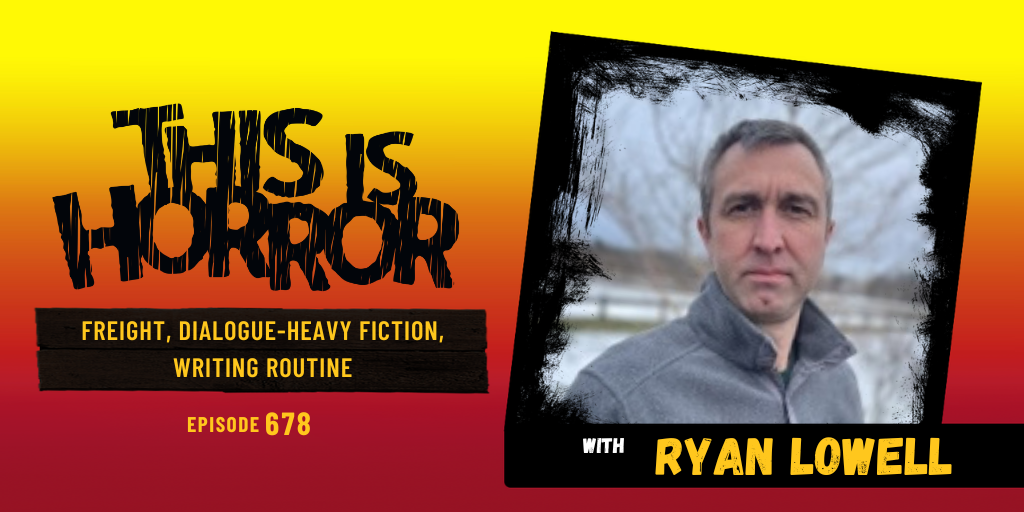
In this podcast, Ryan Lowell talks about Freight, dialogue-heavy fiction, his writing routine, and much more.
About Ryan Lowell
Ryan Lowell’s fiction has appeared in Portland Monthly Magazine, Worker’s Write Journal and other publications. His story “Things Fall Apart” was a Glimmer Train short story award contest finalist. Freight is his first novel. He lives in South Portland, Maine, with his wife and two sons.
Timestamps
Thanks for Listening!
Help out the show:
- Support This Is Horror on Patreon
- Listen to This Is Horror Podcast on Apple
- Listen to This Is Horror Podcast on Spotify
- Rate and review the This Is Horror Podcast on Apple Podcasts
- Share the episode on Facebook and X
- Subscribe to This Is Horror podcast RSS Feed
Let us know how you enjoyed this episode:
- Write a comment below.
- Follow us and get in touch on Instagram @thisishorrorpodcast
- Subscribe and comment on YouTube @thisishorrorpodcast
- Follow us and get in touch on TikTok @thisishorrorpodcast
- Tweet us @thisishorror.
Resources
- Ryan Lowell
- Watch the video version of This Is Horror Podcast episodes, including our conversation with Chuck Palahniuk on YouTube.
House of Bad Memories by Michael David Wilson
From the author of The Girl in the Video comes a darkly comic thriller with an edge-of-your-seat climax.
Denny just wants to be the world’s best dad to his baby daughter, but things get messy when he starts hallucinating his estranged abusive stepfather, Frank. Then Frank winds up dead and Denny is held hostage by his junkie half-sister who demands he uncovers the cause of her father’s death.
Will Denny defeat his demons or be perpetually tortured for refusing to answer impossible questions?
House of Bad Memories is Funny Games meets This Is England with a Rosemary’s Baby under-taste.
Buy House of Bad Memories from Cemetery Gates Media
Buy the House of Bad Memories audiobook
They’re Watching by Michael David Wilson and Bob Pastorella
From the hosts of This Is Horror Podcast comes a dark thriller of obsession, paranoia, and voyeurism.
After relocating to a small coastal town, Brian discovers a hole that gazes into his neighbour’s bedroom. Every night she dances and he peeps. Same song, same time, same wild and mesmerising dance. But soon Brian suspects he’s not the only one watching and she’s not the only one being watched.
They’re Watching is The Wicker Man meets Body Double with a splash of Suspiria.
Buy They’re Watching in paperback and eBook right now.
Michael David Wilson 0:28
Welcome to This Is Horror, a podcast for readers, writers, and creators. I'm Michael David Wilson, and every episode alongside my co-host Bob Pastorella, I chat with the world's best writers about writing, life lessons, creativity, and much more. Now today I am welcoming back Ryan Lowell, the author of freight for the second part of our conversation. Now, if you missed part one, you can go back one episode to episode 677. But as with all this as horror conversations, you can listen in any order. So by all means, listen to 678 now, and then when you're done, jump back just one episode to 677. This episode focuses heavily on freight, a novel that is described as a thrill ride view of the world of labor, life, and love, a searing portrait of men at work, and also at their worst. But before we chat with Ryan, a quick advert break.
Bob Pastorella 1:53
House of Bad Memories, the debut novel from Michael David Wilson, is out now via Cemetery Gates Media. Denny just wants to be the world's best dad to his baby daughter, but things get messy when he starts hallucinating his estranged, abusive stepfather Frank. Then Frank winds up dead, and Denny is held hostage by his junky half sister, who demands he uncovers the cause of her father's death. Will Denny defeat his demons, or be perpetually tortured for refusing to answer impossible questions. Clay McCloud Chapman says, "House of Bad Memories hit so hard you'll spit teeth out once you're done reading it. House of Bad Memories by Michael David Wilson available now in paperback, ebook, and audio. From the host of this isorra podcast comes a dark thriller of obsession, paranoia, and voyeurism. After relocating to a small coastal town, Brian discovers a hole that gazes into his neighbor's bedroom. Every night, she dances and he peeps. Same song, same time, same wild and mesmerizing dance. But soon, Brian suspects he's not the only one watching, and she's not the only one being watched. Their watching is The Wicker Man meets Body Double with a Splash of Suspiria. Their watching by Michael David Wilson and Bob Pastorella is available from This Is Horror.co.uk, Amazon, and wherever good books are sold.
Michael David Wilson 3:16
All right. With that said, here it is. It is part two with Ryan Lowell on This Is Horror. So let's talk about freight, and I think specifically to give people a sense as to the novel, what is the elevator pitch for freight.
Ryan Lowell 3:42
Several desperate characters get involved in a scheme to steal, or in a heist to steal, excuse me, in a heist of a tractor trailer that's hauling $10 million worth of pharmaceutical drugs.
Michael David Wilson 4:03
And so, what was your why for writing Freight, and when did the initial idea appear to you?
Ryan Lowell 4:12
So, the the for me the story really started with a couple of the characters, the one of the main characters, Curtis. That there is an autobiographical kind of element there because you know I had done that same sort of job, but as far as using that in the story, the reason for that was as kind of a central character in the middle of this kind of web that was, you know, that for just legit. Well, I don't know about logistically, but it was easy to have that character. The middle of a bunch of these other characters, just given the nature of that that Curtis's job being a overnight dispatcher. So, but I I had heard or read an article that was in I don't even remember where. I actually want to say it was in Forbes, Forbes Online, which I don't like subscribe to. But I was probably just off the Yahoo or something. But it was a story about a tractor trailer that a theft of a tractor trailer in in I think it was in Mexico that occurred when the driver was inside a truck stop having lunch or taking a shower. I think it was just having lunch, and he comes out to his unit, his tractor trailer gone. And to me, immediately when I read that, it was like, oh, I could totally see it from my perspective of what a clusterfuck this would be. Being from the perspective of a dispatcher being told my truck's gone, and it's like that's 80,000 pounds of you know stuff, tractor, trailer, whatever was in it gone. How does that happen? You know, it just seemed like an unbelievable thing to happen, and just the chaos and who do you call? Who do you you know? In in freight, it happens in Canada. Do you call the FBI? Do you call the local police? Do you call the Royal Mountain? You know their FBI or their their police force. So it just seemed like this really wonderfully chaotic scene, and and then from there, it was kind of just about building up to it, and you know what happens after. And yeah, the the characters, you know, several of them, of course, are you know they're kind of a collage of people that I've met before, or story, you know, of characters that I've heard of, you know, the Billy character. I knew a guy that had a a when I first got in the industry, I met a guy that actually did have a basically a strip joint out in the middle of the woods. Did he just you know charge people to you know like 20 bucks or 15 bucks to come and watch women dance on on a little stage, and it was BYOB in an old horse stable, as I recall, kind of turned into a you know a all year round establishment, you know, and it was mostly like people who just knew about it that would go, but but yeah, I mean, it really just came from like a bunch of characters that I kind of had in my mind, and then that the story of a heist at a truck stop, and then just kind of building around it, you know.
Michael David Wilson 8:21
And then, in terms of logistically putting the pieces together, were you just, I guess, what we term pantsing? So you're writing these conversations, you're seeing what comes, or was there a robust plan, or was it kind of a halfway house between the two.
Ryan Lowell 8:41
So I did it. It was mostly done winter, you know, written winter linear format. There were scenes that were, you know, done later on or added in later. But for the most part, the idea was I just want to get to. We'll start here and and kind of lay out these these scenes, these characters, and this is the point we want to get to. And then, but I really didn't know what was going to happen afterwards or after the heist at all, and I had there were other other ways that I was I thought about going with that, and where you know there were different consequences for different characters. You know, I don't. I guess I don't want to give too much away here, but you know there were there were other alternate kind of endings where there were no consequences for certain people, or they were worse than what what ended up happening in the book. But you know, but I think where we kind of where I landed with it was was appropriate. And you know, as far as winners and losers, and there weren't that many. You know, there were quite a few losers in the in the bunch.
Michael David Wilson 10:12
And so we spoke before about some of the influences. We spoke about your agent mentioning George V. Higgins, who is essentially the master of dialog, and this is almost exclusively dialog. So, I'm wondering: Did you always know that freight was going to be delivered in this form, and what do you think are some of the pros and cons of writing such a dialogue-heavy book,
Ryan Lowell 10:45
I hadn't. I didn't really think about that much going into it. I mean, it's kind of how I. I I feel like if you can do well with the dialog and and it's realistic, then it's a really it can do a very good job of advancing the story, and you know there were. I think that like the Stephanie character, and particularly her does a great job of and and someone like her, she's kind of straight out of my hometown. You know that the way she talks and the way she tells stories, and I thought she was pretty clutch. I don't, you know, I don't know if other if readers would feel the same way, but to me, she was pretty huge part of the story as far as moving moving it forward, telling the story of Sarah, and how she got into that spot, you know, and you know, and Sarah's kind of backstory, but but I think the the dialog heavy stuff. I mean, I I do I am a huge fan of Graham Greene. I think I'm sure there's a bit of influence there. He's probably my favorite writer, and I've read almost all his books. And he's heavy on dialog, so that probably has something to do with it. But I just, I just think that that's a, it's, it can really move things forward and work better than descriptive narrative, especially if you can really, you know, if you have some some gems in there that that in the dialog that, in my opinion, as far as for me, it's usually stuff I've heard before. Other people say whether it was in the context of trucking, or you know, I just heard somebody, some people talking over here, that you can kind of mold the dialog into, you know, somebody says something kind of silly about you overhear something about this. is funny. A driver I know said to me one time. I don't know much about hunting, and he was talking about hunting to me, and I he was talking about caribou, and he was like, he was talking about shooting at a caribou from some distance, and I was like, and he's like, well, yeah, and you you got to get the the male, right, or female? I'm not even sure, but I think he was saying you have to get the male, and and I was like, okay, well, how do you know? And he's like, and I was like, "How do you know from 300 yards away? He's like, "Look between its legs, and you know, which is kind of funny. But, but I was like, "But anyway, that sort of dialog. I don't know if I use it in that story, but I know I've used that before. But then you can kind of mold that into like fitting Another fitting a storyline, you know what I mean. And I think that, like that, first of all, that can be fun by just kind of taking. I don't want to say random dialog, but I think that dialog that is funny, and you can, it might be, You know, there's no direction, or it's kind of lacking a direction because it's just something you overheard people say. You can kind of mold it into a pushing the story that you want to tell forward in a different way. You know, and it's maybe relatable, maybe more Relatable to people, and it makes them engage with it better than me just telling it from a narrative perspective. You know, a descriptive narrative of they did this, this, and this. You know what I mean?
Bob Pastorella 14:57
I see a lot of filmmakers do that. Thomas Anderson comes to mind, especially with Boogie Nights. They will talk about something totally unrelated, and you will get a sense of what the scene is actually really about. And then, and only then will will they have actual like snippets of the action. You know, like the scene with William William Macy when they're outside and his wife's getting you know getting having sex in the driveway and they're talking about the lighting you know and it's just like and he's like do you do you realize what's going on behind you you know and it's that kind of that kind of outside the action dialog tells you more about the scene and how the characters are reacting to that than if they were actually talking about it, and so I don't know. I don't know exactly how you would call that off-handed action dialog, but I notice that a lot in in freight that that you do that and you do that to a great degree, I think a lot of the dialog too was. I felt like it was very internal, and internal dialog to me is like it's crucial. It's it's not exposition. It's not it's not descriptive either. It's characterization, and it's important because it sets up motivations, it sets up you know reasons why people feel certain ways about certain people or certain situations, and so that kind of that kind of dialog is is that internal dialog that monolog is really really important. I see a lot of I felt a lot of film reference more than than than writing reference of a film that come to mind when I was reading this, and it's totally it's it's totally unrelated film, but just the way the characters were all was Strange Darling by J.T. Malorie. Have you ever seen that movie? I
Michael David Wilson 16:54
haven't. No,
Bob Pastorella 16:57
it's it's yeah, Strange Darling. It came out last year, and it's it's a story. I don't want to spoil anything. If you haven't seen it, I highly recommend it. It's it's it's one of those stories that you think you know what it's about, and then about I think about 40 minutes in, then it flips and like completely flips, and you're like, "Oh wow, it's no, this is what it's about. And it's not like a, it's not like a from dusk till dawn type of flip. They don't flip genres; they stay within the genre, but it's just a character realization that that you go through. And but a lot of the dialog and a lot of the the the the way that the scenes were presented, and a lot of the I guess the dialog overshadowing overshadowing reminded me when I read Freight. I was reminded of this. I was like, "Wow, I can't believe you haven't seen it. Because I was like, you know, this is this is really good. It's Freight to me, it's it's more what I would call nor neo nor than crime. There there's a crime involved, but you said it in in your in your in your thing. It's it's desperate people. We writers love writing about criminals because they're desperate. They will literally do anything to get their goals, they don't care what gets in the way. That's why I love it when you combine that kind of element with the supernatural, because then you have a criminal. It's like I can't, I can't shoot the ghost to death. What do I do now? You know. So, but this is, it's. I feel like it's more nor than anything.
Ryan Lowell 18:39
Yeah. So, well, two things that the um the as far as like the movie reference or movie um influence I do when I'm like actually with a with a scene or with a like a full like story you know our novel length story I am seeing it you know like my goal, I mean, the first kind of person that I'm like writing it for is for me in a how would I want to see this as a 90 minute movie, and so I think you can kind of see that how the scenes play out and how they're and you know, like to me, it made a lot of sense. Just like rereading it and going through the drafts is that's how that's how I want to read it. You know, that's how I want to read somebody else's story as well. You know, so like I kind of have myself in mind First, and and the other thing is the oh with I think it was like I didn't describe. I'm I'm not a huge fan of describing what people look like because I think that's one of those things that. It's nice to maintain like a level of ambiguity in a lot of areas, but specifically in the way people look, like physically, and because I I like to imagine that like if I'm reading something and there's like a whole pair a long paragraph. It's like, you know, he has he has long hair and wears glasses and he's wearing a purple shirt. Blah blah blah blah. Like I just kind of tone out and I like scan right to the end of that. That's just me personally. I'm not like I'm not knocking that, but I would rather imagine. I'd rather like you tell me just enough to imagine it in my own mind as I'm reading it, and and in this is a part. This is a tiny part, but in early on with Theo and Sarah, when and I think this is really the only place where I really describe them. I don't describe them. She does, and she just says something about his baseball hat and how he's looks like a. What did she say? Anyway, it's her commenting on what he looks like, but it's in a very like, you know, you shouldn't wear a oh. Why are you wearing a hat? You have nice hair, and that's it. You know, and then I think maybe something a little further. But but that was basically it. I would just prefer that if I'm reading something, I would prefer being told that as a description as opposed to the narrator telling me if it's a third person, you know what I mean?
Michael David Wilson 21:46
Yeah, this is exactly how I feel, and you know, I'd rather if there is description, keep it to a minimum, have it more as one would with screenwriting, where you're not completely casting with such specific detail that it's narrowing who this character is or what they would look like. And to be honest, if there is a whole paragraph anyway describing them, but I've already got an image of them at that point, I'm probably disregarding it and imagining them how I did to begin with, anyway,
Ryan Lowell 22:22
yeah.
Michael David Wilson 22:22
But this book, I mean, one of the reasons I was so attracted to it was the dialog and how dialogue-heavy it is. And I don't think there are that many books or that many writers right now who are writing things that are so purely focused on dialog, and I I love it, and I'm happy that I got to read this. I'm hoping that this will be your style or your your way of putting things together going forward. But I'd understand if you know you you didn't want to commit to always.
Ryan Lowell 22:58
No, I mean that was nice. Yeah, thank you for that. I, it's definitely the way I like to kind of operate. Often, just with like shorter stuff, or like right now, I'm kind of in a in a little bit of a holding pattern where I'm like I have a second draft or a draft of a another novel that I'm kind of waiting on a few things to happen with that, and in the meantime, starting a third. But when I'm thinking up, you know, I'm kind of like putting some scenes together, and often, or and this also happens when I'm just working on shorter stories. Like I just I was working on one just longhand when we were over the last weekend, and often like I'll just take a piece of dialog that I heard from somewhere, something funny that somebody said, and then just kind of build a story around that within it with a an end goal in mind, or like this is what or not an end goal. Something's going to happen here, like some action. Here's some here's a piece of dialog that we can build from. Something as simple as I heard somebody say say to to somebody else, are you a cake person? And and the other person was like, what do you what do you mean? They're like, are you the type of person that only you you eat cake, you know, at birthday parties, or can you eat cake any time? And you know, it was a bunch of back and forth, but and then just kind of expand on that. I thought that was funny. Are you a cake person? I never heard that before, and it was a funny way to look at it. And I realized I am not a cake person because I only eat cake when I'm at a birthday, a function, you know, of some sort. But not everyone's like that. And I thought it was funny, and and you know, it's I'm not basing a whole story on it, but it's kind of a good jump-off point. You know, just kind of a different angle on something that's yeah, it is kind of unrelated or or seemingly kind of silly, but relatable. I think.
Michael David Wilson 25:26
Yeah, and I love that too. And I could almost imagine in a kind of Tarantino way having like five people argue as to what a cake person is and isn't. And you know, you you you could have like a whole story just based on the concept of what a cake person is.
Ryan Lowell 25:48
Yeah, and the way I kind of do it too. I mean, that particular piece of dialog, I turn. I think that just that one phrase or question turned into two or three pages longhand of you know it just kind of went sideways from there, and I might not. And I often I'll do I'll write longhand dialog that way because things just kind of take weird turns that you know something will something else will come in. It's like oh that's a good segue. This cake thing is a good segue to whatever something else that's unrelated or unexpected, and it can lead you in unexpected directions. You know what I mean?
Bob Pastorella 26:34
It sounds like something that that you'd read in a Robert Carver story. You know, I don't know if you've ever read any of his work or not, but he kind of would start, I guess, innocuously. You know, just that's
Ryan Lowell 26:49
what I was looking for. Like what
Bob Pastorella 26:51
we're talking about. You know, yeah, he would he would just like, but and but and you wouldn't even come back to it, but but you could. I mean, you could end for like the part the ending line could be, and you said you were a cake person, you know. And it's like because between that point and the end, something traumatic has happened. Either you know, and it's with him. It's like you know, he his wife left, or she was leaving, or something like that, or there was a death in the family. You never know.
Michael David Wilson 27:23
You said Robert Carver. Do you mean Raymond Carver? Oh,
Bob Pastorella 27:26
actually, yeah, yeah. Did I say? Did I say Robert Carver? Yeah.
Michael David Wilson 27:31
Is yeah. And so, like, I'm, I'm like thinking, who the fuck is Robert Carver? And I quickly Google, and it's like he's he's some independent trader and best-selling author, and he's got books like The Art and Science of Trading, Leverage Trading, Advanced. That's exactly who I was talking about.
Bob Pastorella 27:52
No, no, Raymond, Raymond Carver.
Michael David Wilson 27:56
That makes a lot more sense.
Bob Pastorella 27:59
Sorry, sorry, Raymond. He's he's passed on. So ghost got me, Raymond Carver.
Ryan Lowell 28:07
When you're doing it with dialog like that, you can it it makes it. I don't want to say easy, but it makes it where you can come back to that at the end of this story or this scene or the book, where it's something you can return to, and it's memorable, right, to the reader,
Bob Pastorella 28:27
right. I mean, it had we'd have to have like a really really good like you know build up. You would have to to not just mention it. You'd have to have like a little bit of a conversation on it, and then you'd have an event happen, and the outcome of that conversation would would I guess taint or temper that event to where someone could could use that as a closing sentence. That's how that's how I would do it, and that it sounds like something that that Raymond Carver would have done as well. Let's get his name right, but yeah, that's that's what happens when you get my age. Yeah, I definitely
Ryan Lowell 29:07
have read a lot of Carver stuff. Though his his a bunch of his short stories, those are great.
Bob Pastorella 29:14
Oh yeah,
Michael David Wilson 29:15
yeah, and for for clarity, that is Raymond. You're talking about Ryan, not the trading expert, yeah. Well, we'll all have to look into his short stories later and see if he's got that economy of words. But I mean, moving along as well. I mean, I understand too that I mean, you said before you don't read that much in the crime genre, but what you do read quite a lot is books on psychology and philosophy. So I'm wondering how those and just how those kind of influences and that reading diet has shaped and worked in both race favor and then you know. Your your fiction as a whole. I
Ryan Lowell 30:01
think that that well, so there is a part of me that that and some I'm sure some readers would be like, what the fuck are you talking about? But there's there's a part of me that like I do want to like there's things that I've learned or absorbed like from a philosophical perspective, that you know I feel are important, and I like to to to tell those things. You know, like have those have some of these things as as a theme, whether it's in a serious way or told in kind of a silly way, or or not silly, but you know, innocuous way that see that that I'll give a example. This is not from Freight; it's from a different story. But but you know, we've all heard many variations of you know, don't worry about what other people think, right? I have I had these two characters that you know, one's the kind of they're both like small time drug dealers, right? One's kind of the the one that wants to get out, needs the good the better guy, you know, and he wants to get out of it. The other guy is the kind of scumbag. He doesn't really give a shit, and so this the kind of scumbag dude is saying he thinks he's being cheated on by his girlfriend, and he's saying to the they're in the car, right? It's the two buddies, or the two buddies slash dealers, and the kind of scumbagy one says in a defiant way, he's talking about his not caring about what his what his girlfriend thinks too. He just doesn't give a shit anymore. He's like, I don't I don't give a shit what you know what she thinks about me, what anybody thinks about me, right? The other guy says, maybe you should, right? Like, so yes, it's great to not care to some degree what other people think of you, and to not like give give validity or relevance to what other people are thinking about you. But you know, if if it does matter, right, to some degree, you know, and if like if I had shown up here and you know like talking to you guys and I had, I was smoking a cigarette and I had I don't know like and I was you know wearing pajamas right now. I don't know something you know and like I don't give a shit what these guys think. You know maybe I should you know to to to some degree. So anyway I I thought that using that that's kind of this philosophical thing and but pressing it like using a couple characters, and using that dialog between them to say, "I don't give a shit what people think about me. And then the other guy says, "Maybe you should. And this is coming from the kind of good the dude who wants to get out. He does want to do better, and he's saying that to the guy who's probably going to stick around doing that stuff. It's funny, but it's also going to make you think. Hopefully, you know, it does for me. And so that's just an example. But I think that that that sort of stuff, you know. I read a lot of. I had a phase when I was reading Confucius fairly often, and Marcus Aurelius, and a lot of different stuff. 48 Laws of Power. It's a great, great book, and I just kind of mix that stuff in range. You actually mentioned range, or just used the word range early on when we first started talking. Range by I forget the author's name, but that's a great book about you know it's not I don't really call it self-help, but it's just about having a lot of different interests and how that can, you know, like not concentrating solely on this one thing. You know, like having other interests can help that thing that you're trying. Like in my case, like trying to write fiction. Having other interests outside of just fiction is going to help the fiction, right? So yeah,
Michael David Wilson 34:53
yeah, I think so too, and I think sometimes that's why if you're struggling with your. Writer and with your writing and your a young age, I sometimes find it can be helpful for people to just take a step back, get some life experience, get have some shit happen, and then start writing. Because yeah, and and so in in a way, there's a good argument for people who are writing to, if not have a full time job, then to still have a part time job because you're just getting more of those experiences. If you're just spending your time in your room writing, there can be a bit of a disconnect. Yeah,
Ryan Lowell 35:35
yeah. I always joke to my to my wife, but I'm not totally joking. That if if I didn't need to work. That I would still want to work like part time at a convenience store just to like interact with people and you know like and and just to talk to people and see people interacting and it doesn't have to be a convenience store but whatever you know something that where you're kind of like facing like customers and around a lot of people and just seeing a lot of different like people talking and complaining and bickering about their lives and the store and whatever it is, you know. Because I think it it a kind of keeps you sharp to to some extent, but also gives you gives you fuel, you know, stuff to to write about.
Michael David Wilson 36:27
And so you mentioned before about getting your literary agent. I want to know when that came about, and I want to know how that has affected your writing life, Be it strategically affecting when you do and don't submit things, whether it's even affected the kind of things that you are or aren't writing, and just what that looks like for you at the moment.
Ryan Lowell 36:53
So, so he Warren he responded to me. It was two years ago this summer, and that was after I had been querying for a year and a half, and that was a long, a long stretch. And I know some people have it like more, and you know I've talked to a lot of people lately that have have been doing it longer, and some that had a lot of luck early on. So it's you know, you talk to different people, and I'm sure you guys have. It's all over the place, but but I feel like I lucked out with like his interest is like the what the the way he likes to see things on paper, and you know we kind of see things the same way, I think. And you know, I mean, he says to me whenever we talk, keep it tight, keep it tight, and get rid of shit. You know, like get cut, keep it tight, cut stuff, and you know, because he knows after I sent him, you know, once he expressed an interest in freight, and he asked to see a lot of other material that I had, and you know, a couple things were, he was, he said, stop writing in first person because you're not very good at it. That was one of the first things, and which I was kind of like, really, I was pretty good at that. But but okay, I'll take your root for it. And and then the other thing was, you know, just that need to like you're you're good, but you. you know you got to keep things tight and keep you know because I'll I definitely will meander off with with dialog or just like storylines that might not really be going anywhere. But sometimes you know, especially when you're working on like longer stuff, I feel like having those storylines that might not go anywhere is helpful because you never know. Like they might come back, or they might be useful down the road. But but yeah. So but yeah, that that's been his main thing, you know. And and I'm sure he wouldn't mind me saying this, but you know, he can be harsh and be like, "That sucks, and like, "Cut cut this, which is fine. And I told him from the get go, you know, when we first started talking, and he would like be like, "Cut this shit, like, "Get rid of this or that part sucks, and I and he'd be like, like apologize, you know, and like I'm I am I'm in trucking, dude. Like this doesn't, you know, I deal with a lot harsher stuff from, you know, on a daily basis, so it doesn't bother me at all.
Michael David Wilson 39:57
I'm wondering too, as freight. Comes across as such a tight novel. What was or what is the final word count?
Ryan Lowell 40:07
60. I actually don't know what the final was. I know it was 65 before it got into the you know like the editorial like towards the latter stages, it was like 64 and change, and I think I don't think we cut down much less, much more after that, if any. It's I think it was just under 65.
Michael David Wilson 40:36
Yeah, and I wondered too, with it being such a lean book. I mean, did that present any problems in terms of trying to sell it? I mean, of course, by its nature, it is lean. But you know, you sometimes hear people saying, "Oh, you know, if it's under 70,000, then you can forget landing it with a big publisher. And it's like, well, little brown mother, fucker! There it is. You've done it.
Ryan Lowell 41:04
No, that was never brought up like word count at all. I think like we talked about it in a very like like Warren. I mean, I know as far as like going to like certain publishers that he wanted to go to, or certain editors that he wanted to target, we didn't. He didn't bring that up to me at all. I had read a bunch of stuff about that, you know, as far as like in the process of trying to find an agent. I found a lot of stuff about that, about the word count, but it didn't. It wasn't enough to deter me or make me like want to add to it at all, but honestly, one of the one of the things he said early on was there was a long, there was a a long piece of inner dialog from the Curtis character that was really early on in the story, and it was cut. But he was-I remember when we first started talking. He was like that fucking that inner monolog. It was really long. It was like three or four pages, and it was just a rant. And it was, and he was like, I almost put it. I almost put it away and moved on after when I read that because it was like it was too much. But then I let you know I read another 15 pages and then was like, okay, we're past that. You know, we'll eventually cut that. But anyways, he moved. Luckily, he moved on past that. But I know that was a big deterrent. And he and I asked him afterwards. I was like, "Did that? Do you think that other people passed on me because of that? And he was like, "Yeah. I mean, who the fuck knows? But he. But he was like, "I would guess yes because I almost did, which I thought was interesting, but but the word count was never brought up at all.
Bob Pastorella 43:05
I think a lot of publishers bring that, or I think a lot of people say things like that, or you read things like that, and publishers kind of like it because it kind of it kind of sets a stage, but it's stuff that's not really true, and depending on the quality of the piece, it's like you know. I don't think an editor is going to be like talking to their senior editor, and the senior director is going to be like, "Well, can they add another 20,000 words? It's like, "No, motherfucker, it's good now. Why would we fuck this up? Well, okay, it's only 60,000, but okay, well, let it slide. I don't think they're even going to have that conversation. Yeah,
Michael David Wilson 43:45
the good editors won't. I've heard some fucking horror stories where, and and like particularly about 1015, years ago, where you'd get you know novels that were bloated because their publisher had told them to add another 10 to 20,000 words. Yeah, I don't
Ryan Lowell 44:02
understand that. What do you want a shopping list? I mean, yeah, I don't understand that personally. Like, this is just from a you know, I would prefer two two to 300 pages. Once it's beyond that, I'm excuse me. I'm like this. Better there better be a reason. Like it won't. It's going to be hard for me to not to keep going. I shouldn't say that, but it. But it. My ideal book, like if I'm reading something, is two, 300, you know, 250, something like that. Because I feel like it's just like in a movie. Like I don't really, I, I'm gonna. It better movie better be fucking good if it's three hours long, you know. Otherwise, I'd prefer 90 minutes, maybe 100. Like actually, Pulp Fiction. Yeah. Well, Pulp Fiction might be one of those few. Because I feel like that's like two two and a half hours long, and I'll watch that any day. But generally speaking,
Michael David Wilson 45:06
yeah. The good thing with Pulp Fiction, it's almost three films in one, so you know you can get away with being that long. True.
Bob Pastorella 45:15
Yeah. If you're dealing with a Noor, I mean, if you have a 500 page neo noir book, then it needs to be like an entire cultural history of like the mafia. You know, I mean, it's you are going to have to do in 1902 Sylvia's. You know, it's like that's how that's where you need to start. Yeah, but if you are like starting, you know, like Billy and Jimmy, you're talking about ripping off a truck and 500 pages later. I mean, we better get into some cosmic horror, fucking science fiction, wild ass shit for 500 fucking pages. It needs to be on, go beyond that. Your your neo nords like the guy we mentioned earlier, Jim Thompson. I think he wrote 200 pages. That was it. You know, boom. Here you go. Here's a novel. Yeah, and and
Ryan Lowell 46:04
also like just with a you know, I'm not sure if this is related necessarily, but you know the time frame of the story is very truncated. You know, it's like a couple days, really. It kind of elongates towards the end, just because they're stretching out a couple storylines a little bit, but but for the most part, it's kind of this this brief period of time. So and there's very little backstory, you know. So I think it works it works well at that at that page count or that word count, you know. Hopefully, you can bang through it in a couple sittings. You know.
Michael David Wilson 46:51
Yeah, and I think it's just. I mean, you you'll go through it quickly because it's just so interesting. You know, these conversations, these characters getting to know them, and I mean, to go back to what I was saying about the literary agent, I'm wondering what you're working on now, and I'm wondering, you know, where your literary agent is looking to kind of position you, what kind of publishers does he want to put you with? Because I mean, really, you could approach things with from a more literary fiction perspective. You could approach from a crime fiction perspective. There's a lot of avenues that you could go down.
Ryan Lowell 47:39
Yeah, well, we talked recently, and you know, definitely, Little Brown has been good, really good, to work with as of like up to this point, you know, and it just it just came out a couple weeks ago now. So there is that, you know, the follow through that we don't we don't totally know how how that's going to play out, but so far so good, and they've been great to work with. So I think that's kind of landing point. You know that that'd be a great place to go back to. This story is the one that I'm. I have a full draft of, and it's about I think it's 72,000 words. It's actually kind of a reworking of the story I brought up. We were talking earlier that I had sent my friend about 15 years ago, and that she wrote back. She read it in a weekend. It was like this is brilliant. It was actually like 85,000 at that time, and it was ostensibly a story about a heist off of an island residence of a Winslow Winslow Homer painting. That's part of it, but there's a a young girl from a foster home who kind of gets tangled up in it and in a hit and run, and and there's a couple of kind of small town drug dealers that are also involved. And there's kind of a like I guess similar to Pulp Fiction as far as that linear that time frame. There's like it's three different stories that are all happening at the same time, and then they collide. And then once they all collide, like we'll go one storyline back, next storyline, it's all over the same time period. So tell the three stories about how we got to point to the this point, and then from there, there what happens? What happens to the painting to the young girl who's from a foster home, and and yeah, so I but I cut I cut some, and then also just changed a bunch of stuff pretty much from the. The latter third of what my my old friend had read, so it's not about you know it's not in the trucking world. It is a heist story sort of you know it's kind of how it starts, and yeah, but we'll see. But I like the people there a lot, and they do lend that. You know, I didn't know this until I got involved with them and started talking to other writers that were like more established than me, and they were like, like you know, giving me like, oh, Will Brown, you know, like ooh, literary, you know, and I was like, like I didn't even know like that, what kind of a what that that that element of it, you know, you know what I mean? Like not not the that that um literary aspect of it, you know?
Michael David Wilson 50:58
Yeah, yeah, and I I do think though these days there's so much more crossover between you know so-called literary fiction and so-called genre fiction, and there's so many writers where I think there's an argument that they're both. I mean, you mentioned previously off air listening to the podcast with Stephen Graham Jones, I'd say unquestionably he's writing horror fiction and he's writing literary fiction. And some of the people, you know, who get put into the literary category, if I think of George Saunders, I mean, in a way, is it just because that is the publisher or that is the marketing label that was put on them? You know, you could make the same argument for Mary Gateskill. You could make the same argument for some of A.M. Holmes's stories. So, yeah, I think there's not the divide that there once was, and you know, I mean, Little Brown has obviously got this book out widely as well, and I mean that they approached us about your book and thought, oh, maybe I'd be interested in it. I immediately, as I say, I saw this is told almost or almost exclusively through dialog, and that that was the hook for me. I was like, "Well, fuck! I gotta check it out. And
Ryan Lowell 52:26
it's funny. I'm so
Michael David Wilson 52:26
glad that I did.
Ryan Lowell 52:28
Yeah. Oh, sorry. I was gonna say it's funny because I didn't even realize that like until I think the publisher was the first one to point that out. I think they had that in one of their, you know, kind of selling points or whatever, you know, describing the book, and and they said that, and I was like, really? I didn't. I didn't really even. I didn't think about it like that, you know. Like, of course, I realize it to an extent, but I didn't think about it like that. I was like, ah, okay. I don't know if that's a good thing or a bad thing, but
Michael David Wilson 52:59
I, yeah, I just think when we do something naturally, unless somebody mentions it to us or it's brought to our attention, then yeah, we're not going to think about it. You know, I mean, often when I'm writing, my work is more dialog heavy, not quite as dialog heavy as your work, but it was only other people telling me that that I thought, yeah, I, I guess it is. But I, I think it's useful when people point these things out because then it it helps me understand what I gravitate towards, which can only be a good thing for then me finding other authors that I want to read and that I will enjoy because you know sometimes you can't always put your finger on why you like something and equally why you don't like another thing until it's explicitly pointed out to
Ryan Lowell 53:55
you. Yeah, I agree.
Michael David Wilson 53:56
But I want to know what does your writing routine look like at the moment because obviously, since you've taken the the more kind of conventional hours, that has probably changed quite a lot. So, how often are you writing? How much how how much are you writing, and how long are you writing for?
Ryan Lowell 54:19
Yeah, so a couple things. I I since really since I started writing, I kind of I guilt myself into writing every day, unless I'm like really sick, like with this you know, like laid out, laid up sick, or I'm physically not able to like whatever at some you know, like with friends, and I can't literally can't get away to do something for like that that morning. But otherwise, Christmas Day, my birthday, whenever you know, like I, I don't, I guilt myself into doing working every day, like at least move. I look at it like moving the story forward every day. I have above my desk a little thing. It just says move the story, and that's it. And so, kind of a reminder just to at least kick it ahead a little bit every day. As far as like as a routine, I have to get up. This is partly a function of having the three and a five-year-old is I have to I'll get up before them, so I try to get up like four or 430 every day, and I aim to get 500 words done in the mornings, five to 750 at least, or at least 500. But I'd like to get close to 750, and that's kind of a Graham Greene thing. I mean, from an interview that I read with him, I think it was in the Paris Review. But well, I say that it's it's from somebody that I really like that I can I know that I can hit, and that's a comfortable mark for me. I do not. I cannot do like like Stephen King would write like 1000 to 2000 or 2000 a day when he was really, you know, hitting it, really cranking. I can't get even close to that. So in the morning is the main time for me, and then I try to one one thing that I've gotten used to doing with with having little kids is all I can write in like shorter period. Like if I don't get what I need to get done in the morning. I'll move. I can in the afternoon or in the evening. I can like. I can if I can get 15 or 20 minutes away. You know, in the basement or at the coffee shop or whatever. Those 1520 minutes I can get done. You know, I'm happy with those little little short spurts. You know, and I've kind of like had to not teach myself, but kind of force myself to just be able to concentrate for those periods, at least to get like the word count that I want to get. Yeah,
Michael David Wilson 57:21
and you're absolutely right that having children throws another dynamic into things. And I said, off air, having a 10 month old at the moment will he gets up between five and six every day. So yeah, if I wanted to write beforehand, yeah, it would have to be four a.m. because if it's if it's after that, it's game over. But yeah, it's just kind of finding what where are those where are those moments in the day that you can utilize and right yeah, I think a lot a lot of people do find that if they do something like you, where they they write right at the start and then write at the end, it's a nice little bookend. So whatever else you do in the day, you know that creatively you've got something done. You've accomplished something.
Ryan Lowell 58:17
Yeah, yeah. I mean, I used to look at it like, especially before before we had had kids, I was like I would kind of joke to my wife like once I was once I got my writing stuff in I don't really like whatever happened the rest of the day great you know I'll I'll take whatever else I'm I'm good with anything else that happens during the day as long as I got my writing stuff in that is a little different, you know. Now I can't be quite as selfish, but but but I still do guilt myself into that, and just you know, if I don't if I don't get anything done, or at least you know, like I said, move the story forward. I will not be happy with my with myself. You know, like I will not go to bed at I don't want to say at peace, but I'll be uneasy, and I'll definitely want to. I'll be ready to roll like in the morning. I will absolutely
Michael David Wilson 59:22
yeah
Ryan Lowell 59:23
be ready to go. You know, as far as getting getting some work done the next morning.
Michael David Wilson 59:27
Yeah, and a lot of this applies to you know. We spoke about self help and philosophy and things of that nature, and you know that there's so much about you know get the most important thing done as quickly as possible. You know, if you do that, then you've won the day.
Ryan Lowell 59:47
Right. Yeah, that's a good way to put.
Michael David Wilson 59:48
Yeah. And I mean, I'm surprised I haven't asked already, but because this is so cinematic, have you written for the screen? Before or do you have any aspirations to write for film, or are you more comfortable writing cinematic prose within the context of books and fiction and novels?
Ryan Lowell 1:00:13
I would I would prefer to stick with writing prose. I mean I enjoy it the most. I have I wrote a with a buddy of mine who's in documentary films, or he's done a lot of work on documentary films. We did. We actually wrote a pilot for a version of Freight that was going to be a comedy, like a half hour comedy show, and we wrote a full pilot of it, which I still have kicking around somewhere. Obviously, it was taking a different angle on the whole thing, and it wasn't about a heist, but it was really just looking at the industry and the workplace, you know, and kind of like just a comedic kind of take on it. And that, honestly, that was fun, but I wasn't. It wasn't satisfying for me from a you know writing perspective. Like I was still writing other stuff or fiction prose, you know, like in the morning, and then I would work on that stuff later in the day. We were like collaborating on the pilot, but it was fun. It was interesting. I mean, I learned a lot of shit because he knew what he was doing with writing his screenplay, and I didn't. So it was it was a good learning experience, and it might have helped with dialog. I'm not I'm not really certain, but it was a good experience, and it didn't go anywhere. And that's when I around not long after that is when I started working on the novel.
Michael David Wilson 1:01:41
Well, I know that we are getting to the end of the time that we have together today. But before we go, I would like to know what is the best and what is the worst writing advice that you have ever heard.
Ryan Lowell 1:01:56
The best advice for me-I'm not saying this is for everyone. Best advice for me is to write every day, because it keeps things fresh. And I keep saying move the story, but it it it makes you look at it like you're moving the story ahead every day, advancing it. And that is from Stephen King, I think I believe he says that in the on writing. Worst. It's a good question. Maybe I blocked it out. That's why I can't really think of anything.
Michael David Wilson 1:02:38
There you go. You're you're immune to bad writing advice, you you're immune to bad writing advice. If you hear it, then you're just like, no, it's gone from my mind. I
Ryan Lowell 1:02:49
don't know. I mean, I guess I would maybe say that. I mean, I've heard people say, you know, you should be writing with like with the audience in mind, I've I've had a bunch of arguments with my friends about this, but I I just personally don't look at it that way. I don't I don't think you should write with an audience in mind unless my audience is is me. Like I I'm just writing something that I want to I would like to read, you know. And if it was, if it was made into a movie, how would I like to see it, you know?
Michael David Wilson 1:03:30
So, yeah. No, I think that's a good way of looking at it. And the problem is that if we write too much for an audience in mind, or for current tastes and sensibilities, then the problem is by the time it's published, that audience has moved on anyway. So, at least if you write for yourself and you write primarily to keep yourself happy, then you know that that's been achieved. That's mission accomplished, and also it doesn't rely on external validation or external forces that you can't control anyway. So yeah, yeah, and also I think you've got the right attitude,
Ryan Lowell 1:04:13
and I think it kind of solidifies that timestamp in your life. You know, as far as your, you know, you can look back at something that you did and be like, "Oh yeah, that's when this was this is what was going on otherwise in my life, and you know that because because of what you were doing, you know, because of the material, you know, because of what you were writing, and it was geared towards not not necessarily yourself, or I guess yeah, it was geared towards yourself or what you would like to read.
Michael David Wilson 1:04:46
All right. Well, where can our listeners and viewers connect with you?
Ryan Lowell 1:04:53
So I'm on. I'm not on much social media, to be honest. I'm on Instagram. R dot s dot Lowell, and that's pretty much it. I suppose at some point in Brian, I probably have to do make a website, but I'm not there yet. But I'm on there, and
Michael David Wilson 1:05:18
all right, Instagram it is
Ryan Lowell 1:05:23
there. Do you have? Oh, go ahead, sorry.
Michael David Wilson 1:05:26
Yeah. Well, I I was just gonna say to to close out. Do you have any final thoughts for our listeners and viewers?
Ryan Lowell 1:05:36
No, I mean, I guess I would just I would I would pass along that that advice, you know, the the writing every day thing that I've heard, and or that I adhere to, and I would also say to mix in mix in writing longhand. I think that's really, I I from what I've heard, it's good for you for for the kind of brain to, you know, hand eye coordination. But also, I just feel like you can it you can really move. It makes you slow down in a way that can really help. You're going to waste some time for sure. You're going to write more than you need to, and you're going to have to cut some shit. But, but I guess actually that's what I would say more than anything is if you're writing patience. I think is the biggest thing. Like it, it writing teaches you to be patient. It forces you to be patient unless you're really lucky, and and maybe I don't know if that's necessarily a good thing if you are really lucky early on. You know, I feel like I don't know. I I feel lucky that I didn't that it took a long time to really kind of get anywhere, and you know, and that doesn't really mean much. We'll see what happens going forward. You know, but being patient, I think, is huge. And writing's helped me do that, or helped me become more patient than probably everything.
Michael David Wilson 1:07:15
Yeah, unfortunately, this is not the career for people looking to get rich quick or to get anything quick is a notoriously slow one, but yeah, if you've got that patience, then it's going to really extend to all aspects of your life.
Ryan Lowell 1:07:34
Yeah, and if you really like it, then it should be you know, it's not going to be easy, but it'll be easier, you know, to be patient.
Michael David Wilson 1:07:43
All right. Well, thank you so much for spending the vast majority of your evening chatting with
Ryan Lowell 1:07:50
us. Yeah, thank you guys very much. It was great meeting both of you.
Michael David Wilson 1:07:56
Thank you so much for listening to Ryan Lowell on This Is Horror. Join us again next episode when we will be chatting with Max Doty, the author of The House That Eats the Dead. But if you would like to get that and every other episode ahead of the crowd, please become a This Is Horror patron at Patreon.com forward slash This Is Horror. Not only will you get early bird access to each and every episode, but you will be able to submit questions to each and every guest. Soon we will be talking to Mark Cleaver, the author of *The Caretaker* among other books, and becoming a patron is also the place where you can vote for this as horror with your wallet, where you can show that you love what we're doing and help keep it running. It's been going on for 13 years, so we haven't stopped yet. But part of what keeps us going is that financial support. It shows whether people want this, whether this is something that you believe in. So the Patreon membership starts at $3, if it seems worth paying for, if you can financially afford it, and that is a massive if. You know, don't do this if it will put you in a financially bad situation. But if you can, if you want to, I'll appreciate you. Bob will appreciate you. This Is Horror. We'll keep going. It's Patreon.com forward slash This Is Horror. Okay, before I wrap up, a quick advert break.
Bob Pastorella 1:09:53
House of Bad Memories, the debut novel from Michael David Wilson, is out now via Cemetery Gates Media. Denny just wants to be the world's best dad to his baby daughter, but things get messy when he starts hallucinating his estranged, abusive stepfather Frank. Then Frank winds up dead, and Denny is held hostage by his junky half sister, who demands he uncovers the cause of her father's death. Will Denny defeat his demons, or be perpetually tortured for refusing to answer impossible questions, Clay McLeod Chapman says, "House of Bad Memories hit so hard you'll spit teeth out once you're done reading it. House of Bad Memories by Michael David Wilson available now in paperback, ebook, and audio. From the host of This Is Horror Podcast comes a dark thriller of obsession, paranoia, and voyeurism. After relocating to a small coastal town, Brian discovers a hole that gazes into his neighbor's bedroom. Every night, she dances and he peeps. Same song, same time, same wild and mesmerizing dance. But soon, Brian suspects he's not the only one watching, and she's not the only one being watched. Their watching is The Wicker Man meets Body Double with a Splash of Suspiria. Their watching by Michael David Wilson and Bob Pastorella is available from This Is Horror.co.uk, Amazon, and wherever good books are sold.
Michael David Wilson 1:11:16
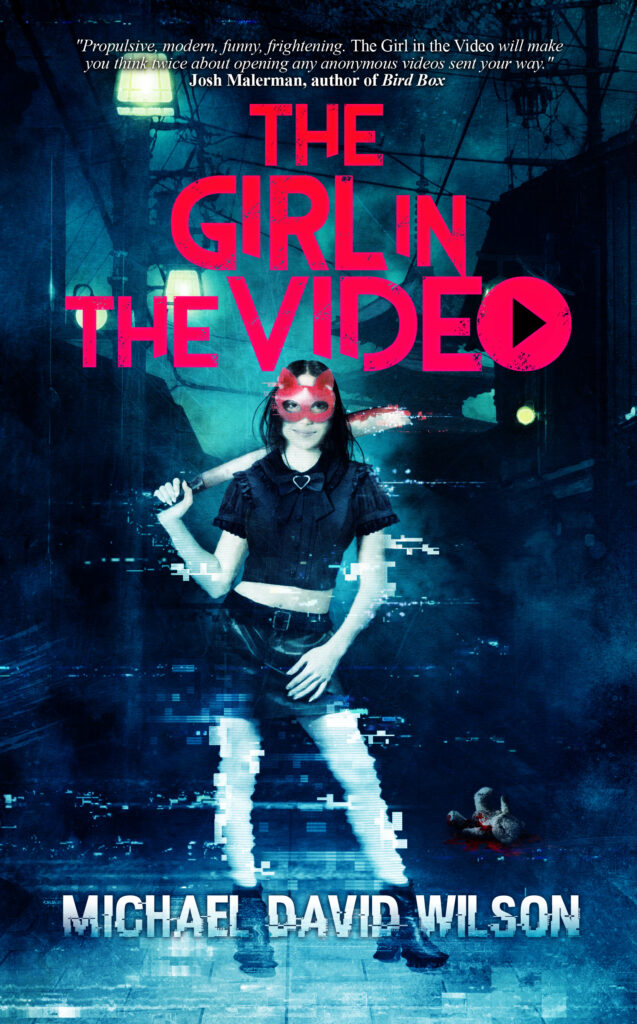
Well, that almost does it for another episode of This Is Horror. But a quick reminder that the second edition of my Gaijin J-horror novella, *The Girl in the Video* is now available in paperback, ebook, and audio book. So, if you want The Girl in the Video by me, Michael David Wilson, you can buy it from Amazon. This Is Horror, or order it into your favorite book shop. I am so proud of this. I think it is one of the most original Gaijin J-horror books out there. Even if that might be an arrogant thing to say, but that is how much I believe in the book. But don't just take my word for it. Take the word of David Irons, the author of "Don't Go to Wheelchair Camp, because he's by the way, what fantastic name for a book that is. But he says, "Imagine crossing a Japanese ghost story with an American slasher. Welcome to the twisted world of The Girl in the Video. Michael David Wilson's unique blend of horror genre is eerie, offbeat, and filled with nail-biting tension. So, if you want a new book this week, The Girl in the Video by Michael David Wilson, and throw in "Don't Go to Wheelchair Camp" by David Irons as well. And on that note, that does it for another episode of This Is Horror. So until next time with Max Doty, take care of yourselves. Be good to one another. Read horror. Keep on writing, and have a great, great day.