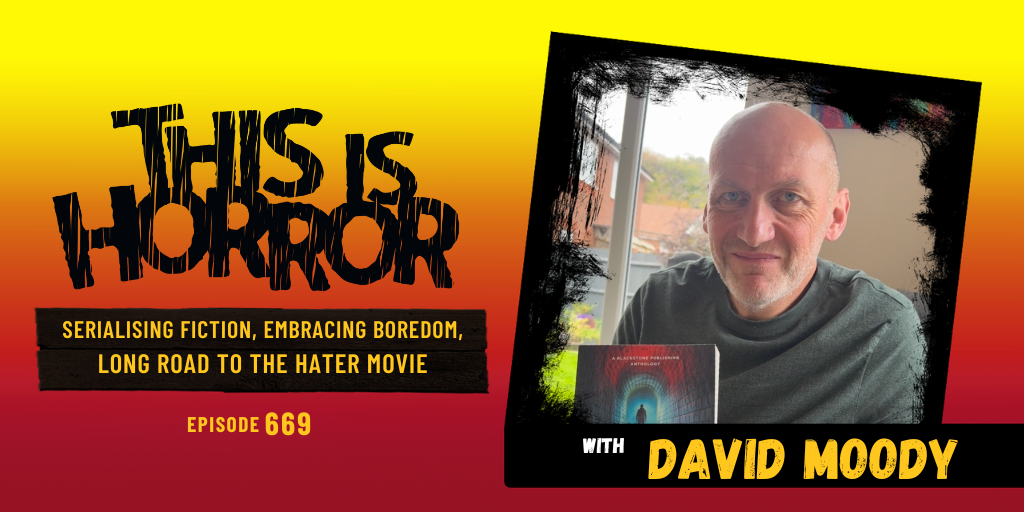
In this podcast, David Moody talks about serialising fiction, embracing boredom, the long road to the Hater movie, and much more.
About David Moody
David Moody first self-published Hater in 2006, and without an agent, succeeded in selling the film rights for the novel to Mark Johnson (producer, Breaking Bad) and Guillermo Del Toro (director, The Shape of Water, Pan’s Labyrinth). His seminal zombie novel Autumn was made into an (admittedly terrible) movie starring Dexter Fletcher and David Carradine. Moody has an unhealthy fascination with the end of the world and writes books about ordinary folks going through absolute hell. His latest book is Kemberton.
Timestamps
Thanks for Listening!
Help out the show:
- Support This Is Horror on Patreon
- Listen to This Is Horror Podcast on Apple
- Listen to This Is Horror Podcast on Spotify
- Rate and review the This Is Horror Podcast on Apple Podcasts
- Share the episode on Facebook and X
- Subscribe to This Is Horror podcast RSS Feed
Let us know how you enjoyed this episode:
- Write a comment below.
- Follow us and get in touch on Instagram @thisishorrorpodcast
- Subscribe and comment on YouTube @thisishorrorpodcast
- Follow us and get in touch on TikTok @thisishorrorpodcast
- Tweet us @thisishorror.
Resources
- David Moody
- Watch the video version of This Is Horror Podcast episodes, including our conversation with Chuck Palahniuk on YouTube.
House of Bad Memories by Michael David Wilson
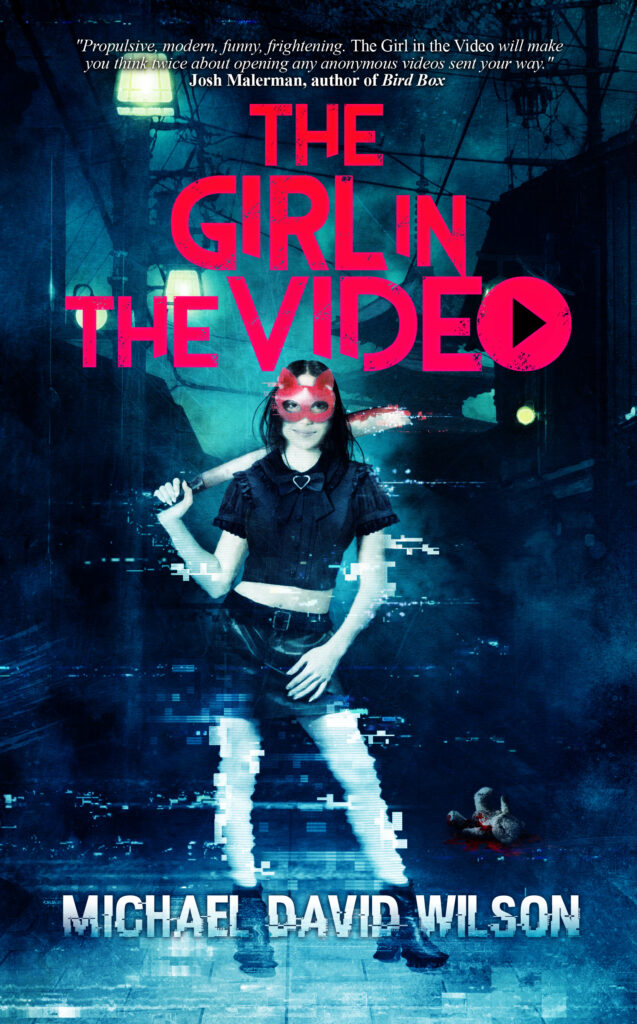
From the author of The Girl in the Video comes a darkly comic thriller with an edge-of-your-seat climax.
Denny just wants to be the world’s best dad to his baby daughter, but things get messy when he starts hallucinating his estranged abusive stepfather, Frank. Then Frank winds up dead and Denny is held hostage by his junkie half-sister who demands he uncovers the cause of her father’s death.
Will Denny defeat his demons or be perpetually tortured for refusing to answer impossible questions?
House of Bad Memories is Funny Games meets This Is England with a Rosemary’s Baby under-taste.
Buy House of Bad Memories from Cemetery Gates Media
Buy the House of Bad Memories audiobook
They’re Watching by Michael David Wilson and Bob Pastorella
From the hosts of This Is Horror Podcast comes a dark thriller of obsession, paranoia, and voyeurism.
After relocating to a small coastal town, Brian discovers a hole that gazes into his neighbour’s bedroom. Every night she dances and he peeps. Same song, same time, same wild and mesmerising dance. But soon Brian suspects he’s not the only one watching and she’s not the only one being watched.
They’re Watching is The Wicker Man meets Body Double with a splash of Suspiria.
Buy They’re Watching in paperback and eBook right now.
Michael David Wilson 0:29
Welcome to This Is Horror, a podcast for readers, writers, and creators. I'm Michael David Wilson, and every episode alongside my co-host Bob Pastorella, I chat to the world's best writers about writing, life lessons, creativity, and much more. Today we are chatting to David Moody, the writer of Hater Autumn and Shadow Locked. Next month he will release his brand new book, Kemberton, a book that he is pitching as Pet Cemetery meets Gangs of London, and for me this is the best book I have read this year, thus far. Now, as with a lot of these conversations, this one is a two-parter, so we will get to it imminently. But before that, a quick advert break.
Bob Pastorella 1:35
House of Bad Memories, the debut novel from Michael David Wilson, is out now via Cemetery Gates Media. Then he just wants to be the world's best dad to his baby daughter, but things get messy when he starts hallucinating his estranged, abusive stepfather, Frank. Then Frank winds up dead, and Denny is held hostage by his junkie half-sister, who demands he uncovers the cause of her father's death. Will Denny defeat his demons or be perpetually tortured for refusing to answer impossible questions. Clay McLeod Chapman says, "House of Bad Memories hits so hard you'll spit teeth out once you're done reading it. House of Bad Memories by Michael David Wilson, available now in paperback, ebook, and audio. From the host of this is our podcast comes a dark thriller of obsession, paranoia, and voyeurism. After relocating to a small coastal town, Brian discovers a hole that gazes into his neighbor's bedroom every night. She dances, and he peeps, same song, same time, sing wild and mesmerizing dance, but soon Brian suspects he's not the only one watching, and she's not the only one being watched. Their watching is The Wicker Man meets Body Double with a splash of Suspiria. They're Watching by Michael David Wilson and Bob Pastrella is available from This Is horror.co.uk Amazon, and wherever good books are sold.
Michael David Wilson 2:58
Okay, with that said, here it is. It is David Moody. On This Is Horror. David, welcome back to This Is Horror.
David Moody 3:13
Thank you for having me again.
Michael David Wilson 3:18
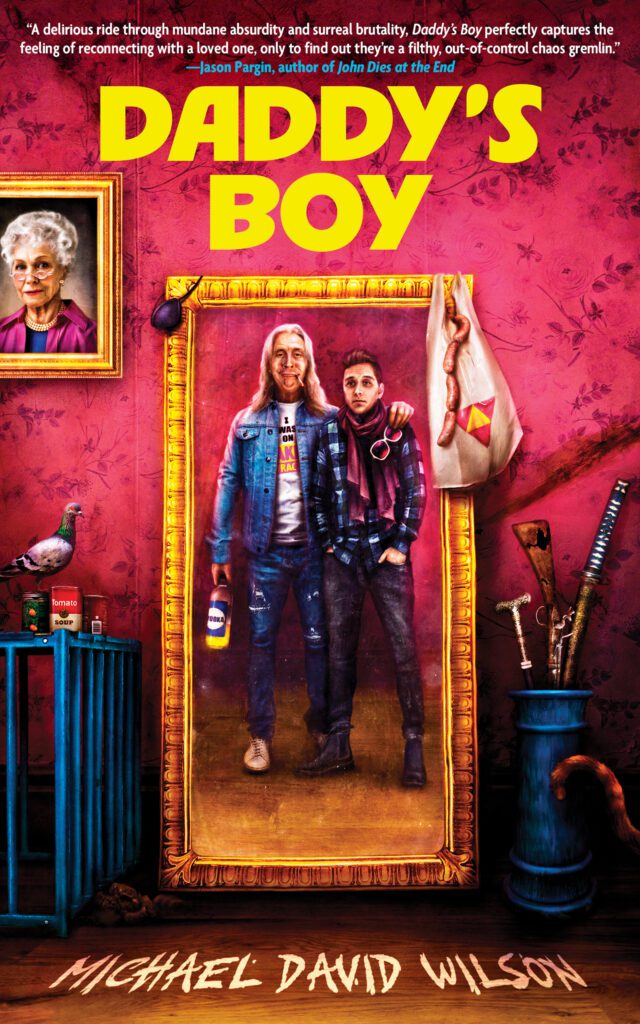
Last time we were speaking, it was May 2025 so about a year ago, and in that particular conversation it was coinciding with the Daddy's Boy launch, and we were talking about hard left turns in fiction, and you know now I should start by thanking you, because you've given an incredibly generous foreword for the special Thunderstorm Books edition of Daddy's Boy. So, thank you very much.
David Moody 3:53
Yeah, no, it's a lot of fun with it, and as we said when we were talking about me doing the forward, and as I wrote in the Ford, you know, we've, we've done a lot of things together over the years, and it just felt, it felt really appropriate to do it, um, because it's based in Kidderminster, which is like 10 minutes down the road from where I'm sitting now.
Michael David Wilson 4:13
Yeah, are you still going to Kidderminster to get your car serviced every year? Is that still the regular place gonna
David Moody 4:20
be? It's gonna be a non-stop exciting podcast, isn't it? If we're already onto car service in
Michael David Wilson 4:26
the first minute,
David Moody 4:29
and I could tell you now, just to break the news to you, I now have biannual, is that right, every every two years, because we've got an electric car now, less bids to go wrong. Yeah, so, so I only have to go to Kidderminster every other year now, which is good.
Michael David Wilson 4:45
Yeah, I was gonna say that's probably a blessing,
David Moody 4:47
that's a positive. Yeah,
Michael David Wilson 4:50
yeah. Well, taking a hard left turn away from Kidderminster, as it has been a year since we last. Joke, that does beg my usual question, which is, what have been the biggest changes for you, both personally and professionally, in that, yes,
David Moody 5:10
changes, biggest changes. Well, do you know, actually, I was looking back on my, my website, just to see when we last spoke, and what we were talking about, and it seemed that last time we spoke I was doing the kind of things that I'll probably be talking about tonight, so it doesn't seem like there's been a huge amount of progress over the last year. There has, I think a lot of things have changed for me here. I've, yeah, I think the main thing is I've got a new book coming out, which hopefully we'll talk about, called Kemberton, which I did mention last time we spoke, because it was an experiment for me, you know, it's just I got to the point where I've got so many ideas that I wanted to work on, I thought it would be interesting just to kind of do one on the hoof and have one go in and just to serialize it online for my mailing list subscribers, so, so that, that's what I did, it, and it's a, it's a very revised and expanded version of the book that comes out, but that was, that was a lot of fun doing, doing it like that, yet there's a certain additional discipline that you have to put on yourself when you've committed to giving people a chunk of a book you haven't written every month, but it was fun, so, so that, that I've done that. All the other big projects that I kind of hinted at, alluded to previously, the hater film, things like that, Dirty Day, another novel of mine I was talking about, they're all, believe it or not, another 12 months down the line, and they're all pretty much in not quite exactly in the same position, but in similar positions to where they were. I've got a couple of editors reading Dirty Day at the moment, and hopefully one of those will bite. And the Hayter movie is still happening, but they're no further forward with the script. In fact, they took a little step backwards and decided to have a change of approach. I think it's, it's quite a difficult novel to adapt. Hayta, I think it's easy to write a basic horror script for it, but you need, well, certainly what the filmmakers are after is the sociological aspect as well, which I think has been missing from every draft that we've had so far.
Michael David Wilson 7:22
Yeah, so it'll be no surprise that these are three topics that I really wanted to talk about today. And as we're now talking about the hater movie, for people who haven't listened to every conversation we've had over the last decade, what is the brief history of the film adaptation of Hayter
David Moody 7:46
so the brief, the brief history, it's actually been two, almost two decades now, because it's the, it's actually the 20th anniversary this year of the original release of Hater through infected books, so that's before it was picked up by Thomas Dunn Books and St. Martin's Press in New York and Gallants in London, so, so just to go right back to the very start, I independently published Hayta when I was just churning out zombie novels back in the day, as we did, kind of finding my way, I've been doing that for about five years, and I thought I was earning quite a decent sum of money, but not enough to write full time, and I thought, okay, just write another load of books, and hopefully your monthly income will be enough to be able to do this for a living. So the first book that I wrote after making that decision was Hayter, and it was doing okay, it was selling quite well, and then randomly got an email. It must have been 2000 like September, October 2007 The book had been out for about a year, and it was an inquiry about the film rights, and I thought it was a joke, and dug into it a little bit more, and it turned out not to be a joke, and it was Mark Johnson's company, so it's Mark Johnson, who had, who previously won an Oscar for producing Rain Man, and then went on after getting involved with Hato, went on to produce Breaking Bad and Better Call Saul, so you know some serious caliber of filmmakers here, and we spoke on the phone, and we did a deal, and he asked, I remember it very clearly. He asked me if I'd ever seen Pan's Labyrinth, and said, "Yeah, of course I have. It's just, it's a, it's a monumental film, absolutely incredible. And he just very casually said, "Oh, that's great, because I want Guillermo del Toro to direct it, to direct Hayter. He didn't, because that's when the fun really started, and Del Toro's career went stratospheric. Mine stayed pretty level, dipped level, you know what I mean. So Del Toro was signed on to direct, then he was only going to be a producer because he got involved in The Hobbit films. This is how far back we're going. Him and then it kind of fell into limbo, I think. Glenn Mazzara, who you've spoken to on the podcast previously, he wrote a screenplay, which I don't think it hit the mark for them, so that the project kind of fell apart, and then it, nothing was happening. I have got the rights back, sold it to a guy in Newcastle, sold them to a guy in Newcastle, and we almost got a TV pilot made, but then another five years or so went on, and the same people came back again, Mark Johnson and Guillermo del Toro, and said we didn't want to let this one go, it's the one that got away, we're really interested in doing it, so we want another bite, so we did another deal, and, and, yeah, it's there, it's, it's set up with one of the big streamers, but it's, it's very easy to work out who, but I've told them I'm not going to say anything, so I will keep quiet, and it's kind of, it's poised to go again, just waiting on the script, and Del Toro's approval of that script, so yeah, it's been a 1520 treading water kind of thing, but it's I can't, I do complain, but I can't complain because it's just it's ongoing publicity for the book, I've actually done pretty well out of the the the option money that keeps coming in every 18 months or so, and it's money for doing nothing really, and it keeps my book in the public eye of it.
Michael David Wilson 11:30
And in terms of Del Toro's current involvement, so what, what is his role at the moment with regards to the movie adaptation?
David Moody 11:41
I don't honestly know what his official title is. I don't know how formal it is, but I know that they're in close communication with him, and he seems to be the one who's making the creative decisions on the on the project for now. So, I think I think we're almost at the stage where they'll start telling me more, but not quite. It always seems to be next time, next time, next time, but you know this from your own experiences as well.
Michael David Wilson 12:09
Yeah, yeah. No, I mean, in some ways there are parallels with our own journeys and with what's been going on with me and The Girl in the Video film adaptation, although I'm hoping it isn't going to go on as long as your saga, because that means there's about at least another 15 years to go on this one.
David Moody 12:33
I really do hope not, for your sake, it's got to the point now where I'm thinking, well, if this goes on as long again, I'm no, I'm never gonna see it made. I'll be another 20 years and I'll be 75 I mean,
Bob Pastorella 12:46
you got to hang in there. It's like that, that show, the recent hit on Apple TV, The Widow's Bay, which I haven't seen. I've heard like marvelous things about
Michael David Wilson 12:56
it. Yeah,
Bob Pastorella 12:56
that, that was a.. that's not a recent script, right? That script's been floating around for 20 years. The girl who did the script did Parks and Recreation, and that springboarded to get there, but it's like she never gave up on Widow's Bay, and it's went through several different iterations of what it was, but it's like in every time, it's like, no, I don't think it's ready, and then finally, you know, that they got the right people, and it came together, but it was 20 years from when I read,
David Moody 13:32
you need, you need so much luck, it doesn't matter how much, how, how good the script is, doesn't matter how much you've put into it, I think it's with the film industry, it's all dependent on a lot of things, or coinciding at the right time, and this person being available, and that person being available, and this studio wanting that, and it's, yeah, it's, it's, it's interesting to say the least, but I am hopeful that it will happen, I'm hopeful for two main reasons. One is that the caliber of the people who are behind the project, but also because they came back for it, and I think if they didn't, if they weren't seriously intended on making this thing, then they'd have let the rights expire and wouldn't have come back when they became available again. But you know we'll, we'll wait and see.
Michael David Wilson 14:23
Yeah, it feels like the most optimistic and the most hopeful that any of us have been about the Hayter Film Project, you know, since, since speaking to you, since the first time that I spoke to you, about 15 years ago now,
David Moody 14:44
yeah, because I wrote about it in for the introduction, I wrote for Daddy's Boy, because it was literally a case of go and meet this person that you don't know in a pub you've never been to, in a place you've never been before, and talk about your book. But we did, and we hit it off, and I remember it very clearly. It was a, it was a good night. And then, since then, it's been - we've been in contact throughout that time, aren't we? Despite the fact that you've disappeared off to the other side of the world, you lucky man.
Michael David Wilson 15:14
Yeah, well, despite being the other side of the world, I still try to keep places like Kidderminster alive via my fiction, so there's a little part of me in Kidderminster, but luckily it's not physically me being there, which probably further thought now. How about Dirty Day, then, because last time we were speaking, that seemed to be the book that you were really preparing to put out, that looked like it would be the next big one for you,
David Moody 15:52
yeah,
Michael David Wilson 15:53
and I think, yeah, I think your agent was kind of you, and your agent were deciding what to do with it, where to shop it, how to put it out. So,
David Moody 16:05
well,
Michael David Wilson 16:05
what's the plan?
David Moody 16:08
Well, the plan was completely scuppered, because my agent died, which was a real, it was a real shame. Obviously, it was a huge loss for his family and friends, but I also found myself like unrepresented, and still am unrepresented, and it's.. it was a bit of a culture shock for me after, you know, being with Scott for nearly 20 years. Yeah, he was just so positive about the book. He. I remember his first response after reading it. I don't like it, I fucking love it. He said, so you know, and he was the kind of guy who went on sent him things which he didn't think had any commercial potential in the past. He wasted it was, it was a, you know, typical New Yorker. He took it, was no bullshit. He just told me, no, that's not going to work. Now we're not doing that, but with this one he was 100% into it, so we did some work on it together, and I'd literally just sent him the last edit, and we were all good to go, and I got a message from his assistant. Sorry to tell you, he's passed away, he had, he had cancer, but decided not to tell his his clients, which is, you know, a remarkable thing to do, a thing, and probably the right thing to do as well, because it was just business as usual for him for as long as he could. So I'm left with this novel, which I think I'm really pleased with. It's very different to anything that I've done previously. It's more of a, it's not a commercial thriller, but it's more thriller than horror. It's very of the moment. It's written in real time, which is fun. So, it's minute by minute. There are no chapters in it, and it's about a guy who's down on his luck, and he comes across a mobile phone in a toilet in a shopping center of all places, and it starts ringing, and he answers it and accepts an offer from the person at the end of the phone to get that phone delivered to her in her office in Charing Cross, in the middle of London, by 1o'clock so she's got this 80 minute dash across London to deliver this phone, but as it goes through, it becomes more and more apparent that there's a lot more going on than it just the delivery of a phone, that the phone's the key to a bigger thing that's happening, and as he's trying to speed up and get through London, the rest of London is slowing down because there are terrorist attacks and the traffic networks been paralyzed. It's very, it's, it's very different to anything I've done before, and for that reason I think I've kind of hesitated in doing anything independently with it. As I mentioned, I don't know if I mentioned when we were recording or when we were talking before, but I've got a couple of editors looking at it at the moment, and I'd love for it to get a more mainstream release, because I think commercially it could do it's the most commercial thing that I've ever written, I think. So, yeah, we'll wait and see where that goes. If the editors that I'm speaking to come back and say they don't want it, then I don't know, maybe it will be an infected books release, but but that's okay. I'm I'm happy with that. I think my attitude to publishing has changed a lot over the last 12 months I'm, I'm just enjoying it. I'm just enjoying writing now, writing what I want to write when I want to write it. I'm very fortunate to be in a position in my life where I can afford to do that, you know, financially and emotionally. I can afford to do that. I don't, don't have, have a lot of outgoings, you know. The mortgage was paid off. We're quite comfortable, so I can do it, and it's just kind of liberating to be able to write what you want to write when you want to write it, and if it works, and if it pays off, and that the books take off with publishers, then that's brilliant, but if not, I'll just. Keep putting them out, and hopefully keep my indie audience growing,
Michael David Wilson 20:06
and with those editors that are looking at it at the moment, are those conversations that you set up previously prior to your agent passing away? Are they conversations that you've sought out since then, and do you think that going forward, will you be looking for new representation, or having been in the business for as long as you have, do you feel that you've kind of got enough contacts and expertise that you can do this yourself,
David Moody 20:42
so the conversations I'm having at the moment are with people that I've worked with before, and one of them I asked if he was interested in the novel, the other one he just caught wind of it from my newsletter, of all places, and said he'd like a look at it, so, so it's nice to know that that people are still paying attention, and they are still interested in what I'm doing. Yeah, in terms of representation, I just found it really disheartening. I did start looking for an agent, because as great as Scott Miller, my agent was, he was in New York, and I'm in the UK, and that made the relationship a little bit less natural than maybe it would have been if he was in the UK. We didn't, we couldn't just meet in the pub and sit down and talk about stuff for a bit, you know. It was with the time difference and everything, it was more a case of, you know, having to put structured calls in. And he was also, he came about through an editor I was working with when everything went wild with Del Toro, so he was probably too, too big an agent for me at the time. If that makes sense, you know, some of his other clients were, they were, they were celebrities, I think Pam Greer, who was in Jackie Brown, and what's his name, Harry Shearer, so the drummer from Spinal Tap, who does the voices for The Simpsons. I'm thinking, well, why are you taking me on? But he did, and everything that he sold for me, he got me a really good deal. But I think there was that disconnect of size and distance, so I did start looking at agents just to see if I could, if I could get anybody a bit closer to home, and I found a few to approach, but to be honest, whether my approaches were poorly put together or what, but I got bugger all response, and I just thought, after a while, this isn't working, I'm really enjoying what I'm doing myself here, and then the thought struck me, and it might sound a bit arrogant, but my biggest successes have come from things that I've generated, not that other people have generated from my ideas. Everything that came from Hayta came from the little independently published book that I put out all those years ago, and it just seemed to me at this moment, at this point in my life, that the important thing is just getting on with writing the books and getting them out. I'm very fortunate in that I've got a decent sized audience, and people that they are happy to buy my books, and they stick with me. I've got this little loyal core audience, and I really appreciate them, because I know I'll get enough sales to cover the production costs of the book. I always do a limited edition that's got additional content, hardcover for my mailing list readers, and usually the cost of that I'll break even, but it will cover all the editing costs, or cover all the artwork costs, so that anything else that comes from other editions of the book is all pure profit, so it works for me financially. I'd be lying if I didn't say I wouldn't like some more big advances and, and 1000s more sales, but again, I'm happy doing what I'm doing, and ultimately I think that's that's what's important. Sounds very wanky, but that's it, that's just how it
Michael David Wilson 24:02
is. No, I mean, I think there's a lot to be said for just enjoying what you're doing, and as ridiculous a statement as it may be, money is overrated. Of course, we need some money, but we don't need as much as perhaps people think we need, as long as we can cover our costs, and we can live relatively comfortably. I mean, I think there's too many people that I've seen that they've just chased the money, and I'm not just talking about writing here, I'm talking more broadly. They take the job that is the highest paying, but then they have no time. They hate the job, and they're betting everything on having a good retirement. Or some of them, they work so hard that, unfortunately, they don't make it to retirement. So I think we might as well, given that we don't know how much time. And we have tried to maximize the enjoyment and fill as many of our hours with doing things that we actually like.
David Moody 25:09
I agree 100% I'm sure with this, this is, I'm sure we're gonna just end up covering the same ground that we covered in our previous conversation, so people will be checking to see if this is a new episode or a repeat, but yeah, the key word for me is enough, and I think that that word doesn't get used enough. Funnily enough, I think you look at all the noise at the moment about Elon Musk becoming a trillionaire, theoretically, and I know, yeah, I know we've spoken about this, because I remember when we took a mid time break when we last spoke, I think the last thing I said was ban all million billionaires or kill all billionaires or whatever, because it's to my mind it's a sickness, no hoarding, holding money like that, that could be doing some good elsewhere, it's there's there's something wrong with you if you've got that much money in the bank, because they're still chasing more and more and more, and this is why, for me, the key word is enough. I'm really fortunate, I'm in a good place, and I feel like I've got enough, so I don't want to keep chasing, I don't want to keep pushing. One of my daughters, her partner, his stepdad works for HSBC, and I used to work for HSBC back in the day. I left after 15 years, I was made redundant, but so he's a similar age to me, and he's done obviously double that now, maybe 3035 years, and he's just kept going through the ranks, and he's, he's very senior, he's not at director level, but he's very, he's very senior now, and he must earn an absolute mint, he must have just the most ridiculous salary and pension, but he doesn't enjoy it, because he's spending every second of every day earning it, and I'm thinking, yeah, you know, I had a heart attack at 49 I could have dropped dead, and the same thing could happen to him, and you know, to earn all that money and leave it in the bank, and then pop your clogs, it's just, what's the point? Just get enough the money that you need, get enough, and enjoy it. I think
Bob Pastorella 27:18
it's important to do that, like in my job. I've been in my job for July, be 14 years. I've never wanted to be a manager. If I ever get into a position to where they're like, 'Hey, you have to move up, you can't stay in a position that you're in. I will find another job, because I do not want to be a manager, because you have no life, they always talk to me about your, your potential, you could do so much better, and I'm like, you, David, I say, I've got enough,
David Moody 27:52
yeah,
Bob Pastorella 27:53
I make enough, and they're like, but we need you to do better, so I say, well, then I'm 50, and how old I was when I told him this, I think it was 55 when I said this, I said I'm going to retire in probably less than 10 years, so what is the bare minimum I can do to where you can say that I'm doing better but it's still enough, and so they give me this number and I'm like okay good that's my threshold, that's where I'm going to be, I'm not going to work any harder than that, you want people to work harder than that, and they're like, "No, no, no, that's a lot of work. I'm like, "Okay, well, I can do it. And so I do this. I barely make it to where I don't lose my job. I make sure that there are people who are doing less than me, you know what I mean, and I still make my money, and I live the life that I want to live. I don't, I don't, you know, that's.. I, the only reason I have a job is because I'm a diabetic, and I need, I need the benefits, but you know, I'll probably work till I'm dead, but you know, after I retire, I hope that I can possibly just get a part-time job and do more of the things that I want to do. I'd love to be in a position, but I think I'm always going to have to have a part-time job, but I do enough. I'm like, I do enough. I have no aspirations on that, writing wise, no, it's not near enough what I want to do with my writing, but when it comes to the actual, you know, the daily grind, yeah, it's enough,
David Moody 29:30
yeah, but again, with writing, it's more about it. Well, I don't know if it's the same for you two, but for me it's, it's pleasing me first and foremost, that's why I do it, you know. I write. I think I'll always write. It doesn't matter what happens. I think I will. It's just something I'm always going to do. The store ways are always.. I'm sure you're the same. Stories always going through your head. You would, Bob, you were talking about mowing the grass this morning. I bet you were thinking about stories. Why? You were mowing the grass,
Bob Pastorella 30:01
yes, and not dying, but yes, I was the.. I was thinking, and I tried to do that, I tried to allow a mundane task, such as cutting the grass and trimming the yard, where you're doing the same motions over and over again, I've trained myself to let my imagination run wild, and it has helped me work out things, but yes, I did think of some stuff that I need from my story. I did take a couple months off, and because I've just been very frustrated, I'm back at it now, but I'm actually, I'm just taking my time.
David Moody 30:45
Yeah, I'm
Bob Pastorella 30:46
not even word counting. I'm just like, I'm just, I'm plugging away at one thing, and just, you know, just keep on going. And I'm overriding it, and so I know that there's cuts, but I'm just, I'm just gonna keep on going till I can't go anymore, and if it takes me a year, it takes me a year. I'm not, I'm not in any hurry.
David Moody 31:07
Yeah, as long as you get the book that you want at the end of it, that's what matters.
Bob Pastorella 31:10
Exactly, that's, and that's to me, that's the most important thing. If no one ever reads it, I'm still going to write it.
David Moody 31:18
Yeah, absolutely. I read something really interesting today. I wish I'd kept it so I could properly cite it to you, but, but it was some somebody was saying about how in this age with social media and our phones attached to us all the time that we we don't get bored anymore, and as a species we're really missing out by not getting bored, because when you're bored is when your mind starts to wander. It's when you, you sort out everything that's in your head. It's when you have your good ideas. It's when inspiration strikes, and we've, because we're permanently scrolling or watching the news 24 hours, or whatever we're doing, that space in our lives has disappeared. And I think that's a real shame. It's interesting. Just, I've lost track now. Were we talking about me going on a wild camp before we started recording? So, would that sound absolutely nonsensical if I started talking about that now? Nobody know what we're talking about.
Michael David Wilson 32:16
I think we mentioned it before we recorded, so we defined what midges were for Bob. That's right. No one else will know what
David Moody 32:31
images apart from us. Just to put it into context from anybody who's paying attention. So last week I went on a wild camp with a longtime reader of mine who has been a fan of my books, and he started a YouTube channel about wild camping. So we went off into the Yorkshire Dales for 24 hours, and it was just absolutely brilliant. Loved it. There's a video available on YouTube, and you can see us getting absolutely massacred by midges, midges slash gnats, is that what we decided we were going to call them, gnats? Yes, yes. Okay, so like flying full stops, but about a million flying full stops. I was going to say a flying period, Denver. That brings up the British
Michael David Wilson 33:20
listeners.
David Moody 33:21
So anyway anyway, what was I saying? When we're talking about this, there is a reason. Oh yeah, the reason is when I.. so I drove to.. He lives in Leeds. I drove two and a half hours to him, and then to get to the camp to where we were going to start the hike from, it was another two hour drive, which he did. So we get to the end of this, so four and a half hours in the car, and he says, "We're going to lose phone signal here, just send your final messages, etc. etc. It sounded very ominous, as I was about to disappear into the hills with him for 24 hours, but I knew what he meant. He said, "So, sent a message to my missus, just going to lose radio. She's gonna lose mobile signal now, so you won't hear from me until we're back again. And it felt like a real wrench. This is the point I wanted to make. It felt like, oh shit, what am I gonna do without this? How am I gonna check my sales rank in the middle of the hills? How am I gonna look to see if anybody's left a review? How am I gonna know if any important emails have come through? It really did, did feel like I was chopping off one of my legs before I started this hike, but obviously we were there to do a job, so we put the phones away and went up into the hills, but what really caught me by surprise was the next morning when we'd packed up the camp, it was about 7o'clock it was absolutely beautiful. It's lovely, warm day. We were walking through this gorgeous countryside, a deer ran past us, and then there were loads of rabbits on the hills, and there were hawks overhead, and we walked through a field of cows, and it was.. and then the phone started beeping again, and my heart sank, and I thought, oh, I don't want it. Yes, do you know what I mean? We get, I think we're so attached to them, so desperate not to let go. But then, when you actually do let go, when you're forced to go back and listen and deal with them again, it's a real disappointment. We miss that emptiness. I think that space in our lives. Have I brought that back to what I was talking about originally? I think I have. Yeah, we don't, we don't get bored anymore, was what I was.
Bob Pastorella 35:27
I think that some of the greatest works of art came because of boredom. Yeah, also some of the greatest arts in the world came from someone making a buck and getting commissioned. Yeah, but you know, I mean, that's that goes with the territory. The thing I don't know, there's something that I read a while, a long time ago, I'd say a long time ago, probably within the last 10 years, that made a lot of sense to me was it was reading the liner notes, actually, that Trent Rosner had put on his website, I think, for Bad Witch, and when Bad Witch came out, he said, 'Hey, you know, I want you to listen to this album, vinyl, preferably, but your muse, your choice, however you want to listen to it. He goes, 'But you need to put on some headphones and listen to this music, crank it up, listen to it, and he's like, 'And get off your fucking phone,
David Moody 36:18
yeah,
Bob Pastorella 36:19
and listen to what I've, what some music, and he goes, just listen, and really anything, but just, you know, get relax, chill out, take, take, take some deep breaths, and just zone out, and I think that's that's missing that concept. concept, being in the tech industry, like I am, I have customers that I can tell that they're addicted to social media, and and I tell them they're like, can you, can you help me figure out how to send this type of post or something like that, and they, and I tell them, I say, "Look, and especially like on Facebook. I'm like, "I don't know how to work Facebook. They look at me like I'm crazy. I'm like, "No, I think one of the best things I've ever done was actually delete my profile, and they're like, "What? And I'm like, "Yeah, like I hate to keep touch with family and friends. I'm like, "I'm 50 something years old. How did they ever reach me beforehand? Yeah, sometimes they come and knock on the door. Are you home?
David Moody 37:29
There's one now.
Bob Pastorella 37:30
Yeah, you know, yeah, exactly. But I mean, it's like if they need to reach me, they're gonna reach me. It's like I'm not gonna, you know, enrich my life with social fucking media, you know, but you can tell these people are just addicted to this shit. Your phone,
David Moody 37:48
yeah, it is so addictive. I try not to use it very much, but even, even when you're trying to create on it, it becomes addictive. I was using, I think, Facebook and Instagram have started posting more stuff on there, just trying to get a bit of engagement, and when you get a little bit of engagement, they reward you and throw you another carrot. Oh, well done, you had this many views, let's see if you can get this many views plus x next week, and like an idiot, you sit there until you, I found myself sitting here spending our whole day making a 32nd clip that gets like I don't know half a dozen views, and you think, well, what? What I feel like I'm doing, I feel like I'm producing something worthwhile, but I'm really not. I'm just satisfying the algorithm, or whenever, and that's a day that I could have used for writing. I could have actually done something worthwhile with that, but it's so easy to fall into the trap, isn't it, and I think there are whole swaths of the population that have fallen right into that trap, and it's terrifying. I remember, like, probably say this too many times, but when I was a kid, in the summer holidays from school, you'd get up when, when you, when you decided to get up, get dressed, go out to the park, come back when it got dark, and that was your day. No screens, no anything, just messing around with your mates, inventing worlds, inventing stories. And I guess that's where a lot of us started coming up with stories for the first time. God sounds so old. I'm sorry. Maybe it's because it's nearly 1o'clock in the morning and still 25 degrees, and I'm absolutely soaked through his hope. Hope it's not looking bad. Keep polishing the dome on the video.
Michael David Wilson 39:35
I mean, yeah, I think being that that hot, and I mean, you know, temperature wise is not familiar, but you know, but Bob, as well, brings up an interesting point, because we're talking about, you know, the need to be bored, and how that can help us create good art, but then there's the other. Side of how we consume, how we watch, how we engage with art, and it's a very different landscape when you know where a lot of people, they can't just sit and watch a movie, they're on their phone at the same time, and
David Moody 40:18
tell me about it, I know, yeah,
Michael David Wilson 40:20
I mean, it means we're, we're missing out if we do that, and I think we don't want to water down our art as a result, but I mean, I think some people do, I think a lot of studios, they consider, well, people are going to be on their phones, so we need to make the film accordingly, but if you do that, then art loses.
David Moody 40:44
Yeah, there was a big thing recently, wasn't it? A Matt Damon film on Netflix when he got criticized doing the press for it, because he just said, "Oh, we have to have an exposition dump every couple of minutes, we have to visit in the dialog, we have to say what we're doing and why we're doing it, because people's attention span is so short now, because since the last time we said it, they've been checking Facebook or Instagram or whatever, so we need to remind them so they stay with the film until the end. It's, it's offensive, isn't it? Make a better
Bob Pastorella 41:17
film, man.
David Moody 41:20
I know
Bob Pastorella 41:21
it's like, I know it's easy to say that I don't make films, but I mean it's like, make a better film, they won't be on their fucking phone. I mean, I don't know what to say. Yeah, that's usually I see it on my live tweet while I'm watching this film. It's like, I'm not gonna follow you no more.
David Moody 41:38
That is true. I like, I go to the cinema every week, because it's, it's very close to the house, and I've got a pass, so it's as easy as using a streamer, and I'll make a point of going, because it's in, it's, I'll go and see any old crap, just because of the experience of going to sit in a, in a room where I know I'm not going to get disturbed for a couple of hours, and I'm going to be able to properly concentrate, as long as I don't fall asleep on this film, which I do. I always seem to fall asleep for about two minutes, 20 minutes in, and then I'm awake again, but it's always the critical two minutes that I miss. Anyway,
Michael David Wilson 42:16
Damon puts the falling asleep.
David Moody 42:22
Well, I think it's more for the youth and their social media scrolling than old men falling asleep, but yeah, the principles the same, isn't it? Yeah, I am amazed the number of people who will sit in a cinema screen in there and just constantly eat or look at their phone or talk to their mates or run up and down the aisles, it's just.. it's crazy, but yeah, I go and see less popular films and just sit there, and I'm the only one in there, and that to me is absolute bliss. Yes, all you've got to do for that couple of hours is just watch that film.
Michael David Wilson 42:56
Yeah, that's why I tend to find that it's better to either go to independent or obscure cinemas that they're a little bit more expensive sometimes, and they might be a bit hidden, but the people going are the people who really care about films, or the other.
David Moody 43:16
The
Michael David Wilson 43:16
other way to do it is to just go at the most obscure times, or to you know, to either go really late or to just go in the middle of a work day, you know, those are good times to go.
David Moody 43:32
Yeah, that's very true.
Bob Pastorella 43:33
Yeah, I saw long legs like that, and when I, when I went, I went during the middle of the day, it was the middle of the week, I went to go see Long Legs, and Devers, probably maybe about 10 people in the theater with me when the movie ended, and I really, really enjoyed Long Legs, and it really, it hit me on a visceral level, but when the movie ended, I realized I was the only one left in the theater, everyone else had left, they'd walked out, and it's like, you know, what if 10 people walked out of this film, and I feel like this, and it wasn't for them, you know. And then I went and sat in my car, and I have those one of those visors that I have to remove, and I sat in my car with the air conditioning going with the visor down for 10 minutes, just going, what the fuck? And then I realized I just left the empty movie theater. I don't think I've ever done that before. I was the only person in there, and then that, that actually kind of creeped me out, because that movie is like it's very creepy fucking film. It is
David Moody 44:37
a creepy film. Yeah, yeah, it's a good film.
Bob Pastorella 44:40
Yeah, yeah, and I just, I was like, man, man, and I couldn't wait to tell people, it's like, just come back from long legs, my God, I had an experience,
Michael David Wilson 44:49
you won't really find people in Japan walking out until the credits end, that was a stark difference between the UK and Japan. Japan going to the cinema, because you know what? One credit turns up in the UK, and it's like, right, the film's over, we're going loads of people just kind of go out, go out, but in Japan they sit through the entire credit, the entire music, only when, when the lights come up, do people get out at a cinema
David Moody 45:29
that's very Japanese, and it's, and it's, yeah, it's a very polite and positive thing to do. I have to admit, I can't, I can't do that, because the problem, as well, I think it's so many people are involved in, if you're going to see a superhero film or a Star Wars film or something, the, you know, the last 15 minutes of the run time is going to be credits, because they and 12 people working on the film, you know, so yeah, there's a point, I, I use a website after credits, I think it's called After credits.com and just check if there are any post credit scenes or any little stingers midway through the credits, and if we're all clear, then I'm, I'll have to admit, unless the music is really good, I'm just up and out straight away.
Michael David Wilson 46:15
I didn't know about After Credit, so I'm always there waiting, is there, but now you've like, well, you don't have to wait, you could.
David Moody 46:26
I'm gonna check now, because it is very, very useful if you're a saddo like me that goes every week. Yeah, after credits.com you just, you type in the name of the film, and it will tell you if there's anything, any stingers, anything in the middle of the credits, or at the end of the credits,
Michael David Wilson 46:42
yeah,
David Moody 46:44
saved me literally minutes of my life there.
Michael David Wilson 46:47
Yeah, get to the car park quicker and get home quicker, which means more writing, potentially. So, there you go, it's a productivity hack.
David Moody 46:58
Yeah.
Michael David Wilson 46:59
Well, let's return to Kemberton. So, of course, we were talking about it initially was produced as a serial, and then you decided, okay, you're going to put this together as a book. What did that process of putting it together look like, and how did you decide that things that you were going to change, and what you were going to keep the same?
David Moody 47:29
I think I, whenever I'm writing a book, I've always got a document running alongside the current draft. Things I'd like to change in the next draft is usually what it's called, or points for next edit, or something really inspired like that. So I'd kind of got a list of things that I wanted to do anyway. As it happened, the final book wasn't too different in terms of structure to the online version. It was just about 20,000 words longer and a lot more rounded, and it had a few more, few more twists in it, and a few more, yeah, a lot more character development than I'd put in before. It was a really interesting experiment, I think, to do, to write a book like that, to try and serialize it as I was writing it, and I didn't do it completely blind. I'm not, I'm not a pantser. I do like to plot. So, there was a, an element of planning that went on beforehand, and then when I was ready to publish a chat, I'd write like two or three chapters a week if I could, and then publish three at the end of a month, so that I was building up a backlog, so I wasn't going to write myself into a corner and end up killing somebody off who I needed, like another few chapters further down the line, so it was, it kind of kept me on my toes, it was really very interesting, but then when I came to do it again, yeah, it was just just really analyzing it and seeing what what worked well, what didn't work well. It was interesting for me. I think it was the characters really that they did more development second time around. Some of the motives of the characters didn't really sit well in the first version of the book, the online version of the book. Some of them were were not as sympathetic towards the main character of Kemberton, as they should have been, particularly the mom, and I realized that it didn't work, and I've got quite a bit of feedback on that, that it didn't make sense that mom was just a kind of a passenger let in all these terrible things happen to her son without any, any fight back. So I was able to tweak that a bit second time around, but it was just it was great to to do it over a period of time, I think it was like September 24 through to November or December 25 that I was serializing it, so it was, yeah, just just over a year, but by the end of that I'd got an almost complete non. Four, and then I did two more drafts, I think, this year to get it to the to the finish point with some beta reading in the middle of all of that, and yeah, and it's come together really well. I'm very, very happy with it. It's been getting some, some good feedback.
Michael David Wilson 50:17
So, in terms of the feedback that you got for putting the book together was a lot of that through the beta readers, or was that through the live reactions that you were getting as you were serializing?
David Moody 50:30
It was predominantly the beta readers. I think I'm doing it again with another novel now, serializing it as a right, because for me it was a good way to keep, to keep writing, to always have a project on the go, but I think I realized afterwards that until the whole book's available, it's a bit of an ask for people to read something from a screen that's just formatted as a web page, there's nothing special about it, I didn't want it to be available as a PDF or an epub before it was completely finished, because I didn't want half-finished versions flying around the internet, so it was just just web pages, and not only was I asking people to read a novel from a screen like that, but also there was a month break between each new installment, so it kind of disrupted the flow a little bit. There were a few people, some die-hard readers, and it was really, it was really heartening to have them at the end of each month comment on what had happened and what they thought was going to happen next, but the real feedback came from the beta readers, and I think I had about 20 people reading this one, and yeah, and I just sent the first full draft after the online serialization went out to them and gave them about a month to get back to me, and I think pretty much everybody did, and there was loads of good feedback in there that allowed me really to tweak it and just iron out a few things that didn't quite work and just put the emphasis in the right place again with the characters predominantly as I said
Michael David Wilson 52:08
and so I wonder if the experience of serializing the novel changed the way in which you were writing it or the way in which you were perhaps ending some of the chapters because I had a kind of similar experience, but I was serializing a novel for one person, and that one person was Ross Jeffrey. We had an exchange of the latest novel that we both wrote, and what we would do is we would typically send about 10,000 words to each other every two weeks, and so you know, depending on the length of each chapter, he might get two to three chapters from me, but I would really be wanting to make that chapter that I leave him on be a bit of a cliffhanger or something, where he's going to be really intrigued and excited to read the next installment, so I don't know if you know I've been that conscious of every three chapters, you know, ending in quite that way before, so it'll be interesting when I go back to edit it to see what changes, and and I will go back to edit it, because it's 120,000 words, so that was the thing too. We, it, it almost made it more indulgent, I think we were almost playing up to one another and being exuberant with our choices that we were making.
David Moody 53:50
I think with, with my experience, because there were, there was more of a slightly bigger audience. I've no idea how many people actually read it. I didn't bother looking at the stats, because that was kind of secondary to me. As long as somebody was enjoying it, then that was great. And as long as the book was getting written, then it was, it was job done. I didn't consciously plan any, any cliffhangers or anything like that. I did, when I first started writing, wonder about whether I should, and I don't know how well this reference will translate to you, Bob, but it was like the Eastenders dum dum dum in my head every time I got to now Bob's looking blank, so there's a really shocking soap opera in the UK that Eastenders that ends every episode with a cliffhanger, and dumb, dumb, dumb, go the drums. So I was thinking, did I need to do that, but then it made no sense in terms of the novel. It would have just been ridiculous, and I think imagine writing a novel like that, where there's a cliffhanger at the end of every, every chapter, or because I decided I was going to put three chapters on every month. Month, this cyclical thing of every third chapter, dumb, dumb, dumb, so it just wouldn't work. So, what I decided instead was just to vary what I was going to post, so if I had got a good cliffhanger coming up and that was two chapters away, then I'd only put two chapters on. If it was four chapters away, maybe I'd give him an extra chapter that month and just do it that way, rather than actually change the book itself.
Michael David Wilson 55:27
Yeah, that kind of reminds me when I was giving Ross these 10,000 words. Of course, you know, I don't write chapters in exactly 10,000 word blocks, so sometimes I'd have to choose between, right, am I giving him 8000 or am I giving him 12,000 this fortnight, and I just look, which one do I think is going to end on the biggest note of intrigue, and I should probably clarify that, you know, it was ending on intrigue and ending with something that would make him want to continue. It didn't have to be an Eastenders moment.
David Moody 56:07
Yeah, which would probably be
Michael David Wilson 56:09
overbearing, especially in 120,000 words. I mean, I know we spoke about left turns before, but you'd, you'd be absolutely dizzy.
David Moody 56:20
Yeah, you would be, wouldn't you? Yeah, no, it's interesting, a really interesting experience. And again, I said, as I said, it's something I'm doing again because I had such a good time with it. I'm less confident about the one that I'm serializing at the moment, because it's a little bit weirder. And Kemberton is quite a straightforward story, although it's got a few swerves in it that you might not be expecting, it's quite a linear and uncomplicated story, really. Whereas the one that I'm writing now is a little bit more high concept. So, yeah, we'll wait and see how that one turns out. I have a feeling that the second draft of the one I'm writing at the moment will be very different to the first, but it's all good fun. It stretches you, doesn't it? That's the thing. It gives you an additional pressure, I think, an additional level of responsibility. It gives a different focus to writing, I think, when you do it this way. And yeah, I really enjoyed the whole, the whole process,
Michael David Wilson 57:18
and ink as well, too. There's then no time for self doubt, or if you do have self doubt, then you have to get over it pretty bloody quickly, because there's an audience waiting for what you're delivering.
David Moody 57:32
Yeah, absolutely. As I said, I'm far less confident about this, the book that I'm currently serializing for my mailing list subscribers, it's called DS EV, and haven't said what DS EV stands for yet. I've tried to get people to work it out. I've got, I've had one word guessed correctly. I'm not going to say which one it is, but it's a very, it's a very odd book, which will go in a lot of very strange directions, and, and I'm happy with it on paper, but I am just waiting for the point where I post three chapters online and then go to write the next ones and think, oh shit, I've made a mistake here, maybe you shouldn't have done that yet, or maybe I shouldn't have revealed that yet, or how can I say that when I said this in chapter two, so we'll see how it works out, but it's yeah, it keeps you on your toes, as I said, it's a lot of fun,
Michael David Wilson 58:21
yeah, and
David Moody 58:22
that's what it's all about, isn't it?
Michael David Wilson 58:23
Yes, it is, yeah. And this is why, again, your strategy of writing slightly ahead is a good idea too, which is what I was doing, but then my son decided to be born one month early, and then suddenly I wasn't so ahead, so how inconsiderate, you know?
David Moody 58:44
Yeah,
Michael David Wilson 58:45
from day one, scuffing my plans.
David Moody 58:49
I started this one, this new book, I can't remember how many months ago now. Maybe I think I've posted about four sets of chapters, and I started writing with the intention of doing one chapter every week, so that I'd be so many chapters ahead now, but I've posted eight online, and I wrote chapter nine this week, so I'm like cutting it to the wire. It's, it never works out how you plan. It's always the thing, as well, I think, that you feel you can kick down a road a little bit, because there's something more pressing that you've got to get on with, you know, like the book that's actually coming out now that people are gonna pay for,
Michael David Wilson 59:24
oh yeah,
David Moody 59:25
hopefully
Michael David Wilson 59:26
we trust.
Bob Pastorella 59:30
How does that, how does that work when you serialize something online? I get maybe the rules have changed, or if there's even a rule or anything like that. I remember reading years ago that you don't, don't ever publish anything on your website that you intend to publish as a book, because it gets in, you get into, if it's been published on your website, certain publishers might say, oh, that's not first, I can't get first rights, you've already published this, and I'm like, uh. Too many people are doing it now, so I mean, maybe that's something that they really don't look at.
David Moody 1:00:05
Yeah, I mean, it's to be honest, that's not something that I really thought about when I first wrote Autumn back in the day, back in 2000 2001 I serialized that, and then gave the whole book away online for a long, long time before it was published independently or and traditionally, and it's not something that really ever came up, and I have tried to use this as a bit of bait to get readers in onto my mailing list, so it's behind it's not behind, it's not behind a paywall, it's just password protected, and the only way you get the password is by subscribing to the newsletter, and the password changes every month, so you need to stay subscribed, and that's really just how I do it, so you know the website that it's all hosted on is not indexable by search engines, it's like invisible to the outside world. Hopefully, I'm sure there are plenty of nerds and clever people who could get in and read it all, but really it's so well. Hopefully, they'll enjoy it and buy a book. Be
Michael David Wilson 1:01:19
pretty funny to go to all that effort when they could just literally sign up for the newsletter.
David Moody 1:01:25
I know, I know, but you know we're talking about by
Bob Pastorella 1:01:29
past all that. I don't need newsletter beat your
David Moody 1:01:32
system, old man.
Bob Pastorella 1:01:34
That's good to know that the rules have kind of. and you read things, and people's like, you know, you're not supposed to do that, and it's like, well, there's a lot of shit you're not supposed to do, and people do it anyway, you know. So, I mean, it's like, I don't think that there's some.. there's.. there might be some stodgy old editor, you know, who's is getting, you know, he's rattling this old saber, going, you can't throw that, you know, but probably not. It seems like it's not, and he's retired, so
David Moody 1:02:10
but again, I think I'm fortunate enough to be in a position where I've got people who, not an enormous number of people who will buy my books, but I've got a decent core of people who will pick up everything I buy, so I know that it'll be okay. I'm not, you know, I'm not going to be left high and dry by doing it this way. I think, as well, there's a, there's kind of a perverse way of trapping people in, because they start reading these things online and think, oh, I can't be bothered waiting for this, I'll just wait for the print one, so they, you kind of build up a head of steam of people actually waiting for the finished book to come out, which isn't too long now,
Michael David Wilson 1:02:47
which I think is a good way as a reader to get a preview to see, am I going to actually enjoy this, because I'm probably not going to want to read an entire novel on my computer screen, but I can read a few chapters, and if I'm in, it's like, right, well, I'll pick this one up when it comes out.
David Moody 1:03:09
Absolutely, yeah, yeah. Oh, you might open yourself up to privacy, might open yourself up to issues, as you've been talking about there, Bob, but really, I think the benefits outweigh the potential grief, potential problems.
Michael David Wilson 1:03:25
Yeah, I think publishers are more interested in readership, they're more interested in story. They don't really care if you put it on a private newsletter behind an obscure website that isn't even indexable, I mean, Chuck Paul and Nicky put out shock induction as greener pastures before you know that the book was out, and I think, as with what you've done with Kemberton, I mean, probably the key is that people are then revising their editing, they're changing.
David Moody 1:04:02
Yeah,
Michael David Wilson 1:04:03
yeah, maybe if you were literally copy paste from the website, done, that could be an issue. But I don't think a lot of people are doing that. What they're, they're putting out, what they're serializing, it's a raw reversion. It's almost like the garage session. No, you're unedited. Yeah,
David Moody 1:04:24
yeah, it's like when you get those special editions of CDs, and they've got a disc of demo versions, that's effectively what it is. I don't know about you, but I never listen to the demos anyway. Why? You know, just listen to the finished track, and it's the same. It's the same principle, really. You can go back and read it and compare the differences if you want to, but I wouldn't. I would just hopefully just hope that you'd read the finished version of the book and enjoy it.
Bob Pastorella 1:04:52
I went through that recently. I picked up, I'm a vinyl snob now, so I picked up Tattoo You by the Romans. Stones and I got the double the double vinyl and so I could listen to the demo tracks and and so it's like I got to hear for the first time ever the original start me up and I know why they re-recorded it now and I was like, man, I think I wasted an extra 15 bucks on this. Is the reason why this stuff didn't make it, but it's.. it is interesting to see how that song evolved, and so I could see that there's probably, you know a market for that,
David Moody 1:05:43
yeah.
Bob Pastorella 1:05:44
Definitely.
Michael David Wilson 1:05:50
Thank you so much for listening to David Moody on This Is Horror. Join us again next time for the second and final part, or listen to it right now, and become a patron@patreon.com forward slash the Cesara, and not only will you get early access to each and every episode, but you will get to support one of the longest running horror fiction interview podcasts. Now, before I wrap up, a quick advert break
Bob Pastorella 1:06:24
from the host of this is our podcast comes a dark thriller of obsession, paranoia, and voyeurism. After relocating to a small coastal town, Brian discovers a hole that gazes into his neighbor's bedroom every night. She dances and he peeps, same song, same time, same wild and mesmerizing dance, but soon Brian suspects he's not the only one watching, and she's not the only one being watched. Their watching is The Wicker Man meets Body Double with a splash of Suspiria. They're Watching by Michael David Wilson and Bob Pastrella is available from disishorror.co.uk Amazon, and wherever good books are sold. House of Bad Memories, the debut novel from Michael David Wilson, is out now via Cemetery Gates Media. Denny just wants to be the world's best dad to his baby daughter, but things get messy when he starts hallucinating his estranged, abusive stepfather, Frank. Then Frank winds up dead, and Denny is held hostage by his junky half-sister, who demands he uncovers the cause of her father's death. Will Denny defeat his demons or be perpetually tortured for refusing to answer impossible questions? Clay McLeod Chapman says, "House of Bad Memories hit so hard you'll spit teeth out once you're done reading it. House of Bad Memories by Michael David Wilson available now in paperback ebook and audio.
Michael David Wilson 1:07:45
Okay, well, as always, I would like to end with a clip from a previous This Is Horror episode, and today is from episode 665 with Jad Shepard, in which he talks about the reaction to host and the 10,000 hour rule, so here we go.
Jed Shepherd 1:08:13
Horror movies have been, and horror literature has been part of my life since such an early age, and I think you know it's the 10,000 hours thing, if you put that much passion into something, eventually it's going to pay off. I do truly believe it. And you know, I spent so much time like dissecting horror movies with my friends, going to horror movies, going to like video shops, and asking them for their list. Remember, video shops used to have, like, a special list, just go in and go, can I see the list, and they would bring out a list underneath the counter of all, like, the crazy horror movies they had that they've imported from around the world. You know, I just love that stuff, and I mean, it's extremely humbling and unbelievable, really, that you know, hostess in that conversation. I still can't believe it, you know. It's still very recent to me. Oh, it's one of the highest rated, not just horror movies, but movies of all time, on Ron Tomatoes. In December, I think it was, they named it the seventh best horror, seventh best horror movie of all time, unless you know it's every year, it's either first or second and scariest movie of all time, as well, on those lists, and it just absolutely blows my mind, because I didn't, yeah, I didn't expect it, and you don't expect it from, you know, some British guys from, you know, and yeah, we don't have too many movies in that conversation from over here, so yeah, it's crazy, it's hard to describe. I remember it was maybe like a week after host came out, and you know, me and Rob, and the bubbles were open again, because, like, you know, Boris John. And had let us out for a little while until the next lockdown, but I remember me and Rob lived on the same road, so you know we would hang out every day, basically, and we went to our local greasy spoon cafe. This is a week after host came out, and we were there eating egg and chips with the TV on, and we looked up, and there's us on ITV Primetime News interview, because there's a delay. They record it in advance, basically by a little bit. So we were just on the interview with ITV News, like 6o'clock news. Then went to this cafe and sat there just to talk, and then we see ourselves on this big screen, and everyone in the cafe is looking at us like, and we were just like, this is so strange, this is so weird, and then you know we did like interviews for the BBC and stuff, and and it would just, you know, people came out of the woodwork and were just, oh my god, just saw you in TV, like, what the hell, and you know, in that host letter, everything really,
Michael David Wilson 1:11:05
and if you want to listen to the full episode of Jed, you can listen to episode 665 of This Is Horror Podcast, or if you want the video version, it is available on YouTube, youtube.com forward slash at This Is Horror Podcast, and if you would like other inspirational clips from past episodes, please do follow us on TikTok and Instagram at This Is Horror Podcast. Okay, well, that does it for another episode of This Is Horror, so until next time for part two with David Moody. Take care of yourselves, be good to one another, read horror, keep on writing, and have a great, great day.