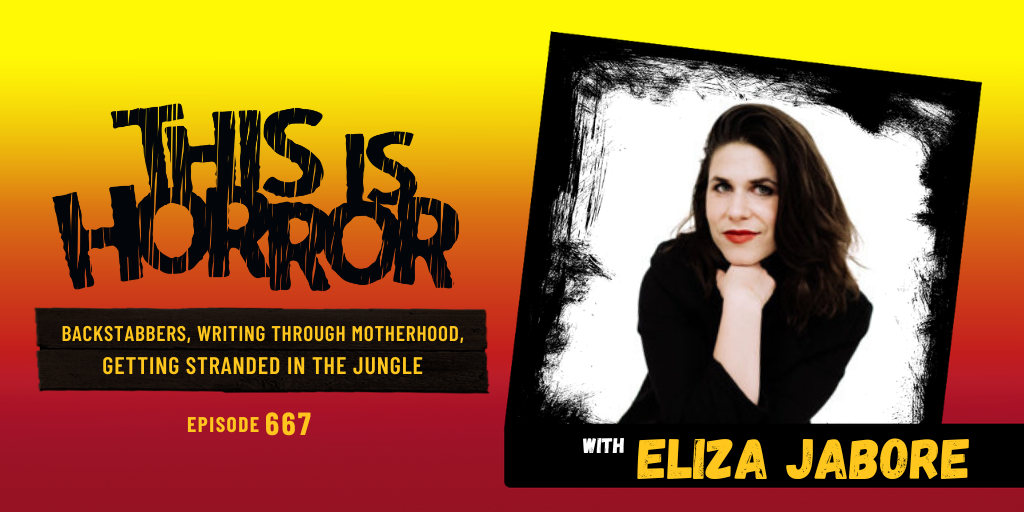
In this podcast, Eliza Jabore talks about Backstabbers, writing through motherhood, getting stranded in the jungle, and much more.
About Eliza Jabore
Eliza Jabore began globetrotting at seventeen and spent the next decade devoted to traveling. She met her husband abroad and, after many years of adventure, finally planted roots back in her hometown in Iowa, where she has two kids, two cats, and a dog. Backstabbers is her debut novel.
Timestamps
Thanks for Listening!
Help out the show:
- Support This Is Horror on Patreon
- Listen to This Is Horror Podcast on Apple
- Listen to This Is Horror Podcast on Spotify
- Rate and review the This Is Horror Podcast on Apple Podcasts
- Share the episode on Facebook and X
- Subscribe to This Is Horror podcast RSS Feed
Let us know how you enjoyed this episode:
- Write a comment below.
- Follow us and get in touch on Instagram @thisishorrorpodcast
- Subscribe and comment on YouTube @thisishorrorpodcast
- Follow us and get in touch on TikTok @thisishorrorpodcast
- Tweet us @thisishorror.
Resources
- Eliza Jabore
- Watch the video version of This Is Horror Podcast episodes, including our conversation with Chuck Palahniuk on YouTube.
House of Bad Memories by Michael David Wilson
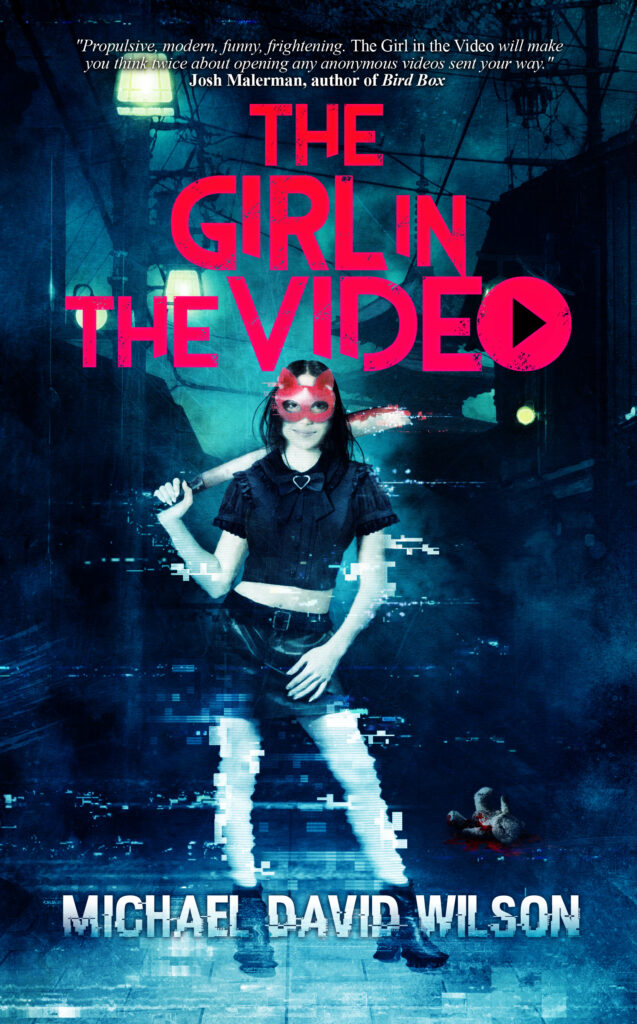
From the author of The Girl in the Video comes a darkly comic thriller with an edge-of-your-seat climax.
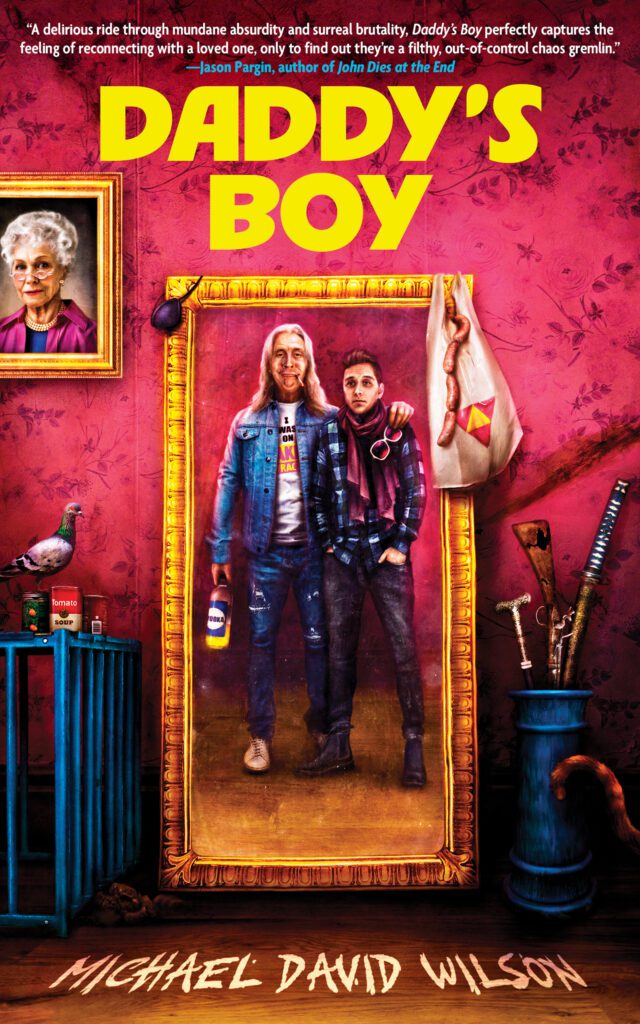
Denny just wants to be the world’s best dad to his baby daughter, but things get messy when he starts hallucinating his estranged abusive stepfather, Frank. Then Frank winds up dead and Denny is held hostage by his junkie half-sister who demands he uncovers the cause of her father’s death.
Will Denny defeat his demons or be perpetually tortured for refusing to answer impossible questions?
House of Bad Memories is Funny Games meets This Is England with a Rosemary’s Baby under-taste.
Buy House of Bad Memories from Cemetery Gates Media
Buy the House of Bad Memories audiobook
They’re Watching by Michael David Wilson and Bob Pastorella
From the hosts of This Is Horror Podcast comes a dark thriller of obsession, paranoia, and voyeurism.
After relocating to a small coastal town, Brian discovers a hole that gazes into his neighbour’s bedroom. Every night she dances and he peeps. Same song, same time, same wild and mesmerising dance. But soon Brian suspects he’s not the only one watching and she’s not the only one being watched.
They’re Watching is The Wicker Man meets Body Double with a splash of Suspiria.
Buy They’re Watching in paperback and eBook right now.
Michael David Wilson 0:28
Welcome to This Is Horror, a podcast for readers, writers, and creators. I'm Michael David Wilson, and every episode alongside my co-host Bob Pastorella, I chat to the world's best writers about writing, life lessons, creativity, and much more. Today we are chatting to Eliza Jabore about her debut novel backstabbers, and to give you a little preview as to what backstabbers entails. Here is the blurb: never turn your back on a friend. Jade, Steph, and Zoe are hiking Washington State's Bones Hollow trail braving cougars, black bears, and storms that roll in without warning. Their anxiety isn't helped by listening to a true crime podcast about a serial killer who once prowled this same forest when Steph twists her ankle badly, there's no one to hear them scream for help. The only sign of life for Miles is a cabin that looks to be straight out of a horror movie occupied by a man who's all too eager to invite them in. A slings take a chilling turn, the friends must find a way to stay alive together. After all, who can you trust when your back's against a wall? Unfortunately for them, the only thing more twisted than this nightmare is their friendship, so that is Backstabbers. It is a fascinating book, both highly recommended by myself and my co-host, Bob Pastorella. Can't wait for you to hear us talk about it, and to hear all about Eliza, her upbringing, her early life lessons, her start as a writer, but before all of that, a quick advert break
Bob Pastorella 2:50
from the host of this Azora podcast comes a dark thriller of obsession, paranoia, and voyeurism. After relocating to a small coastal town, Brian discovers a hole that gazes into his neighbor's bedroom every night, she dances and he peeps, same song, same time, same wild and mesmerizing dance, but soon Brian suspects he's not the only one watching, and she's not the only one being watched. Their watching is The Wicker Man meets Body Double with a splash of Suspiria. They're Watching by Michael David Wilson and Bob Pastrella is available from disishora.co.uk Amazon, and wherever good books are sold. House of Bad Memories, the debut novel from Michael David Wilson. Denny just wants to be the world's best dad to his baby daughter, but things get messy when he starts hallucinating his estranged, abusive stepfather, Frank. Then Frank winds up dead, and Denny is held hostage by his junkie half sister, who demands he uncovers the cause of her father's death. Will Denny defeat his demons or be perpetually tortured for refusing to answer impossible questions? Clay McCloud Chapman says, "House of Bad Memories hit so hard you'll spit teeth out once you're done reading it. House of Bad Memories by Michael David Wilson and paperback@cemeterygatesmedia.com or an ebook via Amazon.
Michael David Wilson 4:07
Okay, well, here it is. It is Eliza Jabore. On This Is Horror. Eliza, welcome to This Is Horror.
Eliza Jabore 4:23
Thank you for having me.
Michael David Wilson 4:25
Yeah, it's a pleasure to have you here, and we both recently read your new book, Backstabbers, which is fantastic. But to begin with, I want to go all the way back to your early life, because I want to know what were some early life lessons that you learned growing up.
Eliza Jabore 4:50
Oh my goodness, wow, we went deep straight. We just dove into the deep end, didn't we? Okay. Huh, so well, I wanted to be a writer since I was like very, very little. My dad's a writer, and he's, you know, got like short stories published lots of different places, and so I kind of like grew up watching him, and just, yeah, like it was just always like a pastime of mine, like writing little stories and making little booklets, and my family loves to tell stories about all the plays that I would put on for my family, and I've always been a storyteller, and so I feel like this has always just been like a part of who I am, as far as like early lessons that I've learned, I mean, like, you mean like the tie into the book,
Michael David Wilson 5:49
you can take this as widely as possible, so it could be to do with writing, but it could be anything,
Eliza Jabore 5:58
so I mean, in some ways I had kind of like a tumultuous upbringing, and I feel like I witnessed a lot of very unstable people throughout my early years, and I feel like, though, like the core people, like, you know, my dad and my brother, you know, like my core family were very stable. I feel like peripherally I witnessed a lot of instability, and I feel like I was always very observant of those relationships, and a lot of the toxicity within them, and I feel like I was, you know, those are some of the lessons that I kind of like internalized that I feel like definitely kind of like made it into backstabbers, if you will. That's a very vague answer right now,
Michael David Wilson 6:54
but there's a lot to go off, and I'm wondering when you were writing these stories from a young age, and when you were putting on these plays, were you even subconsciously or perhaps consciously putting some of those unstable characters into the stories?
Eliza Jabore 7:15
Yes, my family will be the first to tell, like every Thanksgiving, like every family holiday, I gathered siblings and my cousin, especially, and wrangle them in, and we'd spend like an hour preparing on a play that I wrote on the spot, and it would always have to do with like the most macabre elements, there was the killer, the characters were usually orphans, the most famous one had a beheading at the end. The main characters were beheaded. I don't remember why. My early childhood stories were always in on the dark end of things. I always thought that I was writing something really deep, and in the end it was always something really dark, which I feel like younger people kind of like confuse the two, and I definitely made that mistake a lot when I was in, it was fourth grade. I started writing my first novel, and my teacher came up to me, and she asked me, like, what I was working on, because I was working on it in class, and I was like, "I'm writing, I'm writing a novel, and she's like, "Oh, what's it about? And I'm just gonna preface this by saying, like, I was not bullied in any way, and the plot line of this very early book was that this very bullied girl, like, ran away from her antagonizers into a cave and tried to kill herself, and then didn't die, and came back with superpowers, which she then used to, like, save the world or something, and my teacher had, like, a full beat, and she just went, which, like, to her extreme credit, because, like, I mean, honestly, you could have recommended me to for therapy or any number of reactions there. So, yeah, I've definitely always had, I think I've always been processing these lessons like very early on, for sure. Yeah, I thought
Michael David Wilson 9:23
that was kind of where it was going. I thought we were gonna have some insane story where you then were referred to a therapist and you're trying to explain, you know, it's just a story. This isn't me.
Eliza Jabore 9:37
Luckily, I've been surrounded with very understanding people, and also, like, you know, my dad being a writer, and you know, other artistic people in my life, I think they kind of been more understanding of this, which I'm very grateful for.
Michael David Wilson 9:51
And then, so, in terms of some of your first experiences as a consumer of stories, what. Were some of the first books, and some of the first movies that you experienced.
Eliza Jabore 10:06
So, like, I was obsessed with The Outsiders by Essie Hinton from a very early age. I especially, once I found out that she was published at 17, I was like, that is my goal, it can happen. That's gonna be me. I was.. I just loved that book. And then I was watching, like, I was so proud of this at a very young age. I was watching R-rated movies when I was, like, in a kinder in kindergarten. So, like, I was. I'd seen Braveheart and like Die Hard by the age of five, and I was so proud of this, and I was like bragging to all of my friends, and so like I think that I watched a lot of very grown-up movies from a very young age as well, and then that also like infiltrated my art very early, I was trying to emulate this sort of like grown-up subjects of taking on bad guys, and what have you,
Michael David Wilson 11:08
and in terms of the fiction and the short stories that your father was writing, were they also in the kind of horror or dark genre camp, or was it a little different?
Eliza Jabore 11:22
I mean, to be fair, I didn't actually get to read many of his for a long time. My dad's always been like a dabbler of like multi genre. He's never done horror, but his stories have always been sort of like I think what they call kind of like hillbilly nor very gritty, very like real, very like sort of rust belt genre and so, yeah, he, he definitely firmly is in a similar camp. I would say, I mean, I was just talking about this with my husband, that, like, one of my favorite books that I read when I was in high school, which is still probably like one of my favorite books, is Geek Love, which is, I think, a very strange book, for like, if you've read the book that I've written, but at the same time, there's a lot of overlap there. I just really enjoy books that deal with sort of a subversive, and I remember just thinking, if she can write this book, which is so out there, and so macabre, and just so crazy that I can do anything. I sort of had that pedestal ever since.
Michael David Wilson 12:31
Oh, there's certainly a lot of subverting tropes and subverting expectations in Backstabber, so I can see how that influence came in immediately, and I mean, I understand too, that I mean, before you started, not necessarily before you started writing, but before backs, at least a lot of your early life, I think, from 17 was traveling, was globe trotting, so how on earth did that come about? And what inspired you first to go traveling? And what did that initial adventure look like?
Eliza Jabore 13:15
So, from a very early age, I, another, like, you know, early icon, which is probably more age appropriate, was Indiana Jones, and I saw him, and I was like, I want that as my life, I want to, like, travel the world and, like, do crazy things, and so, like, from a very, like, young age, I knew that I wanted to write, I knew that I wanted to travel, and then my dad had graduated early, and so once I found out that that was an option, like from basically 11 years old, I was like, okay, I am going to graduate early, this is my goal. I like went into like the school counselor in like sixth grade, I'm like, I'm going to graduate early, and they're like, cool, you're talking to the wrong people, and like way too early, so like it was just my goal for like a really long time, and then yeah, I like a few months after graduating, you know, I've been saving up for like as soon as I could get a job legally, I got a job and started saving, and then I set off, and I, you know, did the whole Europe thing, and you know, I would oftentimes travel alone. I met my husband while I was traveling. We were long distance for a long time, because he's from England. So then I would go back and forth to see him, and then I would kind of use his house as my home base to go traveling more around Europe, and then I'd go back to his place, and made that just last for, you know, the better part of a decade, I'd say, is that was just like really devoted to traveling, anytime I came back home it was really with. Aim of just saving up money to like go off again, and then that really influenced all of my writing, since I would say, which I kind of actually write while I was traveling, which was a huge shock to me, because I always imagined that I would write as I was going, I kind of thought I was going to be like Kerouac, right, like you know, just writing like furiously in the back seat of a car or something, but I found that when I was traveling I had to really like I was so obsessed with being in the present and being focused on what was happening in my immediate surroundings, like I couldn't even really read books, like I just like had to like constantly be like looking out the window, like I was scared I was gonna just miss anything, and so it was really once I came back and like started like you know me and my husband got our first apartment and you know kind of started to plant roots and stuff, that that's when I could actually start writing and then using those experiences to fuel what would eventually become backstabbers,
Michael David Wilson 16:04
and so when you met your husband, was he on a similar kind of globetrotting adventure?
Eliza Jabore 16:11
We both just met abroad, we were in the same place at the same time, and one of, like, one of the early stories of his, but like, when we were first getting to know each other, but I was like, you are a person for me. Was he had gone on a walkabout, like he just, like from his place in England, decided to like walk. He was trying to walk to Italy, but he walked all the way in, like walked in hitchhikes, um, to Paris, and he with nothing but his backpack, and like a tent, and he describes it as a very miserable experience that I think I have romanticized so much more for him, but I'm like, that is so cool, and like when I heard this him tell this story, it was like, you are amazing, so yeah, I feel like we've always been kindred spirits in that way.
Michael David Wilson 17:02
See, now I want to know where about he's from in England, because obviously the further north the more impressive,
Eliza Jabore 17:11
which is just outside of Manchester.
Michael David Wilson 17:14
Okay, so this is pretty impressive. Then, yeah, that's
Eliza Jabore 17:19
what I keep telling him, like seriously, like he had no money, he just took his guitar, and he would bust, and like try and like make money that way, and he, like, he literally just learned guitar, so the key wasn't even good at it.
Michael David Wilson 17:33
So, did you meet in Paris? Did you kind of see him after he did?
Eliza Jabore 17:38
No, we met like somewhere where we were just like both completely foreign and like a hostile situation, and yeah, just happen to get to know each other, and then want to continue getting to know each other, and yeah,
Michael David Wilson 17:58
well, as long as the hostile situation didn't resemble the movie franchise,
Eliza Jabore 18:04
no resemblance there.
Michael David Wilson 18:06
I mean, I could see how people could get close pretty quickly if they were put into that situation, but also there might be more trauma, which is never advised.
Eliza Jabore 18:17
Yeah, no, thankfully not. Thankfully not.
Michael David Wilson 18:20
And so on your adventures, is there a particular country that really resonated with you, or where you would say you had the best experience?
Eliza Jabore 18:30
So, I'm torn between two. Italy, for me, is always going to be.. it's probably always going to take that spot, because I went there many, many times, I worked, I was with an organization called Wolf, which is Worldwide Organization of Organic Farms, and you get to, which is how mostly I mean, I never had a lot of money, so the way I was kind of doing most of my travels is through work exchanges, where you get to live in a place and work in exchange for, you know, food and a bed, and wolf is one of my number one recommendations for anyone looking for that sort of thing, and so I worked on a farm outside of Florence, and for several months, and then I went off, and then I even went back again, and it was just magical. So, Italy's amazing, and then I've been lots of other places inside of Italy as well, and then I've gone with my husband as well, and like we've lived in Sardinia together, and so Italy, Italy, I feel like has to take that role for me, but then Costa Rica is also like a very close second. I didn't get to spend as long in Costa Rica, but I would 100% go back. Costa Rica is magical,
Michael David Wilson 19:54
and so then after having that amazing experience, what was the impetus. To then return to Iowa, and to kind of put down your roots.
Eliza Jabore 20:05
Well, so me and my husband had been doing long distance for like about five years, and we kind of reached an impasse where you know we couldn't legally work, live, and work in the same place, and so we were like we need to find a way of doing that, or we cannot go on any longer, because long distance is very challenging, and so we eloped, and I, we got married in England, and we thought that this would be the end of our troubles, and in fact it was just the beginning of a basically two year immigration battle, because UK immigration laws are different than other places, and to sponsor your spouse, you have to earn a certain amount, and he was a waiter, and so most of his wages weren't on paper, and so he didn't earn the right amount to sponsor me, and so we were advised by a solicitor that if I ever left the country, I would never be allowed back in, and so I was told to remain in place, and we were trying, we were told to like try all these different loopholes, legally, none of them worked, and then basically after almost two years, my mom very suddenly died, and I had to return home, and then I couldn't return to England, and so he came to join me in America, and he was able to get a green card, and that's how we ended up sort of settling in Iowa, and it actually just so happened that we found a really happy life here, so it all worked out for the best.
Michael David Wilson 21:45
Oh my goodness, I mean, the moment you got married, that was meant to be the start of, you know, a beautiful chapter, but it was kind of a two year immigration nightmare, and
Eliza Jabore 21:58
oh, completely, yes, yes,
Michael David Wilson 22:01
you know, I, I know a number of people who, you know, I guess they're in international relationships, and one of them is British, and then they're trying to decide, well, where to settle, and yeah, the, the ceiling, or the requirements as to what's actually needed, you know, to bring your wife or your husband to the UK is pretty staggering, but
Eliza Jabore 22:28
yes, and we only found this out sort of after the fact,
Michael David Wilson 22:34
yeah, find it out, yeah,
Eliza Jabore 22:38
no, it was, it was, it was, it was a shock for sure, and I think a lot of people find it very surprising, because they're like, but you're, you're American and he's British, like, what's the problem? But yeah,
Michael David Wilson 22:49
and also just the fact that you were told you won't be allowed back into the country, because I mean, you know, it's not as if in the UK, in general, we're not, we're not letting Americans in. So, I would have assumed, I guess incorrectly, that there would be a way that you were allowed in, even if you had to.
Eliza Jabore 23:14
It was specifically because now that I'd married a British national, they assumed that I was trying to live there, so they're like, "You'll never get a tourist visa again, and because he can't, he hasn't earned enough to sponsor you as a spouse. You'll never get the spousal visa, so you'll never get allowed back in. And then we were told to go live in Europe for three months, and to try, and this was before Brexit, and to try and use what was called the surrender sing exception, and try and re-enter as Europeans, and we did, and that didn't work either. We tried all sorts of things, we got so many, so such terrible advice. I was told, "Just have a baby, like if you just have a baby, then they can't remove you. I mean, we just got like the worst legal advice ever.
Michael David Wilson 24:04
I think whenever there is a problem, whether it is a relationship problem or anything, just have a baby is very bad advice, like just upend your life completely, just, you know, throw an extra dynamic in. I mean, I understand at the moment you have a young child, I have a seven month old as well. So,
Eliza Jabore 24:32
congratulations.
Michael David Wilson 24:33
Thank you, thank you. But just have a baby is not what you want during a time of any stress.
Eliza Jabore 24:41
No, it would have been catastrophic. Like, we have two children now, we have a five year old and an 11 month old. She just turned 11 months, but yeah, and I mean, I love it, but if we had had a child back then, it would have been catastrophic.
Michael David Wilson 24:57
But I trust then that a man. Ricker and Iowa had no qualms with letting your husband in, and that was relatively, but maybe not from your facial expression
Eliza Jabore 25:10
at the time. It had been an issue because he, when he had come, like back in 2009 he had overstayed his visa, and so then there was a time, I think it was in 2010 when we'd had this idea that we were going to get married then, and he tried to come to America, and he got turned. I, we had rented an apartment, we had just signed a lease, I had just packed the fridge, and like had my family move us all in, and I just packed the fridge, and like with all of his favorite foods, and I checked my email because he was meant to be landing in Chicago, and instead I got an email saying that he was turned back at the border, and he was got a three year ban, and so our saga is like so long it had so many bumps in the road, so it wasn't, it wasn't a sure thing that when that he was gonna get let into America and get given a green card, it was a lot of stress in the end, it all worked out, and now he actually, he just got his citizenship, which is like such a safety net that we've not had, like, in the for the entirety of our relationship, so now now we can finally like breathe easily, but yeah, it was a lot of bumps to get here.
Michael David Wilson 26:30
How long between him getting a three year ban and him actually getting into America was there?
Eliza Jabore 26:38
God, okay, so four years, yeah. Okay, it was four years, yeah. So I mean, he had, he had to outgo his band, yeah. He was not, he did not come back for those three years, for sure.
Michael David Wilson 26:50
Oh my goodness, what a nightmare. I was, I was again assuming naively that, you know, he, he, he found out about the band, but then, okay, well, actually, I'm married to, no, no, the
Eliza Jabore 27:09
band came before we got married, okay,
Michael David Wilson 27:11
yeah,
Eliza Jabore 27:12
we had planned to get married, we had, we planned this ridiculous plan that we.. it's such a long story. I'm gonna try and give this short phrase up. So we had planned that we were going to get married in Niagara Falls, so he was going to come. We knew he overstayed his visa, but we thought that we could get away with it, because we were young and stupid. And so he was going to fly to Iowa, and then we had an onward ticket, which we thought was like the green flag that was going to get us out of this issue, so we had an onward ticket, we had bought a train up to Canada, and we were going to get married in Canada, and then we thought from there it would be smooth sailing, and we thought that the onward ticket would be the thing that caused them to overlook the overstayed visa. It didn't work.
Michael David Wilson 28:06
Oh my goodness. Well, once you were settled quite, quite, quite a long time after, then I assume that was when you got back into writing, as you said, that you hadn't been writing while traveling, so what did that look like, and what was the first thing that you wrote when you began writing again?
Eliza Jabore 28:32
The first thing I wrote was when, when I was in England, and I was in that horrible, like, hiatus, like I couldn't work, and I couldn't go anywhere, I like tried writing so often because I kind of thought, like, well, this is the perfect time, I'm a captive audience, you know, like I have nothing to do, like all this free time, of course I'm going to be jumping back into writing, and I was just like in just a really bad head space, so I couldn't, couldn't make it work, but I started a short story there that was based on an area in Alderly Edge, which is just outside of where he lives, and what's the book that's based there called
Michael David Wilson 29:11
The
Eliza Jabore 29:13
Weird Stone of Brisingamin. Um, so there's a book there that's, that's what it's, it's called, it's based in that area, and it's like these sort of like magical woods, and so I started my own short story, kind of like based on that area, having hiked around there, and it didn't really go anywhere, and then it was once we'd resettled in Iowa, and I was kind of in much better headspace, and we finally had some stability and security and stuff, and then I revisited that story, and I rewrote it into what became a little novella that I self-published just for fun, and that's what kind of got me back into writing it. I tried shopping it around literary magazines as a short story, but it was far, far. Are too long to be a short story, so it ended up being a very, very short novella, and then that was kind of my gateway, and then from there I was able to start my what I consider my first serious novel, and then I didn't really finish it, so once I got pregnant, which is probably about two years later after starting the novel, I panicked, and I thought, like, oh my gosh, like I've only just rediscovered this part of myself writing, and now I'm about to have a baby, and I'm gonna have zero free time, and obviously I'm never gonna be able to write with a baby, so I have to finish it now, and so that sort of lit this creative fire, and I would finish before she was born, and then you know, sort of very happy surprise that I found that actually this fire didn't go out, and this sort of pressure that I felt as a new mother continued, so that I started using my free time better than I had in all my years of freedom and traveling and not having kids, like now I was just using this time, so that every free moment that I had, whether it was like, like every single nap, any time she was asleep, if she slept in on those rare mornings, I would race down to my computer, I would like, wouldn't even eat breakfast, and I just, yeah, and it's thankfully, you know, now five years, and another baby later, it's still the same.
Michael David Wilson 31:28
Yeah, I often find that the less time we have, the more we put it to good use. It's like, if we only have 30 minutes to write, well, we're gonna bloody well, right, but if we've got the whole day, then well,
Eliza Jabore 31:43
it's so much easier to just like peter it away and like do this and then do that, and then suddenly you're like, how did I even use these hours, right? But if you only have like this finite amount of time, you like get down to it, it's so counterintuitive, but yes, I, that's exactly what I found.
Bob Pastorella 31:59
Yeah, it's like when you become laser focused on one thing, then it allows you to actually become laser focused on multiple things. It's the idea that if I, so basically, you become more effective with time management, but when you have all the time in the world, you don't get shit accomplished, so because like my lately I've been trying to write on my days off, and if I have nothing to do, I don't get much written, but I can write if I have like chores, like I've got errands, I've got to go here, I've got to go here, I've got to go here, so I've got a laser focus on my time, and I'm like, oh, look, here's here's my writing time, and it's bam, that's when it happens, and so it all has to do with how we're being effective in other areas of our life, and that's life lessons from Bob. Yeah,
Eliza Jabore 32:51
I wish I'd been told that from a young age, I would have berated myself so much less in all those years of travel, because I felt like, you know, I just had like wide open spaces, so much time, like, of course, I was going to use all of this time to write, and I ended up using none of it, and like, just really hating on myself, but yeah, that's exactly it, I just didn't have that pressure,
Bob Pastorella 33:14
exactly.
Michael David Wilson 33:15
Well, as we're talking about time management and writing, what does your typical writing routine look like? What is a typical day or a typical week? And I understand it might be a little bit different now with an 11 month old, as opposed to let's say what it was like two years ago,
Eliza Jabore 33:39
so like when I was writing Backstabber, say, I had, you know, my five year old, she just started preschool, and then eventually kindergarten, and I ended up being pregnant. I had a couple of pregnancy losses in that time, so I was kind of pregnant through basically like the entire time of writing backstabbers, and so she would be at school in the morning, and so I would use those three hours to write, and those were like, you know, my hardcore writing times, and then I would also write when she went to bed in the evening, and that was probably the most like regimen that I writing schedule that I've like ever had before, that before she started preschool, it was just only when she was asleep, and she's never been a good sleeper, like from the beginning, she's never like even now at five and a half, she's like only sometimes sleeps through the night, like at least once she's gonna call you to go in there, definitely chaotic, definitely sporadic, but again, like, using the I feel like the fact that she's not been a good sleeper is just like made you like maximize that time like so much better, and then now with a baby, she mostly. Contact sleeps, so I will often just write like here on the couch with her in my lap, and like one-handed, like hunched over, and that's kind of my writing routine. Yeah, sometimes when she's at school, when Iris, or my oldest, is at school, I can kind of like create a play area by walling off sections that I don't want my now crawling baby to get into, and I can sort of write at the coffee table while I'm also playing with the baby, but she knows when your attention is diverted, so it's very sporadic.
Michael David Wilson 35:40
No, I totally relate to writing with a literal baby there, because you know a lot of my writing at the moment, either I am like physically wearing a baby carrier, and so my son's head is there, or if he's really settled, maybe he's in like a high load chair, just next to me, and then when he's really not settled, then we go in for the okay, I'm holding, and we're going for the one, the one hand type, very slow writing at that point, but
Eliza Jabore 36:15
yes,
Michael David Wilson 36:16
but sometimes I mean, if we talk about constraints, sometimes having to write slow slows down the thinking, and you can be more deliberate and meticulous with what you're putting down. So, there is value to it. Not that I'm recommending for people who don't have a baby to go out and find a baby just to do that challenge
Eliza Jabore 36:39
again. It's one of those. Just have a baby is rarely like the best advice, but at the same time, yeah, I completely agree with you.
Michael David Wilson 36:50
I'm wondering, too, if you were writing when your daughter was sleeping and your daughter was not a good sleeper, when were you sleeping, or how much were you sleeping? Very
Eliza Jabore 37:01
little. My sleep has always taken the back burner, like always. Like I, before the new baby, I never adhered to like the sleep when they sleep. If she was asleep, that was my right time, which meant that I slept very little, but I actually found those sort of like sleep haze, delirious like moments, like I found that I felt like tapped into the voice that I was trying to get into, like a lot better, and maybe that's because of the genre that I'm writing, but I felt that it really like helped me get into the zone better. Actually,
Michael David Wilson 37:43
did you ever get so sleep-deprived that you hallucinated something? Because I think it was Delilah S. Dawson we were talking to, and when she was at her peak of sleep deprivation with young children, I think she hallucinated rats in the wall, which is very Edgar Allan Poe,
Eliza Jabore 38:01
seriously. Um, thankfully no. Thankfully, no. I, that I'm aware of, um, no hallucinations
Michael David Wilson 38:11
again. Probably not recommended,
Eliza Jabore 38:14
but way to make the best out of a situation, you know.
Michael David Wilson 38:19
I know, I know. Well, talking about backstabbers, what was the genesis for writing it, and how much of it did you plan before you started writing?
Eliza Jabore 38:34
So, the genesis, I like to. so I put a lot of my personal travel horror stories into backstabbers, like I peppered so many of them throughout, but I would say that the main inspiration for backstabbers came from this hiking trip that I took with my friends in the Colorado Rockies, and it was a Mother's Day weekend, so beautiful May spring weekend, and it wasn't like one of the 14 years, like it was like, you know, it's still a mountain, but not like one of the insane ones, and we planned just a very simple loop hike, we like parked in the valley, and we were gonna summit, and then have a picnic and then walk back down to the car and drive home and there was a surprise snow storm and so we started we were not dressed for the occasion at all we had very little supplies with us but you know we're like this is adventure this is fun yay and so we kept going, and we summited. We had our little picnic. It was great. We started back down, and like the snowfall was so heavy at this point that we couldn't even see, like, the footsteps that we had left behind us, like it was very, very deep, and I. Reached into my hoodie pocket, where I realized then that I had very foolishly put my car keys and my now empty hoodie pockets, and I was like, I wouldn't have put the car keys there, because only a very stupid person would put their car keys in an unzipped hoodie pocket, and I'm not stupid, and so I said to the group, do any of you have the car keys, like kind of internally, very much knowing that none of them had the car keys, and of course none of them had them, and so then we went about a very frantic shirt search, you know, retracing our steps that we can now no longer see, and my husband very heroically, like, ran back up to the summit to see if we'd left them there, like we had even, like, stopped and had, like, a snowball fight, and so like we were like searching all along there, and then we did something like very, very stupid, and we split up, and I mean, with the snowfall being so heavy, like you couldn't even see the trail, and I suddenly looked around, and like I couldn't see any of my friends, I had no idea where the trail was, and I was just surrounded by trees and snow. It was starting to go dark. I didn't have any winter gear on. I could barely feel my toes, and I was like, cool. This is how people die. This is officially a horror film that I've now found myself trapped in. I luckily found my friends again. We gave up trying to find the keys. My husband came back, obviously didn't find the keys, and so we went back to the car, which we had mostly been back to the car at the point when I realized, like, that I didn't have the keys, and at this point it's about to go dark, and so we're looking for rocks to like break into my car, just so we have somewhere to shelter for the evening, because we're going to freeze to death, and that's when one of my friends says something cut from every horror film, says I think I see a cabin over there, like literally in the middle of nowhere, so we go and knock on the store, and luckily it is a very kind, albeit very strange, isolated woman who answers the door, and she lets us stay in her garage while we call a local friend who drives up the mountain to come rescue us, and I like to say that Backstabpers was born on the mountain because it's sort of that scenario of a having to knock on the isolated cabin door, and who's going to answer? Like, what if it hadn't been a very nice old lady who offered help, but then also, like, what if the friends that I was with, like, what if we hadn't really been that solid? Like, what if we had had all of these old tensions and, like, very fractured. fractured relationship, and what would have happened then, and so I sort of imagined that scenario to the worst possible conclusion.
Eliza Jabore 43:12
So I would say that that's probably like the most direct inspiration for backstabbers, and then in terms of how much did I have planned before writing Backstabbers, I would say that I've never been a plotter, I've always been, you know, a pantser, I just write as I go, but Backstabbers was one of the first ones where I actually did have kind of like not a firm outline but like a pretty solid outline, not like scene by scene, but you know, like the bones, like I knew the plot points that I wanted to hit, I knew the theme, like I knew the title, like basically straight away that I was building towards. So I would say that I knew the gist of Backstabber is more so than any project that I've worked on before, before I started,
Michael David Wilson 44:04
and in terms of the actual selling of backstabbers, did that come kind of halfway through? Did that come when you had written it, because I think your literary agent was shopping it around, and I understand too, you were writing things before under your own name, so I am interested, you know, later to get onto, well, why did you change to a pen name as well? It's
Eliza Jabore 44:31
a really interesting, yeah, it's a very unusual path for backs avers, so I was writing under my, my name Kelsey Kupitz, and then, which was still thrillers, and very dark thrillers, but less of, like, the sort of horror crossbone, and, like, this kind of, you know, traditional slasher, in a sense, and I had, we had submitted one of my early May. Scripts to an editor's sphere in the UK, and she had really loved it, but, like, didn't know a place on her list for this book, and so then it was a while later that I reconnected with her, and we started talking about this other idea that I had for backstabbers, and so we actually kind of were working together with my editor at Sphere, like from the onset of the beginning of Fox Avers. So then I wrote a pitch, which she sent to acquisitions, so suppose we like sold our proposal before the full book was written, so it was definitely like a unique start to the book in terms of like other books, and then because I still had other books that I was still shopping around for Kelsey Coupets, we decided, and because it was such a different blend from the other books that I was writing, like similar but different, we decided to use a pen name for backstabbers,
Michael David Wilson 46:03
and why did you choose Eliza Jabor, which I might not even be pronouncing. No,
Eliza Jabore 46:10
it's perfect. Okay, yeah. So, Jabor is actually my husband's last name.
Michael David Wilson 46:16
Okay,
Eliza Jabore 46:16
yeah. And then Eliza is a shortening of my middle name, which is Elizabeth, and I wanted a name that I was gonna like feel a kinship to that wasn't like completely alien, so I used like, you know, my married name and my middle name, basically.
Michael David Wilson 46:33
And now that you've got a name for writing, I guess more overtly horror, and then you've got your original name for writing, kind of, I guess, lighter thrillers. Does that give you more freedom in terms of what you're writing? Do you feel that you can kind of go anywhere because you've got a name for Eva?
Eliza Jabore 46:56
It's awesome. Yes, completely. Yeah, it's pretty fantastic in that sense, because I get to like have one foot firmly in both ponds, and then that breeds room for all sorts of crossovers. It's pretty fantastic.
Michael David Wilson 47:15
Is there a pressure for you to turn in more work, because you know you've got to kind of put in a release for each name fairly regularly.
Eliza Jabore 47:25
Well, I mean, I haven't technically been published under my official name yet, though, that I have several projects that we're hoping for, but it gives a lot more of, I think, artistic freedom for me to just kind of write the book that speaks to me in a moment, and so I have, I wouldn't say I feel pressure, I mean I feel internal pressure, right, to just write as much as I can for as long as I can, so I have another book that I've just finished that's with my literary agent that I'm that I would want for the Eliza Jabor name that I think is more of like the horror cross blend, and then I have even another one that I've just started that I think would also be really good for that name, and then I have like multiple other projects, like I'm a back burner in my brain that I think would be good for like my original name, so really it's just all fun, it's just it's I feel like it's creatively like a really great place to be in.
Michael David Wilson 48:24
And how did you connect with your literary agent? And how did you know this is the agent for me?
Eliza Jabore 48:32
So my first book that I wrote, I was very, very dark on sort unsurprisingly, I probably, and I started querying way too soon, like I didn't really know anything about the publishing process. I was very much learning as I went, and so I started querying way too soon, and I sent it out to so many agents, and then, like, started doing rewrites as I went, and so I think I accumulated probably, like, I think 130 rejections, if not more, for this book, like, over the course of, like, many rewrites, and you know, and I basically given up hope on it, and then I had started a second book, which I had also been sending around, and was getting immediately more positive feedback for, and at the same time, out of crazy coincidence, I got two offers at the same time, one for my second book and one for my original book, and I think it's because she offered for my original book, which, and she just saw it like in a way that no one else had, she like got it, she just. Really, really, got it, and I was like, you're the literary agent for me, and yeah, we've, we've.. she's.. I couldn't have asked for a better agent. She's perfect,
Michael David Wilson 50:11
I think, too, to have had over 130 rejections. It just shows that, you know, this writing game, it's such a game of perseverance, and of self-belief, and of just determination, and I love that you kept going, and here we are.
Eliza Jabore 50:31
Thank you. I also like to clap myself on the back for that sometimes, because, yeah, seriously, it is. I tell people that all the time, like, you, if you really want this, like, it is a game of numbers, if you think about, like, how many people are querying, and then also, like, you know, it's such a cliche of people saying, like, I love your book, but I'm not the right person for it, and that sounds like such a platitude when you're in the trenches and you're getting those regen rejections and it hurts and you're like but now that I'm in it and especially now that I've seen that from the editor side of things as well now I get what that means so much more because you want somebody that doesn't just like your work but like connects with it on a level because they have to reread it so many times, and then also, like from the editor perspective, right, not only are they going to reread it so many times, but you need somebody that really clicks with your view for the book, so that the edits that they offer are elevating your work in the way that fits with your view, and they're not like just coming in and completely changing it in a way that doesn't align with your vision, and so now I understand even deeper, like just how hard it is to really find your person and how important it is to find those people in this industry that really connect with your work, because once you find them, it's such a game changer. Yeah, it's, it's everything, finding the right people for your, for your work,
Michael David Wilson 52:16
right? Because you need somebody who's going to champion you, but at the same time, you want someone who's going to help you get better, but they have to understand your artistic vision and intention to begin with.
Eliza Jabore 52:29
That's exactly it. Yeah, like I like, they, I like to say, like, they help your work shine, right? They don't come in and change it, they like, they help it shine, they like polish it in that way, that just really, you're like, when the edits that they offer, you're like, yes, this is what I was aiming for, not so much like a change coming from left field that you're like, oh, oh, you know, it's they really just help take it to the next level, and the right people will help you do that, but it does, especially as there's more and more people who are looking and fewer and fewer agents, and they have, like, the competition is insane, but if you really want it, and you just keep trying, like, I do believe that you do find your person eventually, but you do really have to have a very strong stomach, and you really just have to keep at it,
Michael David Wilson 53:22
and so what were some ways that either your agent or your editor helped backstab a shine, or what were some ways where they perhaps illuminated a thing that you were doing and cast it in a different light?
Eliza Jabore 53:38
That's it. I love that question. So my first editor, so the editor that I worked with from the onset, the editor from Sphere, our vision was just very much in line, like from the start, I think we just had very similar views for the book, so really she just helped me, I think sharpen the thesis, but then, like, when we sold rights to the US, and we sold, we got the editor for Bantam, like, she came in, and she was like, I think an epilog would be really useful here, and so she helped us, like, think of the idea for the epilog, and when she suggested that I was like, oh my god, that is absolute genius, and it just clicked on this level that I was like, yes, this is perfect. So, like editorial suggestions like that, where when they suggest it, it's like a light bulb going off, and you're like, this is perfect,
Michael David Wilson 54:41
and I think sometimes the complication in having a UK and a US publisher separately is you've got two different editors, so did they kind of have meetings and did they have to have kind of conversations as to what they agreed on? Nor did one take a first pass and another a second, so what did that look like?
Eliza Jabore 55:05
I think we were really lucky in that the person that we found at Bantam was really like, I would say, so we got a couple, we got two offers for backstabbers, and the first person, I mean, they were both amazing, and they were both very enthusiastic, and very complimentary of the work, but I think that one of the ways that I knew that we chose correctly was that the person at Bantam was such a fan, like she was, so it was like speaking with, like, somebody who was already just such a fan of the book, and who was just so obsessed with it, and who really, again, just really got it. So all of her suggestions, like basically none of them were anything that didn't adhere already to our vision, our to artistic vision, they just were automatically just sharpening and helping polish what we already had, so I feel like really, really lucky in that sense, that at no point in this journey of backstabbers, like honestly, like at no point was I like really having to push back against any editorial suggestions, like they always were so cool. I was very happily surprised. I mean, as a debut author, you have no idea what to expect, and you hear lots of stories about editors like telling you what to do and saying it's this way or the highway. At no point has been that been my experience. They have always been like, this is your book, you are the author, you are the decider. Here's what we suggest. What do you think? And I've been really, really lucky and fortunate that almost all of the suggestions I've been like, you know what, I really love that, or yes, that really fits with what I was already trying to do. Thank you for helping make it that much better. There's really only been a couple of very like minor things, where I was like, you know what, I know you're saying that maybe I could cut that line, but I really love that line, I keep that line, but yeah, just very minor things, all the big, and like, all like, really, there's been no huge editorial suggestions. It's all been like lots of little things that have just helped take this, and as a group and a team, like, we've just like brought it to the next level.
Michael David Wilson 57:35
Yeah, I think what you're describing is definitely how good editors work, or at least tell editors that I want to work with work, you know, and
Eliza Jabore 57:46
I've been so lucky.
Michael David Wilson 57:48
Yeah, and what one editor I remember working with me, he said, "Look at the end of the day, it's your name on the book. So these are my suggestions, but if you don't want to go for it, then I understand, because it's your name, it's your book that we're putting
Eliza Jabore 58:05
down. I think that's how it should be. I mean, granted, you know, I'm still a very new author, and I've only worked with these two different publishing houses, but that's been my experience with both of them, and that feels right to me, right? Because, yeah, it's it is our name at the end of the day, and you do want to feel like from start to finish, this is your, you know, this is your baby, right? And yeah, so I, I understand more and more now when people say I loved it, I just don't know if I'm the person for this project. What I understand now that to mean is I don't know if I have the right voice to help you come up with those editorial suggestions that fits with your voice.
Michael David Wilson 58:49
Yeah, that makes total sense. And I want to just deviate back to kind of bad experiences when traveling, because there was something you said in a previous interview, and you mentioned that you were once stranded in a jungle at nightfall after an Airbnb owner failed to show up with the key. Yeah, but what happened next? Tell us what happened.
Eliza Jabore 59:19
Okay, so we were told, so we had to get.. I don't even remember how long that bus journey was. We had to get like a really long taxi ride. It wasn't a taxi, it was just some guys outside the airport that said they were a taxi, but like you got in their jeep and you were like, this could go very badly. But then they did actually take us to the right spot, and then, um, and then we got the bus from there. It was like at least four or five hours, right? Yeah, and then from there it was basically nightfall, and the whole, by the way, the whole journey on. That bus, we were speaking to people, and they were warning us about a guy with a machete who roamed the jungles outside the village where we were gonna go, and who robbed travelers and left them naked and barefoot in the jungle, and they called him the Green Man, and I swear I'm still gonna put him in a book one day, but anyway, I, I do divulge, but um, so we got there, and we were told to go to this bar, it was Max's bar, and to ask anyone, anyone would know this Airbnb order, and just say this owner, and just say, I'm looking for, I can't remember his name, but I'm looking for so and so, and that they all know his number, and they'll all just be able to tell, get in touch with him, and that he'll come and give you keys, and so we get there, and it's basically dark, and it's, it's a rain forest, so it is obviously like torrential downpour, and the bar is literally about to close, and I go up, and I have high school level Spanish at best, and I'm like, "Hey, can do you know so and so? And they're just like, "What do you know so and so? They're no cool, so I'm supposed to get in touch with So and So. Do you have Wi-Fi? And they're like, "No. I'm like, "Okay, this is a little hairy. And so basically I had written down his phone number, and they let me use a landline, and the first few times we tried to call him, he did not answer, and they let us stay late, and thankfully, and eventually we did get through to this person, and he came and gave us the keys at night, and walked us, like, I mean, literally, like in virtually pitch black, like up this jungle trail, like up to this house, but it was like this close from being an absolute disaster. So, yeah,
Bob Pastorella 1:02:15
that whole thing reminded me of like reading Jonathan Harker's diary about going to Castle Dracula, and I expected you to, whenever you said, 'Do you know so and so? when you were at the bar, for them to go, 'Oh, I'd be like, wow, wait a second, this shit's really real. It's just not in it's not in Transylvania, you know? I was like, 'Damn, that's crazy.
Eliza Jabore 1:02:43
I will say that this specific story has been the influence for the my newest project that I'm working on. So,
Bob Pastorella 1:02:51
well, that's that's gonna be kick ass. Thank you. There's a lot there to mine.
Michael David Wilson 1:02:56
Yeah, yeah, we got to find out more about that project a little later, and thank goodness you didn't run into the green man, say that
Eliza Jabore 1:03:06
right now. I, in the end, nothing but the best experience in Costa Rica. Like, I literally, and this is it's the first time this has ever happened to me, like as we were leaving, I literally like cried on the bus, because I was so sad to be leaving, like it was such an amazing place. We had the best time there. I, 1,000% want to go back.
Michael David Wilson 1:03:31
Yeah, I mean, to go from that start to it being in your top two of all the places you've been. I mean, that's impressive. That says a lot for Costa Rica.
Eliza Jabore 1:03:42
It does, right? Right.
Michael David Wilson 1:03:47
Thank you so much for listening to Eliza Jabor on This Is Horror. Join us again next time for the second and final part, but if you would like to listen to part two, and indeed every other episode of This Is Horror ahead of the crowd. If you would like to listen right now and to support over 13 years of horror fiction podcast interviews, you can do so. All you have to do is become our patron@patreon.com for forward slash This Is Horror, and in addition to getting early access to each and every episode, there are a number of Patreon bonuses, including the ability to submit questions to every single Discis horror guest, and coming up soon we will be welcoming back CJ Lead to talk about her brand new book Headlights. So if you have a question for CJ, if you want to listen to. Early This Is Horror Podcast episodes patreon.com forward slash This Is Horror. Okay, before I wrap up, a quick advert break
Bob Pastorella 1:05:15
from the host of This Is Horror Podcast comes a dark driller of obsession, paranoia, and voyeurism after relocating to a small coastal town. Brian discovers a hole that gazes into his neighbor's bedroom every night. She dances and he peeps, same song, same time, same wild and mesmerizing dance. But soon Brian suspects he's not the only one watching, and she's not the only one being watched. Their watching is The Wicker Man meets Body Double with a splash of Suspiria. They're Watching by Michael David Wilson and Bob Pastrella is available from disease horror.co.uk Amazon, and wherever good books are sold. House of Bad Memories, the debut novel from Michael David Wilson. Denny just wants to be the world's best dad to his baby daughter, but things get messy when he starts hallucinating his estranged, abusive stepfather, Frank. Then Frank winds up dead, and Denny is held hostage by his junkie half sister, who demands he uncovers the cause of her father's death. Will Denny defeat his demons or be perpetually tortured for refusing to answer impossible questions? Clay McLeod Chapman says, "House of Bad Memories hit so hard you'll spit teeth out once you're done reading it. House of Bad Memories by Michael David Wilson in paperback@cemeterygatesmedia.com or an ebook via Amazon.
Michael David Wilson 1:06:33
Okay, well, as always, I would like to end with a clip from a previous This Is Horror episode, and this is taken from episode 536 with Jak Paulinik, the author of Fight Club and Not Forever, but for now, in which he talks about why mainstream publishers need to stop playing it safe and pandering to the market, so here we go.
Chuck Palahniuk 1:07:11
I see publishers becoming very timid about what they're going to bring to market, for fear of kind of a social pushback, but I think it's kind of a short-lived phenomenon, because it sort of happened in comics, and then comics realized there really wasn't any money in trying to make everyone happy. There's an old saying about if you design a house that's going to make one person fantastically happy, then the whole world ultimately loves that house, but if you're going to try to design a house that will make everyone happy, the whole world isn't eventually going to hate that house, and so I think that, like, as happened in comics, that that publishing prose publishing is going to realize that people respect a unity of vision and a really authentic vision much more than respect this kind of pandering that we've fallen into, where you're trying to pander to every single part of the market, you're trying to make everybody happy. Ultimately, people do not respect that.
Michael David Wilson 1:08:16
And if you would like to listen to the full episode with Chuck, believe you me, it is a fascinating conversation. Then you can listen to episode 536 of This Is Horror Podcast, or if you want the video version, it is available on YouTube, youtube.com youtube.com forward slash at This Is Horror Podcast, and if you would like other inspirational clips from past episodes, then do please follow us on TikTok and Instagram at This Is Horror Podcast. Well, okay, that does it for another episode of This Is Horror. So, until next time for part two with Eliza Jabore, take care of yourselves, be good to one another, read horror, keep on writing, and have a great, great day.